


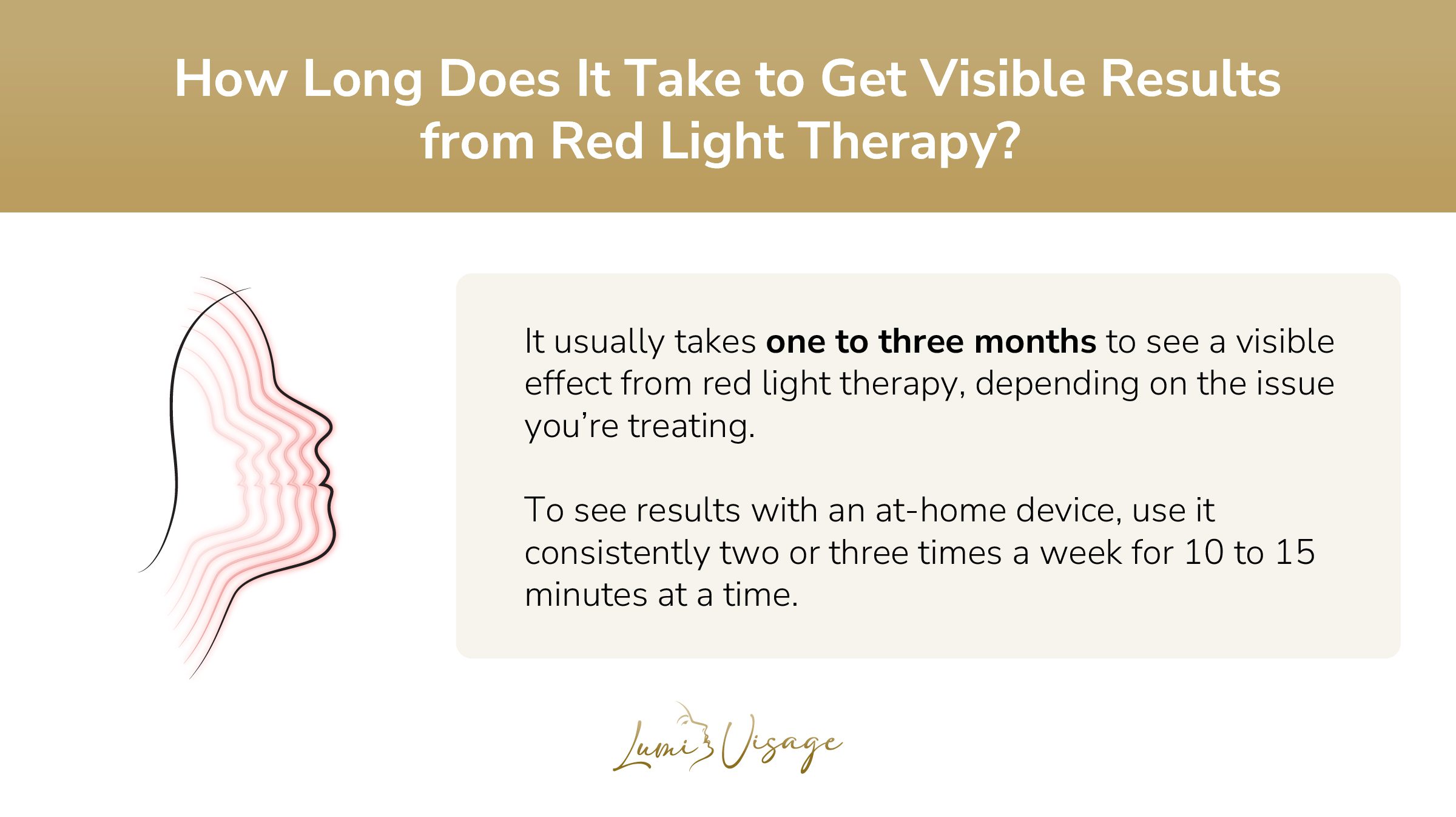
It’s hard to keep up with treatments if you’re not seeing immediate improvement, but, as is the case with most skincare, patience and consistency are key. Red light therapy (RLT), a type of light-emitting diode (LED) therapy, starts working right away, but it typically takes one to three months to see visible results.
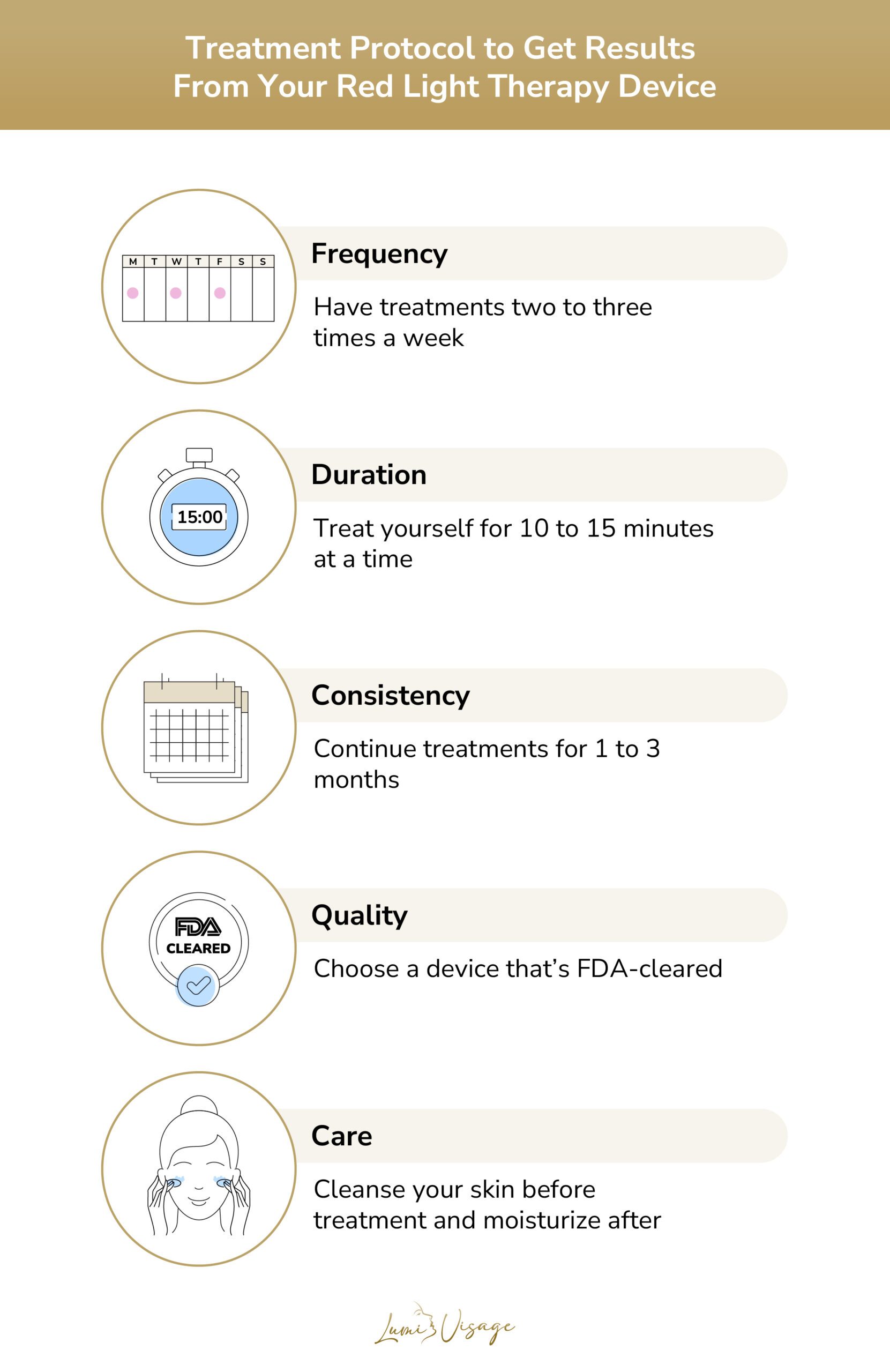
How soon you see results depends on various factors, including the severity of your skin condition, the device you choose, and how you use your device. To achieve the best results with an at-home device like an LED face mask, you should use it for 10 to 15 minutes at a time, two or three times a week.
In this post, we explain how long it takes red light therapy to work according to research, as well as detail how long your treatments should be, how many light therapy sessions you need, and how to maximize your results.
Table of Contents
- How Long Does It Take for Red Light Therapy to Work and Show Visible Results?
- Do You Need to Maintain Your Results?
- How Long Should You Do Red Light Therapy Per Session?
- What Impacts the Effectiveness of Red Light Therapy?
- Does Red Light Therapy Cause Any Side Effects?
- 4 Tips for Maximizing Your Red Light Therapy Results
- Get Visible Results from Red Light Therapy with Lumi Visage
How Long Does It Take for Red Light Therapy to Work and Show Visible Results?
Red light therapy, which is also referred to as low-level laser (light) therapy (LLLT), can be a great tool in skin rejuvenation, but usually takes about a month for the therapy to work and for you to start seeing results. With regular treatments, you’ll likely see the full benefits of red light therapy in one to three months.
It also depends on what you’re using red light therapy to treat. Here’s an overview of common skin issues, and how long research shows it takes to observe results as well as the treatment times used.
Because the strength of the red light therapy devices used varies in each study, if you’re using an at-home device, we recommend following a treatment plan of 10 to 15 minutes per session, two to three times per week.
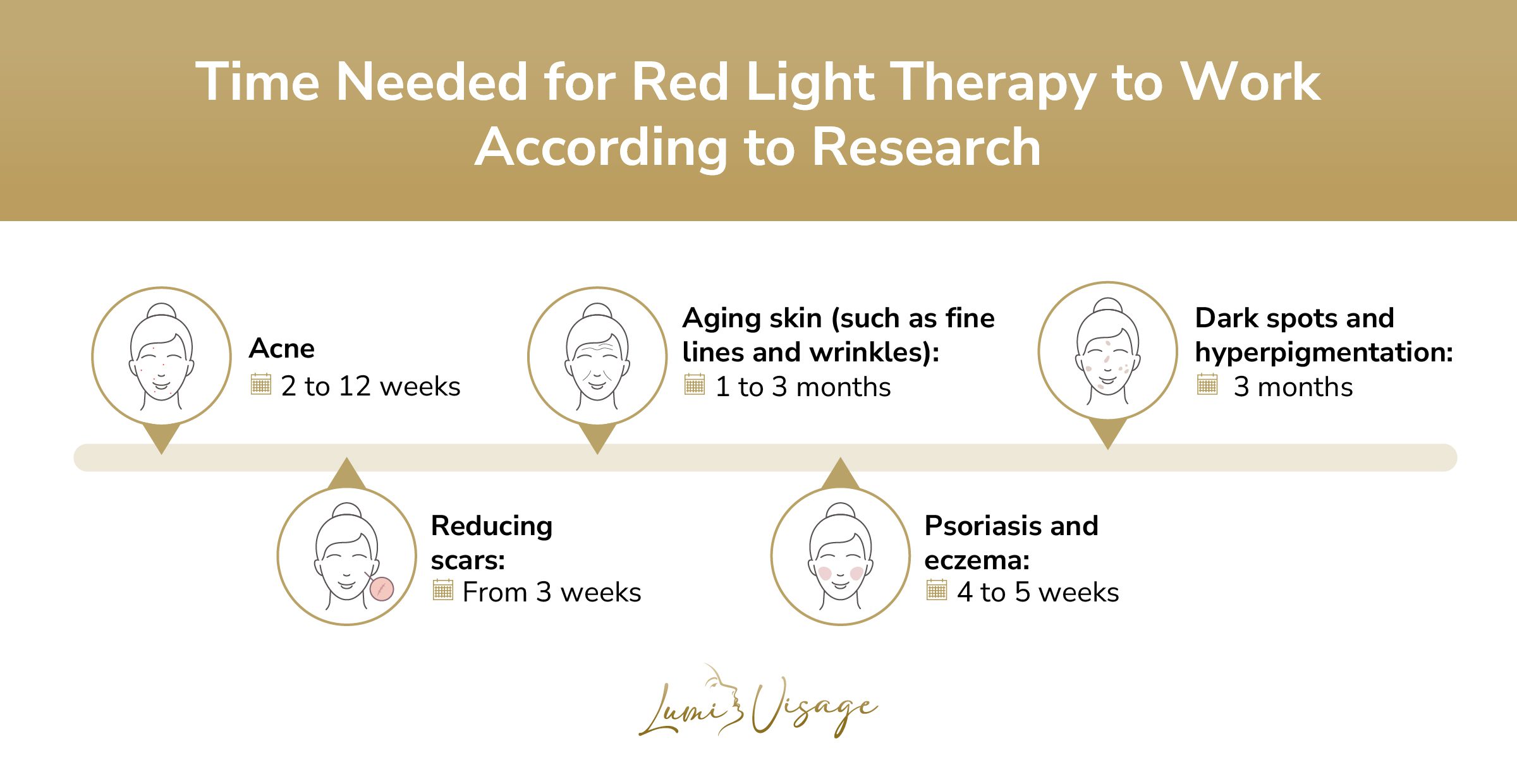
| Skin issue | Treatment time | How often | Time to see results |
| Aging skin (such as fine lines and wrinkles) | 12 minutes | Twice a week | 1 to 3 months |
| Acne | 20 minutes | Twice a week | 2 to 12 weeks |
| Dark spots and hyperpigmentation | 10 to 15 minutes | Two to three times per week | 3 months |
| Reducing scars | 10 to 15 minutes | Three times a week | From 3 weeks |
| Psoriasis and eczema | 20 minutes | 48 hours between each use or once a week | 4 to 5 weeks |
Anti-Aging
A study using an LED mask showed visible signs of skin aging decreased after one to three months of red light therapy after it was used twice a week for 12 minutes. All the participants observed an improvement in their skin quality, with 100% believing red light treatment using this at-home device significantly improved the overall condition of their skin.
Here are the results:
| After 1 month (28 days) | After 2 months (56 days) | After 3 months (84 days) | |
| Decrease in crow’s feet in depth | 15.6% | 34.7% | 38.3% |
| Decrease in face sagging | 5.4% | 14.7% | 24.8% |
| Increase in skin firmness | 13.6% | 19.7% | 23.6% |
| Increase in skin elasticity | N/A | 17.1% | 18.7% |
| Increase in skin density | 26.4% | 41% | 47.7% |
| Decrease in skin roughness | 6.8% | 18.2% | 23.8% |
| Increase in skin homogeneity | N/A | 32.7% | 34.9% |
| Decrease in pore diameter | 28.5% | 30.7% | 32.8% |
| Decrease in sebum levels | 34.9% | 63.9% | 70.3% |
The anti-aging effects of red wavelengths of light are caused by an increase in collagen production, as well as skin levels of elastin and hyaluronic acid, making your skin firmer and smoother while decreasing the appearance of wrinkles and crow’s feet.
As shown in the table above, consistency and time led to greater and more noticeable results. Results lasted for up to one month after stopping the use of the mask.
Acne
One study showed that a combination of blue and red light therapy visibly improved the appearance of acne within 2 to 12 weeks when subjects had treatment sessions two times per week, three days apart, for 20 minutes each time (alternating between the colors, one each time).
Results were assessed at baseline and at weeks 2, 4, 8, and 12, and showed significant results at the following points:
- 4 weeks: mean lesion count reduction of 46%
- 12 weeks: mean lesion count reduction 81%
Red and blue wavelengths work well together for acne. Red light reduces sebaceous (oil) gland secretions, controlling oil production, reduces inflammation, and helps normalize hyperkeratinization, which limits the buildup of excess skin cells in hair follicles, reducing acne. Blue light reduces the appearance of acne and prevents new breakouts by killing bacteria on the surface of your skin.
Dark Spots and Hyperpigmentation
In a study evaluating the effect of LED light on reducing pigmentation in patients with melasma, treatment over 12 weeks showed a significant reduction of pigmentation. Patients in the study were treated by a healthcare professional for five minutes at a time weekly using a clinical-strength device. Although healthcare providers treated the patients in this study, you can achieve similar results at home, with the standard protocol of two to three times per week for 10 and 15 minutes each time for at-home devices.
Red light diminishes dark spots on the skin and hyperpigmentation by increasing the activation of the key signaling pathway in melanocytes, the cells that produce melanin pigments. It also inhibits tyrosinase production, which is necessary for melanin synthesis, so less melanin accumulates in your cells.
Scars
In a study, patients were treated with red light for three weeks to reduce scars, and results were observed at 1, 3, and 6 to 12 months. The specific wavelengths of red light therapy work to treat scars by boosting collagen production, supporting tissue regeneration and wound healing, and increasing blood circulation.
If you’re looking to reduce scars, follow the standard recommendation of using red light two to three times a week for between 10 and 15 minutes at a time and you might see results as soon as three weeks in, depending on the type of scar and how old it is.
Psoriasis and Eczema
A study showed good results for psoriasis when subjects were treated with a combination of red and infrared light together for four or five weeks, in two 20-minute sessions (with 48 hours between sessions). Long-term follow up showed improvement, ranging from 60% to 100%. Another study showed improvements in eczema using red light once per week.
Red light works to treat psoriasis and eczema mainly by reducing inflammation, one of the potential causes of these conditions. It also helps reduce redness and soothe itchiness associated with these conditions.
Red light can improve classic psoriasis and eczema symptoms, like scaly skin, but it may take over a month of consistent therapy to achieve.
Do You Need to Maintain Your Results?
For some skin issues, using red light therapy for the recommended amount of time can resolve the issue and leave you with lasting results. For example, in research where red light therapy was used to reduce scarring, the treatment took three weeks, and the improvement was observed up to a year later as the scarring gradually healed.
For other and more chronic issues, however, you’ll need to have repeated treatments long-term to maintain the visible effect. For example, when used for anti-aging, the results from red light were still noticeable after one month, but as aging is a natural and continual process, you may need ongoing treatments to keep your skin healthy as time progresses.
In skin conditions like eczema, psoriasis, and rosacea, red light therapy offers relief, but the inflammation causing them may be chronic.
Although there are in-office treatment options, investing in an at-home device may be more cost-effective than a course of in-office treatments because consistency and long-term use are key.
How Long Should You Do Red Light Therapy Per Session?
It’s typically best to use red light therapy for 10 to 15 minutes at a time, two or three times a week for most skin conditions.
With red light therapy, more is not necessarily better, and you should space your sessions out to give the light time to work. Red light is effective because it causes a cellular response that improves the skin’s cellular function and ability to repair itself. Once the cellular mechanisms have been activated, it takes a few days for the activity to take place. So if you’re excited to get the best results possible from red light therapy, rushing treatments won’t necessarily help — and it may even hinder your progress.
When red light or any other LED light from the visible light spectrum shines on your skin, it’s absorbed by components of the cellular respiratory chain. These are proteins embedded in the inner membrane of our mitochondria, the powerhouse of the cell that generates energy for cellular function.
This causes responses that improve cellular function, such as increased ATP (adenosine triphosphate) synthesis, increased RNA and protein synthesis, and increases in oxygen consumption, membrane potential, and increased synthesis of NADH (a molecule that stores energy).
What Impacts the Effectiveness of Red Light Therapy?
In addition to using the optimal frequency, other factors can affect how long red light therapy takes to work.
Whether You Choose In-Office or At-Home Treatments
In-office red light therapy treatments guided by a dermatologist may help you get results faster. They can be professionally tailored to your exact situation and skin needs, and the devices are often medical-grade and stronger.
However, these types of treatments may end up costing a lot more in the long term than using an at-home device, so if you’re looking at having treatments long-term, you may get better results by investing in your own device.
The Severity of the Issue Being Treated and Your Skin Type
Everybody’s skin is unique, and different skin conditions may take longer to heal depending on how severe they are and how long you’ve had them.
If you have highly sensitive skin, you may want to adjust how often you do treatments based on your individual skin needs and how you feel after each treatment. Red light therapy is a powerful tool for skin health but it’s not a quick fix, so don’t rush in and overdo it.
Your Consistency with Treatments
Like most skincare, red light therapy requires consistent treatments to be effective. Skipping sessions can impact your results and you might not get the maximum benefits.
To ensure you stay consistent, consider block-booking in-office treatments (which may also get you a discount) or investing in your own device that targets your skin needs.
The Timing of Each Session
Both duration and frequency are key to getting visible results from red light therapy. Using your device too frequently may not give your body the time it needs for cellular activity to take place. Using it too infrequently won’t give you optimal benefits. We suggest using your device for 10 to 15 minutes at a time, two or three times a week.
The Type and Quality of Device Used
Different red light devices are designed for different purposes. For example, full-body treatments are best done using a large panel, with the strength adjusted for the fact that you’ll be further away. Facial treatments are best done using an LED mask, which is designed to be close to your skin.
No matter what you’re using, always read the manufacturer’s instructions to ensure you’re using the device in the correct way to get the benefits. Also, make sure you choose a high-quality device that has been FDA-cleared and passed rigorous safety tests.
Does Red Light Therapy Cause Any Side Effects?
Red light therapy has been widely studied and shown to be safe and effective non-invasive treatment, so you can be confident that you will get results without complications if you use it. But it might not be the right treatment for everybody.
You shouldn’t use red light therapy if:
- You have a history of medical conditions that cause photosensitivity.
- You’re taking certain medications, like Accutane or antibiotics, that make you photosensitive.
- You have a weakened immune system.
- You have had cosmetic surgery or skin-related procedures in the last two months or less.
In these situations, the light may damage your skin. Additionally, you shouldn’t use at-home LED light therapy directly after shaving, after an in-office treatment, or if your skin is irritated or damaged.
Using red light therapy too often (such as every day) could lead to skin irritation and redness in some people, so it’s best to stick to 10 to 15 minutes at a time, two or three times a week, unless a medical professional suggests otherwise.
Usually, any rare cases of redness or swelling after treatment disappear in 24 hours. If you experience any other side effects, contact your doctor.
4 Tips for Maximizing Your Red Light Therapy Results
How you use your LED device is just as important as how often you treat your skin. Here’s how to use red light therapy for the maximum benefits.
1. Prepare Your Skin
There’s no need to put anything on your face before you undergo red light therapy. Using cosmetic products may even hinder your results by causing adverse effects or blocking how deeply the light can penetrate. Make sure you cleanse your skin before treatment so it’s free from oil, dirt, and makeup.
2. Set a Timer and Follow Your Device’s Instructions
Treating yourself to 10 to 15 minutes of red light therapy is enough in most cases, so use a timer (such as the one on your phone) to make sure you don’t spend too long in the light. Check the instruction manual to make sure you’re sitting at the correct distance from the light for the specific power of the device.
The Lumi Visage LED face mask makes it easy to do red light therapy safely. It has a built-in timer and rests gently on your face so you know you’re getting exactly the correct treatment every time.
3. Build a Post-Treatment Skincare Routine
After your treatment, using specific products can help enhance your results. Look for products that contain ingredients like:
- Green tea
- Vitamin C
- Hyaluronic acid
- Retinol
- Peptides
You can use your regular skincare routine or build a new one around these products to get the maximum effect possible from your device. Also, be sure to wear SPF any time you’re in the sun to maintain your results.
4. Be Patient and Consistent
Some people may notice results immediately from red light therapy, but for others, it takes at least a few weeks. Don’t be discouraged if you don’t see an effect right away. Keep in mind that red light therapy requires time and consistency to work — the more you stick with it, the better your results will be.
Get Visible Results from Red Light Therapy with Lumi Visage
With consistency and patience, red light therapy can improve a wide variety of skin conditions and help your skin look its very best. Great results are even easier to achieve with the Lumi Visage LED Face Mask. In just 10 to 15 minutes a day, two to three times a week, you’ll be on your way to getting healthy, glowing skin, all from the comfort of your home.
References
Skin Research and Technology. “Reverse skin aging signs by red light photobiomodulation.” https://www.ncbi.nlm.nih.gov/pmc/articles/PMC10311288/. Date accessed: March 25, 2024.
Journal of Cosmetic and Laser Therapy. “Combination blue (415 nm) and red (633 nm) LED phototherapy in the treatment of mild to severe acne vulgaris.” https://pubmed.ncbi.nlm.nih.gov/16766484/. Date accessed: March 25, 2024.
The Journal of Clinical and Aesthetic Dermatology. “Dual Effect of Photobiomodulation on Melasma.” https://www.ncbi.nlm.nih.gov/pmc/articles/PMC5891084/. Date accessed: March 25, 2024.
Journal of Biophotonics. “Light emitting diode-red light for reduction of post-surgical scarring: Results from a dose-ranging, split-face, randomized controlled trial.” https://pubmed.ncbi.nlm.nih.gov/33788987/. Date accessed: March 25, 2024.
Photomedicine and Laser Surgery. “Combination 830-nm and 633-nm light-emitting diode phototherapy shows promise in the treatment of recalcitrant psoriasis: preliminary findings.” https://pubmed.ncbi.nlm.nih.gov/19764893/. Date accessed: March 25, 2024.
Laser Therapy. “CLINICAL APPLICATION OF GaAlAs 830 nm DIODE LASER FOR ATOPIC DERMATITIS.” https://www.jstage.jst.go.jp/article/islsm/5/2/5_93-OR-08/_article. Date accessed: March 25, 2024.