


Looking to soften the look of scars—from surgery, acne, or stretch marks—without invasive treatments?
Red light therapy could be the gentle solution you’re after.
We’ll break down how it works, what to expect, and whether it can help you see real results, all from the comfort of your home or in a clinic.
Let’s see if red light therapy is the effective, convenient option you’ve been waiting for.
- Red light therapy helps fade scars by boosting collagen and promoting healthy skin repair.
- Effective for surgical scars, acne marks, and stretch marks with consistent use.
- It works well at home with non-invasive, easy-to-use LED devices.
How Does Scar Tissue Form?
Scars occur naturally when your body heals itself as it tries to close the opening in your skin to prevent germs and bacteria from getting in.
Scars don’t always reseal your skin in perfectly flat lines though.
Some scars can be thick and raised, such as the following:
- Hypertrophic scars: These scars stay within the wound area but are thick and raised and are usually pink to red in color.
- Keloid scars: These scars are also thick and raised but spread beyond the wound area with color ranging from red to purple.
Regardless of the type of scar, this resealing of your natural barrier for defense (your skin) happens when your body produces new tissue after your skin has been injured.
Collagen fibers are responsible for this repair.
You likely already know that collagen is good for your skin, helping it to be tighter, firmer, and younger looking, so you may wonder how collagen can create an unsightly scar.
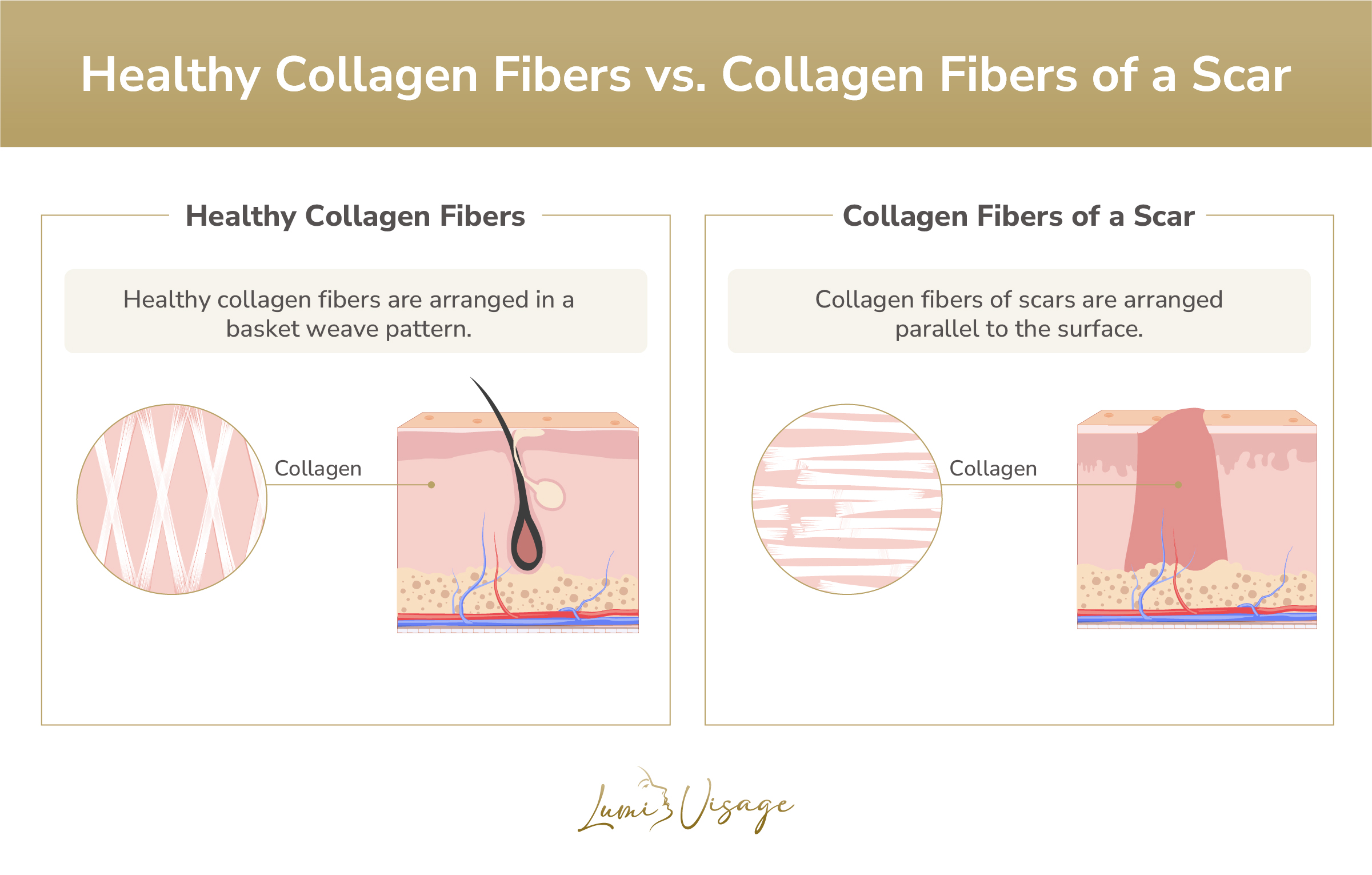
The answer is all in how the collagen organizes its repair. In normal skin, collagen forms an orderly basket-weave-type structure responsible for keeping your skin plump and taut.
When your skin is injured, however, your immune system signals that something is wrong and collagen mobilizes in a disorganized fashion trying to patch your skin up in a hurry.
This results in a parallel structure in a single direction that lacks the elasticity, strength, and integrity of normal skin. For hypertrophic and keloid scars, the effect is more pronounced.
Red Light Therapy for Surgical Scars
Does It Help?
Yes, research suggests that red light therapy can reduce the appearance of surgical scars.
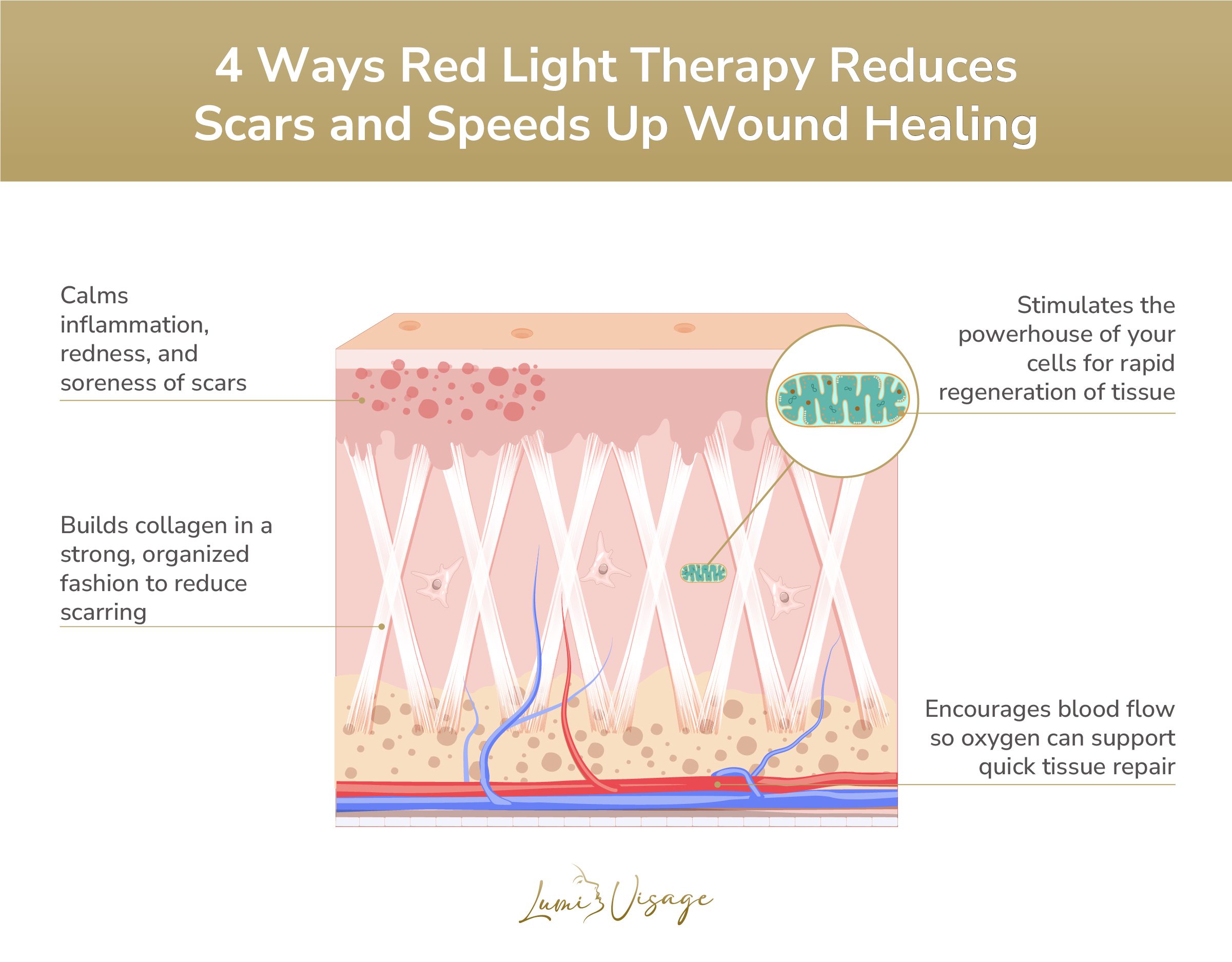
This treatment works by encouraging collagen and elastin production, which strengthens the skin’s structure and can help surgical scars blend better with the surrounding tissue.
How It Works
When red light penetrates the skin, it stimulates the mitochondria in cells to produce more adenosine triphosphate (ATP), which powers cell functions, including repair and regeneration.
Increased ATP boosts collagen production in the dermis, the skin’s thickest layer.
For surgical scars, this means a better-organized collagen structure, which can smooth out the raised appearance and improve skin texture over time.
Red light therapy also supports elastin production. Elastin, another protein, gives skin flexibility, which helps scars to stretch and adapt rather than remaining stiff or raised.
What to Expect
Red light therapy can help surgical scars soften and fade, though results vary based on factors like scar age and severity. With regular sessions, you might notice a reduction in redness and firmness, allowing the scar to blend more naturally. Using red light therapy within a few weeks of surgery (with a doctor’s approval) may produce the best results, but it can also be effective on older scars.
Red Light Therapy for Acne Scars
Does It Help?
Yes, red light therapy is effective for certain types of acne scars, especially atrophic (pitted) scars. Acne scars result from inflammation and skin damage that occur when acne lesions break the skin’s surface.
Red light therapy can help improve these scars by promoting collagen production, which fills in pitted areas and reducing post-inflammatory redness.
How It Works
Red light therapy for acne scars works by encouraging skin cells to regenerate. This treatment triggers fibroblasts, the cells responsible for collagen synthesis, to work at a faster rate. Increased collagen helps fill in atrophic scars, improving the skin’s texture and smoothness.
Red light also reduces inflammation, which can be especially helpful in reducing the redness associated with acne scars.
Additionally, red light therapy’s anti-inflammatory effects can help prevent future breakouts from turning into scars by controlling inflammation early in the healing process.
What to Expect
Many people see improvements in acne scars after one to three months of consistent use, though this can vary depending on scar severity.
Pitted acne scars may appear shallower, and overall skin texture can become smoother with regular red light therapy sessions.
Red Light Therapy for Stretch Marks
Does It Help?
Yes, red light therapy can reduce the appearance of stretch marks.
Stretch marks develop when the skin stretches rapidly, such as during pregnancy or weight gain, causing the collagen and elastin in the skin to rupture.
It helps by supporting the repair of these proteins, improving skin elasticity, and fading stretch marks.
How It Works
Stretch marks form when rapid skin stretching damages collagen and elastin fibers, creating scar-like lines on the skin.
Red light therapy stimulates the production of these proteins, encouraging the skin to repair itself.
Collagen production helps “fill in” the stretched areas, while increased elastin promotes skin resilience and flexibility, making stretch marks less visible.
Red light therapy also stimulates hyaluronic acid production, which helps the skin retain moisture. This added hydration can improve skin texture and further reduce the appearance of stretch marks.
What to Expect
Stretch marks often respond well to red light therapy, especially when the treatment is started early.
With consistent sessions, the marks can fade in color, becoming closer in tone to your surrounding skin.
Skin texture can also improve, and the lines may appear smoother and more blended. Although red light therapy won’t eliminate stretch marks, it can make them far less noticeable over time.
Scars and Uneven Skin Breaking Your Confidence?
Fade marks and smooth skin from home.
SHOP NOW – GET $100 OFF
Can Other LED Light Therapy Colors Help?
Red light therapy, while the deepest penetrating, isn’t the only color or wavelength that can help with scarring.
So when you’re using an LED light therapy mask, you can choose additional colors to address your specific skincare needs.
Blue Light
Although blue light is known for its acne-fighting benefits, it also helps with inflammation as well as wound healing.
NASA noticed that scientists researching plant growth under LED lights had faster healing wounds on their hands that were exposed to the light—they used both red as well as blue light in their research.
Yellow Light
Like red light, yellow light increases ATP production in the cells, which can help with skin regeneration and inflammation. It may help the skin heal more quickly and soothe irritation. Yellow light therapy can also reduce redness from various issues, such as rosacea.
Other Treatments to Reduce Scarring and Heal Wounds
You can reduce the look of scars and aid wound healing by combining light therapy with other treatment options, such as:
Over-the-counter medications
You can use over-the-counter topical medications to treat your scars and wounds to promote healing.
Prescription medicine
Your doctor may have specific ointments or oral medications you need to use for scars and wounds.
If you are on prescription meds, check with your doctor to make sure it can be layered with light therapy.
Injections
Steroids and other medications could be injected to manage keloid and hypertrophic scars under supervision of your dermatologist.
Frequently Asked Questions
Can red light therapy prevent scars if used on fresh wounds?
Yes, red light therapy may help minimize scar formation if used on fresh, healed wounds (not open). By boosting collagen production and reducing inflammation, it can support proper healing, helping skin recover more evenly.
How long should I continue red light therapy once I see scar improvement?
It’s best to continue red light therapy even after you start seeing results, as consistent use further supports collagen remodeling. For long-term maintenance, using the device once or twice weekly can help sustain improvements.
Can red light therapy help with discoloration in scars, like redness or hyperpigmentation?
Yes, red light therapy can improve discoloration by reducing inflammation and boosting cell turnover. This helps fade redness, hyperpigmentation, and other discolorations associated with scars over time.
Does red light therapy work on older scars, or is it only effective on newer ones?
Red light therapy can be effective on both old and new scars. While newer scars often respond more quickly, older scars can also benefit as collagen production is stimulated and skin texture gradually improves.
Conclusion
Red light therapy offers a non-invasive way to reduce scars, improve skin texture, and support healing from home.
With benefits for surgical scars, acne marks, and stretch marks, it promotes smoother, firmer skin by boosting collagen and encouraging healthy cell renewal. The Lumi Visage Face Mask combines these benefits with the convenience of seven LED color options to target your unique skincare needs. Ready to see real changes? Try our LED Face Mask today for an at-home solution to scar care and rejuvenation.