


Choosing the right light therapy shouldn’t feel like a guessing game.
Whether you’re after clearer skin, pain relief, or a boost to your routine, knowing the difference between red and blue light can make all the difference.
Each offers unique benefits, but only one might be the perfect fit for what you need.
Here’s what to know to get the most from your therapy choice.
Key Notes
- Red and blue light therapies target different skin concerns with unique penetration depths and effects.
- Red light boosts collagen and elastin, reducing wrinkles, inflammation, and scarring.
- Blue light combats acne-causing bacteria and supports faster skin healing.
- Combining red and blue light enhances acne treatment and evens out hyperpigmentation.
What’s the Difference Between Red and Blue Light Therapy?
Red and blue light correspond to different frequencies and wavelengths of light, meaning they will penetrate your skin at different depths and produce different cellular responses.
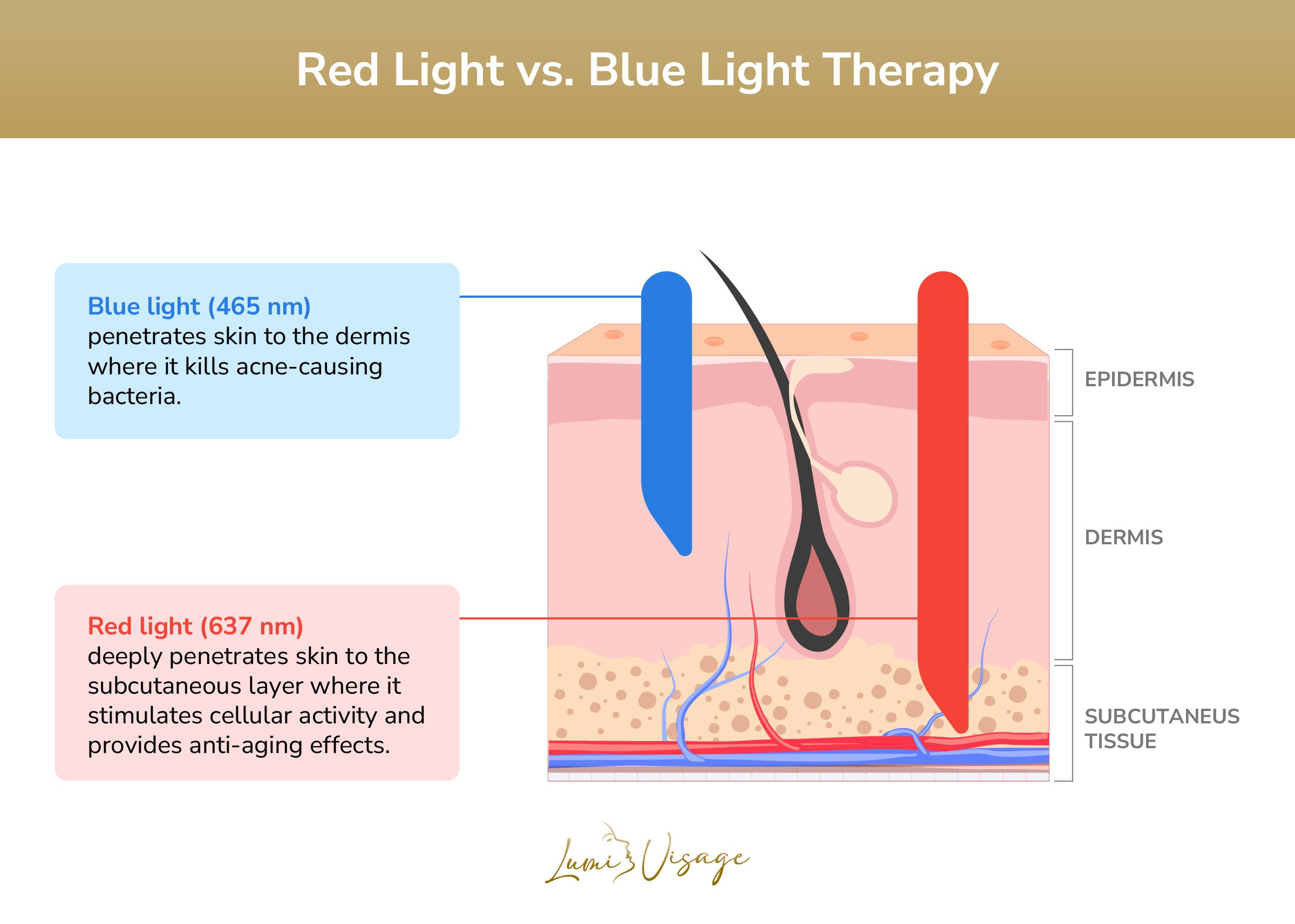
- Red light: Red light is known for its anti-aging effects, as it can penetrate deep into your skin and stimulate cellular activity, tightening up any wrinkles you might have.
- Blue light: Blue light can fight acne since it penetrates the surface of the skin and kills any bacteria lying there.
Red and blue light have different wavelengths, measured in nanometers (nm). Red light is typically 637 nm and blue light is 465 nm, although the exact wavelength will depend on the light therapy devices you’re using. The higher the wavelength, the deeper the light penetrates your skin.
Benefits of Red Light Therapy
With a wavelength of approximately 637 nm, red light penetrates throughout the dermis, the skin below the surface layer of your skin, to the subcutaneous layer, offering anti-aging effects.
Once it has reached the subcutaneous layer, red light stimulates your mitochondria and increases the production of ATP (adenosine triphosphate), giving your cells energy.
Tightens Skin and Reduces Wrinkles
With more energy in your cells, they can synthesize or increase the production of collagen proteins and increase the production of elastin and hyaluronic acid, all of which have powerful anti-aging effects.
- Collagen: Collagen is the foundation of your skin. With more collagen production, your skin structure is strengthened and keeps your skin looking tight and smooth.
- Elastin: Elastin is the protein that gives your skin its elasticity and keeps it stretchy, without sags, fine lines, or wrinkles.
- Hyaluronic acid: Hyaluronic acid keeps your skin moisturized, improving your skin texture, making sure it stays smooth and relaxed.
With these cells regenerating and improving your skin, you’ll notice a decrease in wrinkles and an increase in healthy, younger-looking skin.
Soothes Inflammation
Studies show that red light can decrease the molecular and enzyme activity that leads to inflammation.
Skin conditions such as rosacea, eczema, and psoriasis are caused by inflammation in the body and are characterized by flare-ups or redness.
Using red light therapy can stop such activity on the molecular level before you notice it, leaving you with happy skin.
Improves Circulation and Heals Wounds
Red light therapy, along with near-infrared light, increases blood flow in your skin by dilating blood vessels. With more open vessels, your blood can transport more oxygen and nutrients to your cells, which allows them to complete repair processes faster.
With your cells and tissue repairing faster, your skin will generally be more healthy and will heal from minor wounds quickly.
Reduces Scarring
If you’ve been cut or scratched deeply, the collagen fibers in your skin work to repair this wound as soon as possible.
Unfortunately, the fibers will repair in an inconsistent fashion, which leads to visible scars on your skin.
Studies have found that red light will nurture the collagen repair process into a more organized effort, which reduces the sight of scars on your skin. This includes blemishes from acne, not just scars from cuts or scratches.
Impacts Oil Production
Red light therapy has also been known to treat acne, as it can penetrate the skin deep enough to reach the sebaceous glands. These glands can sometimes overproduce sebum, a natural oil.
Your skin needs this oil to remain healthy, but too much of this oil leads to clogged pores, causing acne.
Red light reduces the gland size, which decreases the amount of sebum your body can produce. With less sebum, your skin will clear up.
Minimizes Dark Spots and Hyperpigmentation
Research has shown that red light therapy can decrease dark spots and hyperpigmentation by impacting the production of melanin, which is the pigment that gives your skin color.
First, red light targets melanocytes—the cells that produce the melanin pigments—and increases the activation of the key signaling pathway ERK (extracellular signal-regulated kinase) to reduce pigmentation.
Second, it decreases the production of tyrosinase, an enzyme necessary for melanin synthesis, so less melanin is synthesized and accumulates in your cells.
Both of these lead to a more even skin tone.

Benefits of Blue Light Therapy
Blue LED light is usually used to fight acne but has other benefits as well.
With a wavelength of approximately 465 nm, blue light can reach the dermis layer of your skin, as it cannot reach as far as red light can.
This means it can kill certain bacteria on the skin. You’ve probably heard of the negative effects of blue light, such as the light from electronic devices straining your eyes.
However, using a natural wavelength can have positive benefits for your skin.
Kills Acne
Blue light is the most common light therapy used to treat acne since it can kill the acne-causing bacteria on your skin’s surface, preventing breakouts and reducing the acne already visible on your skin.
Another study showed the efficacy of blue light in eradicating acne-causing bacteria by activating endogenous substances called porphyrins produced by the bacteria itself, which could also help in treating bacterial resistance.
Blue light decreases the production of oil within the sebaceous glands, so there’s less clogging of your pores. One clinical-strength study found that using at-home blue light LED devices decreases pimple size and redness over the course of eight weeks while also improving skin health overall.
This means that blue light can be used as an alternative to traditional acne treatments or as an additional treatment to complement existing therapies.
Helps Wounds Heal
Like red light, blue light can also help your skin repair. Blue light works to accelerate the wound-healing process and exerts a bactericidal effect to aid skin-injury repair, whether from cuts, scrapes, or acne.
Ready To Transform Your Skin With LED Light?
We deliver professional-grade light therapy for all your skincare goals.

Can You Use Red Light and Blue Light Therapy Together?
Red and blue light can be beneficial if you use them together, or as separate treatment options.
You could also use an at-home device to give yourself both red and blue light therapy.
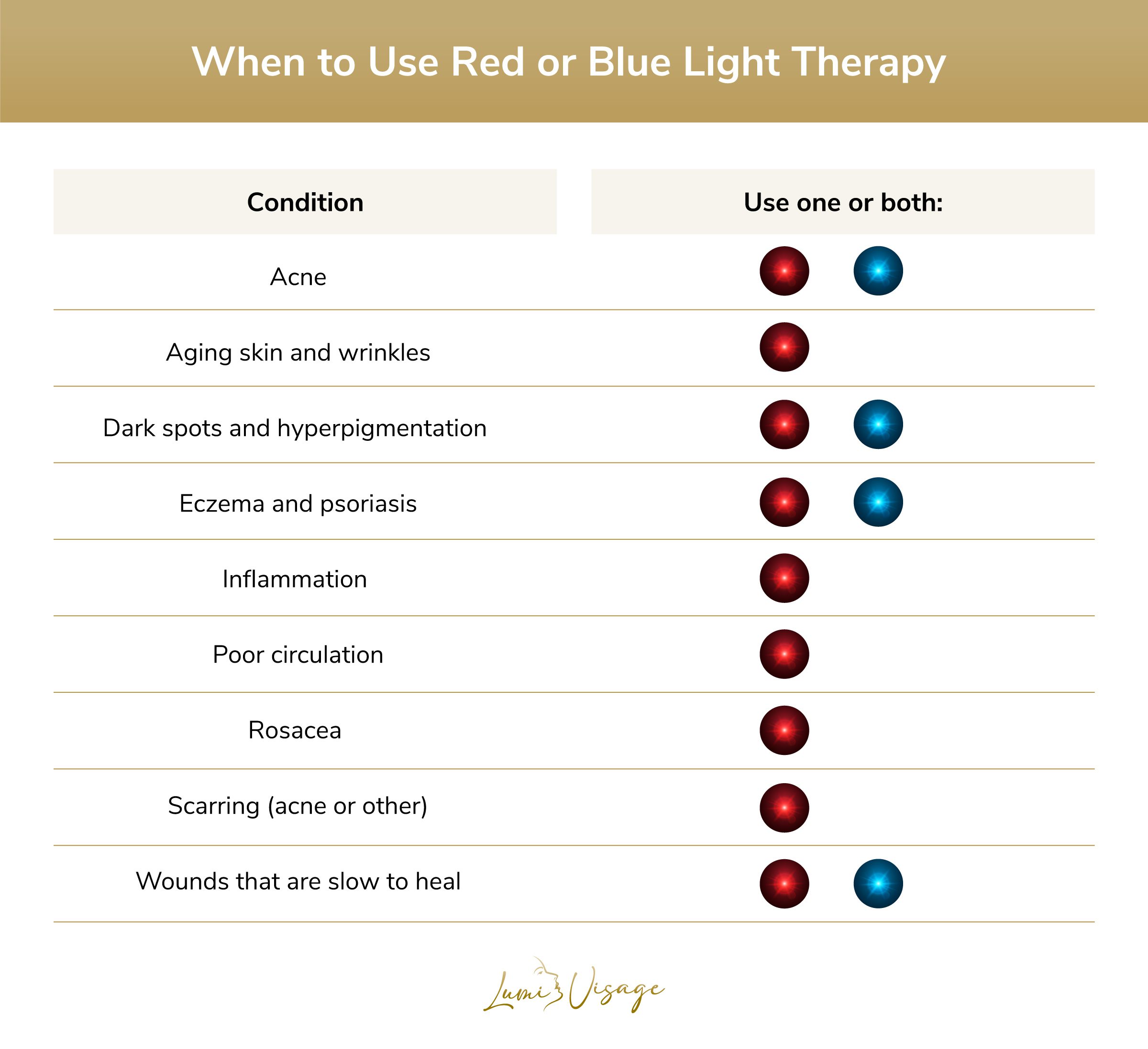
Knowing what skin concerns you want to treat can help you decide if you want to use one color or both.
If you want anti-aging effects, then using just red light would do the trick. If you primarily want to treat acne, then use only blue light.
However, there are some conditions where using both at the same time is helpful:
Acne
Blue light can kill the bacteria that cause acne, and red light can reduce inflammation and scarring.
Red light also normalizes the production of sebum in the sebaceous glands, so using both will treat the acne and continue to fight future breakouts.
Eczema
Both blue and red light can treat the symptoms of eczema before it becomes visible on your skin.
Hyperpigmentation
Treat discoloration or dark spots by using red and blue light. These lights can impact melanin production, keeping your skin tone more uniform.
Side Effects and Safety Tips
Red and blue light therapy is usually safe to use and you can easily add it to your skincare routine.
Red light therapy doesn’t have any side effects, while blue light can sometimes cause itchiness or dry skin. If for some reason you have side effects that don’t go away, talk to your doctor.
Here are some tips you can use to keep your device and skin in top condition:
Cleanse your skin before use and moisturize it after
Make sure you clean your face before using your device, clearing off any excess oils or makeup. Having dirt or extra oil on your face could block the light from penetrating your skin properly.
You should also moisturize your face after treatment so that your skin doesn’t get too dry.
Clean the device after use
Keeping your LED light therapy devices clean will help your skin stay clean too, as well as ensure the best possible treatment.
Clean with a little soap and warm water to wipe any dirt or grease away.
Don’t use some medications
If you’re using certain medications or creams like topical steroids, you should talk to your doctor before using this therapy.
If your medication lists side effects that impact your skin, like skin atrophy, you should also stop treatment.
Discuss with your doctor
If you are already having skin-related treatment with your dermatologist, talk to them to be sure that the LED therapy won’t negatively affect your current treatment plan.
Want Effortless, Safe LED Treatment At Home?
We make professional skincare simple and worry-free.
Frequently Asked Questions
Can light therapy help with seasonal depression (SAD) as well as skin issues?
Yes, specific light therapies, like bright white light therapy, are known to help with SAD. Red and blue light therapies are primarily for skin health, but red light may offer mood-boosting effects due to its influence on cellular energy.
Is there a best time of day to use red or blue light therapy?
Many prefer red light therapy in the evening, as it may help with relaxation. Blue light therapy, however, is often better in the morning or early day, as it can stimulate alertness and help regulate the circadian rhythm.
Can LED light therapy affect hair growth?
Red light therapy can stimulate hair follicles by increasing blood flow and energy at the cellular level, promoting hair growth in some cases. This is especially noted in low-level laser therapy (LLLT) devices designed for scalp use.
Are there benefits to using light therapy for pain relief?
Red and near-infrared light can penetrate deeper tissue layers, making them helpful in reducing joint and muscle pain, especially for those with conditions like arthritis or muscle soreness.
Is LED light therapy safe for all skin types and tones?
Generally, LED light therapy is safe for all skin types and tones, with low risk of hyperpigmentation or scarring. However, individuals with photosensitivity or specific skin disorders should consult a dermatologist first.
Conclusion
Red and blue light therapy each bring unique benefits for a range of skin concerns, from acne to aging.
Red light reaches deeper layers to support collagen production, smooth wrinkles, and reduce inflammation, while blue light targets the skin’s surface to help control acne-causing bacteria and manage breakouts.
Whether used separately or together, these therapies offer a versatile approach for healthier, clearer skin.
For convenient, effective treatments right at home, consider the Lumi Visage LED Face Mask, designed with both red and blue light settings. It’s time for an easy skincare upgrade that brings spa-quality results right to your home.