


Wondering if red light therapy can actually tighten loose skin?
With the right approach, this non-invasive treatment can firm up sagging areas, reduce wrinkles, and even boost your skin’s elasticity—all without pricey procedures.
We’ll dispel common myths, explain how red light therapy works for skin tightening, and share practical tips for achieving lasting results.
Key Notes
- Red light therapy stimulates collagen and elastin, helping skin look firmer and more youthful.
- It boosts moisture by increasing hyaluronic acid, reducing sagging and enhancing skin plumpness.
- Results can appear within weeks, with improvements in tone, elasticity, and smoothness.
What Causes Loose Skin?
Aging causes a reduction in collagen, elastin, and hyaluronic acid in your skin, which directly impacts the strength and elasticity of your skin:
Collagen
In normal skin, collagen (a protein) forms an orderly basket-weave type structure responsible for keeping your skin plump and taut.
Elastin
Another protein, elastin gives your skin its elasticity, so it can stretch and go back to its original shape, like a rubber band.
Hyaluronic Acid
A primary factor in skin moisture, hyaluronic acid is a gooey substance your body produces naturally that supports elasticity in your skin.
This molecule helps your skin retain moisture by binding to water in your cells and adding to the plump look of your skin.
.
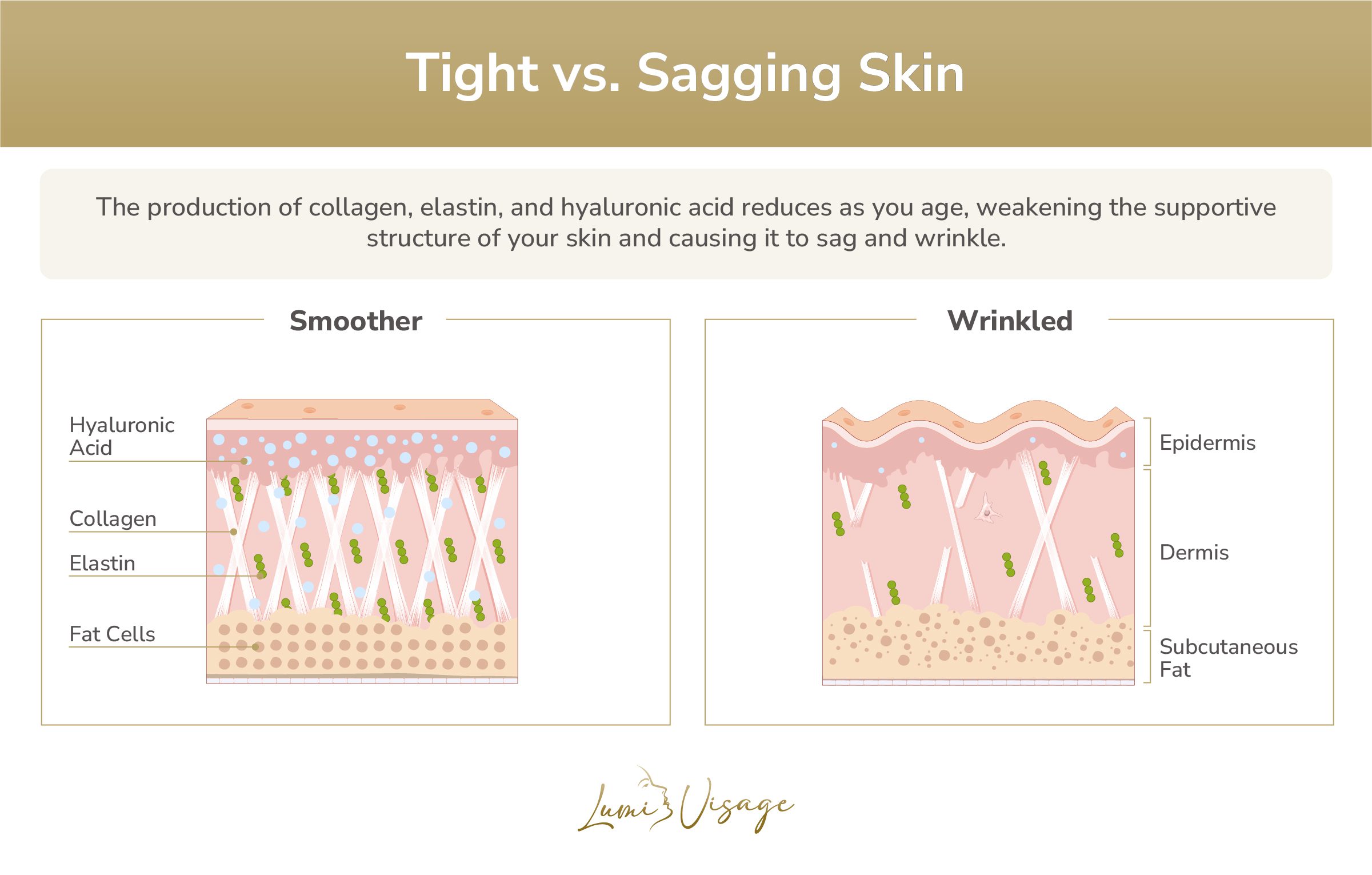
Because these sources contribute to your skin’s structure and elasticity, when they slow production, you’ll notice loose skin.
Gravity heightens the effect by pulling your skin down when it becomes less elastic, causing wrinkles, jowls, or the turkey-neck effect to appear.
Several factors—from age to lifestyle choices to environmental conditions—result in the reduction of collagen, elastin, and hyaluronic acid, which leads to the appearance of loose, wrinkled skin.
Here is a detailed look at the factors that cause loose, sagging skin:
- Age: The foremost factor in loose skin is age and it impacts all three substances.
- Obesity and weight loss: Rapidly losing a large amount of weight (over 35 pounds) can be disruptive to your production of collagen and elastin. Your skin doesn’t have time to rebound/recoil to compensate for the weight loss.
- Sun exposure: Tanning and general exposure to the sun can damage your skin structure, including collagen and elastin, and the production of moisture-retaining hyaluronic acid.
- Smoking: Smoking is toxic to skin cells. It decreases collagen production and damages collagen and elastin, leading to wrinkles.
- Diets high in sugar and refined carbohydrates: Sugar attaches to proteins to form molecules that cause collagen to become dry, weak, and brittle.
- Air pollutants: Pollutants in the air impact the production of collagen and elastin, which can also lead to loose, wrinkled skin.
How Red Light Reduces the Appearance of Saggy Skin and Wrinkles
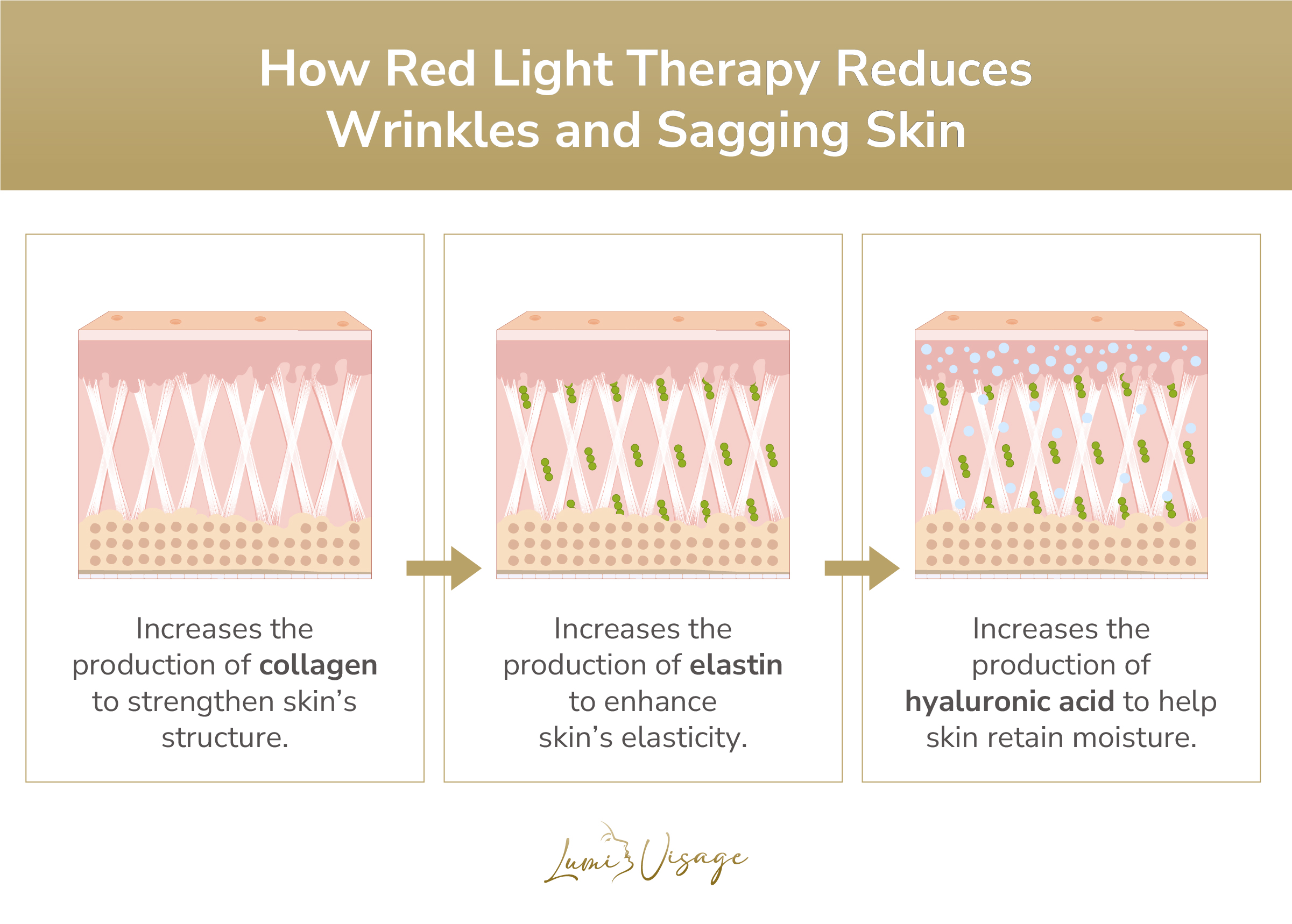
Strengthens skin’s structure by stimulating collagen production
Several factors, including age, slow down collagen production, which weakens the underlying structure of your skin and causes it to appear saggy.
Red light therapy stimulates the powerhouse of the cell, the mitochondria, encouraging the production of ATP (adenosine triphosphate), which in turn stimulates the production of collagen in your skin’s thickest layer, the dermis.
Increased collagen production can reduce the look of sagging, loose skin.
A study in 2019 showed that skin exposed to red light (640 nm) exhibited an increase in collagen production. The same result was found during a study in 2021. This increased collagen production leads to tighter, firmer, and smoother skin.
Increases skin’s elasticity through elastin production
Elastin gives your skin the ability to stretch and recoil, but elastin production slows with age and certain lifestyle or environmental factors.
Red light therapy treatments can increase the production of this protein, encouraging the production of more elastin fibers to help your skin snap back into shape when stretched.
A study published in 2021 saw red light (640 nm) stimulated elastin fiber production.
Plumps up skin with increased production of hyaluronic acid
Hyaluronic acid helps plump up skin by binding to water, keeping your skin firm. However, the levels of production slow with age and other factors, leading to loose skin.
Red light therapy can help encourage cells to produce hyaluronic acid so that your skin retains more moisture, reducing the look of loose skin and wrinkles.
A study in 2019 noted that an increase in several biomarkers of anti-aging, including the production of hyaluronic acid, were the result of red light (640 nm) therapy.
Loose, Sagging Skin That No Cream Or Serum Can Fix?
Our red light therapy mask brings firming power right to your home.

Tightening Skin After Weight Loss with Red Light Therapy
Weight loss—especially rapid weight loss—can often leave behind loose, sagging skin that doesn’t bounce back easily.
This is due to the sudden reduction in body mass that doesn’t allow collagen and elastin production to keep up, leaving skin without the elasticity needed to tighten.
Red light therapy, however, can help stimulate collagen, elastin, and hyaluronic acid production, which are crucial for firmer, more resilient skin.
By using red light therapy consistently, those experiencing post-weight-loss skin laxity may see gradual improvements as these proteins rebuild, promoting a tighter, more toned appearance.
Combined with other skin-strengthening habits, such as a balanced diet and regular hydration, red light therapy can support a smoother, more contoured look after weight loss.
Lifestyle Changes to Help Tighten Your Skin
You can enhance the look of your skin by combining LED light therapy with other lifestyle choices that can help improve skin health, including:
Eat healthy foods
Many foods can help boost firming agents in your skin such as elastin and collagen.
These include foods you already know to be a good source of nutrition such as leafy greens and fruits, such as citrus and berries, but nuts as well as fatty fish can also boost skin health.
Wear sunscreen
Damage from UV light affects all three skin-tightening agents, so make sure to protect yourself from the sun.
Quit smoking
In addition to decreasing collagen production, smoking can restrict blood flow and slow skin repair.
Stopping smoking gives your skin a better chance to stay strong and recover from damage.
How Long Does Light Therapy Take to Work?
If using an at-home device, make sure to read your product guidelines. Many masks recommend 10-minute sessions three to four times per week.
How quickly you see results depends on your condition. You could see changes as quickly as one day or one to three months. Just use the product consistently for best results.
Red Light Therapy Safety Tips
When using your LED device for skin tightening, follow the tips below for safe operation and best results:
Consult with your doctor
Some medications, injectables, and topical treatments may make your skin more sensitive to light or have other side effects, so see whether you can add light therapy to your current skincare regimen your dermatologist has ordered.
Generally, LED light therapy can be used in conjunction with injectables and can even reduce the swelling and other effects you may experience in the downtime after treatments.
However, if you experience any skin irritation or discomfort, stop using the device and consult with your healthcare provider.
Cleanse your skin before use
Cleansing your skin of any skincare products or medical creams before use prevents irritation and helps the light penetrate your skin more easily.
Clean the device after use
Wipe the device with a little soap and water to cut down on any bacteria that may accumulate from regular use.
Moisturize your skin
Using a red light therapy device may make your skin feel dry at first, so it’s recommended to moisturize your skin after use.
Use eye protection
The Lumi Visage LED face mask has built-in eye protection goggles to safeguard your eyes during use and is FDA-cleared, so you can trust that it’s completely safe to use.
Frequently Asked Questions
Can red light therapy help with loose skin on areas other than the face?
Yes, red light therapy can be used on various parts of the body, including the neck, arms, and abdomen. Many people use it to target loose skin from weight loss or to firm up areas affected by aging.
How does red light therapy compare to radiofrequency (RF) for skin tightening?
Both stimulate collagen, but red light therapy is gentler and non-invasive, while RF uses heat to tighten skin. RF may give faster results but can be uncomfortable, whereas red light is ideal for ongoing, pain-free treatment with no downtime.
Is red light therapy safe to use around the eyes to reduce crow’s feet?
Yes, it’s safe, but eye protection is crucial. Many devices, like the Lumivisage LED Mask, come with built-in eye shields. Red light can help reduce fine lines around the eyes by stimulating collagen in this delicate area.
Will I lose skin-tightening results if I stop using red light therapy?
Results are best maintained with continued use. Collagen and elastin production may slow if treatments stop, so for lasting skin firmness, regular sessions are recommended.
Conclusion
Red light therapy is a powerful way to support skin firmness, smooth texture, and rejuvenation.
By boosting collagen, elastin, and hyaluronic acid, it helps reduce sagging and creates a fuller, more youthful appearance.
If you’re ready to see real results from the comfort of home, our LED Face Mask makes it easy. With seven color options for targeted benefits, this mask is designed to address loose skin, even tone, and more.
Get started today and discover firmer, healthier skin.