

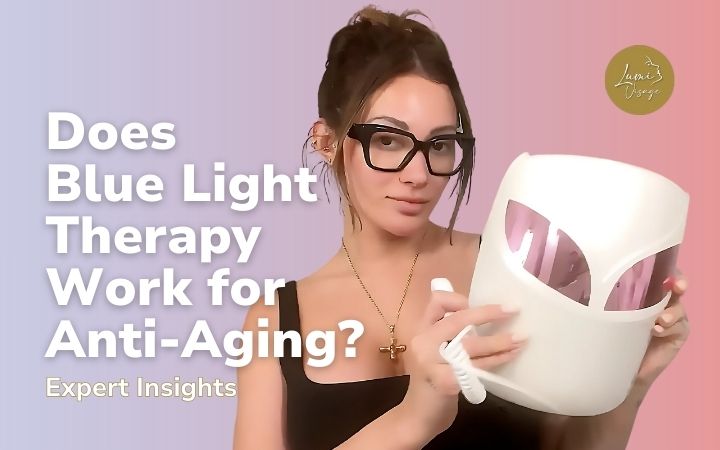

Blue light therapy is often hailed for clearing up acne, but can it also help with wrinkles and aging skin?
We know the battle against aging is ongoing, and you’re probably looking for answers that work.
So, let’s walk you through it: is blue light worth adding to your anti-aging routine, or should you save it for acne treatments?
Here’s what you need to know.
Key Notes
- Blue light therapy is great for acne but not ideal for reducing wrinkles as it doesn’t stimulate collagen, essential for youthful skin.
- Red light therapy is more effective for anti-aging benefits.
- Overexposure to blue light may accelerate skin aging due to oxidative stress risks.
Can Blue Light Therapy Help with Aging Skin?
When you think about aging, wrinkles, sagging skin, and fine lines are usually the top concerns. These are mostly caused by a decrease in collagen, the protein that keeps our skin firm and smooth.
Traditional anti-aging treatments, like red light therapy, work by penetrating deeper into the skin to stimulate collagen production.
Blue light, on the other hand, doesn’t reach these deeper layers.
Blue Light vs. Red Light: Which Is Better for Anti-Aging?
If your main focus is on keeping your skin looking youthful, it’s worth comparing blue light to red light therapy.
Red light is the more popular choice for anti-aging treatments. The reason is simple: red light penetrates deeper into the skin, reaching the layers where collagen is produced. This helps to reduce wrinkles, firm up sagging skin, and improve overall skin texture.
Red Light: The Collagen Booster
Red light therapy operates at wavelengths between 630 and 660 nanometers, meaning it can get deep enough to affect the layers of your skin that matter when it comes to anti-aging.
It stimulates collagen production, which can lead to a reduction in fine lines, wrinkles, and overall skin tightening. This makes red light therapy an obvious choice for people looking to maintain or improve their skin’s elasticity and appearance.
Blue Light: Great for Surface-Level Treatments
While blue light therapy is more limited in terms of anti-aging, it still shines when it comes to treating surface issues like acne and inflammation.
Some people opt to use both blue and red light therapies together to get the benefits of each: red light to boost collagen production and blue light to keep acne and inflammation in check.
Think of it as a multi-faceted approach to better skin health, tackling problems at different levels.

Side Effects and Risks: What You Should Know
Although blue light therapy is considered safe for most people, it’s not without risks.
If you have sensitive skin, blue light can cause some irritation, dryness, or redness. These effects usually subside within a few days, but they’re something to keep in mind, especially if you have a history of skin sensitivity.
Oxidative Stress: A Risk for Aging
Interestingly, overexposure to blue light has been linked to oxidative stress, which could actually accelerate the aging process.
Blue light generates free radicals, unstable molecules that can damage skin cells and speed up aging.
This is why dermatologists recommend using blue light sparingly and following treatment guidelines closely. Too much blue light exposure—whether from therapy devices or from screens—could do more harm than good in the long run.
Sun Sensitivity
If you’re using blue light therapy, particularly in a medical setting to treat conditions like actinic keratosis, be aware that your skin might become more sensitive to sunlight afterward.
This increased sun sensitivity could last for a few days, so you’ll need to be diligent about sun protection. Using a good sunscreen and avoiding prolonged sun exposure is key to preventing further skin damage.
What The Experts Recommend
Dermatologists generally agree that while blue light can improve certain aspects of your skin’s health—like reducing acne or minimizing dark spots—it’s not the most effective solution for fighting wrinkles.
If your main goal is to reduce signs of aging, you’ll get better results from treatments like red light therapy, which is proven to stimulate collagen and improve skin elasticity.
Combining Treatments for the Best Results
That said, blue light therapy can still be a helpful addition to your skincare routine, especially if you’re dealing with acne or oiliness.
Some people find success using both red and blue light therapies in tandem.
Red light can work on the deeper layers of your skin to boost collagen production, while blue light can manage surface-level issues like breakouts and inflammation. Together, these treatments can lead to clearer, healthier, and more youthful-looking skin.
Frequently Asked Questions
How often should I use light therapy for anti-aging benefits?
Use red light therapy 3-5 times per week for 10-20 minutes per session to see optimal anti-aging results.
Can I combine light therapy with other anti-aging treatments?
Absolutely. Red light therapy can complement other anti-aging treatments like serums or moisturizers. Always apply skincare products after your light therapy session.
Can blue light therapy help with rosacea?
Blue light therapy may reduce redness and inflammation associated with rosacea, but it isn’t a primary treatment. It’s important to consult a dermatologist to see if it’s right for you.
How long does it take to see results from blue light therapy?
It usually takes several sessions to see noticeable improvements, with many people seeing results after 4-8 weeks of consistent treatment.
Is blue light therapy safe for all skin tones?
Yes, blue light therapy is generally safe for all skin tones. However, those with darker skin should use it cautiously to avoid hyperpigmentation.
Conclusion
Blue light therapy can be a useful tool for treating acne and improving skin clarity, but its anti-aging effects are limited. It’s not designed to target wrinkles or boost collagen, which are essential for youthful skin.
For more significant anti-aging results, red light therapy remains the better choice.
However, blue light therapy may complement other treatments, especially if you struggle with breakouts or inflammation.
Ready to boost your skincare routine? Get our 7-Color LED face mask today and enjoy professional-level treatment at home with blue and red light therapy.