

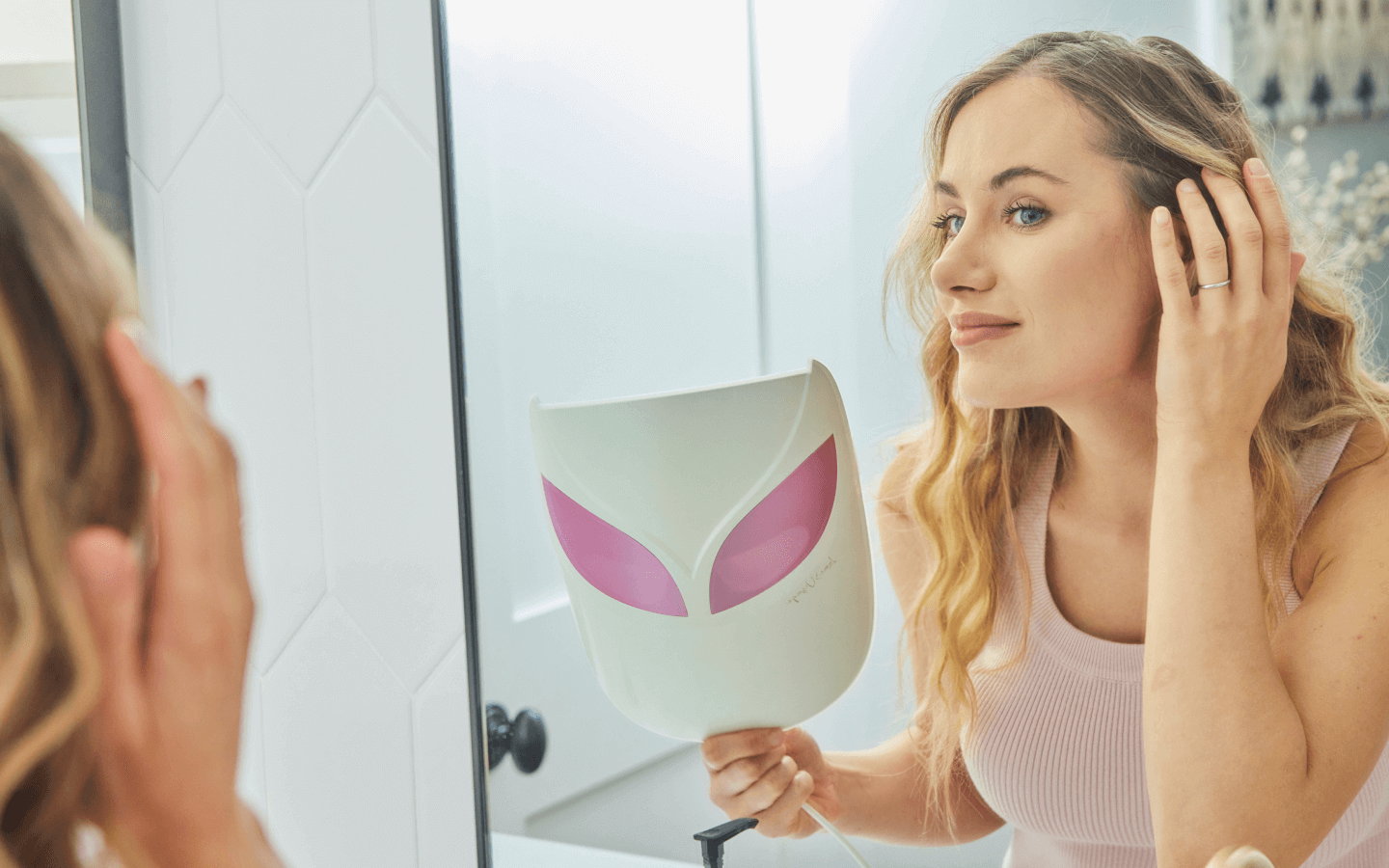

If you’ve noticed discoloration or dark spots, like age spots or liver spots, melasma, and even acne scars, you may be dealing with hyperpigmentation, and red light therapy can help.
Hyperpigmentation can show up for a variety of reasons including hormonal changes, skin trauma, and sun damage. While these spots are painless and usually harmless, they might make you feel self-conscious about your skin.
A form of LED (light-emitting diode) therapy, red light therapy offers the deepest penetration of any wavelength on the visible light spectrum, helping to inhibit melanin production, stimulate collagen and cell regeneration, and calm inflammation, all of which can help lighten hyperpigmentation.
In this post, we go over how red light therapy works to treat hyperpigmentation, banishing dark spots to give you the clear skin that helps you get your confidence back.
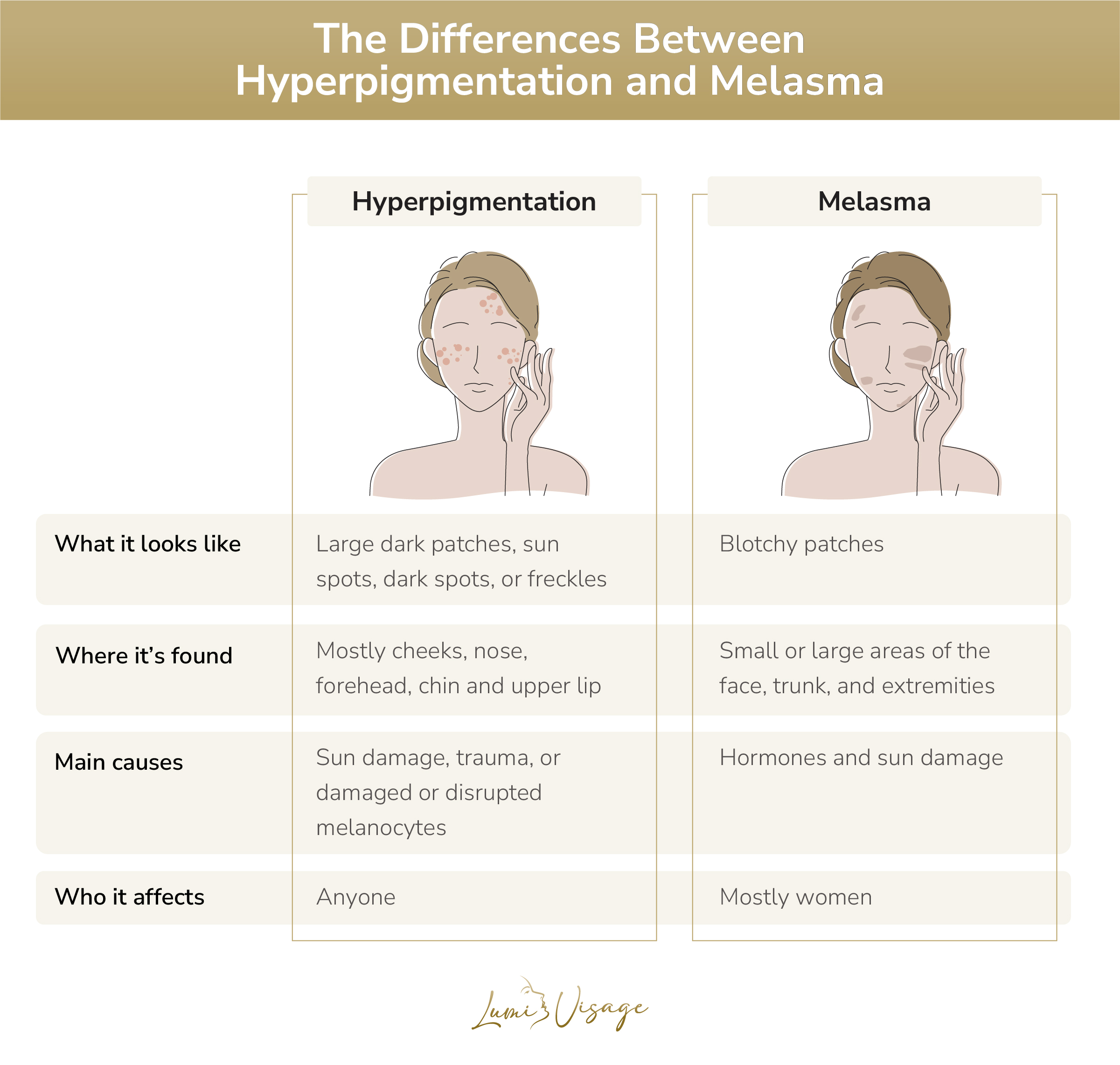
Table of Contents
- What Causes Hyperpigmentation and Dark Spots?
- How Red Light Therapy Lightens Hyperpigmentation & Dark Spots
- Can Other LED Light Therapy Colors Help?
- Other Treatments for Hyperpigmentation
- How Long Does Light Therapy Take to Work?
- Red Light Therapy Safety Tips
- Try LED Light Therapy at Home
What Causes Hyperpigmentation and Dark Spots?
Melanin is the natural pigment found in our bodies that gives our skin, hair, and eyes their color.
It also protects our skin from the sun. Tanning is actually the result of melanin acting as a barrier to UV radiation, whether artificial from tanning beds or from direct sun exposure. It absorbs the sun’s UVA and UVB light, and safely redistributes it to the upper layers of the skin, protecting your skin cells’ DNA from damage.
Melanocytes, the cells responsible for producing melanin, can increase their melanin production when stimulated by UV light. Excessive melanin production, triggered by prolonged or intense UV exposure, may result in hyperpigmentation.
Melanocytes make melanin in a multi-stage chemical process called melanogenesis. While there are many functions to this process, understanding the two following key players helps you understand how to best target your treatment:
- The role of tyrosinase: The cells produce the protein tyrosinase, a key enzyme in melanin synthesis.
- The role of melanosomes: Once it’s processed, it gets sent to melanosomes, cellular organelles that synthesize and store your melanin.
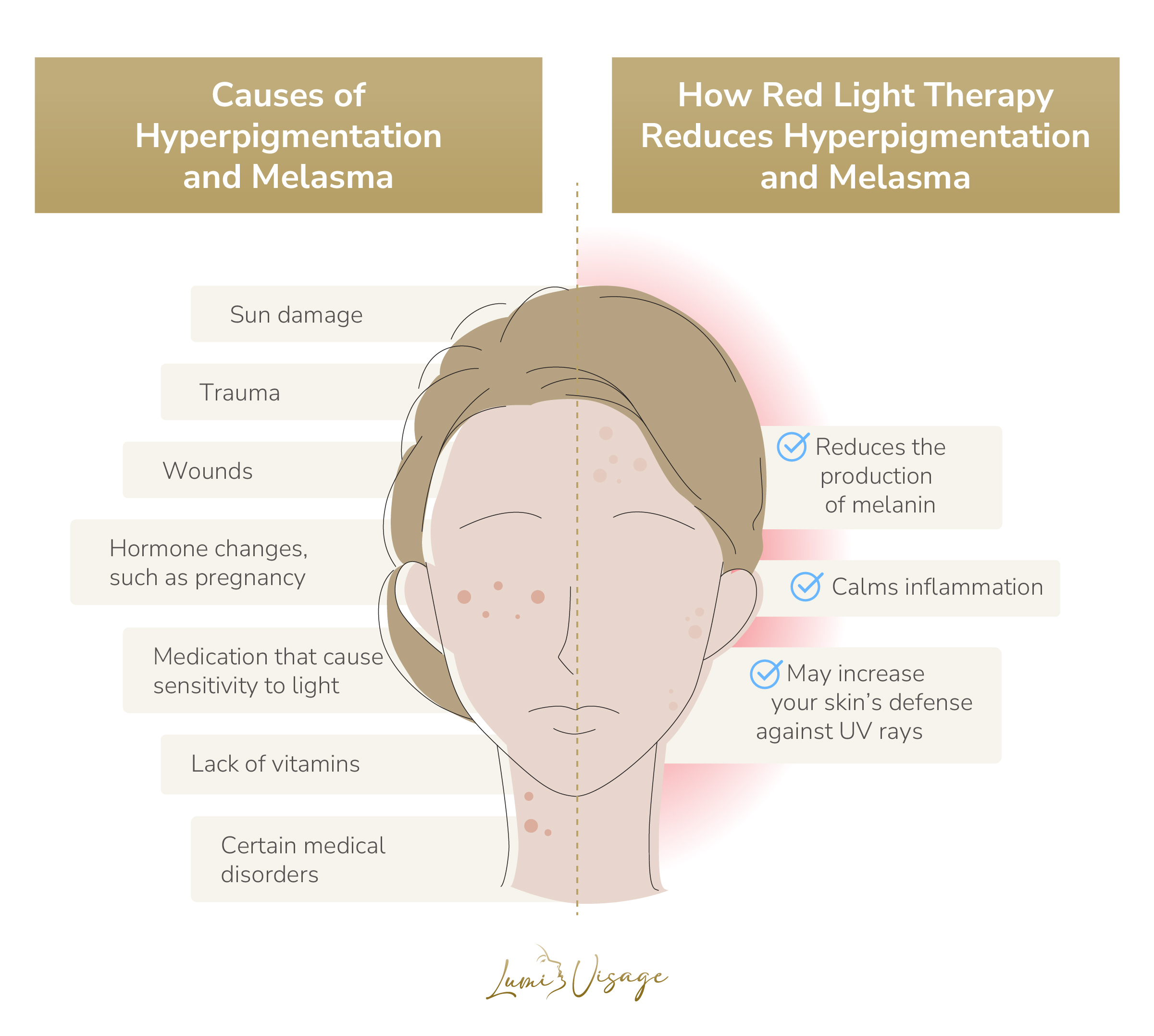
Many factors can damage your cells or disrupt and overactivate the process, leading to hyperpigmentation and dark spots. Some common causes include:
- Sun exposure
- Skin injuries, trauma, or wounds
- Hormonal changes, like pregnancy
- Medications that cause photosensitivity
- Vitamin deficiencies
- Certain medical conditions
Different causes lead to different types of hyperpigmentation. For example, melasma, brown patches that typically appear on the face, is usually caused by hormonal issues and sun damage, and mainly affects women. Whereas, post-inflammatory hyperpigmentation (PIH) can occur after a skin injury or wound.
How Red Light Therapy Lightens Hyperpigmentation & Dark Spots
Red light therapy, also referred to as low-level light therapy (LLLT), can help treat several different skin conditions, including hyperpigmentation. These next sections explain how light therapy can help restore your even complexion.
Helps reduce the production of melanin
Regardless of the specific cause, hyperpigmentation results from the overproduction of melanin. Red light therapy can penetrate past the epidermis and dermis to the subcutaneous layer of skin, allowing it to reach and inhibit those overproducing cells.
Red light has been shown to have the following impacts on melanin production:
- Lowers melanocytes: Studies show that red light both lowers the number of melanocytes overproducing melanin, as well as inhibits melanin production on the whole.
- Inhibits tyrosinase: Since tyrosinase is a key factor in melanin production, many treatments for hyperpigmentation try to target it. Red light (at 660 nm) has been shown to inhibit tyrosinase production in addition to inhibiting melanin synthesis.
- Decreases overall melanin production: Studies also show that red light can increase the activation of ERK, or extracellular signal-regulated kinase, a key signaling pathway in melanocytes. Activating this pathway can actually decrease melanin production.
Calms inflammation associated with some types of hyperpigmentation
When you have a wound, your immune system responds by sending out inflammatory mediators to help you heal. While this is a natural immune response, a skin injury can also cause overproduction of melanin, which is post-inflammatory hyperpigmentation.
Inflammatory mediators are key in tissue repair. But if they trigger increased activity in melanocytes, this melanin overproduction can leave you with pigmented spots after a wound or injury to your skin heals.
By increasing blood flow and promoting circulation, red light can calm inflammation and reduce redness and swelling. It also reaches the mitochondria, the powerhouse of your cells, to increase the production of ATP (adenosine triphosphate), which modulates cell physiology and recovery.
May increase your skin’s defense against UV rays
One of the biggest causes of hyperpigmentation is sun damage. In addition to helping fade existing sun damage and sun spots, light therapy may even help condition your skin against further sun damage.
In one study, participants who had red light therapy prior to UV exposure noticed they had better protection against sunburn-causing UVB rays. Red light therapy was about as effective as an SPF 15 sunscreen, showing its promise as both a preventative measure as well as a treatment for sun damage.
Can Other LED Light Therapy Colors Help?
While red light therapy has some impressive benefits, it isn’t the only color or wavelength that can help with hyperpigmentation. Some at-home LED devices, like the Lumivisage LED Face Mask, come with a wide range of wavelengths, so you can experience skin rejuvenation for a range of skin concerns.
Yellow Light
Yellow light was shown to be effective in inhibiting pigmentation by inhibiting the activity of an enzyme (tyrosinase) needed to form skin pigment (melanin). Yellow light was also shown to decrease melanin-containing bodies and even decrease the whole process of melanin formation, storage, and transport.
Other Treatments for Hyperpigmentation
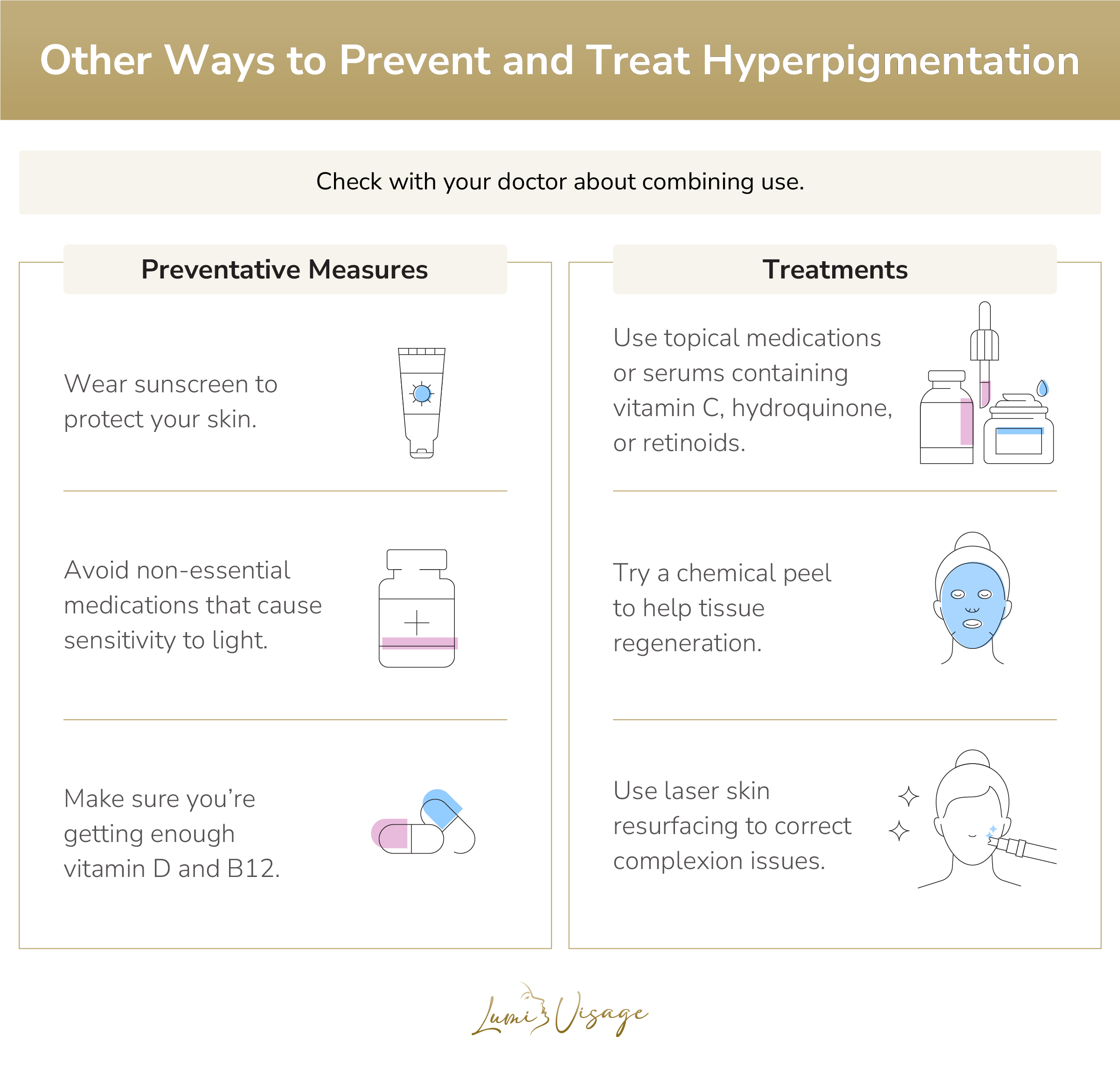
Prevention is crucial to treating hyperpigmentation, especially if you’ve already developed some differences in your skin tone and pigmentation. Here are some tips for preventing dark spots from developing or getting worse:
- Wear sunscreen. Remember, sun damage is one of the leading causes of hyperpigmentation. Wearing SPF while you’re in the sun keeps your skin from getting overexposed.
- Stop taking non-essential medications that make you photosensitive. Common medications, like ibuprofen, naproxen, and some antibiotics, can make your skin more sensitive to light. Consult this list to see if anything you’re taking might cause photosensitivity. While not everyone who takes these medicines experiences these side effects, it’s still worth considering if you’re noticing an uptick in dark spots.
- Make sure you’re getting enough vitamins. If you’re lacking in key vitamins like vitamin D or vitamin B12, that might be making your hyperpigmentation worse.
Red light therapy is a great way to treat hyperpigmentation, but it doesn’t have to be the only thing you try. Combining it with other treatments can help you get the best results. Here are some other treatments to try:
- Topical medications or serums containing vitamin C, hydroquinone, or retinoids, such as tretinoin. These products might cause photosensitivity, so consult with a doctor or your dermatologist to make sure they’re safe to use with light therapy.
- Chemical peels. Using light therapy after a chemical peel can help tissue regenerate and reduce inflammation.
- Laser skin resurfacing. Laser treatments are a great tool for correcting complexion issues.
How Long Does Light Therapy Take to Work?
As with any other part of your skincare routine, consistency is key. If you’re using an at-home device, check your product guidelines for specific instructions on how to use it. Most LED masks recommend treating in 10-minute sessions three to four times a week.
Skin health and skin types vary. No one’s skin is exactly the same, so your results will depend on what kind of hyperpigmentation you have, how often you use your mask, and how your skin responds. However, most users typically see a difference in one to three months of consistent therapy.
Red Light Therapy Safety Tips
Red light therapy is a painless, non-invasive treatment and generally regarded as safe. But it’s still important to make sure you’re using your device the way it’s supposed to be used.
To help you achieve the best results, here are some tips for using your device safely:
- Consult with your doctor. You should check in with your doctor if:
-
- You experience any skin irritation or discomfort. Stop using the device and ask your doctor about these side effects, or any changes in your skin, before resuming use.
- Your doctor has already given you topical medication, whether OTC or not, or you’re undergoing current or recent skincare treatment. Check to see if you can safely add light therapy into your treatment regimen. Some medications and treatments may make your skin more sensitive to light or have other side effects, so it’s important to get the go-ahead from your doctor.
-
- Cleanse your skin before use. Removing any skincare products, medical creams, cosmetics, or dirt and oil from your face before using your device ensures there’s nothing blocking the light from penetrating your skin. It also reduces the chances of irritation.
- Clean the device after use. Every time the device comes in contact with your face, there’s some residue and bacteria left behind. Wiping the device with a little soap and water helps prevent residue build-up that could irritate your skin or cause breakouts.
- Moisturize your skin. Using a red light therapy device may make your skin feel dry at first, so it’s important to moisturize after each session.
- Protect your eyes. Make sure you wear some kind of eye protection during red light therapy to protect your eyes from damage. The Lumivisage LED Face Mask has built-in eye protection goggles to protect your eyes during use, and it’s FDA-cleared, so you can trust it’s completely safe.
Try LED Light Therapy at Home
Dealing with dark spots is never fun, especially when they seem to show up out of nowhere. But, with time and consistency, red light therapy can reduce these unsightly marks, brightening your skin and evening its color. In just 10 minutes a day, three to four times a week, our LED Face Mask can help you uncover your beautiful, even skin, all from the comfort of your home.
References
Advances in Dermatology and Venereology. “Light-emitting Diodes at 830 and 850 nm Inhibit Melanin Synthesis In vitro.” https://www.medicaljournals.se/acta/content/html/10.2340/00015555-1319. Date accessed: October 12, 2023.
Photodermatology, Photoimmunology and Photomedicine. “Inhibitory effect of 660-nm LED on melanin synthesis in in vitro and in vivo.” https://pubmed.ncbi.nlm.nih.gov/27696509/. Date accessed: October 12, 2023.
The Korean Journal of Physiology & Pharmacology. “ERK Activation by Fucoidan Leads to Inhibition of Melanogenesis in Mel-Ab Cells.” https://www.ncbi.nlm.nih.gov/pmc/articles/PMC4297759/. Date accessed: October 12, 2023.
AIMS Biophysics. “Mechanisms and applications of the anti-inflammatory effects of photobiomodulation.”
https://www.ncbi.nlm.nih.gov/pmc/articles/PMC5523874/. Date accessed: November 20, 2023.
Free Radical Biology and Medicine. “Red/Near Infrared Light Stimulates Release of an Endothelium Dependent Vasodilator and Rescues Vascular Dysfunction in a Diabetes Model.” https://www.ncbi.nlm.nih.gov/pmc/articles/PMC5699925/. Date accessed: October 12, 2023.
Photomedicine and Laser Surgery. “Low-Intensity Light Therapy: Exploring the Role of Redox Mechanisms.” https://www.ncbi.nlm.nih.gov/pmc/articles/PMC2996814/. Date accessed: October 12, 2023.
Lasers in Surgery and Medicine. “LED photoprevention: reduced MED response following multiple LED exposures.” https://pubmed.ncbi.nlm.nih.gov/18306161/. Date accessed: November 20, 2023.
Journal of American Academy of Dermatology. “Low-level red and infrared light increases expression of collagen, elastin, and hyaluronic acid in skin.” https://www.jaad.org/article/S0190-9622%2819%2933160-3/fulltext. Date accessed: October 12, 2023.
Seminars in Cutaneous Medicine and Surgery. “Low-level laser (light) therapy (LLLT) in skin: stimulating, healing, restoring.” https://pubmed.ncbi.nlm.nih.gov/24049929/. Date accessed: October 12, 2023.
The Journal of Clinical and Aesthetic Dermatology. “Light-emitting Diodes.” https://www.ncbi.nlm.nih.gov/pmc/articles/PMC4479368/. Date accessed: October 12, 2023.
Journal of Lasers in Medical Science. “Impact of Blue Light Therapy on Wound Healing in Preclinical and Clinical Subjects: A Systematic Review.” https://www.ncbi.nlm.nih.gov/pmc/articles/PMC10082909/. Date accessed: October 12, 2023.
Photochemistry and Photobiology. “Role of Visible Light on Skin Melanocytes: A Systematic Review.” https://onlinelibrary.wiley.com/doi/full/10.1111/php.13454. Date accessed: October 12, 2023.
Journal of Dermatological Science. “Light-emitting diode 585nm photomodulation inhibiting melanin synthesis and inducing autophagy in human melanocytes.” https://pubmed.ncbi.nlm.nih.gov/29065997/. Date accessed: October 12, 2023.
Integrative and Comparative Biology. “Melanosome Biogenesis in the Pigmentation of Mammalian Skin.” https://www.ncbi.nlm.nih.gov/pmc/articles/PMC8516112/. Date accessed: October 12, 2023.
Wisconsin Department of Health Services. “Medications and other Agents that Increase Sensitivity to Light.” https://www.dhs.wisconsin.gov/radiation/medications.htm. Date accessed: October 12, 2023.