

Eczema and psoriasis are two common skin conditions with different causes but similar symptoms. Both are considered inflammatory skin conditions that can get better or worse. When worse, they both may cause your skin to redden, and psoriasis may even show itself with thick, scaly plaques on your skin. Both conditions are concerning because they impact your skin’s appearance and may cause itching and discomfort.
Luckily, red light therapy (RLT) can help treat both. Red light therapy, a type of LED light therapy, uses wavelengths of both visible red light as well as near-infrared light to penetrate the skin at the deepest depth light therapy can reach. It can reduce inflammation and redness, and promote faster skin healing, making it useful for helping your skin recover from these conditions.
If you’re struggling to treat eczema or psoriasis, red light therapy can be an effective treatment. In this post, we go over how red light therapy works to treat the symptoms of eczema and psoriasis, according to the latest research.
Table of Contents
- Eczema Causes and Triggers
- Psoriasis Causes and Triggers
- How Does Red Light Therapy Help Treat Eczema and Psoriasis?
- Other Beneficial LED Light Colors for Eczema and Psoriasis
- Red Light Therapy vs. Prescription Phototherapy
- How to Safely Use an LED Light Device
- How Long Does LED Light Therapy Take to Work?
- Try Red Light Therapy for Eczema at Home
Eczema Causes and Triggers
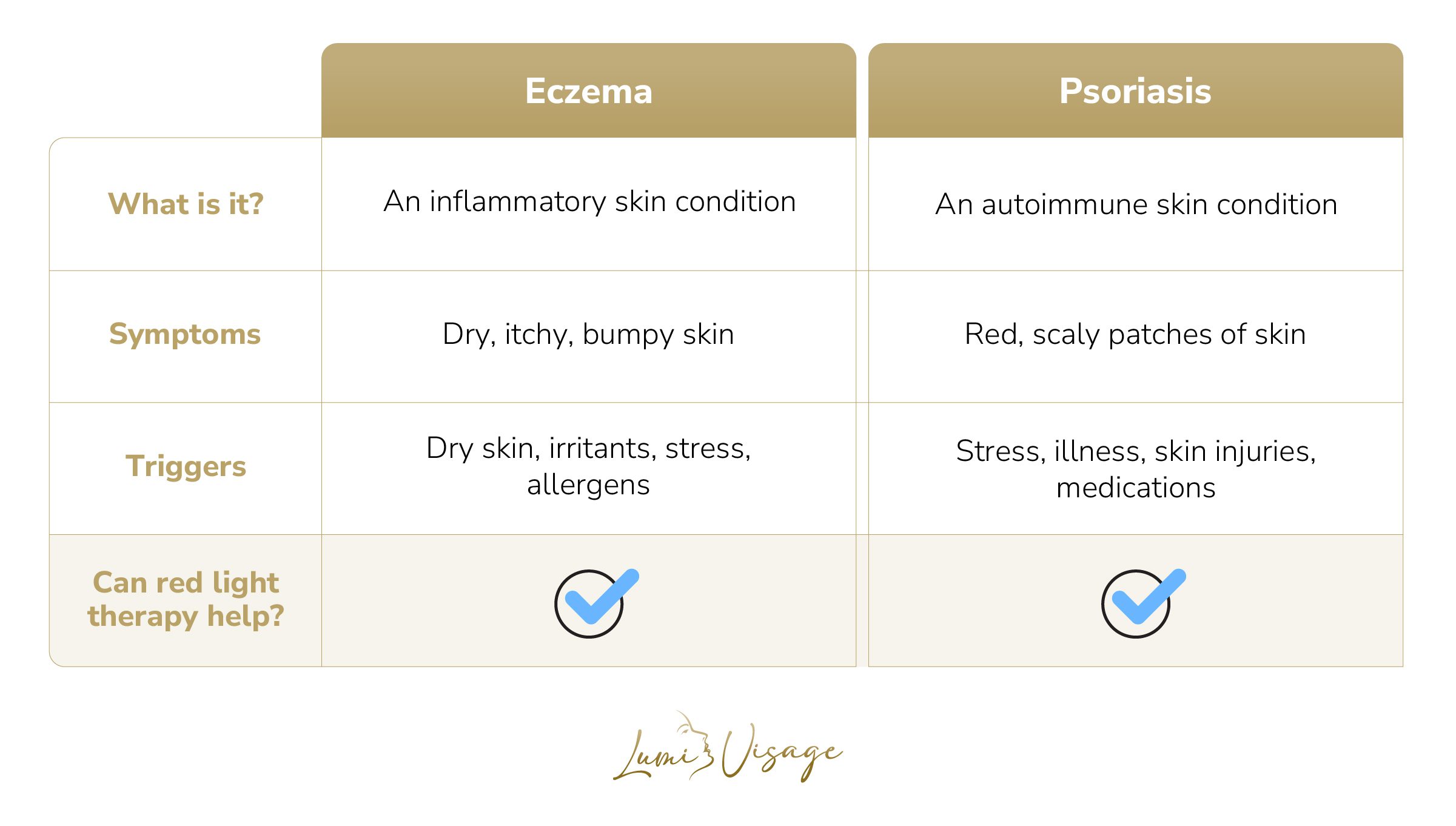
The exact cause of eczema is unknown, but it’s thought to be caused by a combination of environment and genetics. People with eczema usually have overactive immune systems. That means their immune response to things like irritants or allergens is more intense than normal, which causes inflammation.
Common eczema triggers include:
- Changing weather: Anything that makes your skin dry, brittle, or tight, such as the weather or changes in temperature, can trigger a flare-up.
- Irritants: Household products such as laundry detergent and cosmetics can cause irritation, even if they’re natural products.
- Stress: Emotional stress can trigger a flare-up for some people.
- Allergens: Although allergies are a different issue, certain things you’re allergic to can also cause flare-ups in your skin.
There is no cure for eczema, but symptoms of eczema flare-ups can be treated with over-the-counter topical medications, ointments, or prescription steroids, as well as prescription phototherapy using UVA or UVB light. All of these treatment methods, however, can cause side effects or complications for people with sensitive skin.
Many people choose to manage their eczema by targeting their physical wellness, preventing flare-ups through diet, decreasing stress, and a comprehensive skincare routine with natural products.
Psoriasis Causes and Triggers
Psoriasis is an autoimmune skin condition. An overactive immune system speeds up skin cell growth, causing them to pile up on the surface of the skin instead of shed. That’s how psoriasis sufferers end up with plaques, or scaly patches.
The type of outbreak differs from person to person, but common triggers include:
- Emotional stress
- Illnesses like a strep infection.
- Skin injuries like cuts or surgery
- Some medications, such as lithium and beta-blockers.
- Seasonal changes
There is no cure for psoriasis. Typical treatment options include steroid creams, medications that slow skin cell production, and other moisturizers and lotions. If these aren’t effective, your doctor may suggest some biological therapy or immunosuppressive drugs like Cyclosporine and Methotrexate.
How Does Red Light Therapy Help Treat Eczema and Psoriasis?
Psoriasis is a different condition than eczema but both can cause some similar symptoms. Eczema mainly causes an itchy rash, while psoriasis causes red, thick skin covered in scales.
Studies have shown that red light therapy can treat both eczema and psoriasis. Here’s how it works to help these conditions.

1. Reduces the Inflammation from Flare-Ups
Red light has been found to have a calming effect on inflammation. Inflammation is part of your body’s natural healing process. The immune system responds to infection and injury by sending inflammatory cells to fight viruses or bacteria.
But with conditions like eczema and psoriasis, immune responses can be triggered when no real threat is present, and this chronic inflammation leads to destructive changes in the skin. Red light therapy has been shown by various studies to reduce inflammatory markers in activated inflammatory cells, which can reduce the symptoms of flare-ups.
For example, in one study, near-infrared and red light from clinical-strength LEDs was tested on nine patients with persistent psoriasis. After treatment in two 20-minute light therapy sessions over four to five weeks, with 48 hours between sessions, their skin clearance rates ranged between 60% and 100%. All patients involved reported high satisfaction with the treatment.
2. Soothes Itchiness
Multiple studies have shown that red light therapy can reduce the severity of skin lesions, reduce itchiness, and decrease eruptions, which may help soothe symptoms of both eczema and psoriasis. For example:
- In one study using a laser device, 79% of cases (63 out of 81 patients) experienced a decrease in itchy sensation after treatment with near-infrared light.
- One animal study showed that near-infrared LED light therapy combined with water baths reduced eczema-like skin lesions by reducing the infiltration of inflammatory cells in the lesions.
- showed that near-infrared LED light used with a low-dose immunosuppressant drug decreased inflammatory markers, which helped heal skin lesions.
Reducing itchiness has several benefits. Scratching can exacerbate the symptoms of eczema, so reducing itchiness can break the cycle and not only soothe your symptoms but also stop them from becoming worse.
3. Reduces Redness
Redness is a hallmark of conditions like eczema. It comes from a type 2 inflammatory response as your body overreacts to things that aren’t infectious.
During this inflammatory response, the body releases proteins called cytokines, along with antibodies and other immune cells, that tell your immune cells to fight threats. This causes symptoms like redness and even itchiness.
So studies have shown that red light therapy can help reduce the chemicals that cause inflammation, thus reducing redness caused by eczema and psoriasis. For example:
- An animal study showed that mice treated with daily, 30-minute treatment sessions of red and near-infrared light for ten days had decreased proinflammatory cytokines and upregulated anti-inflammatory cytokines.
- An in vitro study also showed that red and near-infrared light reduced the production of pro-inflammatorMacrophages Modulated by Red/NIR Light: Phagocytosis, Cytokines, Mitochondrial Activity, Ca2+ Influx, Membrane Depolarization and Viability cytokines in activated macrophages, a type of immune cell.
4. Heals Thickened and Flaking Skin
Because red light therapy increases the production of collagen and elastin and improves circulation, it helps heal the skin and may reduce the appearance of thickened and flaking skin.
Red light stimulates the mitochondria in your cells, increasing the production of ATP (adenosine triphosphate). This helps cells repair themselves and provides energy for cellular processes like producing collagen and elastin, proteins that work together in your connective tissue to strengthen skin.
One study showed that light therapy stimulates blood flow by dilating the blood vessels that carry oxygen and necessary nutrients to cells, supporting cell repair.
This may help stop skin from flaking and soften the thickened skin that develops from eczema and psoriasis.
5. Helps Dry Skin Retain More Moisture
Red light therapy can help encourage cells to produce hyaluronic acid, a substance that retains water and helps your skin stay moisturized.
Hyaluronic acid is a substance that the body produces naturally, found in the skin. It’s often found in supplements and creams or serums that are used as moisturizers, but red light can help your body produce it naturally.
Both eczema and psoriasis cause the skin to dry out, so helping your skin retain moisture may help alleviate your symptoms.
Other Beneficial LED Light Colors for Eczema and Psoriasis
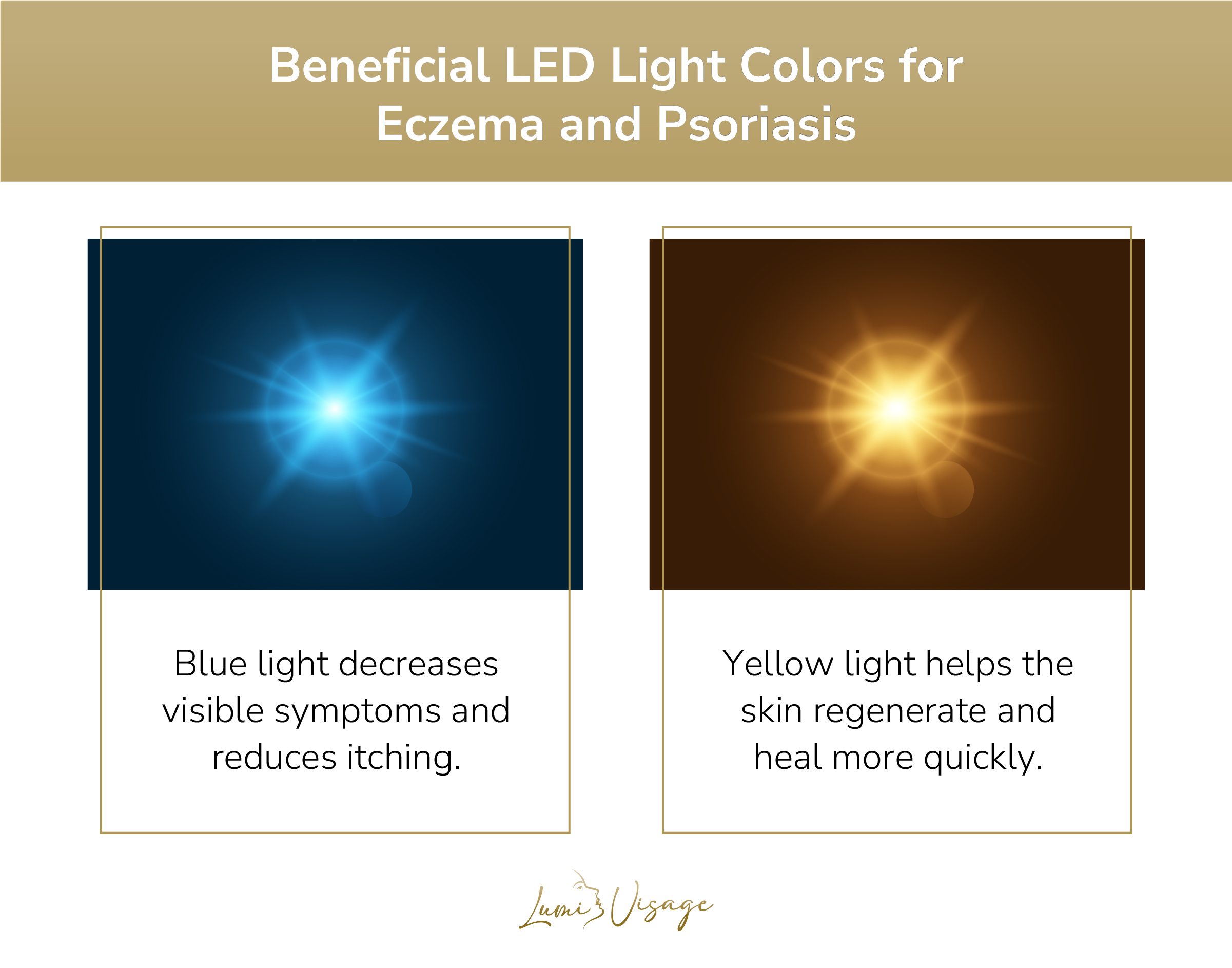
Though red light offers amazing therapeutic benefits, it isn’t the only wavelength that can help eczema and psoriasis. If your light therapy device offers other colors like our LED Face Mask does, you can use these to treat your skin conditions, too.
Blue Light
Several studies have shown that blue light can effectively treat the symptoms of eczema. For example, in one study, patients who were treated with blue light for 30 minutes, three times per week showed significant clinical improvement in their symptoms over four weeks.
Another study involved 36 patients with severe eczema who were treated with full-body blue light irradiation. Over six months, these patients underwent two to five cycles of daily phototherapy for five days, applying topical corticosteroids between cycles.
Disease severity decreased by 29% at 15 days, 41% at three months, and 54% at six months from the start of the study, with patients experiencing a reduction in the severity of itching and enhancements in their overall quality of life.
Yellow Light
Similar to red light, yellow light can increase adenosine triphosphate (AThumaP) production, which supports skin regeneration and inflammation. This may help the skin heal more quickly and soothe irritation.
Red Light Therapy vs. Prescription Phototherapy
When people discuss light therapy for eczema, they’re often referring to prescription phototherapy, which is different from at-home LED and red light therapy. Here’s how the two
Involves in-office treatment with various types of ultraviolet (UV) light, such as UVA (320–400 nm) and UVB (290–320 nm), which aren’t visible to the n eye.
- UV light is the same as the light that comes from the sun. It can help with skin conditions and inflammation, but it comes with potential side effects such as redness, burns, and increased risk of skin cancer.
LED Light Therapy:
- Refers to different wavelengths of the visible light spectrum from 380 to 700 nm, which appear as different colors. Because it uses a different kind of radiation, it doesn’t have the risks of UV light therapy.
- Also known as photobiomodulation or low-level light therapy, this can be done at home with your own device or in-office. In-office treatments are more powerful, but at-home devices offer many of the same benefits.
Some LED light therapy devices, such as the Lumivisage LED Face Mask, combine red light (637 nm) with the infrared light (854 nm [±5nm]) wavelength for additional benefits.
How to Safely Use an LED Light Device
Unlike UV light therapy which comes with some risks and side effects, red light and LED light therapy are generally safe. You can make it a regular part of your skincare routine to help reduce your eczema and psoriasis symptoms.
Here are some tips for using your device safely:
- Cleanse your skin before use. Cleansing your skin of dirt and oil as well as any skincare products, cosmetics, or medical creams before use ensures nothing blocks the light from penetrating your skin. It also reduces the risk of irritation.
- Clean the device after use. Wiping the device with a little soap and water helps prevent the build-up of bacteria from regular use.
- Don’t use it with some medication. Medications used in psoriasis and eczema treatment like topical steroids can come with side effects like photosensitivity and skin atrophy, which cause your skin to become thinner and more sensitive to light. Check with your doctor to make sure your medications aren’t contraindicated with LED therapy.
- Moisturize your skin. Using a red light therapy device may make your skin feel dry at first, so it’s important to moisturize your skin after use. Look for products with the National Eczema Association (NEA) Seal of Approval, or that contain aloe, glycerin, or hyaluronic acid.
- Discuss with your doctor or healthcare provider. If you’re undergoing skin-related treatment already, talk to your doctor or dermatologist to check your treatment won’t interact with LED light therapy. Stop using the device if you experience any skin irritation.
- Use eye protection. During light therapy treatment, make sure your eyes are fully covered and protected from the light. The Lumivisage LED Face Mask has built-in eye protection goggles to keep your eyes safe. Our device is also FDA-cleared, so you can trust it’s completely safe to use.
How Long Does LED Light Therapy Take to Work?
Consistency is key to seeing results from LED light therapy. Your at-home device should come with specific guidelines for how to use it for the best results. Our LED Face Mask is designed to be used for 10-minute sessions, three to four times a week.
Many people see a benefit from the first time they use it, but it typically takes one month of consistent use to see results, with full results appearing around the one- to three-month mark.
Try Red Light Therapy for Eczema at Home
Symptoms like scaling, itching, and irritation can not only affect your quality of life — they also hurt your self-esteem. But adding red light therapy to your routine might just help you get these painful symptoms under control.
In just 10 minutes a day, three to four times a week, our LED Face Mask can help stop your flare-ups in their tracks, and get you back to the calm, clear skin you’ve been looking for.
References
Photomedicine and Laser Surgery. “Combination 830-nm and 633-nm light-emitting diode phototherapy shows promise in the treatment of recalcitrant psoriasis: preliminary findings.” https://pubmed.ncbi.nlm.nih.gov/19764893/. Date accessed: November 16, 2023.
Laser Therapy. “Clinical Application of GaAlAs 830 nm Diode Laser for Atomic Dermatitis.” https://www.jstage.jst.go.jp/article/islsm/5/2/5_93-OR-08/_article. Date accessed: November 16, 2023.
Photodermatology, Photoimmunology and Photomedicine. “Effects of low-dose light-emitting-diode therapy in combination with water bath for atopic dermatitis in NC/Nga mice.” https://pubmed.ncbi.nlm.nih.gov/26479265/. Date accessed: October 11, 2023.
Frontiers in Neuroscience. “The anti-inflammatory effects of photobiomodulation are mediated by cytokines: Evidence from a mouse model of inflammation.” https://www.ncbi.nlm.nih.gov/pmc/articles/PMC10115964/. Date accessed: October 11, 2023.
Photodermatology, Photoimmunology and Photomedicine. “Macrophages Modulated by Red/NIR Light: Phagocytosis, Cytokines, Mitochondrial Activity, Ca2+ Influx, Membrane Depolarization and Viability.” https://pubmed.ncbi.nlm.nih.gov/34569637/. Date accessed: October 11, 2023.
International Journal of Cosmetic Science. “Low-level red plus near infrared lights combination induces expressions of collagen and elastin in human skin in vitro.” https://pubmed.ncbi.nlm.nih.gov/33594706/. Date accessed: October 11, 2023.
Photomedicine and Laser Surgery. “Low-Intensity Light Therapy: Exploring the Role of Redox Mechanisms.” https://www.ncbi.nlm.nih.gov/pmc/articles/PMC2996814/. Date accessed: October 11, 2023.
Free Radical Biology and Medicine. “Red/Near Infrared Light Stimulates Release of an Endothelium Dependent Vasodilator and Rescues Vascular Dysfunction in a Diabetes Model.” https://www.ncbi.nlm.nih.gov/pmc/articles/PMC5699925/. Date accessed: October 11, 2023.
Journal of the American Academy of Dermatology. “Low-level red and infrared light increases expression of collagen, elastin, and hyaluronic acid in skin.” https://www.jaad.org/article/S0190-9622%2819%2933160-3/fulltext. Date accessed: October 11, 2023.
Life (Basel). “Blue Light in Dermatology.” https://www.ncbi.nlm.nih.gov/pmc/articles/PMC8307003/. Date accessed: October 11, 2023.
PLoS One. “Clinical Efficacy of Blue Light Full Body Irradiation as Treatment Option for Severe Atopic Dermatitis.” https://www.ncbi.nlm.nih.gov/pmc/articles/PMC3110790/. Date accessed: November 16, 2023.
The Journal of Clinical and Aesthetic Dermatology. “Light-emitting Diodes.” https://www.ncbi.nlm.nih.gov/pmc/articles/PMC4479368/. Date accessed: October 11, 2023.