


Red light hits the surface. Infrared goes deep. One is great for skin, the other for muscles and joints. But which one do you actually need?
Red light therapy vs infrared isn’t just a techy debate—it’s the difference between glowing skin and serious pain relief.
Before you spend money on the wrong thing, let’s break it down in a way that actually makes sense.
- Red light targets skin; infrared penetrates deeper into muscles and joints.
- Infrared therapy generates heat, while red light therapy does not.
- Both therapies boost circulation and cell function but have different applications.
- Devices often combine red and infrared light for full-body benefits.
Key Differences Between Red and Infrared Light Therapy
Even though both types of light therapy have health benefits, their effects on the body are quite different.
1. Wavelength Range
|
2. Visibility
|
3. Penetration Depth
|
4. Heat Production
|
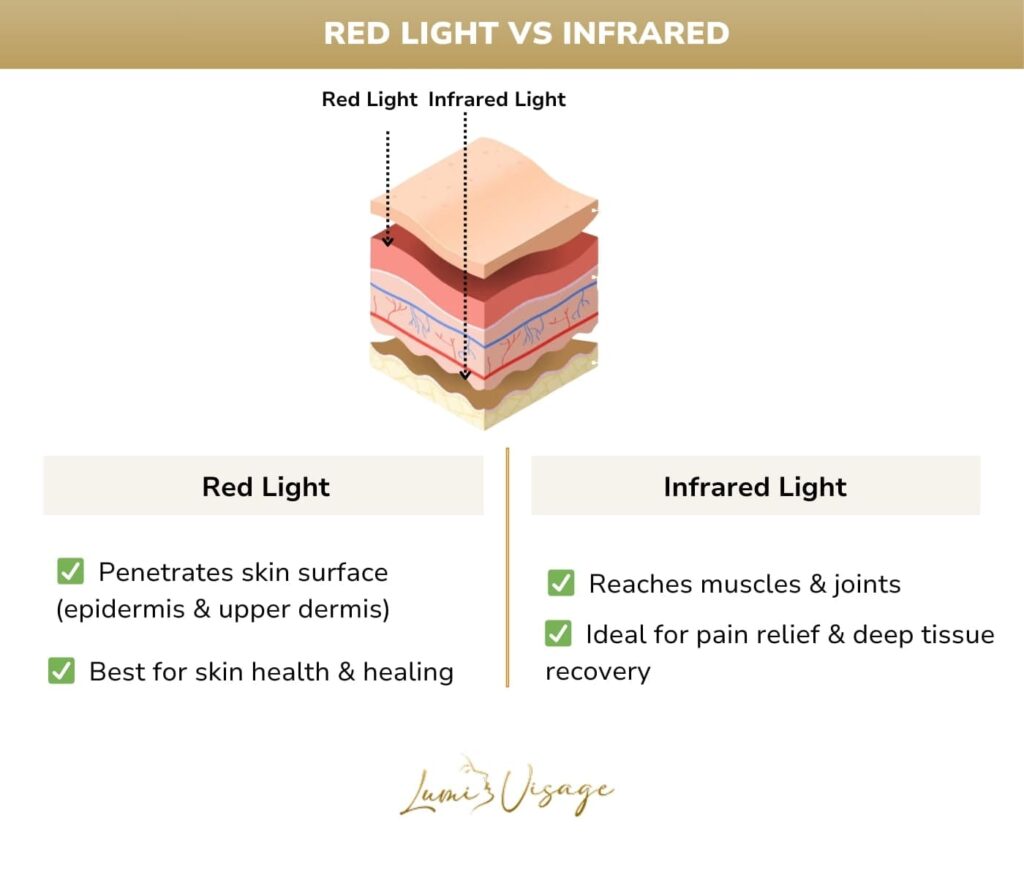
Because of the differences between the two, red light therapy is often used for skin-related concerns, while infrared light therapy is better for muscle recovery and deep tissue healing.
What is Red Light?
Red light is part of the visible light spectrum, meaning you can see it with the naked eye. Its wavelengths range from 620 to 750 nanometers (nm), making it one of the longest visible light waves before transitioning into infrared.
How Deep Does Red Light Penetrate?
Red light doesn’t go very deep. It mostly affects the epidermis and upper dermis layers of the skin. This makes it ideal for improving skin texture, reducing fine lines, and promoting wound healing.
How Does Red Light Therapy Work?
When red light reaches your skin, it interacts with mitochondria, the energy centers of your cells. This stimulates ATP production (the energy your cells use), which supports cell repair, collagen production, and reduced inflammation in the treated area.
What is Infrared Light?
Infrared light exists just beyond the visible spectrum, meaning the human eye can’t see it. Its wavelengths start at 700 nm and extend up to 1 millimeter (mm).
Infrared light is split into three categories:
|
Each type penetrates the body differently, with near-infrared being the most relevant for light therapy.
How Deep Does Infrared Light Penetrate?
Infrared light reaches muscles, joints, and even bones, depending on the wavelength. This deep penetration makes it useful for relieving muscle soreness, joint pain, and improving circulation.
How Does Infrared Light Therapy Work?
Instead of just affecting the skin’s surface, infrared light warms tissues beneath the skin, improving blood flow and reducing stiffness.
This makes it useful for muscle recovery, joint support, and even boosting metabolism.
Benefits of Red Light Therapy
Red light therapy is primarily used for skin health and surface-level healing. Here are some key benefits:
1. Skin Rejuvenation
Red light stimulates collagen and elastin production, which helps reduce wrinkles and fine lines. This leads to smoother, firmer skin over time.
2. Wound Healing and Tissue Repair
By increasing cellular energy (ATP production), red light therapy helps the body repair itself faster. This makes it useful for cuts, burns, and even acne scars.
3. Anti-Inflammatory Effects
Red light therapy has been shown to reduce inflammation in skin cells, which can help with conditions like eczema, rosacea, and psoriasis.
4. Hair Growth Support
Studies suggest that red light therapy may help with hair regrowth, especially in cases of androgenetic alopecia (pattern baldness).
Benefits of Infrared Light Therapy
Infrared light therapy is known for deep tissue penetration and is often used for pain relief and recovery.
Here’s how it helps:
1. Muscle and Joint Pain Relief
Infrared light reaches deep into muscles and joints, helping to ease chronic pain, stiffness, and soreness. It’s often used by athletes and people with arthritis.
2. Improved Circulation
By increasing blood flow to deeper tissues, infrared therapy helps deliver more oxygen and nutrients to areas in need of repair.
3. Faster Muscle Recovery
Athletes often use infrared therapy to reduce soreness and speed up muscle repair after intense workouts.
4. Detoxification and Sweating
Far-infrared therapy is used in saunas because it promotes sweating, which helps the body get rid of toxins.
Which Should You Use?
Choosing between red light therapy vs infrared depends on your goals.
|
Many therapy devices combine both red and infrared light, providing surface-level and deep tissue benefits at the same time.
Can You Use Red and Infrared Light Therapy Together?
Yes! Many high-quality light therapy devices include both red and infrared wavelengths because they complement each other.
Using them together can be beneficial for:
|
If you’re looking for a well-rounded therapy approach, using both is often the best option.
Tired Of Dull Skin & Fine Lines That Won’t Fade?
Red light therapy helps restore glow and even tone—right from home
SHOP NOW – GET $100 OFF
Frequently Asked Questions
Can red light and infrared therapy be used on all skin types?
Yes, both therapies are safe for all skin tones and types. Unlike some laser treatments, they don’t cause hyperpigmentation or damage melanin-rich skin.
How long does it take to see results from light therapy?
It depends on the condition you’re treating. Some people notice improvements in a few sessions, while deeper issues like joint pain or collagen production may take a few weeks of consistent use.
Is infrared therapy the same as sitting in the sun?
Not exactly. The sun emits infrared light, but it also includes harmful UV rays that can damage skin. Infrared therapy devices isolate the beneficial wavelengths without the risks of sun exposure.
Can light therapy interfere with medications?
Certain medications, like antibiotics or acne treatments, can make skin more sensitive to light. If you’re on prescription drugs, check with your doctor before starting therapy.
Does red or infrared light help with sleep?
Yes! Red and infrared light can support melatonin production and help regulate your sleep cycle, especially if used in the evening.
Can I overuse red or infrared light therapy?
While generally safe, overuse can lead to diminishing returns. More isn’t always better—sticking to recommended treatment times (usually 10-20 minutes per session) is best.
Conclusion
Red light works at the surface, infrared reaches deeper. One helps with skin and healing, the other tackles muscle and joint pain. Both boost circulation, support cell function, and can be used together for a well-rounded approach.
But the right choice depends on what you’re trying to fix.
If glowing skin is your goal, the Lumi Visage 7-Color LED Face Mask is a great place to start. With red light therapy and multiple other wavelengths, it’s designed to target fine lines, uneven skin tone, and overall radiance. Try it for yourself and see the difference.