

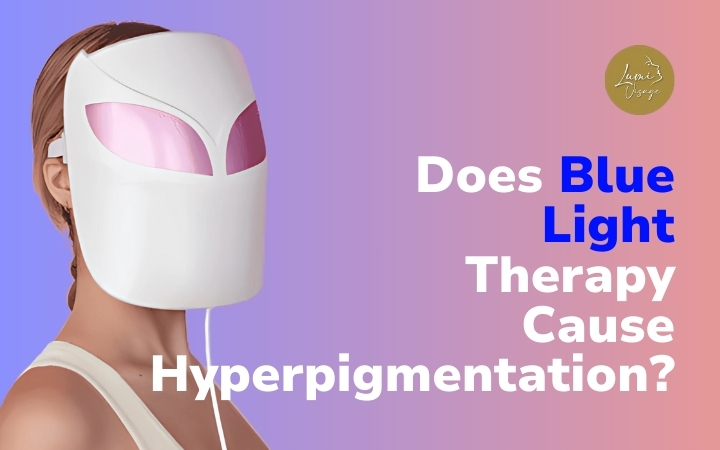

Blue light therapy is a popular solution for acne, loved for its non-invasive, effective approach.
But questions about its link to hyperpigmentation have left some wondering if it’s the right choice, especially for darker skin tones.
Is it safe, and what should you watch for?
Here’s a clear, evidence-backed look at whether blue light therapy could impact pigmentation and how to make the best decision for your skin.
- Blue light therapy targets acne but may increase melanin activity in darker skin tones.
- Prolonged or intense exposure can heighten the risk of hyperpigmentation for some individuals.
- Alternatives like red light therapy and topical treatments offer safer options for pigmentation concerns.
How Does Blue Light Therapy Affect Pigmentation?
Blue light therapy targets acne-causing bacteria with precise wavelengths, offering a non-invasive, safe solution. Originally used for medical purposes, it’s now a dermatology favorite for clearer skin.
To understand the potential link between blue light therapy and hyperpigmentation, it’s important to look at how it interacts with the skin:
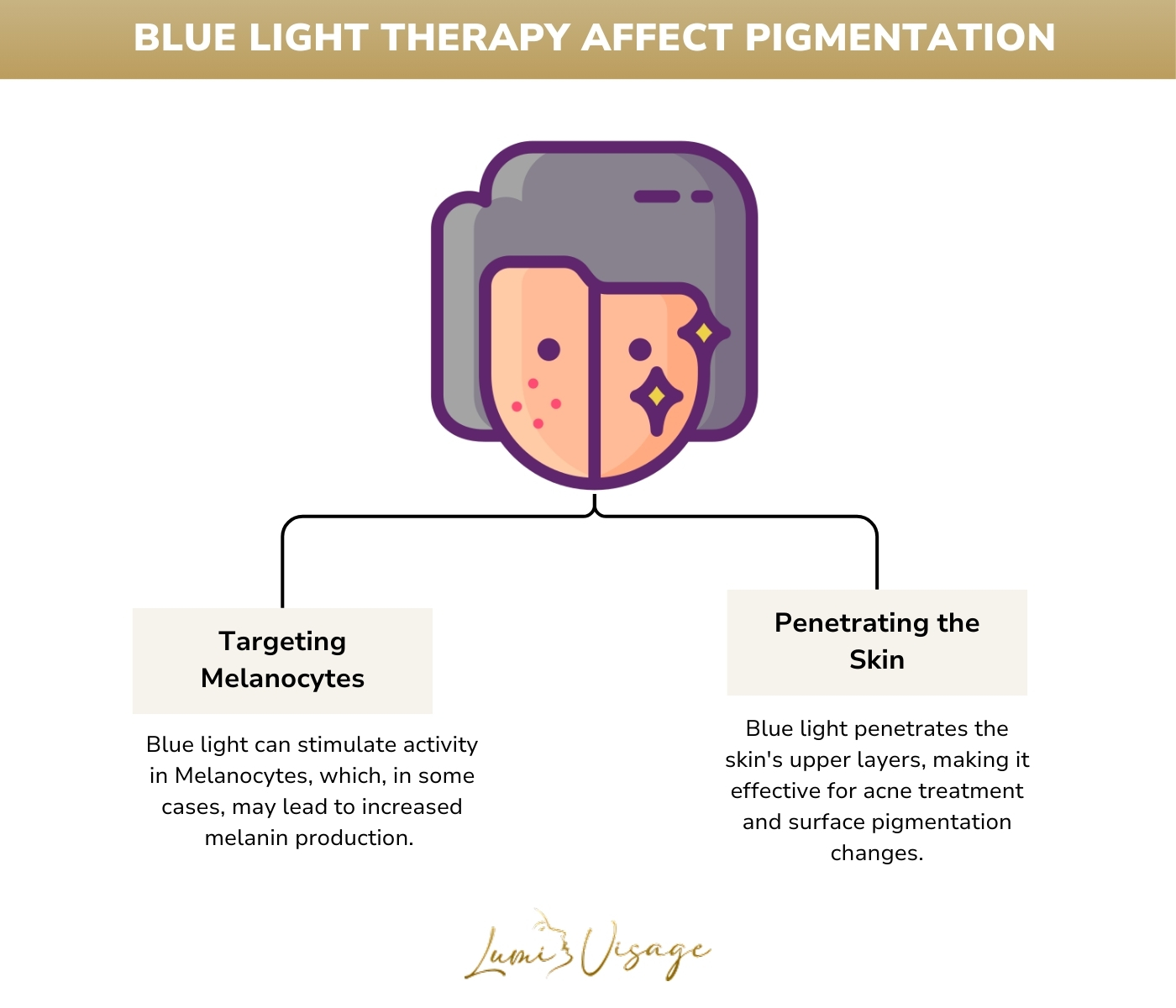
Targeting Melanocytes
Melanocytes are the skin cells responsible for producing melanin, the pigment that gives skin its color.
Blue light can stimulate activity in these cells, which, in some cases, may lead to increased melanin production.
This process is especially relevant for individuals with darker skin tones, where melanocytes are more active by nature.
Penetrating the Skin
Blue light doesn’t penetrate as deeply as red or near-infrared light, but it does reach the upper layers of the skin. This makes it effective for treating acne but may also influence surface-level pigmentation changes.
Does Blue Light Therapy Cause Hyperpigmentation?
The short answer: not really.
Research on blue light therapy and hyperpigmentation is still emerging, but current findings suggest mixed results.
Evidence Supporting a Link
Some studies have indicated that prolonged exposure to blue light, particularly from devices like phones or laptops, can increase melanin production. This raises concerns about whether therapeutic blue light could have a similar effect, especially with repeated treatments.
Some people with darker skin tones may notice temporary darkening of existing pigmentation or the development of new spots after blue light therapy.
Evidence Against a Link
However, most studies done on the subject suggest that blue light therapy is highly unlikely to cause significant hyperpigmentation when used correctly.
Unlike UV rays, which penetrate deeply and damage DNA—the main driver behind pigmentation issues—blue light operates at a much shallower level, primarily targeting acne-causing bacteria on the skin’s surface.
It does not generate the kind of cellular disruption that leads to lasting pigmentation changes.
When performed under professional supervision or with FDA-approved devices designed for safe, targeted use, the risk is minimal for most people.
Proper application, limited session durations, and adherence to guidelines make blue light therapy a reliable and low-risk option, even for individuals concerned about pigmentation.
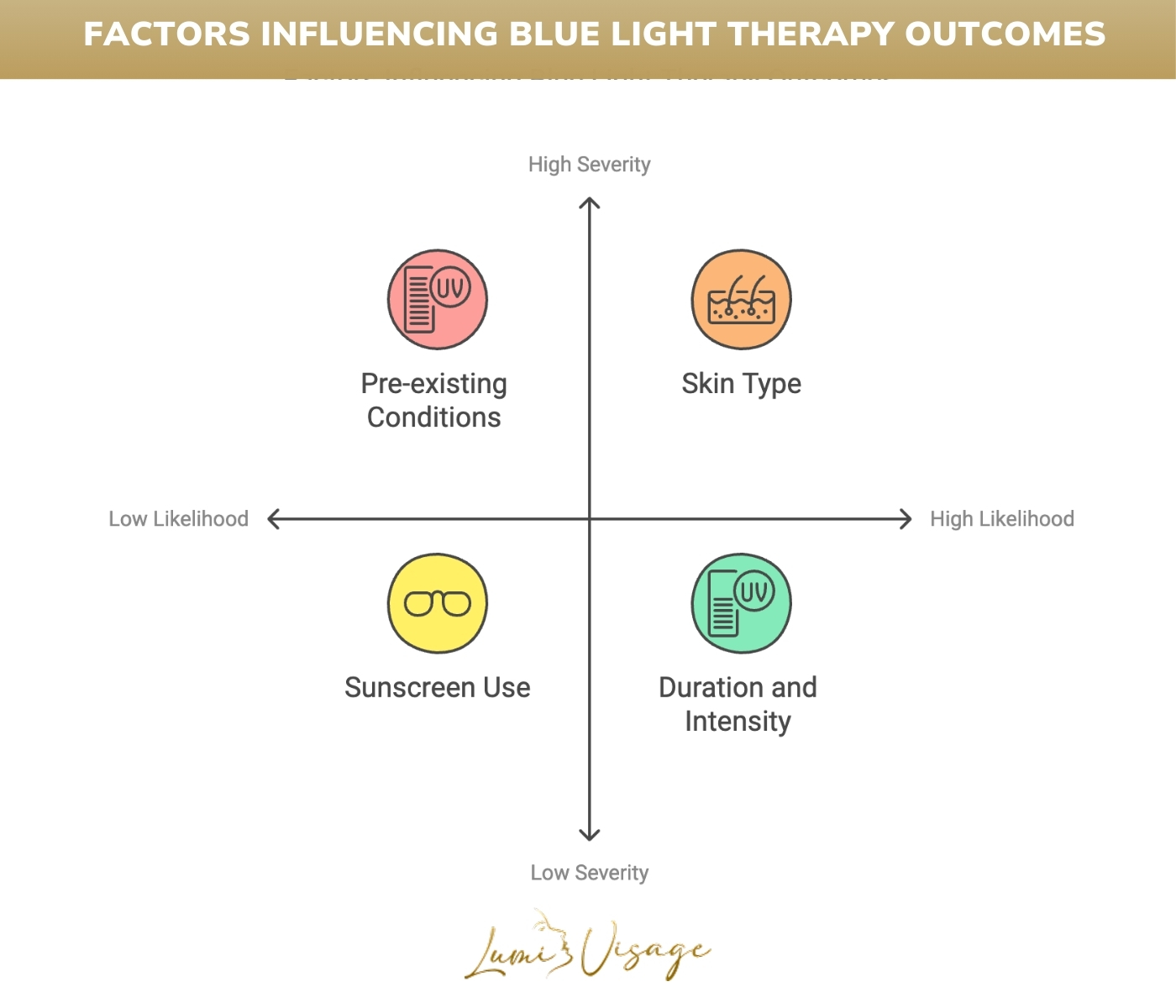
Factors That Influence Outcomes
1. Skin Type
People with darker skin (Fitzpatrick skin types IV–VI) may be more prone to hyperpigmentation after blue light exposure due to naturally higher melanin activity.
2. Duration and Intensity
Longer or more intense exposure increases the likelihood of side effects, including pigmentation changes.
Always follow recommended treatment times and avoid overuse.
3. Pre-existing Conditions
If you already have melasma, post-inflammatory hyperpigmentation, or sun damage, blue light therapy may exacerbate these conditions.
4. Sunscreen Use
Blue light from both therapy devices and screens could possibly contribute to oxidative stress on the skin.
Using a broad-spectrum sunscreen with blue light protection can mitigate these effects.
Alternatives to Blue Light Therapy
For those concerned about hyperpigmentation risks, other treatments may provide effective solutions without the potential drawbacks of blue light.
1. Red Light Therapy
Red light therapy penetrates deeper into the skin and is often used to reduce inflammation and promote healing. It’s less likely to affect melanin production, making it a safer option for those worried about pigmentation changes.
2. Topical Treatments
Brightening serums containing ingredients like vitamin C, niacinamide, or alpha arbutin can help fade hyperpigmentation over time.
These are great alternatives or complementary treatments to blue light therapy.
3. Chemical Peels
For more significant pigmentation concerns, chemical peels offer deeper exfoliation and can lighten dark spots effectively.
However, they require downtime and should be performed under professional supervision.
Worried About Blue Light Therapy & Hyperpigmentation?
Our LED mask offers safe, effective skincare solutions.
SHOP NOW – GET $100 OFF
Frequently Asked Questions
Can blue light therapy be used on sensitive skin?
Yes, blue light therapy is generally safe for sensitive skin. Start with shorter sessions to gauge your skin’s tolerance and avoid irritation.
How does blue light from therapy devices compare to blue light from screens?
Therapeutic blue light is more controlled and targeted than the blue light emitted by screens, which is less intense but more prolonged, potentially contributing to skin damage over time.
Is blue light therapy safe for long-term use?
When used as directed, blue light therapy is safe for long-term use. Overuse, however, can increase the risk of skin sensitivity or pigmentation changes.
Does blue light therapy require downtime?
No, blue light therapy is non-invasive and typically requires no downtime, making it easy to fit into your skincare routine.
Conclusion
Blue light therapy works wonders for acne, but its impact on hyperpigmentation depends on your skin type and usage.
The good news? With the right precautions—like sunscreen, professional guidance, and proper timing—you can minimize risks and enjoy clear, healthy skin.Want a safer, more versatile solution? Our 7-Color LED face mask combines blue, red, and more to tackle multiple skin concerns. Shop now and take the first step toward your best skin yet.