


Struggling to fall asleep? You’re not alone. Light exposure plays a huge role in sleep quality, but while blue light from screens keeps you awake, red light might do the opposite.
Some studies suggest it helps regulate melatonin, making it easier to wind down at night.
But does it actually work, or is it just another sleep gimmick?
Here’s what the research says—and how red light therapy could fit into your nighttime routine.
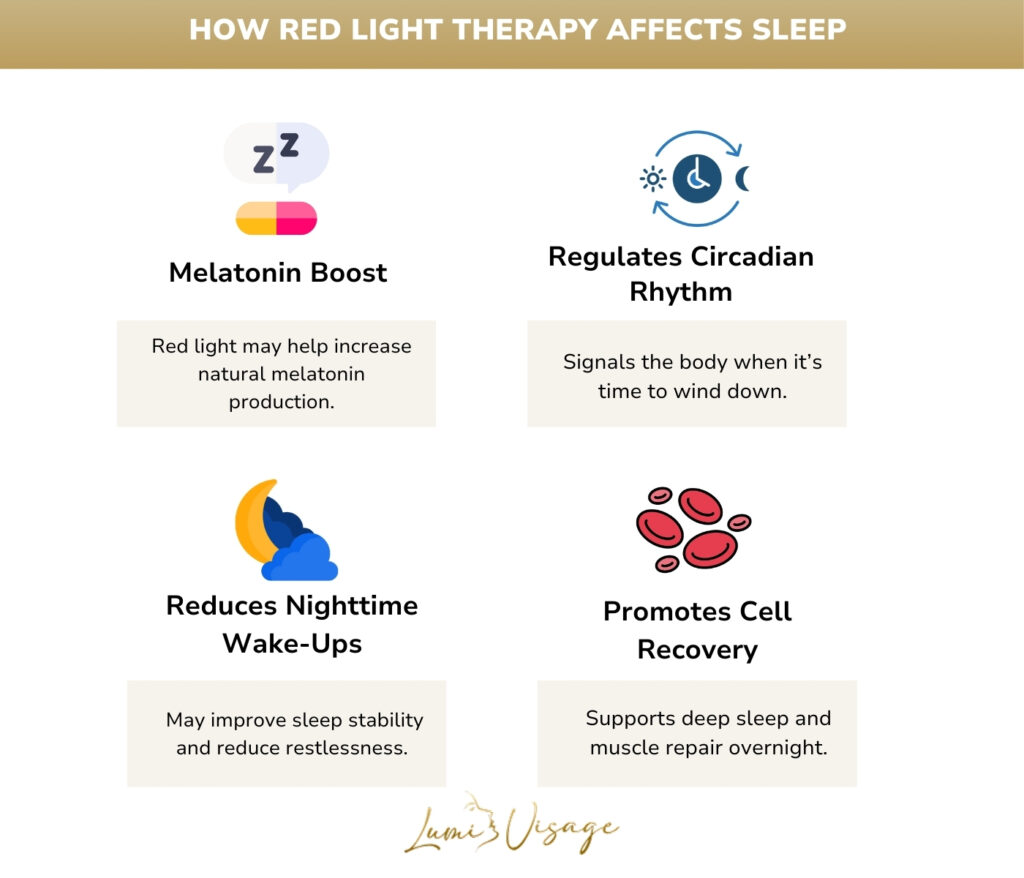
- Red light therapy may support melatonin production and improve sleep quality.
- Unlike blue light, red light doesn’t suppress your body’s natural sleep signals.
- Studies suggest it can help regulate circadian rhythms and reduce nighttime wake-ups.
- For best results, use it 1-2 hours before bed for 10-20 minutes.
How Light Affects Sleep
Your body has an internal clock, known as the circadian rhythm, that regulates when you feel awake and when you feel sleepy. This rhythm is controlled by light exposure—which is why you naturally feel alert during the day and tired at night.
The Problem With Blue Light
Blue light, found in sunlight, LED screens, and fluorescent lights, signals your brain to stay awake by suppressing melatonin, the hormone responsible for sleep.
This is why looking at your phone or watching TV before bed can make it harder to fall asleep.
Why Red Light Is Different
Unlike blue light, red light has a different effect on the body. Instead of blocking melatonin, it may actually support its natural production, helping you feel sleepier at night.
Some research suggests that red light exposure in the evening can improve sleep quality by keeping your circadian rhythm on track.
What Science Says About Red Light Therapy and Sleep
Several studies have explored how red light therapy might improve sleep:
1. Red Light May Boost Melatonin Levels
A study published in the Journal of Athletic Training looked at female basketball players who were exposed to red light therapy for two weeks.
The results: They not only slept better but also had increased melatonin levels compared to before.
2. It Could Improve Sleep Quality
Another study examined people suffering from sleep disorders. Researchers found that red light exposure before bed helped regulate sleep cycles, leading to longer and deeper sleep.
3. It Might Help Shift Workers and Those With Jet Lag
Red light therapy has also been explored as a way to reset circadian rhythms for people who work night shifts or travel across time zones.
Since it doesn’t suppress melatonin, it can help the body adjust more easily to new sleep schedules.
While more research is needed, these findings suggest that red light therapy may be a useful tool for improving sleep—especially for people who struggle with disrupted circadian rhythms.
What Is Red Light Therapy?
Red light therapy (RLT) is a treatment that uses low-wavelength red and near-infrared light to penetrate the skin and tissues.
Unlike UV light, which can be harmful, red light is non-damaging and has been studied for cell repair, inflammation reduction, and even skin health benefits.
It’s commonly used for:
- Muscle recovery and pain relief
- Skin rejuvenation and anti-aging
- Reducing inflammation
- Supporting wound healing
Now, researchers are looking at red light therapy and sleep to see if it can help people fall asleep faster and stay asleep longer.
How to Use Red Light Therapy for Better Sleep
If you want to try red light therapy to support your sleep, here’s how to do it correctly:
1. Choose the Right Type of Red Light
Not all red light is the same.
For sleep benefits, look for red or near-infrared light in the 600-850 nanometer range. These wavelengths are the most studied for their effects on melatonin production and cellular repair.
2. Use It 1-2 Hours Before Bed
For best results, use red light therapy in the evening—about 60-90 minutes before sleep. This gives your body time to adjust and start winding down.
3. Keep Sessions Between 10-20 Minutes
Longer sessions aren’t necessarily better. A short exposure of 10-20 minutes is enough to stimulate melatonin production without overexposure.
4. Create a Relaxing Sleep Routine
Red light therapy works best when combined with other good sleep habits, such as:
- Keeping your bedroom cool and dark
- Dimming overhead lights in the evening to reduce blue light exposure
- Avoiding screens at least 30-60 minutes before bed
Does Red Light Therapy Work for Everyone?
Like any treatment, red light therapy may not work the same for everyone.
Some people may see noticeable improvements in sleep within a few weeks, while others may experience minimal effects.
Who Might Benefit the Most?
- People who struggle to fall asleep due to late-night blue light exposure
- Shift workers trying to regulate their sleep-wake cycle
- Frequent travelers dealing with jet lag
- Athletes or high-stress individuals needing deeper recovery sleep
Who Might Not See Results?
- People with severe insomnia that isn’t related to light exposure.
- Those who already sleep well and have a strong circadian rhythm.
- Anyone expecting instant results—sleep improvements take time and consistency.
If your sleep issues are related to stress, anxiety, or other health conditions, red light therapy alone may not be enough—but it can still be a helpful tool alongside other sleep strategies.
Tried Everything To Get Better Sleep?
Our gentle LED mask could be the answer

Potential Risks & Considerations
Red light therapy is considered safe with minimal side effects, but here are a few things to keep in mind:
- Avoid looking directly at the light – While red light is less harmful than blue light, it’s still bright. If using a high-powered device, consider wearing eye protection.
- Stick to recommended exposure times – Overexposure isn’t necessarily better. Too much red light could overstimulate the body, making it harder to relax.
- Check with a doctor if you have light sensitivity – Certain medical conditions or medications can make the skin more sensitive to light. If unsure, talk to a healthcare provider before starting red light therapy.
Frequently Asked Questions
Can red light therapy help if I wake up frequently during the night?
Yes, some studies suggest that red light therapy may help stabilize circadian rhythms, which can reduce nighttime wake-ups and improve overall sleep continuity.
Is red light therapy safe for children who have trouble sleeping?
Generally, yes. Red light therapy is non-invasive and doesn’t emit harmful radiation. However, it’s best to consult a pediatrician before using it for children, especially those with light sensitivity or underlying conditions.
Can red light therapy be used alongside other sleep aids?
Yes, it can be combined with melatonin supplements, white noise, or relaxation techniques to enhance sleep quality. Just be sure to introduce changes gradually to monitor what works best.
Does red light therapy work instantly, or does it take time?
Results vary. Some people notice improvements within a few days, while others need several weeks of consistent use to see changes in their sleep patterns.
Can I use red light therapy in the morning instead of at night?
Morning use can help regulate circadian rhythms, but for direct sleep benefits, it’s best used 1-2 hours before bed to signal your body that it’s time to wind down.
Can too much red light exposure be harmful to sleep?
Red light therapy is generally safe, but overuse (especially for long durations) may overstimulate the body, making it harder to relax. Stick to 10-20 minute sessions for best results
Conclusion
Red light therapy isn’t a magic fix for sleep, but research suggests it can help. Unlike blue light, it doesn’t disrupt melatonin production and may even support a healthier sleep cycle.
Some people report falling asleep faster, staying asleep longer, and feeling more rested. The key is consistency—using it for 10-20 minutes in the evening, avoiding blue light before bed, and keeping a solid sleep routine.
If sleep struggles are a constant issue, red light therapy is a simple, non-invasive option worth trying. Give it time, track your results, and see if it makes a difference in your nightly rest.
Ready to enhance your sleep naturally? The Lumi Visage LED Mask features calming red light therapy that can help regulate your sleep cycle while improving your skin. Try it today and discover the difference better light exposure can make for your nightly rest.