

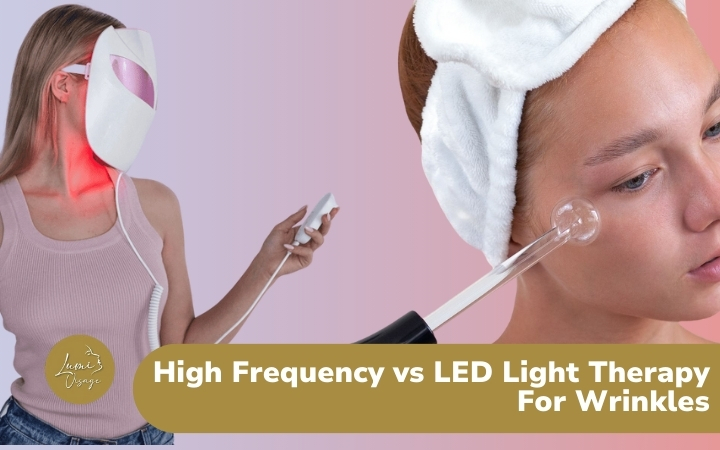

Torn between High Frequency and LED Light Therapy to smooth out those wrinkles?
Both treatments promise smoother, younger-looking skin without invasive procedures, but they work in different ways.
Whether you’re after fast results, long-term benefits, or unsure which option targets wrinkles best, we’re here to clear up the confusion.
Key Notes
- High Frequency offers fast, visible results but requires regular upkeep to maintain them.
- LED Light Therapy is slower but provides longer-lasting wrinkle reduction with fewer sessions.
- Both treatments stimulate collagen, but LED is gentler on sensitive skin.
- High Frequency also addresses acne and puffiness, while LED can target inflammation and redness.
High Frequency vs LED Light Therapy At A Glance
| Feature | High Frequency | LED Light Therapy |
|---|---|---|
| Price | $50-$150 per session; $40-$150 for at-home device | $25-$85 per session; $100-$500 for at-home mask |
| Main Benefit | Quick results in firming skin | Long-term reduction in wrinkles |
| Core Feature 1 | Collagen stimulation via electrical currents | Collagen production through red light |
| Core Feature 2 | Also treats acne and puffiness | Customizable for multiple skin concerns |
1. High Frequency Therapy
High Frequency Therapy uses an electrical current to stimulate blood flow, oxygenate the skin, and boost collagen production.
It’s popular in spas for treating aging skin, but also acne, dark circles, and even puffiness.
The mild warmth created by the electrical currents can help improve skin firmness and reduce fine lines, giving an almost instant tightening effect.
Core Features
- Collagen Stimulation: The electrical current stimulates collagen and elastin, which help reduce wrinkles and fine lines by firming up the skin.
- Improved Skin Texture: High frequency also works on tightening pores, making the skin look smoother overall.
- Multi-Purpose: Besides wrinkles, it treats puffiness, acne, and dark spots.
Positives of High Frequency
- Immediate results: Many users notice firmer, tighter skin right after the first few sessions.
- Quick treatment time: A session lasts about 10-20 minutes, making it easy to fit into a busy schedule.
- Versatile treatment: In addition to wrinkles, it addresses acne, puffiness, and even dark under-eye circles.
Downsides of High Frequency
- Short-lived effects: The results often need frequent maintenance sessions to keep the skin firm.
- Limited to surface improvements: It’s not as effective on deeper wrinkles and may require repeated sessions to see more noticeable changes.
Pricing
High Frequency devices are a great option if you’re looking for an affordable skincare upgrade. At-home models are reasonably priced, and spa sessions won’t break the bank either.
However, prices can shift depending on where you go and the quality of the equipment, so it’s worth checking out both options to see what fits your routine and budget best.
How to Get Started with High Frequency
You can experience High Frequency Therapy at many spas or invest in an at-home device.
At-home tools are generally safe but talk to a skincare professional to ensure you’re using it correctly.
2. LED Light Therapy Overview
LED Light Therapy uses different wavelengths of light to target skin concerns like wrinkles, acne, and inflammation.
Red light, in particular, is known for its ability to reduce fine lines by stimulating collagen production.
Unlike high-frequency treatments, LED doesn’t use heat or electrical currents, making it a gentler option for sensitive skin.
Core Features
- Red Light for Wrinkles: Red LED light penetrates deeper layers of the skin, encouraging collagen production and reducing the appearance of fine lines over time.
- Customizable Treatments: You can adjust the light to target other skin concerns, such as acne (blue light) or inflammation (yellow light).
- Non-Invasive and Painless: Sessions are painless and suitable for all skin types, including sensitive skin.
Positives of LED Light Therapy
- Long-lasting results: Regular sessions can lead to long-term improvements in skin firmness and elasticity.
- Customizable: You can switch between red, blue, or yellow lights depending on your skin’s needs.
- Gentle on skin: LED light therapy doesn’t use heat or electrical currents, so it’s great for sensitive or reactive skin types.
Downsides of LED Light Therapy
- Slower results: You may need more sessions to notice visible improvements in wrinkle reduction.
- Longer session times: Sessions typically take 20-30 minutes, which is longer than high-frequency treatments.
Pricing
LED Light Therapy devices might come with a higher price tag upfront, but they’re a solid investment for long-term skin health.
While spa treatments can add up due to longer sessions, owning an at-home device lets you enjoy the benefits whenever you want, without the ongoing costs.
The lasting improvements in skin tone, wrinkle reduction, and overall rejuvenation definitely make the higher price totally worth it.
How to Get Started with LED Light Therapy
You can book sessions at a professional clinic or purchase an at-home LED mask or handheld device.
Be sure to choose a device with multiple light settings if you’re hoping to treat more than just wrinkles.
Rejuvenate Your Skin With Long-Lasting Results
LED light therapy targets wrinkles for smoother, firmer skin.

Feature-by-Feature Comparison
| Feature | High Frequency | LED Light Therapy |
|---|---|---|
| Collagen Stimulation | Yes, via electrical current | Yes, via red light |
| Acne Treatment | Yes, also treats acne with oxygenation | Yes, blue light targets acne-causing bacteria |
| Skin Sensitivity | Not ideal for very sensitive skin | Great for sensitive skin, no heat used |
| Treatment Time | 10-20 minutes | 20-30 minutes |
High Frequency vs LED Light Therapy: Which Should You Choose?
Choosing between High Frequency and LED Light Therapy really comes down to your skin goals.
Choose High Frequency if you’re looking for quick results, especially if you also want to treat acne, dark circles, or puffiness. It’s ideal if you need to see an immediate tightening effect, though you may need to maintain results with frequent sessions.
Choose LED Light Therapy if you’re after a longer-term solution for wrinkle reduction. Red light therapy helps with deeper wrinkles by promoting collagen over time. It’s also gentler on sensitive skin and can target other issues like inflammation or acne if needed.
Frequently Asked Questions
How long does it take to see results from LED Light Therapy for wrinkles?
LED Light Therapy typically requires multiple sessions to see visible improvements. Most users notice a difference after 4-6 weeks of consistent treatments, with long-term benefits after several months.
Can High Frequency Therapy be used on sensitive skin?
High Frequency Therapy is generally safe for most skin types but may not be ideal for those with very sensitive or reactive skin, as the electrical current can cause slight irritation.
Is LED Light Therapy better for long-term wrinkle reduction?
Yes, LED Light Therapy, especially red light, stimulates collagen production at deeper layers of the skin. While it may take longer to see results, the improvements tend to last longer compared to High Frequency Therapy.
Can I combine High Frequency Therapy and LED Light Therapy in my skincare routine?
Yes, these treatments can be complementary. High Frequency helps with immediate tightening, while LED works on deeper, long-term collagen production. Consult a skincare professional to determine the best sequence for your needs.
Conclusion
High Frequency and LED Light Therapy both offer powerful solutions for tackling wrinkles, but each works in its own way.
If you want fast, noticeable skin tightening and need to address multiple concerns like puffiness or acne, High Frequency is a great option. For those focused on long-term wrinkle reduction with a gentler touch, LED Light Therapy is the smarter choice, especially with its customizable settings.
So why wait? Snag the Lumi Visage 7-Color LED face mask and enjoy the lasting benefits of smoother, firmer skin—all from the comfort of home.