

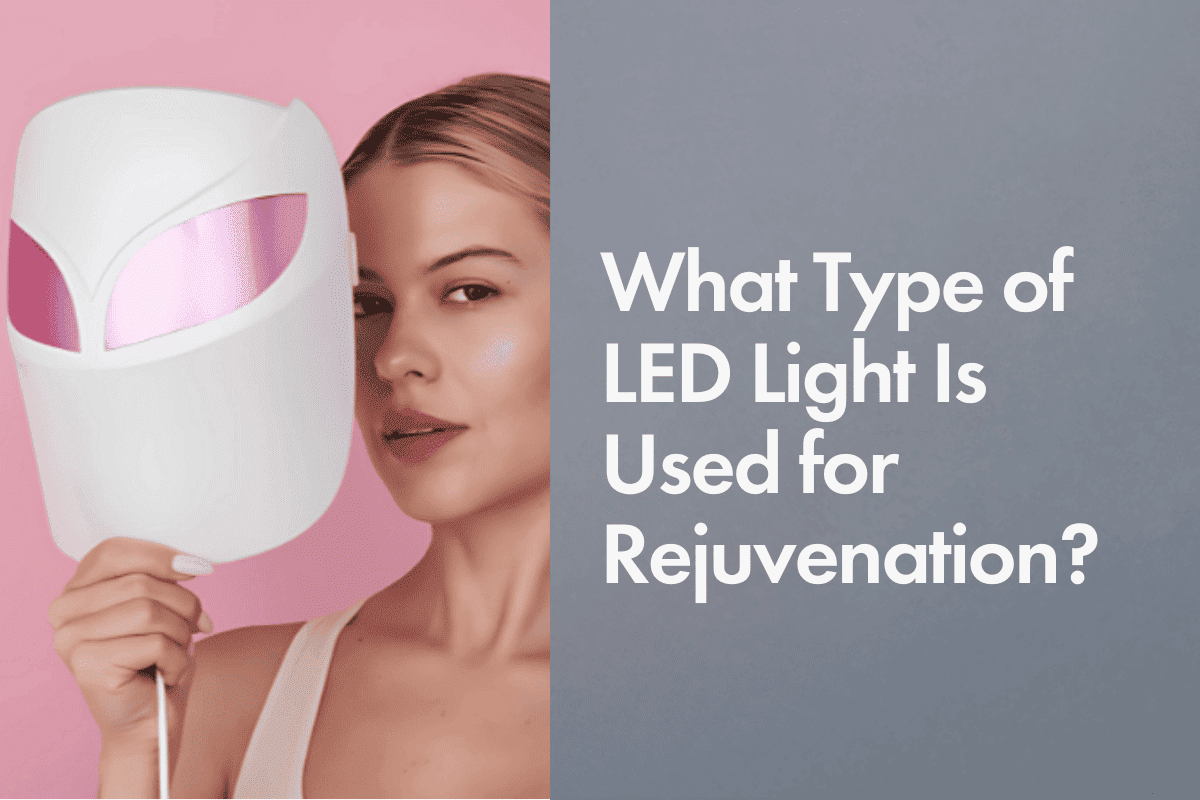

LED light therapy claims to smooth wrinkles, boost collagen, and brighten skin—all without a single needle. But does it actually work?
The truth is, not all LED light is created equal. If you’re after real rejuvenation, red and near-infrared light are the ones that matter.
We’ll explain why these wavelengths are the secret to firmer, healthier skin.
- Red and near-infrared LED light boost collagen and improve skin elasticity.
- Yellow light helps with redness but doesn’t provide deep rejuvenation.
- Professional treatments offer stronger results, but at-home devices work with consistency.
- Regular use is key—expect visible improvements after 4–6 weeks.
Types of LED Light for Skin Rejuvenation
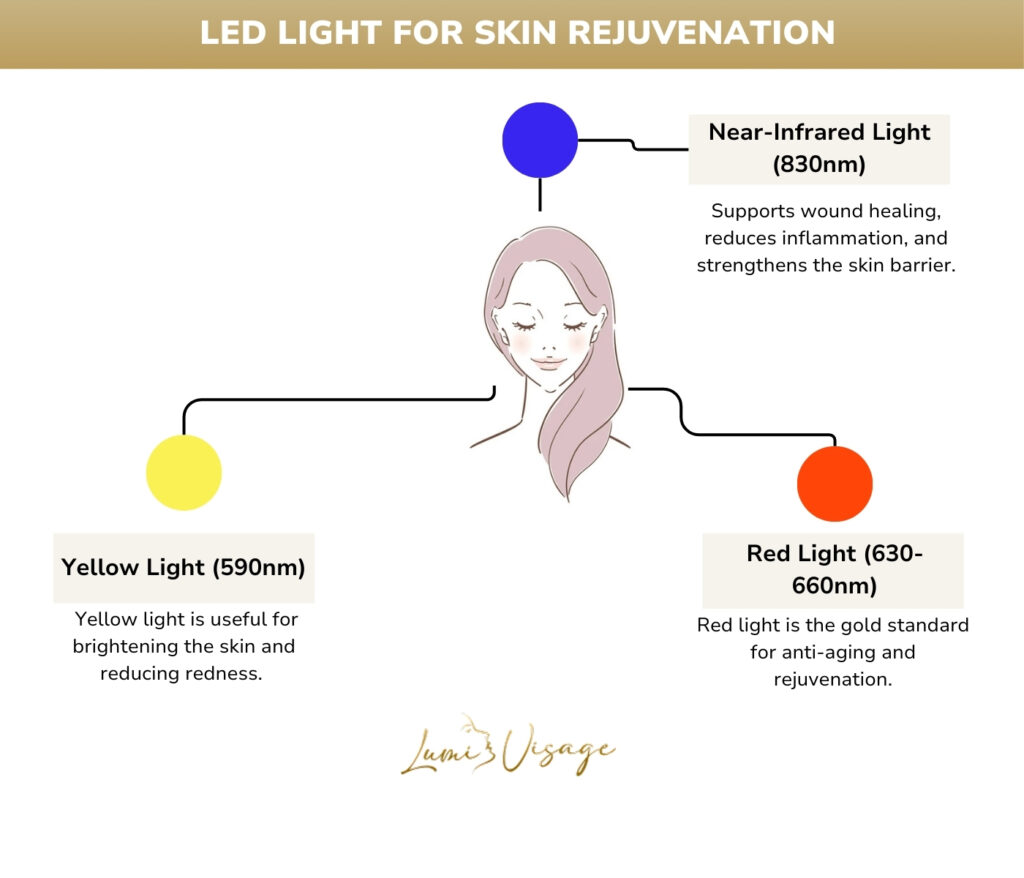
Red Light (630-660nm)
Red light is the gold standard for anti-aging and rejuvenation.
It works by stimulating fibroblasts, which are responsible for producing collagen and elastin. These proteins give skin its structure and firmness, making red light an effective tool for reducing fine lines, improving skin texture, and promoting a youthful glow.
In addition to collagen production, red light increases circulation, delivering oxygen and nutrients to the skin. This helps repair damage caused by environmental stressors, such as sun exposure and pollution.
Near-Infrared Light (830nm)
Near-infrared light goes even deeper than red light, reaching the subdermal layers where skin repair happens at a cellular level. It supports wound healing, reduces inflammation, and strengthens the skin barrier.
This wavelength is often used in medical treatments for pain relief and muscle recovery, but its benefits for skin are just as impressive.
Regular use can lead to firmer, more resilient skin that looks healthier over time.
Yellow Light (590nm)
While red and near-infrared light target deeper concerns, yellow light is useful for brightening the skin and reducing redness.
It can help with rosacea, sensitivity, and post-inflammatory discoloration, making it a great addition to a rejuvenation-focused routine.
Benefits of Red and Near-Infrared Light Therapy
Collagen Stimulation
Collagen production naturally slows down as we age, leading to fine lines, sagging, and dullness.
Red and near-infrared light help reverse this process by energizing fibroblasts, increasing collagen output, and improving skin elasticity.
With consistent use, skin looks firmer and smoother.
Improved Circulation
Good circulation is essential for healthy, glowing skin.
Red and near-infrared light boost blood flow, allowing more oxygen and nutrients to reach skin cells. This not only accelerates repair but also gives skin a more radiant appearance.
Inflammation Reduction
Inflammation is one of the biggest contributors to premature aging. Chronic exposure to pollutants, stress, and UV rays can lead to redness, irritation, and weakened skin.
Red and near-infrared light calm inflammation at a cellular level, helping skin recover from daily stressors and preventing long-term damage.
Treatment Protocols: In-Office Treatments vs At-Home Devices
| Feature | Professional Treatment | At-Home Device |
|---|---|---|
|
Light Intensity |
Higher, more powerful |
Lower but effective with consistency |
|
Convenience |
Requires appointments |
Use anytime at home |
|
Cost Over Time |
Expensive per session |
One-time investment |
|
Results Speed |
Faster, noticeable within weeks |
Gradual, visible in 4-6 weeks |
In-Office Treatments
Professional LED treatments deliver higher-intensity light using medical-grade devices.
These treatments are often used in combination with other anti-aging procedures, such as microneedling or chemical peels, to enhance results.
Many dermatologists recommend a series of sessions for maximum collagen stimulation.
At-Home Devices
For those who prefer convenience, at-home LED masks and handheld devices offer an effective way to maintain results.
While they are not as powerful as in-office treatments, regular use can still make a noticeable difference.
To get the best results:
- Use your device 3-5 times per week for 10-20 minutes per session.
- Apply LED therapy to clean, dry skin before applying serums or moisturizers.
- Be patient—collagen production takes time, so expect visible improvements after 4-6 weeks.
Safety and Considerations
Side Effects
LED light therapy is generally safe, with minimal risks when used correctly.
The most common side effect is mild redness or warmth after a session, but this typically fades within a few hours.
Contraindications
While LED therapy is safe for most people, certain conditions may require caution:
- Epilepsy: Flashing lights may trigger seizures in some individuals.
- Photosensitivity: Those sensitive to light (e.g., due to medications or skin conditions) should consult a doctor first.
- Pregnancy: While LED therapy is non-invasive, it’s best to check with a healthcare provider.
Not Seeing The Skin Rejuvenation You Expected?
Red and near-infrared light make all the difference

Frequently Asked Questions
Can LED light therapy be combined with other skincare treatments?
Yes! It works well with microneedling, serums, and facials, but avoid strong acids right before use.
Does LED therapy help with sun damage?
Red and near-infrared light can repair sun-damaged skin by boosting cell renewal and reducing inflammation.
How long do LED devices last before they need to be replaced?
High-quality LED masks can last several years, but cheaper models may lose effectiveness over time.
Can I use LED therapy if I have melasma?
Red and near-infrared light may help reduce inflammation, but always check with a dermatologist first.
Is there an ideal time of day to use LED therapy?
Evening is best—LED light preps skin for repair while you sleep, but morning use works too.
Conclusion
LED therapy isn’t just hype—it’s backed by science. But if you’re after real skin rejuvenation, the type of light you use matters.
Red and near-infrared wavelengths are the key to firmer, healthier skin, boosting collagen, improving elasticity, and helping repair damage over time. Consistency is everything, and whether you go for in-office treatments or an at-home device, results come with regular use.
If you want professional-grade LED therapy without the clinic visits, the Lumi Visage 7-Color LED Face Mask delivers the right wavelengths for real results. Get the benefits of red and near-infrared light, plus other targeted treatments, all in one device. Shop now and start your skin transformation today.