

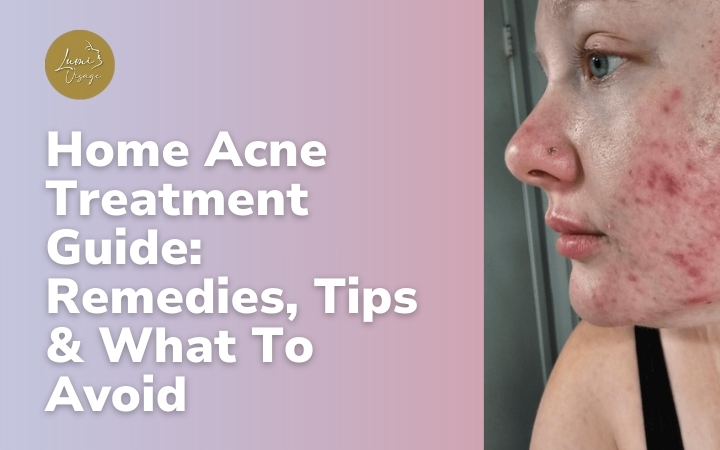

Acne doesn’t discriminate—it can hit anyone, anytime, and seriously knock your confidence.
If you’re searching for a home acne treatment that actually delivers results, you’ve come to the right place.
From natural remedies that soothe inflammation to essential tips for keeping breakouts under control, we have you covered.
Get ready to reclaim a clearer, healthier complexion
Key Notes
- LED light therapy effectively kills acne-causing bacteria with daily 10-minute sessions.
- Tea tree oil and aloe vera offer powerful, natural anti-inflammatory and healing benefits.
- Apple cider vinegar can work wonders but may irritate if not diluted properly.
- Avoid popping pimples or harsh products to prevent scarring and inflammation.
Understanding Acne: What It Is and Why It Happens
Acne strikes when oil and dead skin cells clog your hair follicles, leading to unwanted breakouts.
Hormones, stress, diet, and genetics all play a role, often making your skin a battleground.
And acne isn’t one-size-fits-all: from blackheads to cysts, recognizing each type can empower you to tailor your treatment and win the fight.
Effective Home Remedies for Acne
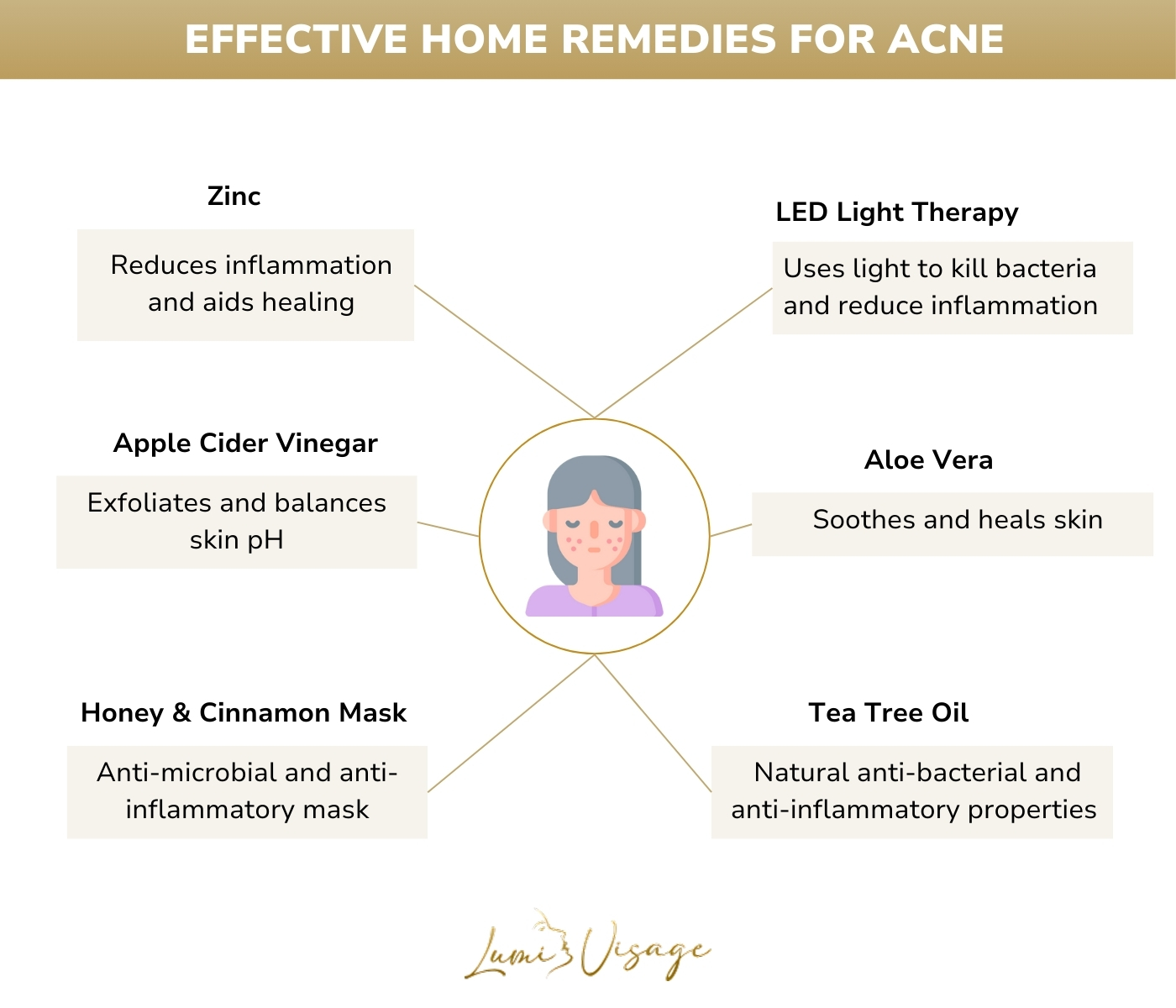
While home acne treatments aren’t a guaranteed cure for everyone, many of them have a strong foundation in research and traditional medicine.
1. LED Light Therapy
LED light therapy has become a popular home acne treatment option. Devices emitting blue or red light are designed to combat acne-causing bacteria and reduce inflammation.
Blue light penetrates the skin to kill Propionibacterium acnes, the bacteria responsible for breakouts, while red light helps reduce swelling and promotes healing.
How It Works
Home LED masks or handheld devices are widely available and easy to use. Typically, you place the mask over your face for 10-15 minutes daily.
Over time, this therapy reduces the frequency and severity of acne flare-ups.
2. Tea Tree Oil
Tea tree oil is an antibacterial powerhouse, known for its ability to combat acne-causing bacteria while reducing inflammation.
Studies suggest that tea tree oil can be as effective as benzoyl peroxide, a common over-the-counter acne treatment.
How To Use
Due to its potency, dilute tea tree oil with a carrier oil (like jojoba or coconut oil) before application. Use a cotton swab to dab it directly on blemishes.
Avoid using it on large areas to prevent irritation.
3. Aloe Vera Gel
Aloe vera is renowned for its soothing, anti-inflammatory properties. It also aids in wound healing, making it ideal for calming inflamed, acne-prone skin.
Application Tips
Extract the gel from an aloe plant or use a store-bought version free of fragrances and dyes.
Apply a thin layer after cleansing your skin. Aloe can be used as a daily moisturizer or spot treatment for areas of redness and irritation.
4. Honey and Cinnamon Mask
Combining honey and cinnamon creates a potent, antimicrobial face mask. Honey has natural antibacterial qualities, while cinnamon contains antioxidants and anti-inflammatory properties.
Preparation
Mix two tablespoons of honey with one teaspoon of cinnamon powder. Apply the mask evenly and leave it on for 10-15 minutes before rinsing.
Use this mask once or twice a week for noticeable results.
5. Apple Cider Vinegar (ACV)
Apple cider vinegar is an astringent that helps exfoliate the skin, balance pH levels, and kill bacteria.
However, it must be used cautiously, as its high acidity can irritate sensitive skin.
How To Apply
Always dilute ACV with water (one part vinegar to three parts water) before using it as a toner. Apply with a cotton pad, and focus on problem areas.
Avoid using undiluted vinegar to prevent burns and irritation.
6. Zinc Supplements and Topical Use
Zinc is an essential mineral that plays a role in wound healing, inflammation reduction, and immune function. It’s particularly effective for individuals who suffer from inflamed or cystic acne.
Ways To Use
Zinc can be taken as a dietary supplement or applied topically using creams. If you choose to ingest zinc, speak with a healthcare professional to ensure proper dosage and prevent side effects. Topically, zinc oxide creams are useful for calming irritation.
Breakouts Making You Feel Stuck and Stressed?
LED light therapy zaps acne fast and effectively.

Tips for a Healthy Skincare Routine
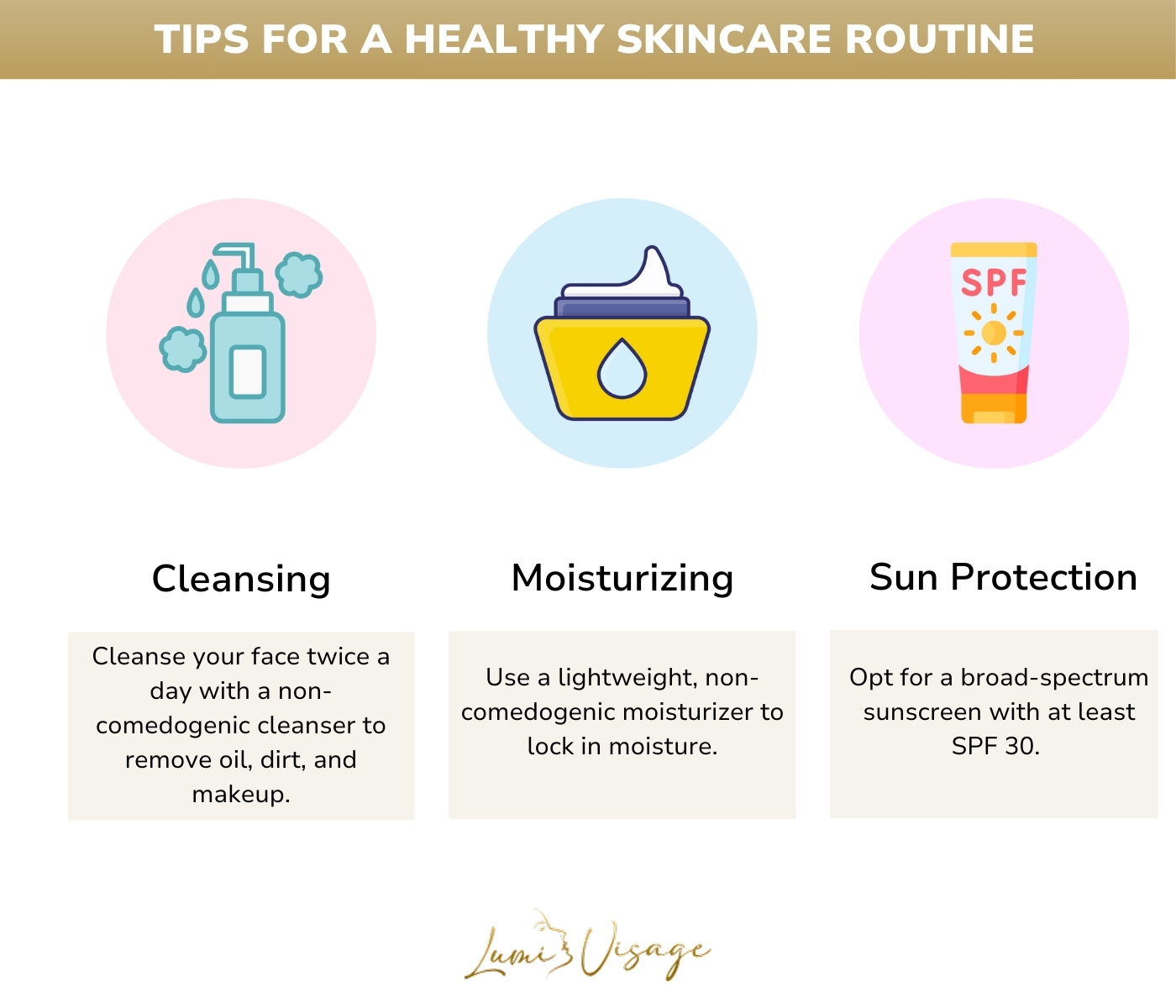
Acne management doesn’t stop at home remedies. A consistent skincare routine can make a significant difference.
1. Cleansing
Cleanse your face twice a day with a gentle, non-comedogenic cleanser to remove oil, dirt, and makeup. Avoid harsh soaps that can strip the skin’s natural barrier and worsen breakouts.
Consider cleansers that contain active ingredients like salicylic acid or benzoyl peroxide for acne control.
Advice: Wash with lukewarm water, as hot water can dry out and irritate the skin.
2. Moisturizing
Hydration is essential, even for oily or acne-prone skin. Use a lightweight, non-comedogenic moisturizer to lock in moisture without clogging your pores. Products labeled “oil-free” and “fragrance-free” are ideal.
Hydration Tip: A gel-based moisturizer is often more suitable for oily skin types.
3. Sun Protection
Daily sun protection is crucial, especially when using treatments that make your skin sensitive to UV rays.
Tip: Opt for a broad-spectrum sunscreen with at least SPF 30. Mineral sunscreens containing zinc oxide are particularly effective and gentle on sensitive, acne-prone skin.
What to Avoid During Your Acne Journey
Navigating acne treatment can be tricky, and some common habits can actually worsen breakouts:
1. Avoid Irritating Ingredients
Stay away from products with alcohol, heavy fragrances, or irritating essential oils. These can inflame your skin and lead to more acne.
! Always read labels and choose items specifically designed for sensitive or acne-prone skin.
2. Don’t Pick at Your Skin
Popping pimples may feel gratifying in the moment, but it leads to further inflammation, potential infection, and even permanent scarring.
Trust that your skin will heal faster and more smoothly if you leave blemishes alone.
3. Dietary Triggers
While everyone’s skin reacts differently, some foods have been associated with acne flare-ups.
High-glycemic foods and dairy products, in particular, may trigger breakouts in certain individuals. Keeping a food diary can help identify any patterns between diet and skin health.
Nutrition Tip: Incorporate anti-inflammatory foods such as leafy greens, berries, and omega-3-rich fish to support clear skin.
When To Get Professional Help
While home remedies can be helpful, they may not work for everyone. If your acne persists, worsens, or affects your mental well-being, it’s time to see a dermatologist.
Professional treatments can range from prescription creams to oral medications and even in-office procedures like chemical peels.
When It’s Critical
Signs that you may need expert intervention include deep, painful cysts, significant skin damage, or if acne leaves lasting marks and scars.
Frequently Asked Questions
Can LED light therapy work on all skin types?
Yes, LED light therapy is generally safe for all skin types, including sensitive skin. However, people with severe skin conditions like rosacea or photosensitivity disorders should consult a dermatologist before using.
How long does it take to see results with an LED mask?
While some users notice improvements in as little as two weeks, optimal results typically require consistent use for 8-10 weeks. Patience and adherence to the recommended schedule are key.
Is it safe to use LED light therapy every day?
Yes, most home devices are designed for daily use, but follow the manufacturer’s guidelines. Overuse can lead to skin irritation, so don’t exceed the suggested treatment time.