


Acne can feel relentless—just when you think you’ve won, new breakouts or stubborn scars appear.
If your bathroom shelf is already stocked with every lotion and potion but you’re still struggling, red light therapy is definitely worth a look.
This treatment is fast gaining attention for how it calms irritated skin and promotes healing.
We’ll explain why it’s the missing piece in your skincare routine.
Key Notes
- Red light therapy calms acne inflammation and promotes skin healing.
- Stimulates collagen, helping fade scars and reduce future breakouts.
- Safe, non-invasive, and effective for mild to moderate acne.
- Consistency is key—regular sessions yield the best results.
- Can help reduce oil production, lowering the risk of future breakouts.
How Does Red Light Therapy Work for Acne?
To understand how RLT works, we need to zoom in—literally—on the skin. Acne, at its core, is an inflammatory condition, one where clogged pores, excess oil, and bacteria gang up on your skin, creating those frustrating red bumps.
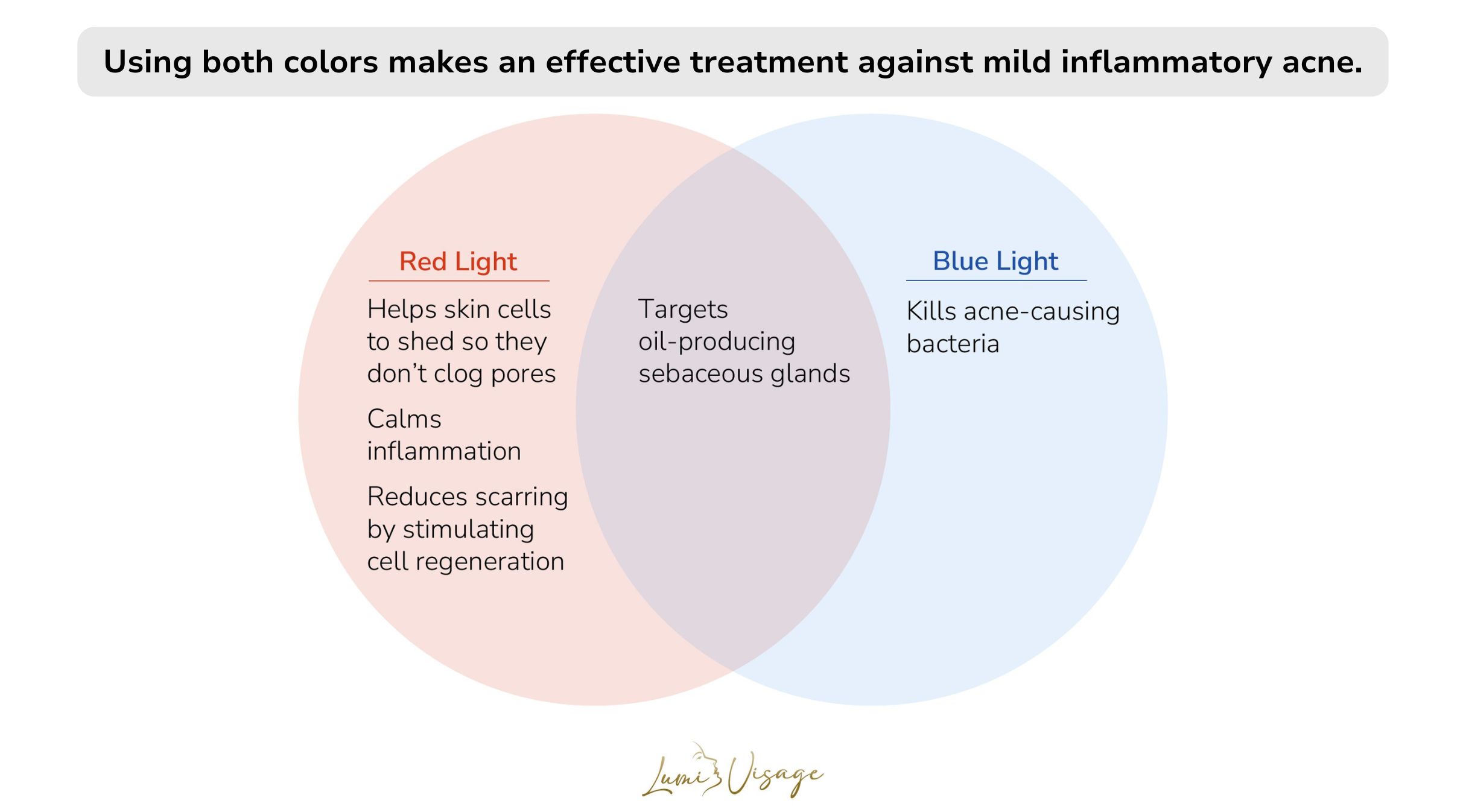
Red light therapy doesn’t fight the bacteria itself (that’s blue light’s job), but it plays a crucial role in taming inflammation and promoting healing.
When red light touches the skin, it stimulates cells called fibroblasts—responsible for producing collagen and other proteins that keep skin firm and healthy.
These fibroblasts get to work repairing damaged tissue, boosting cell regeneration, and reducing inflammation. For acne sufferers, this means less redness, fewer swollen pimples, and faster recovery from those stubborn post-breakout marks.
But the magic doesn’t stop there. Red light also seems to have a regulating effect on sebaceous glands, which produce the oil that clogs your pores in the first place. With consistent use, RLT can help control oil production, potentially reducing future breakouts.
Like anything worth your time and money, it’s not a quick fix. But for those willing to invest the time, the results can be both calming and transformative.
Benefits of Red Light Therapy for Acne
1. Calms Inflammation
If acne is a wildfire, inflammation is the fuel. Red light therapy douses that flame by acting directly on cytokines, the proteins that drive the body’s inflammatory response.
This means less swelling, reduced redness, and a calmer complexion.
2. Encourages Skin Healing
One of red light’s superpowers is its ability to stimulate your skin’s healing mechanisms. It encourages collagen production, which not only helps heal current breakouts but also smooths over the scars left behind by past battles.
3. Reduces Acne Scars
Speaking of scars, RLT has gained a reputation for being a secret weapon against those dreaded post-acne marks.
Over time, red light therapy can fade hyperpigmentation and improve skin texture, leaving you with a clearer, more even-toned complexion.
4. Safe and Non-Invasive
Perhaps the most appealing benefit? Red light therapy is non-invasive, meaning no harsh chemicals, no needles, and no downtime.
You can walk out of a session and go about your day—no need to hide behind closed doors while your skin recovers. It’s gentle enough for almost every skin type, and there’s no risk of UV damage like you’d find with tanning beds or some laser treatments.
Struggling With Stubborn Acne & Scars That Won’t Fade?
RLT could be the solution your skin’s been waiting for.

Is Red Light Therapy Really Effective for Acne?
Honestly, no skincare treatment is a golden bullet, but red light therapy comes pretty close.
Research on red light therapy is very promising. Studies suggest that it significantly improves acne, particularly when used consistently over time and in combination with blue light therapy.
However, it’s important to set realistic expectations. Red light therapy tends to work best for mild to moderate acne, especially when the main concern is inflammation and scarring rather than active, cystic breakouts.
It’s not a cure-all, but for people tired of harsh topical treatments, it can be a welcome addition to their routine.
The key here is patience. Red light therapy is a long game—it may take weeks or even months of consistent use to see noticeable improvements.
For those willing to invest the time, the payoff will be smoother, calmer, and less irritated skin.
Safety Considerations and Potential Side Effects
Red light therapy’s most appealing feature is its safety profile. Unlike other treatments that can strip your skin or cause side effects, RLT has a gentle yet effective approach.
There’s no UV radiation involved, so the risk of skin damage or cancer isn’t a concern. It’s a treatment you can undergo without worrying about long-term consequences.
But while RLT is generally safe, it’s not without minor side effects. Some users report temporary redness or sensitivity in the treated areas, though these symptoms usually disappear quickly.
The key to avoiding any adverse effects is following the manufacturer’s instructions or the guidance of your dermatologist—especially if you’re using an at-home device. More is not always better, and overusing RLT can lead to irritation or, in rare cases, mild burns.
Also, people taking photosensitizing medications, such as Accutane, should approach red light therapy with caution. If you’re pregnant or have certain light-sensitive conditions, you should definitely consult a healthcare professional before starting any treatment.
At-Home vs. Professional Treatments
| Feature | Professional Treatments | At-Home Treatments |
|---|---|---|
| Power & Effectiveness | More powerful devices, deeper skin penetration. | Less powerful but still effective with consistent use. |
| Administration | Administered by dermatologists or skincare professionals. | User-applied; requires following instructions closely. |
| Customization | Tailored to your skin type and needs. | Standard settings, less customization. |
| Cost | $50 to $200 per session, multiple sessions needed. | $50 to $1,000+ for devices; one-time purchase. |
| Convenience | Requires scheduling and visiting a clinic. | Can be used at home, anytime. |
| Session Duration | 5 to 20 minutes, depending on treatment and skin type. | 5 to 20 minutes, device-dependent. |
Whether you’re using an at-home device or going to a clinic, dermatologists recommend two to three sessions per week, over several weeks or even months, to see real, lasting changes. Each session usually lasts between 5 to 20 minutes, making it easy to fit into your routine.
Can Red Light Therapy Be Used with Other Acne Treatments?
The short answer is yes—and in fact, it’s often recommended.
Red light therapy can be paired with blue light therapy to tackle acne from two angles, addressing both the bacteria and the inflammation simultaneously. Many dermatologists will prescribe a combination approach, especially for people with more severe or cystic acne.
RLT also plays well with topical treatments, such as benzoyl peroxide or retinoids. Just make sure you’re spacing them out appropriately, as some treatments can make your skin more sensitive to light.
If in doubt, consult with a dermatologist to create a regimen tailored to your specific needs.
Frequently Asked Questions
Can red light therapy help with other skin issues besides acne?
Yes, red light therapy is often used for skin rejuvenation, reducing wrinkles, and improving skin elasticity. It can also help with conditions like eczema, psoriasis, and even sun damage.
How soon can I expect to see results from red light therapy?
Results vary, but some users report improvements in skin texture and reduced inflammation within 4 to 6 weeks of consistent use. However, more dramatic results may take several months.
Can red light therapy be used on sensitive skin?
Generally, yes. Red light therapy is considered gentle and non-irritating, making it suitable for sensitive skin types. However, if you have any concerns, consult a dermatologist first.
Does red light therapy require any post-treatment care?
Unlike more aggressive treatments, red light therapy typically doesn’t require any downtime. However, moisturizing and wearing sunscreen are good post-care practices to maintain skin health.
Is there an ideal time of day to do red light therapy?
There’s no strict “best” time, but many users prefer to do it at night to help their skin repair while they sleep. Others incorporate it into their morning routine for a fresh glow throughout the day.
Conclusion
Red light therapy is a game-changer for acne—gentle but seriously effective. It calms inflammation, speeds up healing, and leaves your skin looking healthier than ever.
It doesn’t just treat breakouts; it helps fade scars too, making it a must for any skincare routine. Stick with it, and you’ll love the results.
Want to see the difference? Grab our 7-color LED face mask and start your journey to clearer skin right from home.