


Light therapy is shaking up the acne game, using the power of red and blue light to fight breakouts from all angles.
Each light targets acne differently. Red light tackles inflammation while blue light kills acne-causing bacteria.
But, the million dollar question is—which one is actually better?
Let’s get into it.
Key Notes
- Red light reduces inflammation and promotes healing, great for deep cystic acne.
- Blue light targets acne-causing bacteria, ideal for surface breakouts like blackheads and whiteheads.
- Combining both lights can tackle multiple acne triggers for faster, more effective results.
- Studies show light therapy can reduce acne lesions by up to 70%.
How Red Light Therapy Works for Acne
Red light therapy has been found to penetrate deeper into the skin compared to blue light.
It works at a wavelength of about 630-700 nanometers, which allows it to reach the dermis—the second layer of skin where inflammation and healing processes occur.
Reducing Inflammation and Promoting Healing
Red light primarily targets inflammation. Acne, especially cystic or hormonal acne, is often driven by inflammatory processes. Red light helps reduce this inflammation, making it useful for those who suffer from swollen, painful blemishes.
Not only can it calm current acne, but it can also help prevent future breakouts by addressing inflammation at its root.
Benefits for Acne Scarring
Another significant benefit of red light therapy is its ability to aid in skin repair and regeneration.
This makes it particularly effective for reducing acne scars. By boosting collagen production, red light can help smooth out the skin and reduce the appearance of scarring over time.
Scientific Evidence Supporting Red Light Therapy
Multiple studies have shown that red light therapy can reduce acne lesions and help the skin heal. For example, a study published in the Journal of Clinical and Aesthetic Dermatology found that red light reduced inflammatory acne lesions by up to 70% in some patients after several weeks of treatment.
How Blue Light Therapy Works for Acne
Blue light therapy works at a shorter wavelength—around 400-490 nanometers—which allows it to target the surface of the skin. This is where acne-causing bacteria, specifically Propionibacterium acnes (P. acnes), thrive.
Killing Acne-Causing Bacteria
The primary mechanism of blue light therapy is its ability to kill P. acnes. These bacteria are a significant factor in many types of acne, particularly blackheads and whiteheads.
When exposed to blue light, the bacteria produce reactive oxygen species, which effectively destroy them.
So, by going straight to the source, it cuts down breakouts before they even start.
Fast Results for Active Acne
Blue light therapy is a go-to for mild to moderate acne, delivering fast results by reducing active breakouts.
Unlike red light, which targets inflammation, blue light goes straight to the cause of the problem—bacteria—making it an excellent option for those who have frequent breakouts, oily skin, or clogged pores.
Scientific Evidence Supporting Blue Light Therapy
Research has shown that blue light therapy can significantly reduce acne after just a few sessions.
A study published in The British Journal of Dermatology found that participants who received blue light therapy experienced a 60-70% reduction in acne lesions after four weeks.
While blue light is excellent at reducing active acne, it does not reach deeper layers of the skin, so it doesn’t have the same healing benefits as red light.
Red Light vs. Blue Light: Key Differences
While both red and blue light therapies are effective for treating acne, they work in different ways and target different aspects of the skin.
Penetration Depth
Red light penetrates deeper into the skin, targeting inflammation and promoting healing. Blue light remains closer to the surface and is more effective at killing bacteria.
Types of Acne
Blue light is best for surface-level acne like blackheads and whiteheads, while red light is better for inflamed, cystic acne that causes redness and pain.
Treatment Focus
Red light focuses on reducing inflammation and boosting collagen production, which helps with both active acne and scarring. Blue light is primarily concerned with killing acne-causing bacteria and reducing active breakouts.
Combined Red and Blue Light Therapy
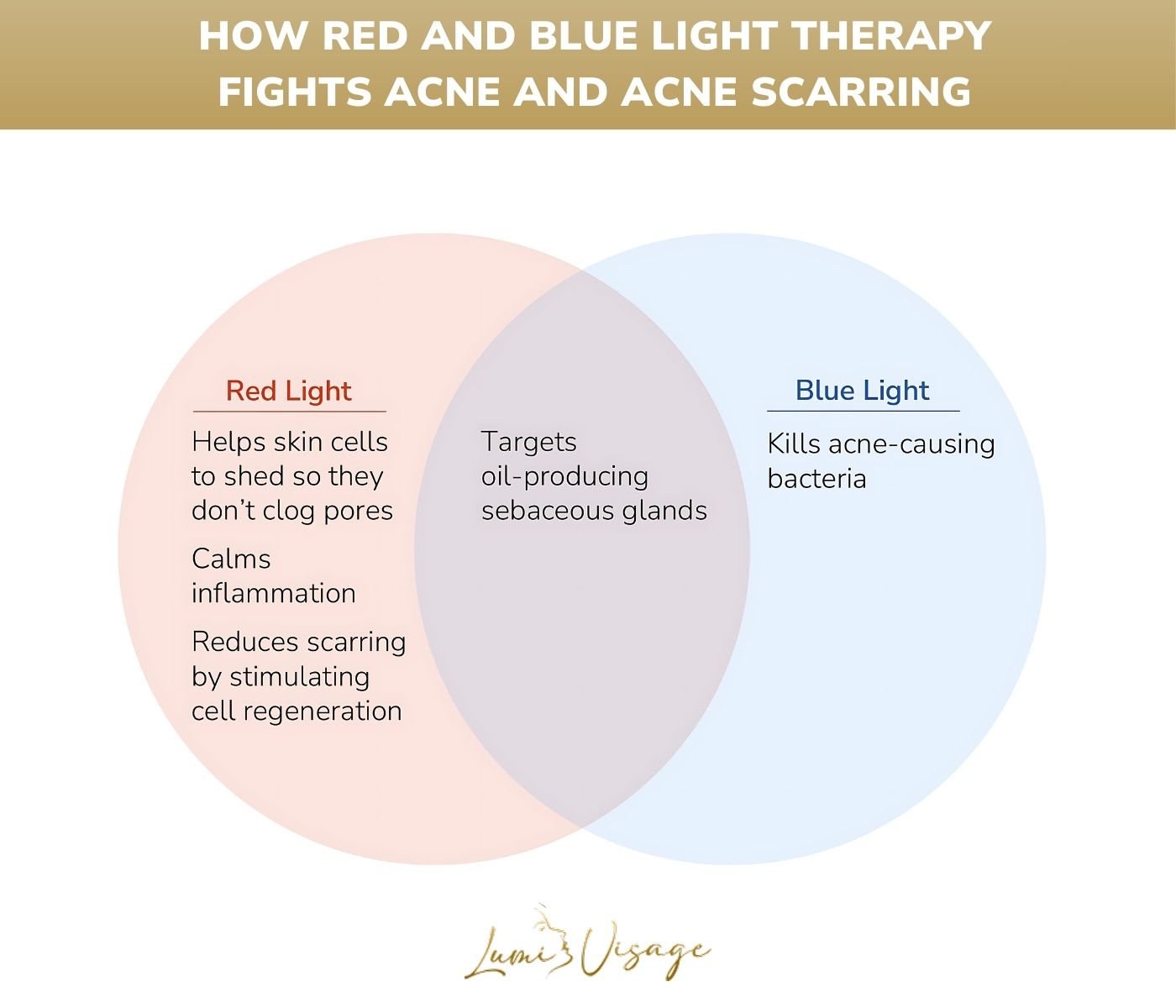
For many people, a combination of red and blue light therapy can be the most effective treatment. Using both types of light together allows you to tackle multiple causes of acne simultaneously.
By combining blue light’s bacteria-fighting capabilities with red light’s anti-inflammatory and healing properties, you can address both the cause and the symptoms of acne.
This is especially beneficial for those with moderate to severe acne, where both bacteria and inflammation play a role.
Many light therapy devices on the market offer dual-function options, allowing users to switch between red and blue light or use both in combination. For example, handheld LED devices or full-face masks designed for home use can provide the convenience of using both lights in one session, amplifying the benefits.
Which Therapy Is Best for Your Acne Type?
The best light therapy for acne largely depends on your skin’s needs and the type of acne you’re dealing with.
Here’s a breakdown to help you decide:
Best for Mild to Moderate Acne (Blackheads, Whiteheads):
Blue light therapy is most effective for killing surface-level acne-causing bacteria.
If you tend to get clogged pores, oily skin, or frequent breakouts without significant inflammation, blue light might be the best option for you.
Best for Inflammatory Acne (Cystic Acne, Redness):
Red light therapy works better for treating inflamed, painful acne.
If your breakouts tend to be red, swollen, and deep, red light’s ability to reduce inflammation and promote healing will offer more noticeable results.
When to Combine Both Treatments:
If your acne involves both surface-level bacteria and inflammation, combining both red and blue light therapy can be a powerful approach.
Using them together can tackle the root causes of acne while also promoting skin healing and reducing scarring.
Ready To Target Acne Right At Its Source?
Our face mask gives you clearer skin from every angle.

Are There Any Side Effects?
Light therapy for acne is generally considered safe and well-tolerated by most people.
However, it’s still essential to be aware of potential side effects:
Side Effects of Red Light Therapy
Red light therapy is non-invasive and causes few side effects. Some people might experience mild irritation, dryness, or redness after a session, but these typically fade quickly.
Because red light penetrates deeper into the skin, it’s important to follow the recommended treatment duration and not overuse it.
Side Effects of Blue Light Therapy
Blue light therapy also carries a low risk of side effects. Like red light, it may cause mild skin irritation, especially in sensitive skin types.
Since blue light works at a shallower level, overuse can potentially cause dryness or temporary pigmentation changes in some users, particularly those with darker skin tones.
It’s essential to follow the instructions provided with any light therapy device and avoid prolonged exposure beyond the recommended time to prevent any adverse effects.
Frequently Asked Questions
How long does it take to see results with light therapy for acne?
Most users typically start seeing results with light therapy for acne after 4 to 8 weeks of consistent use, though the time frame can vary depending on the individual.
Can light therapy be used on all skin types?
Yes, light therapy is generally safe for all skin types, but those with darker skin tones should be cautious as blue light can sometimes cause temporary pigmentation changes.
Is light therapy safe to use with other acne treatments?
Light therapy can be safely combined with most topical treatments, but avoid using it with products that increase light sensitivity, such as retinoids or certain acids.
Do I need to wear protective eyewear during light therapy?
Yes, protective goggles are often recommended to shield your eyes from the bright light, especially with blue light therapy, which can cause eye strain.
Conclusion
Choosing between red and blue light therapy for acne comes down to your skin’s specific needs.
Blue light targets acne-causing bacteria, perfect for clearing up active breakouts. Red light reduces inflammation and supports healing, making it great for deeper cystic acne.
For many, a combination of both delivers the best results—fighting bacteria while soothing redness and preventing scarring.
Ready to take control of your acne? Shop our 7-Color LED Face Mask and experience clearer skin from all angles.