



Is the glow of red light therapy really worth the splurge?
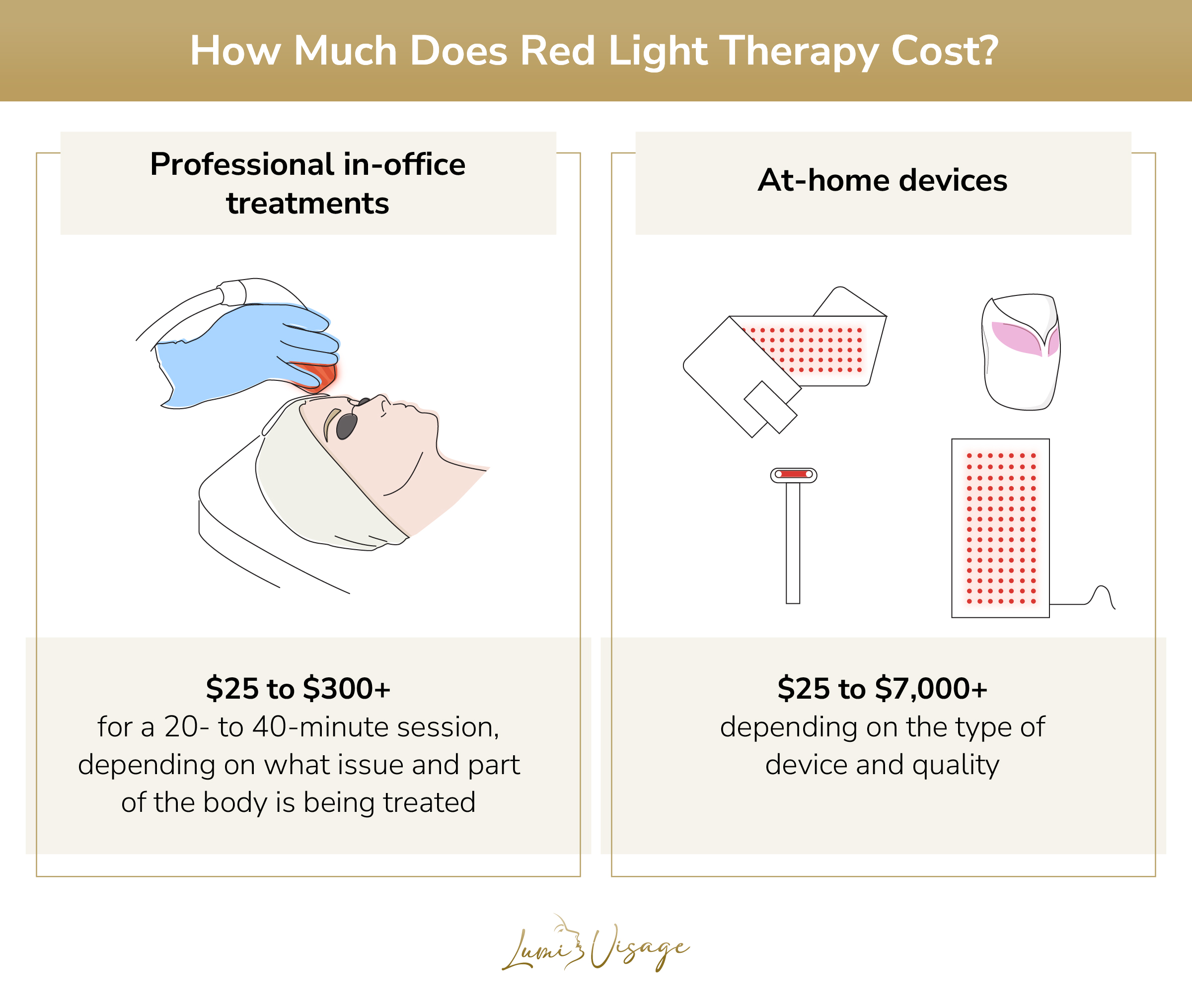
With sessions priced between $25 and $300 and home devices ranging from a modest $25 to a whopping $7,000+, finding what’s worth the cost can feel like a maze.
But don’t fret, we’re here to help!
We’ll unpack the real costs of red light therapy to help you make a choice that shines for both your skin and your wallet.
Key Notes
- In-office red light therapy ranges widely, from $25 to $300 per session.
- At-home devices vary in price, from $25 to full-body panels costing $7,000+.
- Professional sessions can target severe skin issues; at-home options fit into daily routines.
Cost of In-Office Red Light Therapy Sessions
Most dermatology clinics and medspas offer red light (and other color light) therapy sessions for between $25 and $300, and they time these sessions between 20 to 40 minutes.
The cost of your treatment varies on several factors, which include:
- Area of your body and condition being treated
- Location of the clinic in the US (major cities may be more expensive)
- Session length, which can change depending on the issue being treated
- Other treatments involved (such as pre- or post-treatment facials or creams) or complementary treatments like microdermabrasion.
- The clinic’s equipment and staff’s level of experience
- The clinic’s pricing structure, including memberships, block bookings, and group discounts
If you plan on attending an in-office treatment session, then it’s best to contact your dermatologist or a clinic in your area to learn the specific prices and what’s included in the treatment.
Cost of At-Home Red Light Therapy Devices
If you decide to purchase an at-home red light therapy device, keep in mind that it can cost anywhere from $25 to several thousand dollars.
Here are approximate price ranges for devices you can use at home:
- Lamps: $25 to $250
- Half-body panels: $300 to $3,000
- Full-body panels: Up to $7,000
- Specialist devices, like belts, mats, and wands: $300 to $1,000
- Face masks: $300 to $500
Each at-home device serves a different purpose, as some only treat parts of your body while others can treat your whole body at once.
The larger the device, the more expensive it is as it comes with more light bulbs and treatment options.
Dreaming Of Clinic-Level Skin Treatment At Home?
Affordable, FDA-cleared, cordless – the future of facial care is here.

Choosing Between In-Office and At-Home Treatments
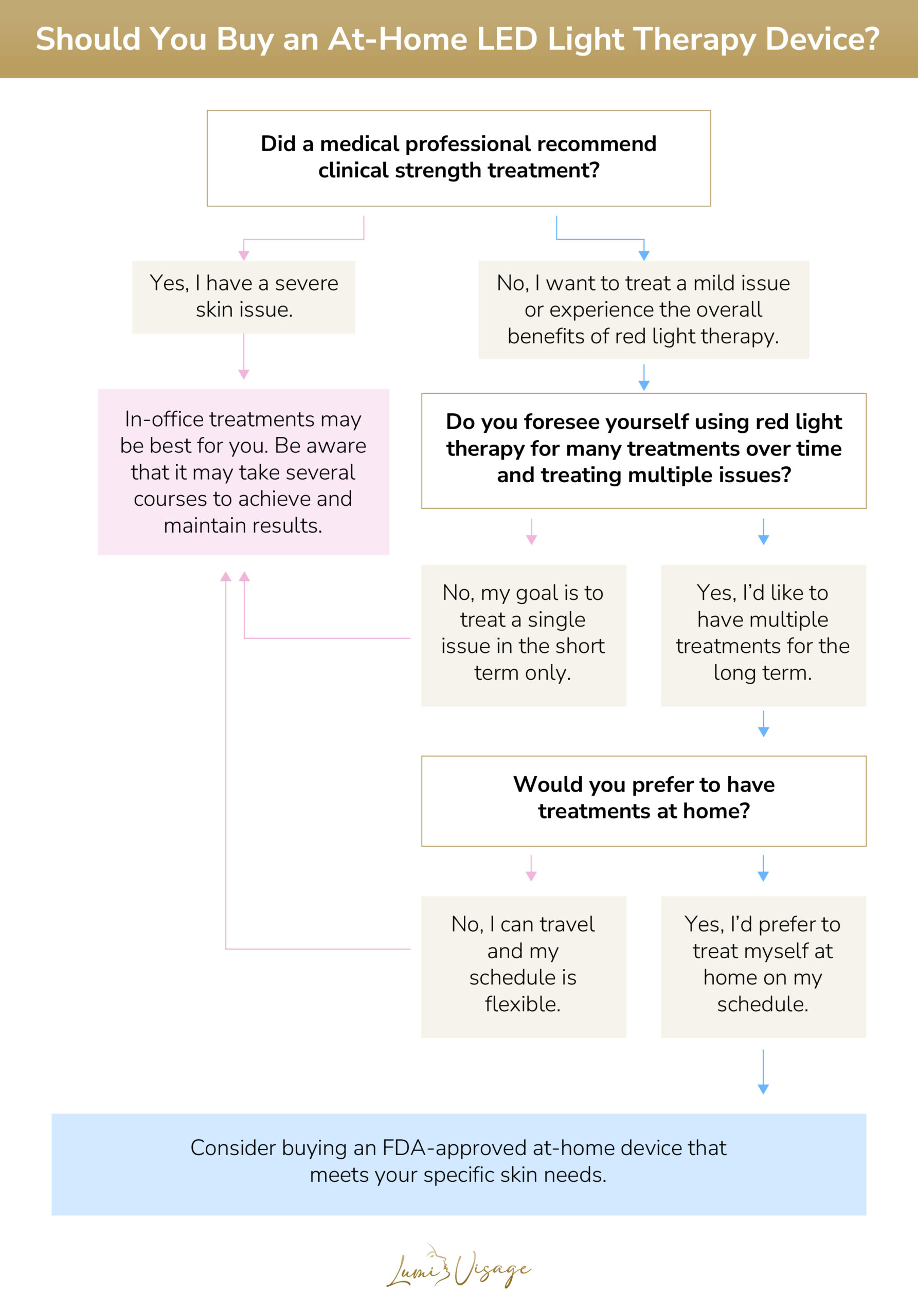
While in-office treatments are more expensive, the expense comes with benefits, such as allowing you to have a licensed professional on hand to give you the treatment.
These treatments may be recommended by a doctor if you have a severe skin issue, such as psoriasis, and having a medical professional administering these treatments may give you better results than at-home treatments.
If you simply wish to undergo a low-level laser therapy treatment for cosmetic reasons, such as improving your skin health or experiencing anti-aging benefits, then an at-home device may be the right option for you.
At-home devices offer benefits as well, such as fitting seamlessly into your everyday schedule.
| In-office | At-home | |
|---|---|---|
| Cost | Typically $25 and $300 per session | $25 to $7,000+ depending on the device |
| Most suitable for | Treatment when medically needed or suggested by a doctor | Treating milder issues and improving your skin health overall |
| Intensity | Stronger | Weaker |
| Protocol | Administered by a professional | Follow the instructions for the specific device |
| Safety | Supervised and monitored by a medical professional | Make sure to choose an FDA-cleared device |
| Convenience | Need to book and visit the clinic for treatment | Can use your device any time, as often as you want |
When you try to decide between the two, consider what you want treatment for, how severe your skin issue is, and whether it calls for professional treatment.
If your dermatologist doesn’t deem it medically necessary, compare the cost of an at-home device with the treatment options at your local clinic.
You’ll also want to consider convenience. An at-home device can easily be incorporated into your skincare routine and is much easier than booking an appointment and driving to the clinic.
How Many Red Light Therapy Sessions Do You Need?
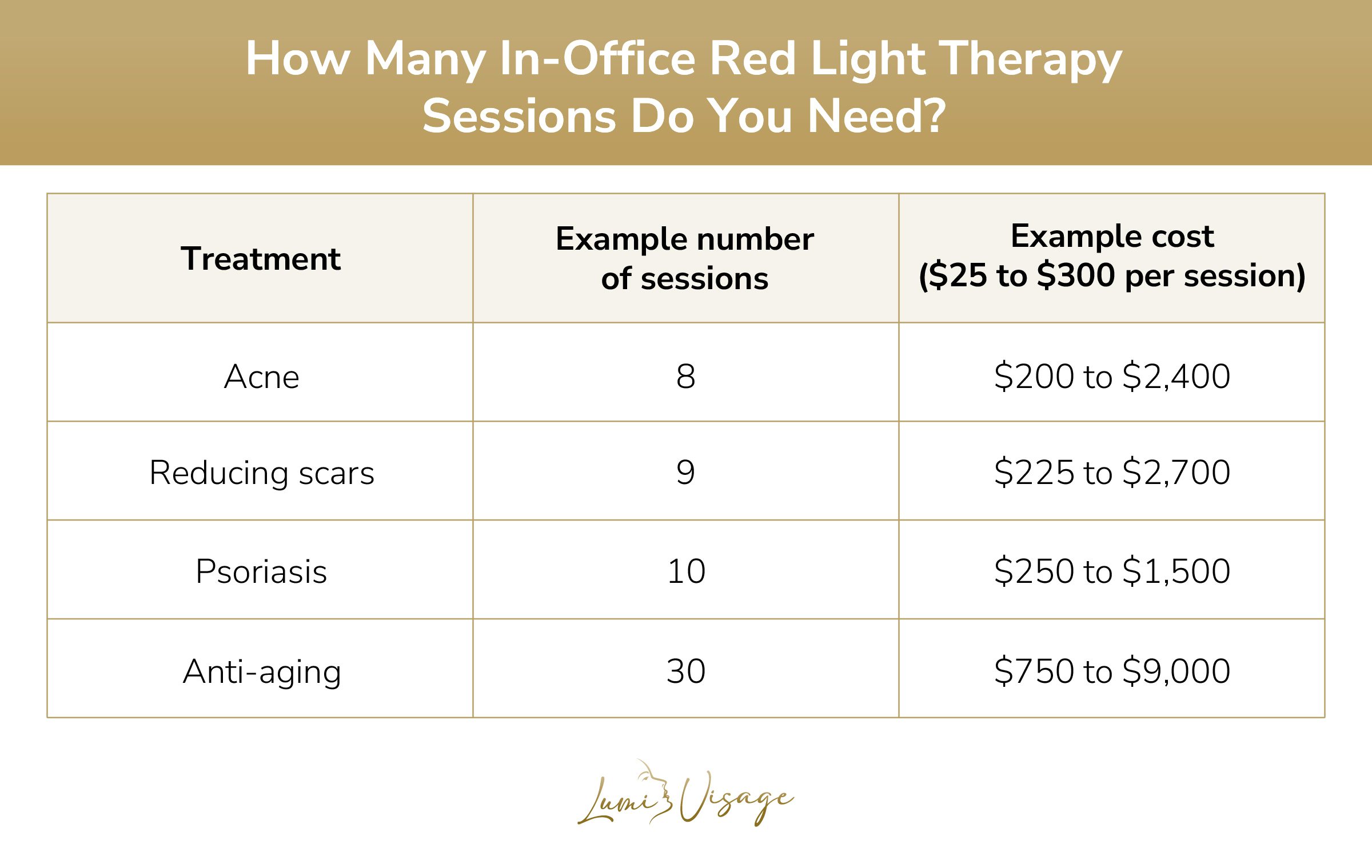
If you’re looking to do in-office treatment, think about how many sessions you’ll need.
Here’s the amount of sessions, based on skin condition, that different patients in studies experienced:
Anti-Aging
Subjects who saw results from red light therapy were treated with a professional-grade red light device for a total of 30 treatment sessions, which were conducted twice a week.
Acne
In a study where patients were treated with blue and red LED light combined with mild microdermabrasion for 8 sessions (2 per week), results were observed from the second week (after 4 sessions)
Reducing Scars
A study showed positive results for reducing different types of scars based on 9 treatments (triweekly for 3 weeks).
Psoriasis
A study showed good results for psoriasis based on 8 to 10 sessions (two 20-minute sessions a week for 4 or 5 weeks).
Is Red Light Therapy Covered by Insurance?
Red light therapy is typically not covered by insurance because it is considered a cosmetic treatment and not always medically necessary.
Other types of phototherapy may be covered by insurance if deemed medically necessary by your doctor or healthcare professional.
You should contact your insurance provider to make sure of their policy on red light therapy before you book a treatment or make a purchase.
How to Choose an At-Home Red Light Therapy Device
While at-home devices are certainly cheaper than an in-office treatment, not all home devices are safe to use.
If you believe an at-home therapy device is best for you, follow these tips to ensure you choose the right one for you:
1. Choose a Device that Targets Your Specific Issue
No at-home device will be the same. Each type of device is created to target a specific issue or treatment area of your body.
These include:
- Lamps: Often handheld so you can shine the light on one particular body part
- Full and half-body panels: Designed for you to sit or stand in front of to target a larger area of your body
- Belts: Strap around your waist or upper body so you can treat yourself while not sitting perfectly still, such as when working
- Mats: Can be used for yoga or meditation
- Wands: Highly targeted skin treatment that requires you to move the device
- Face masks: Treats your whole face similar to a facial, but is also securely held in place so you can use it anywhere
If your end goal is to improve your skin, enjoy the health benefits of red light, and combat aging, then a face mask is the most reliable and relaxing at-home device to accomplish it.
2. Look for Devices with Multiple LED Light Settings
There are other colors on the spectrum besides red, and they have other benefits for your skin and body in addition to red light treatment.
For example, blue light therapy treats acne and green light can aid headaches. So, you should look for at-home devices with multiple LED light settings.
Most lamps and full-body red therapy panels will only offer red light. If you want to get your money’s worth out of an LED light therapy device, you ought to consider an LED face mask.
3. Read the Settings and Product Information
When you’re choosing your device, be sure to check out its features and settings.
Make sure the wavelengths are within the clinically proven safe range, so you don’t risk irritating or damaging your skin even more. You should also purchase a device that is easy to use with a good warranty.
4. Make Sure the Device is FDA-Cleared and Safe
Only consider devices that have been FDA-cleared.
Because the light can damage your eyes, you should keep your eyes closed during red light therapy. Y
ou can also look for a device that has built-in eye protection to protect your eyes and timers that prevent your device from overheating and hurting you.
Looking For Pro-Level Results Without The Price Tag?
Get clinic-quality red light therapy straight to your home.
Frequently Asked Questions
Can red light therapy be used with other skin treatments like chemical peels or microdermabrasion?
Yes, red light therapy can complement treatments like peels and microdermabrasion by reducing inflammation and aiding healing, but spacing sessions is crucial. Wait 24–48 hours after an intensive skin treatment.
How soon can I expect to see results from red light therapy?
Many see initial improvements in skin tone within 2–4 weeks with regular use, but lasting results for anti-aging or scarring often require 8–12 weeks.
Is red light therapy safe to use on sensitive skin?
Red light therapy is generally safe for sensitive skin, but start with shorter sessions and monitor for any redness or discomfort, gradually increasing exposure time as your skin adjusts.
Conclusion
Red light therapy offers flexibility in both professional and at-home treatments.
In-office sessions range from $25-300, providing supervised care with stronger intensity – ideal for specific medical needs. At-home devices span from $25 lamps to $7,000 full-body panels, letting you incorporate treatments into your daily routine.
While insurance typically doesn’t cover these treatments, the investment can be worthwhile depending on your needs.
Looking for professional-grade treatment without the ongoing costs? Experience the benefits of our FDA-cleared 7-color LED face mask. Shop now and save $100 on your path to healthier, rejuvenated skin.