

Whether you want to address specific skin concerns or simply make your skin look more radiant, light-emitting diode (LED) light therapy is an effective and affordable solution. It’s a safe and non-invasive treatment for a variety of skin conditions, helping to reduce acne breakouts, signs of aging, inflammation, rosacea, uneven skin tone, and more.
LED light therapy is available as an at-home treatment, through options like light therapy masks, as well as in-office from providers like your dermatologist.
In this post, we go over how light therapy works, the science behind this skin treatment, and some of the benefits of LED light therapy.
What Is LED Light Therapy?
LED light therapy is a skin treatment in which light penetrates your skin, targeting and improving issues in your complexion. Different colors of visible light correspond to specific wavelengths, measured in nanometers (nm).
Each color acts on a specific layer of skin, targeting certain cellular components with specific actions. In general, the higher the wavelength, the deeper the light penetrates your skin. This light is absorbed by components of the cellular respiratory chain, a series of proteins embedded in the inner membrane of our mitochondria, which is the powerhouse of the cell.
When light is absorbed by this chain, the result is increased ATP synthesis, increased RNA and protein synthesis, and increases in oxygen consumption, membrane potential, and increased synthesis of NADH (a molecule that stores energy). All of these responses improve your skin’s cellular function and repair.
Blue light (465 nm) kills acne-causing bacteria, helping reduce breakouts and treat inflammatory skin conditions, like eczema, psoriasis, or severe acne. Red (637 nm) and near-infrared light (854 nm) penetrates more deeply, enhancing collagen production and firming skin, reducing fine lines and wrinkles, and reducing inflammation and redness. Other common light therapy colors are green, yellow, and amber.
LED Light Therapy Benefits
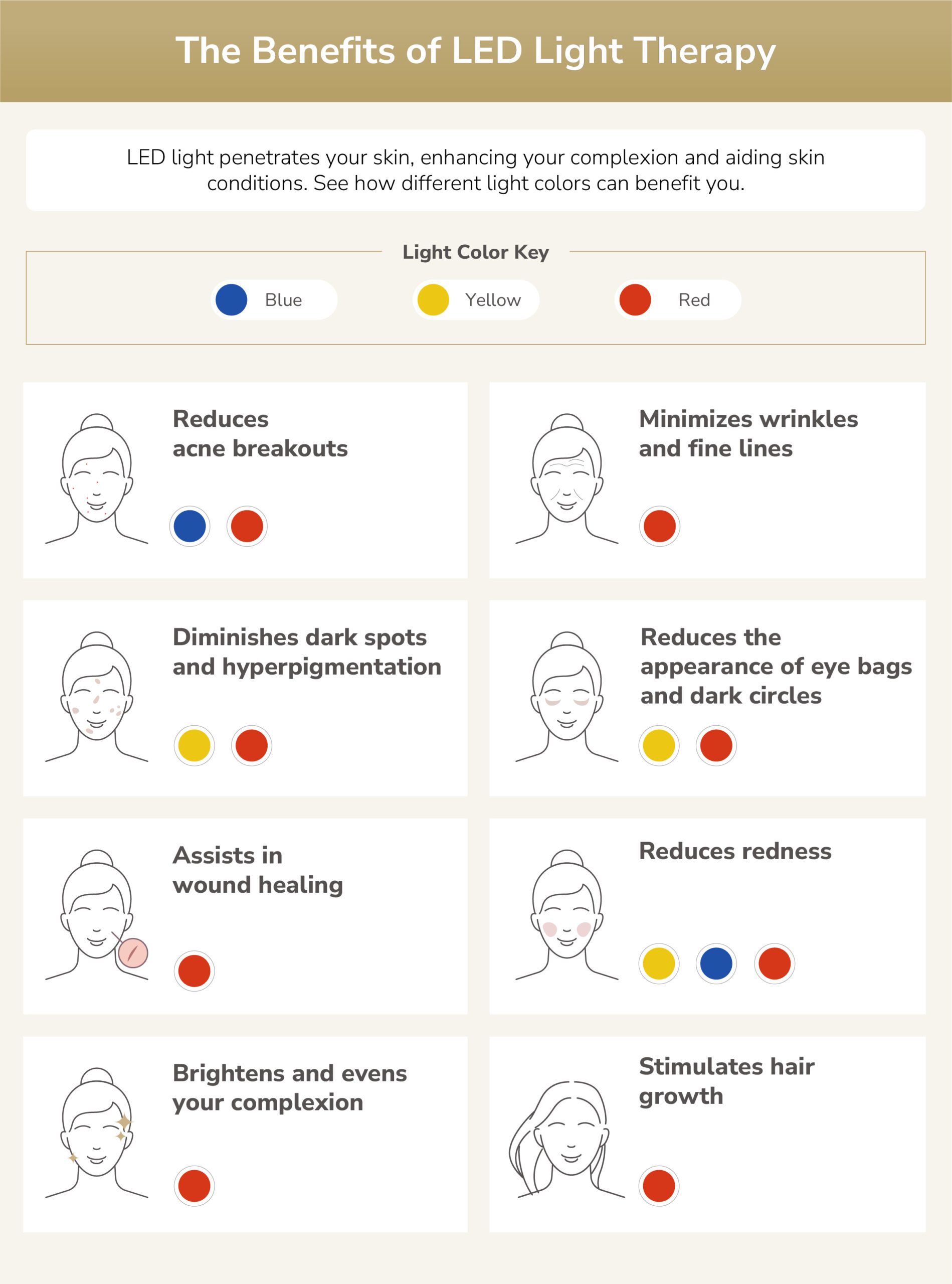
LED light therapy has many benefits for all skin types. Let’s take a look at what it can do for your skin.
1. Reduces Acne Breakouts
Blue light and red light are most effective for treating acne breakouts. Blue LED light kills acne-causing bacteria, so it has the potential to reduce acne breakouts.
Red light can reduce sebaceous (oil) gland secretions, control oil production, and reduce inflammation. It can also normalize hyperkeratinization, limiting excess skin cells in the hair follicle and reducing the incidence of acne.
The combination of blue and red light offers even more improvement with acne.
Back in 2021 a mass review of different studies showed significant improvement in the overall picture of acne of patients in almost eight different studies that used blue light to treat acne patients.
LED light therapy may work in conjunction with other treatments like retinoids. However, make sure not to apply retinol products directly before using an LED light therapy at-home device as it can make your skin more photosensitive.
2. Minimizes Wrinkles and Fine Lines
While wrinkles are a natural part of aging, lifestyle and environmental factors can also play a role in how you develop them. Slow skin cell production, thinning skin, and less collagen all contribute to wrinkles.
Red and near-infrared light therapy helps minimize fine lines and wrinkles by increasing your skin’s production of hyaluronic acid, collagen, and elastin. These substances positively impact the skin, improving hydration, elasticity, and structure which in turn reduces wrinkling and roughness.
3. Diminishes Dark Spots and Hyperpigmentation
Yellow and red light therapy are useful for treating dark spots and hyperpigmentation. Both issues can be caused by an increase in melanin, which is the pigment that gives your skin color.
Red light penetrates deeply to target melanocytes, the cells that produce melanin pigments. This increases the activation of the key signaling pathway in melanocytes, referred to as ERK (extracellular signal-regulated kinase), decreasing pigmentation and dark spots.
Red light impacts pigmentation through decrease in the production of tyrosinase, a necessary enzyme for melanin synthesis. By inhibiting tyrosinase production, less melanin can be synthesized and accumulate in your cells.
Like red light, yellow light therapy has shown that it can be as effective as red light when it comes to decreasing melanin production and inhibiting tyrosinase production, an essential component in melanin synthesis. Yellow light can also prevent melanosomes—the organelles that synthesize melanin—from maturing, causing them to lack pigmentation.
4. Reduces the Appearance of Eye Bags and Dark Circles
Under-eye bags and dark circles have a variety of causes, including inflammation, hyperpigmentation due to excess melanin production, and loose skin from collagen loss. Red and yellow light can help reduce the appearance of eye bags and dark circles by treating each of these potential causes.
If dark circles are caused by hyperpigmentation, red light and yellow light can help by inhibiting melanin production.
If dark circles are caused by inflammation or loose skin, red light can help because it reduces inflammation and enhances collagen production, leading to tighter skin and a more even complexion.
5. Assists in Wound Healing
Both red light therapy and infrared light therapy can be effective for wound healing. Both types of light therapy help reduce inflammation, increase collagen production, and control cells responsible for tissue remodeling, all of which help your skin rebound from damage.
NASA has done extensive testing on LED and near-infrared light on wound healing. In various studies on mice and rats, NASA scientists have found that it speeds up the healing process, especially those deprived of oxygen, as well as increased cell growth.
6. Reduces Redness From Skin Conditions Like Rosacea
Skin conditions like rosacea, eczema, and psoriasis are characterized by skin flare-ups and inflammation, often resulting in an uneven complexion. Red and yellow light can help reduce the redness these conditions cause by reducing inflammation and (increasing ATP production). But you may need clinical-strength LED treatment to treat these conditions.
Both red light and near infrared achieved good results in reducing inflammatory mediators and new vessel formation causing rosacea. Blue light helps in the reduction of inflammation and the treatment of inflammatory skin conditions, such as atopic dermatitis, eczema, and psoriasis. And in one study, yellow light was found to reduce the redness of skin and erythema following some procedures and for some skin conditions.
7. Brightens and Evens Your Complexion
Red light therapy increases the production of collagen, elastin, and hyaluronic acid, and it promotes better circulation, leading to tighter, brighter skin. Collagen and elastin are proteins that give your skin its underlying structure. It’s part of what keeps skin from sagging as the elastin helps it snap back into shape and the collagen gives it a firm look. Hyaluronic acid tops it all off by helping your skin retain its moisture, brightening your complexion and keeping skin plump.
As we age, we lose collagen, and the loss accelerates later on in life — for example, women can lose up to 30% of their collagen production in the first five years after menopause alone. Skin therapies that promote collagen production can help combat this loss, keeping skin firm, even, and youthful for longer.
8. Stimulates Hair Growth
Red light therapy penetrates deep into your cells, stimulating the mitochondria, increasing blood flow, and increasing ATP production, which can positively impact hair growth. It can both stimulate the growth of hair follicles and prolong the anagen or growth phase.
In one study, patients with androgenetic alopecia — a type of hair loss caused by an abnormal genetic response to androgens, which affects both men and women — showed a 39% increase in hair density after LED light treatment every other day for six weeks.
9. Has Advantages over Laser Treatments
In recent years, non-coherent light sources such as light-emitting diodes (LEDs) and broad-band lamps have become common. Advantages of LEDs include no laser safety considerations, ease of home use, ability to irradiate a large area of tissue at once, possibility of wearable devices, and much lower cost, meaning LED photobiomodulation is here to stay.
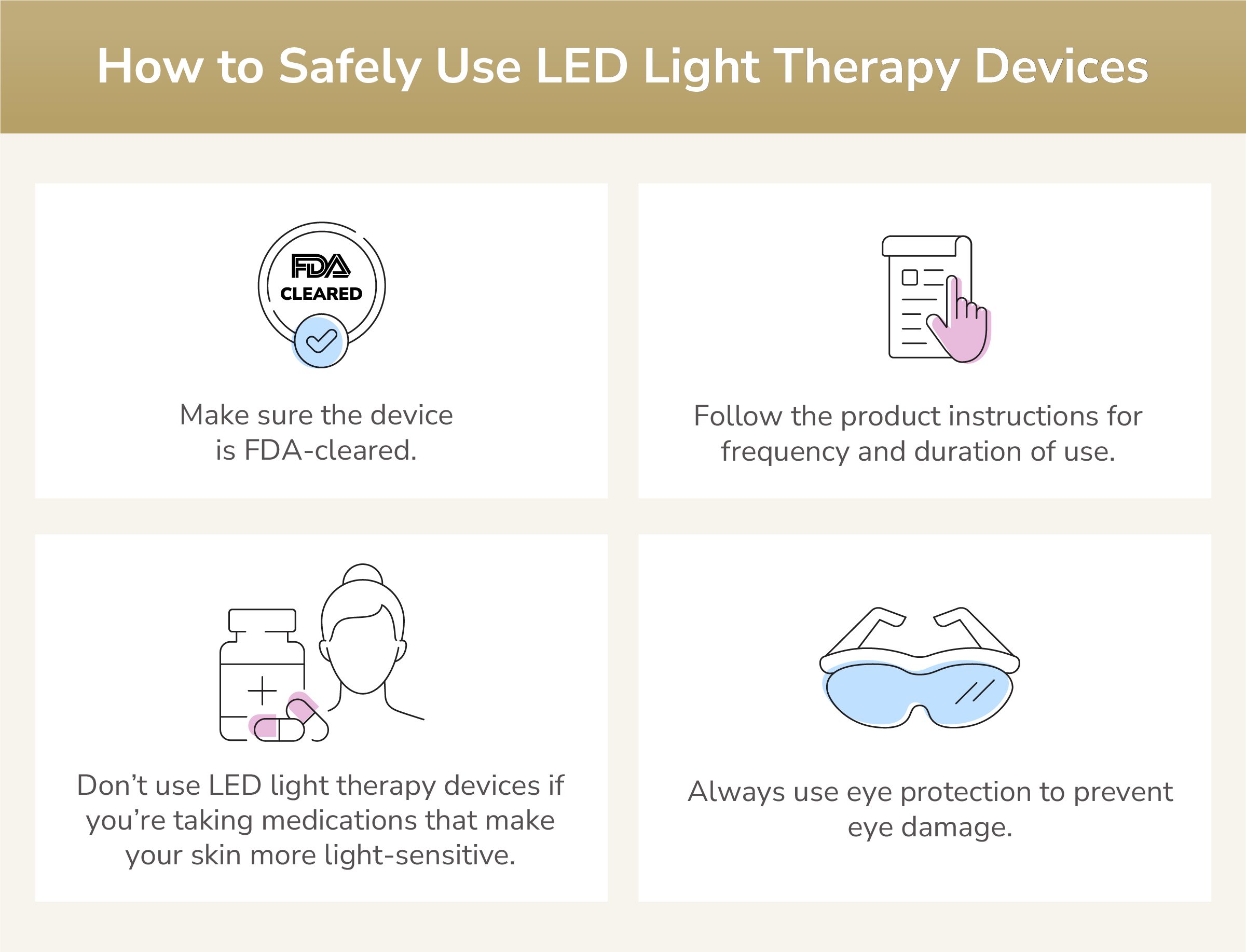
How to Safely Use LED Light Therapy
With all its potential benefits, LED light therapy might just be the skin-rejuvenation device you’re looking for. Just make sure you go about the treatment safely. Here are safety precautions you should take to make sure you get the best results:
- Look for an FDA-cleared device. Getting FDA clearance means the device has been reviewed by the FDA and deemed safe for consumers to use. Lumivisage products are FDA-cleared.
- Follow product instructions. Your LED light therapy device should come with specific instructions for use that ensure your safety. Make sure you follow them when using the device.
- Avoid use with certain medications. If you’re taking medications that cause photosensitivity, like Accutane or antibiotics, don’t use LED light therapy.
- Always use eye protection. Risks to eye health from light therapy can range from discomfort due to brightness, all the way to damage from UV rays. No matter what wavelength you’re using, it’s always best to protect your eyes. The Lumivisage mask has built-in eye protection.
Finally, if you have any questions or concerns about LED light therapy, make sure to consult with your doctor or dermatologist.
Try At-Home Light Therapy Today
With the versatility to address a broad spectrum of skin concerns, it’s no wonder LED light therapy is such a popular treatment. Whether you want anti-aging benefits, something to use in addition to your current regimen of creams and serums, or you just want to improve your overall skin health, light therapy is a worthwhile addition to any skin care regimen.
With Lumivisage’s LED Light Mask, you can try LED light therapy from the comfort of your home.
References
Journal of Cosmetic and Laser Therapy. “Light-emitting diode 415 nm in the treatment of inflammatory acne: an open-label, multicentric, pilot investigation.” https://pubmed.ncbi.nlm.nih.gov/16581683/. Date accessed: November 6, 2023.
Archives of Dermatological Research. “Regulation of lipid production by light-emitting diodes in human sebocytes.” https://pubmed.ncbi.nlm.nih.gov/25690162/. Date accessed: November 6, 2023.
Lasers in Surgery and Medicine. “Low-level red LED light inhibits hyperkeratinization and inflammation induced by unsaturated fatty acid in an in vitro model mimicking acne.” https://pubmed.ncbi.nlm.nih.gov/29095531/. Date accessed: November 6, 2023.
Journal of Cosmetic and Laser Therapy. “Combination blue (415 nm) and red (633 nm) LED phototherapy in the treatment of mild to severe acne vulgaris.” https://pubmed.ncbi.nlm.nih.gov/16766484/. Date accessed: November 6, 2023.
Photomedicine and Laser Surgery. “A Controlled Trial to Determine the Efficacy of Red and Near-Infrared Light Treatment in Patient Satisfaction, Reduction of Fine Lines, Wrinkles, Skin Roughness, and Intradermal Collagen Density Increase.” https://www.ncbi.nlm.nih.gov/pmc/articles/PMC3926176/. Date accessed: November 6, 2023.
Photodermatology, Photoimmunology & Photomedicine. “Inhibitory effect of 660-nm LED on melanin synthesis in in vitro and in vivo.” https://pubmed.ncbi.nlm.nih.gov/27696509/. Date accessed: September 22, 2023.
Journal of Dermatological Science. “Light-emitting diode 585nm photomodulation inhibiting melanin synthesis and inducing autophagy in human melanocytes.” https://pubmed.ncbi.nlm.nih.gov/29065997/. Date accessed: September 22, 2023.
Journal of American Academy of Dermatology. “Low-level red and infrared light increases expression of collagen, elastin, and hyaluronic acid in skin.” https://www.jaad.org/article/S0190-9622%2819%2933160-3/fulltext. Date accessed: September 22, 2023.
Anais Brasileiros de Dermatologia. “Effects of low-power light therapy on wound healing: LASER x LED.” https://www.ncbi.nlm.nih.gov/pmc/articles/PMC4148276/. Date accessed: September 22, 2023.
NASA. “NASA Research Illuminates Medical Uses of Light.” https://spinoff.nasa.gov/NASA-Research-Illuminates-Medical-Uses-of-Light. Date accessed: September 22, 2023.
Annals of Translational Medicine. “The effects of photobiomodulation therapy on inflammatory mediators, immune infiltration, and angiogenesis in a mouse model of rosacea.” https://www.ncbi.nlm.nih.gov/pmc/articles/PMC9403938/. Date accessed: November 6, 2023.
Life. “Blue Light in Dermatology,” https://www.ncbi.nlm.nih.gov/pmc/articles/PMC8307003/. Date accessed: November 6, 2023.
The Journal of Clinical and Aesthetic Dermatology. “Light-emitting Diodes.” https://www.ncbi.nlm.nih.gov/pmc/articles/PMC4479368/. Date accessed: September 22, 2023.
Dermato Endocrinology. “Estrogens and aging skin.” https://www.ncbi.nlm.nih.gov/pmc/articles/PMC3772914/. Date accessed: September 22, 2023.
Nano Research. “Red organic light-emitting diodes based photobiomodulation therapy enabling prominent hair growth.” https://link.springer.com/article/10.1007/s12274-022-5315-1. Date accessed: November 6, 2023.
Lasers in Surgery and Medicine. “The growth of human scalp hair mediated by visible red light laser and LED sources in males,” https://pubmed.ncbi.nlm.nih.gov/24078483/. Date accessed: September 22, 2023.
Photochemical & Photobiological Sciences. “Photobiomodulation: lasers vs. light emitting diodes?” https://pubmed.ncbi.nlm.nih.gov/30044464/. Date accessed: November 6, 2023.
Wisconsin Department of Health Services. “Medications and other Agents that Increase Sensitivity to Light.” https://www.dhs.wisconsin.gov/radiation/medications.htm. Date accessed: September 22, 2023.