

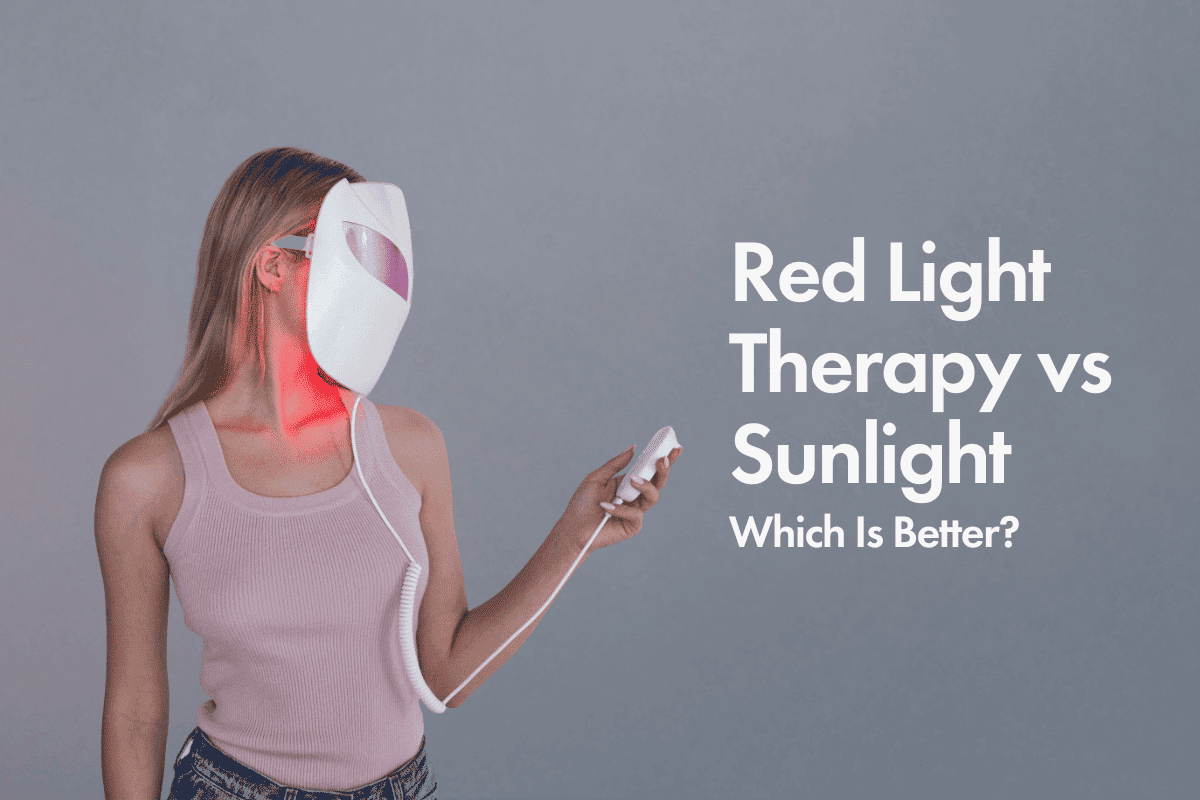

Sunlight is free, natural, and packed with benefits—but it also comes with risks. Red light therapy offers targeted skin and health benefits without UV exposure.
So which one shines brighter for your health? It all comes down to what you need.
We’ll break down the differences, benefits, and risks of red light therapy vs sunlight so you can make the best choice for your skin, health, and overall well-being.
- Sunlight provides vitamin D but comes with UV risks like skin damage and aging.
- Red light therapy boosts collagen, reduces inflammation, and is completely UV-free.
- Sunlight regulates circadian rhythms, while RLT supports skin health and muscle recovery.
- Both can be used together for optimal health benefits.
Key Differences Between Red Light Therapy and Sunlight
| Feature | Sunlight | Red Light Therapy |
|---|---|---|
|
Contains UV Rays? |
Yes (can cause skin damage) |
No (completely UV-free) |
|
Stimulates Vitamin D? |
Yes |
No |
|
Collagen Production? |
Can break down collagen with excess exposure |
Increases collagen and improves skin elasticity |
|
Reduces Inflammation? |
Somewhat, through infrared exposure |
Yes, significantly |
|
Affects Circadian Rhythm? |
Yes, helps regulate sleep cycles |
Indirectly, by improving melatonin production |
|
Risk of Skin Damage? |
High with overexposure |
None |
|
Safe for Daily Use? |
Limited exposure recommended |
Yes, with proper session timing |
What Is Red Light Therapy?
Red light therapy (RLT) uses specific wavelengths of red and near-infrared light to stimulate cellular repair, reduce inflammation, and promote healing.
Unlike sunlight, it contains no UV rays, making it a safer option for skin health and long-term use.
How Red Light Therapy Works
RLT operates within the red (630-700nm) and near-infrared (700-1000nm) spectrum, delivering light energy directly to mitochondria (the energy center of cells).
This boosts ATP production, giving cells more energy to repair and regenerate.
Health Benefits of Red Light Therapy
- Supports Skin Health – Increases collagen and elastin, reducing wrinkles, scars, and pigmentation.
- Reduces Inflammation – Helps with muscle recovery, joint pain, and chronic conditions like arthritis.
- Speeds Up Healing – Improves circulation and oxygen delivery, accelerating wound healing and tissue repair.
- Enhances Hair Growth – Stimulates hair follicles, making it effective for thinning hair and hair loss.
- Improves Mood & Sleep – Helps regulate melatonin production, leading to better sleep quality.
Are There Any Risks?
- Overuse Can Reduce Benefits – Using RLT for too long in one session may lead to diminishing returns.
- Not a Vitamin D Source – Unlike sunlight, red light therapy doesn’t help with vitamin D production.
- Device Quality Matters – Not all red light therapy devices are created equal; low-powered LEDs may be ineffective.
Natural Sunlight 101
Sunlight is a full-spectrum light source, meaning it contains ultraviolet (UV), visible light, and infrared rays. Each type of light interacts with the body in different ways.
Main Components of Sunlight
- Ultraviolet (UV) Light (10-400nm): Essential for vitamin D synthesis but can also cause sunburn and increase the risk of skin cancer with overexposure.
- Visible Light (400-700nm): The light we see, which includes blue, green, yellow, and red wavelengths that impact mood, energy, and eye health.
- Infrared Light (700-1000nm+): The heat-producing part of sunlight that can penetrate deep into the body, helping with circulation and relaxation.
Health Benefits of Sunlight
- Boosts Vitamin D Production – UVB rays trigger the body to produce vitamin D, essential for bone health, immune function, and hormone regulation.
- Regulates Circadian Rhythms – Exposure to natural light in the morning helps set the body’s internal clock, improving sleep quality.
- Enhances Mood – Sunlight stimulates serotonin production, which can help reduce stress and depression.
- Supports Skin Conditions – Certain skin issues like psoriasis and eczema improve with controlled sun exposure.
Risks of Too Much Sunlight
- UV Damage – Overexposure can cause sunburn, premature aging, and increase the risk of skin cancer.
- Eye Strain & Damage – Prolonged sun exposure without protection may lead to cataracts and vision problems.
- Oxidative Stress – Excess UV exposure breaks down collagen and elastin, leading to wrinkles and skin sagging over time.
Which One Is Better for Your Health?
The answer depends on your specific goals.
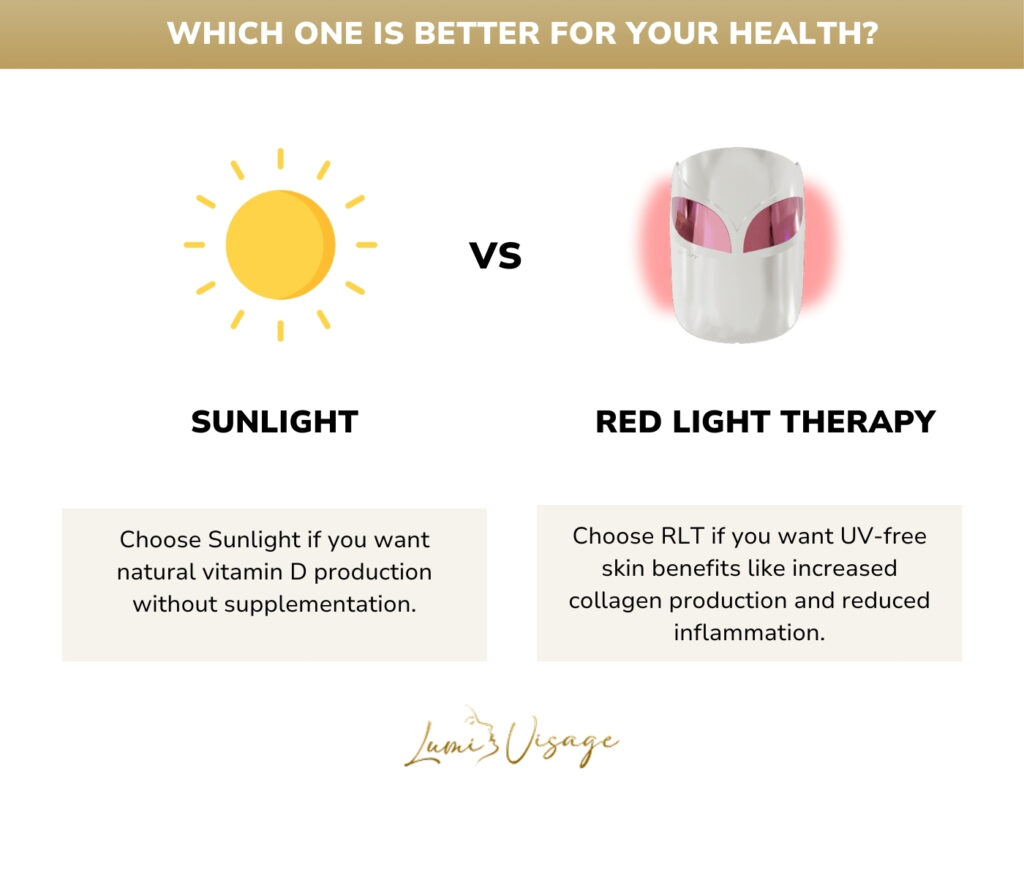
Choose Sunlight If:
- You want natural vitamin D production without supplementation.
- You’re looking to support circadian rhythms for better sleep.
- You enjoy being outdoors and need an energy boost from full-spectrum light.
Choose Red Light Therapy If:
- You want UV-free skin benefits like increased collagen production and reduced inflammation.
- You’re dealing with joint pain, slow healing, or chronic inflammation.
- You need a consistent, controlled light source that’s safe for daily use.
Can You Combine Red Light Therapy and Sunlight?
Yes! In fact, using both can be highly beneficial.
- Morning Sunlight + Evening RLT – A great combination for circadian rhythm balance, vitamin D production, and skin repair.
- Short Sun Exposure + RLT for Skin Health – If you need vitamin D but want to prevent sun damage, keep your sun exposure short and follow up with red light therapy to support collagen and reduce oxidative stress.
- Post-Workout Sunlight + RLT – Sunlight can boost energy levels, while red light therapy aids muscle recovery.
If you live in a low-sunlight area, red light therapy can be a valuable supplement, but you may still need a vitamin D supplement to make up for the lack of UV exposure.
Want The Benefits Of Light Without The UV Damage?
Red light therapy boosts collagen and heals skin—safely

Frequently Asked Questions
Can red light therapy help with seasonal depression like sunlight does?
Yes, while red light therapy isn’t as effective as bright light therapy for seasonal depression, it can still support mood regulation by reducing inflammation and improving mitochondrial function in brain cells.
Does red light therapy provide the same energy boost as sunlight?
Not in the same way. Sunlight, especially blue light, signals wakefulness, while red light therapy supports cellular energy production, which may help with fatigue over time.
Can I get sunburned from red light therapy?
No. Red light therapy contains no UV rays, so it won’t cause sunburn or skin damage, even with frequent use.
Is red light therapy beneficial for people with sun-sensitive skin?
Yes! People with conditions like rosacea or lupus, who may react poorly to UV light, can safely use red light therapy for skin healing and inflammation reduction.
Can red light therapy reverse sun damage?
It can help. RLT boosts collagen production and cellular repair, which may improve fine lines, hyperpigmentation, and skin texture caused by UV exposure.
Conclusion
Both sunlight and red light therapy have their place in health and wellness.
Sunlight is essential for vitamin D and circadian rhythm regulation, while red light therapy is safer for the skin, promotes collagen production, and reduces inflammation.
If you want the benefits of light exposure without UV damage, red light therapy is the better choice for skin health, anti-aging, and healing. But if your goal is vitamin D and energy balance, a little sun exposure is still necessary.
Want an easy way to get red light therapy at home? The Lumi Visage 7-Color LED Face Mask delivers spa-quality treatments without harmful UV rays. Order yours today and start glowing!