


There’s no debate about whether red light therapy works—science says it does. The real question is which device suits you best: mask or panel?
One’s sleek and effortless, the other’s powerful and all-encompassing. The right choice depends on what you want and how you’ll use it.
Here’s how they stack up.
- Red light masks target facial skin, are portable, and work best for surface-level concerns.
- Red light panels offer deeper penetration, full-body coverage, and faster results but cost more.
- Masks suit convenience and skincare; panels are better for muscle recovery and broader treatment.
- Panels require dedicated space, while masks are compact and easy to use anywhere.
Overview: Red Light Panel vs Mask
| Feature | Red Light Panel | Red Light Mask |
|---|---|---|
|
Coverage Area |
Full face & body |
Face only |
|
Intensity |
Higher power, deeper penetration |
Moderate intensity |
|
Hands-Free Use |
No (must sit in front of it) |
Yes (wearable) |
|
Session Time |
10-20 minutes |
10-15 minutes |
|
Best For |
Full-body benefits, deeper skin concerns |
Convenient, targeted facial treatment |
Red Light Therapy Masks
How They Work
Red light masks are wearable devices designed primarily for facial treatments. They fit over the face, emitting low-level red and near-infrared light to target skin concerns.
Most masks are wireless, rechargeable, and designed for hands-free use, making them a convenient option for home treatments.
Sessions typically last 10 to 20 minutes, depending on the power of the device.
Benefits of Red Light Masks
- Convenient and portable – You can use them while relaxing at home.
- Great for facial skin concerns – Helps with fine lines, wrinkles, and acne.
- Low commitment – Quick and easy to use, making them ideal for busy schedules.
Drawbacks of Red Light Masks
- Limited power – Lower energy output means results may take longer.
- Targeted treatment only – Primarily designed for facial use, with little impact on other areas.
- Fit issues – Some masks may feel heavy or uncomfortable, especially for those with sensitive skin.
Red Light Therapy Panels
How They Work
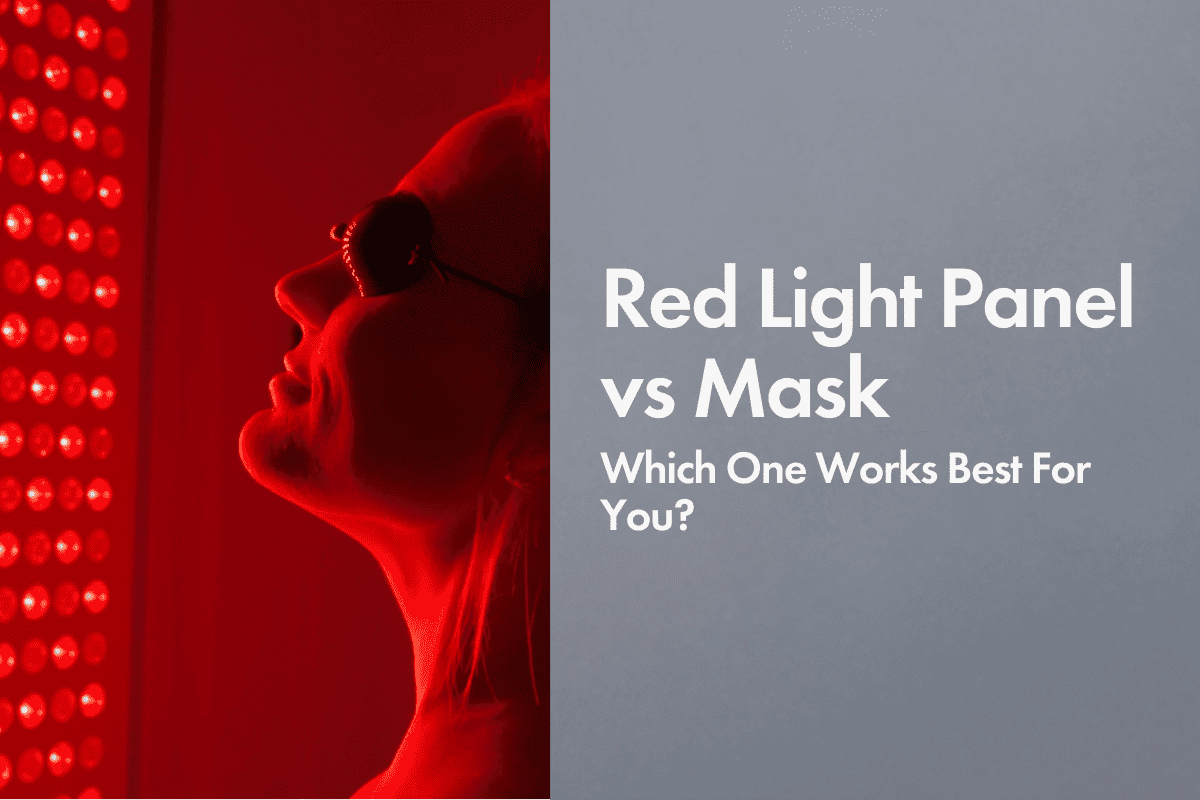
Panels are larger, more powerful devices that emit higher doses of red and near-infrared light. They are typically designed for full-face, upper-body, or even whole-body treatments.
Unlike masks, panels require you to sit or stand in front of them. They cover a much larger surface area and deliver deeper penetration, making them suitable for both skincare and muscle recovery.
Benefits of Red Light Panels
- Higher power output – More intense treatments for faster results.
- Covers more surface area – Treats multiple areas at once, from face to body.
- Deeper penetration – Can reach deeper skin layers and muscle tissue.
Drawbacks of Red Light Panels
- Less portable – Requires dedicated space and setup.
- Higher cost – More expensive than most masks.
- Longer sessions – Depending on the size of the panel, sessions may take longer.
Red Light Panel vs Mask: Key Differences
1. Power and Effectiveness
A panel generally delivers stronger light intensity, meaning it can penetrate deeper and provide results faster. Masks, while effective, have a lower power output and primarily work on the skin’s surface.
If you’re looking for full-body benefits or deeper skin rejuvenation, a panel is the better option. For mild to moderate facial concerns, a mask can be enough.
2. Coverage Area
Masks are designed specifically for facial treatments. Panels, on the other hand, can treat not just the face but the neck, chest, back, and other body areas.
If you’re dealing with muscle recovery or broader skincare concerns, a panel offers more flexibility.
3. Treatment Time
Masks require shorter sessions—usually around 10–20 minutes—because they focus on a smaller area. Panels, depending on the size and power, may require 10–30 minutes per session.
If you have limited time, a mask may be the easier option. However, if you’re committed to maximizing results, a panel provides more powerful treatments in a single session.
4. Portability and Convenience
Masks are lightweight and easy to store, making them perfect for travel or quick home use. Panels, while more effective, require a designated space and aren’t as portable.
If you need a device that fits into a busy lifestyle, a mask is a practical choice. If you’re looking for the best results and have the space, a panel is worth considering.
5. Cost
Panels are generally more expensive than masks. However, they provide more versatility, higher power, and broader treatment options.
Masks are a budget-friendly choice for those primarily interested in facial skincare.
Which One Should You Choose?
The best choice comes down to your goals, budget, and lifestyle.
Go for a Mask If:
- You’re focused on facial skincare.
- You need a portable and easy-to-use device.
- You prefer shorter, more convenient treatment sessions.
- You’re looking for a lower-cost entry into red light therapy.
Go for a Panel If:
- You want full-body or multi-area treatments.
- You’re looking for deeper skin benefits and muscle recovery.
- You have space for a larger device.
- You’re willing to invest more for stronger and faster results.
Torn Between Power & Practicality In Light Therapy?
Our pro-level LED mask delivers results without the space or hassle
SHOP NOW – GET $100 OFF
Frequently Asked Questions
Can I use a red light panel and a mask together for better results?
Yes! Combining a red light panel with a mask can enhance benefits. The panel offers full-face exposure, while the mask provides a more concentrated effect on problem areas. Just ensure you don’t overdo it—stick to recommended usage times.
How does red light therapy affect collagen production over time?
Red light therapy stimulates fibroblasts, which help produce collagen. Over time, regular use can lead to firmer, plumper skin by reducing fine lines and wrinkles. However, consistency is key—results build up gradually over months.
Do red light therapy panels or masks help with seasonal depression?
Yes! While primarily used for skincare, red light therapy may also help boost mood and combat symptoms of seasonal affective disorder (SAD). The near-infrared light can stimulate mitochondrial activity, which may enhance energy and mental well-being.
Are there any skin types or conditions that should avoid red light therapy?
Most skin types tolerate red light therapy well, but those with photosensitivity (due to conditions like lupus or medications such as antibiotics) should consult a doctor first. Also, individuals with active skin cancers should avoid red light exposure.
How does red light therapy compare to LED face masks in treating acne?
Red light reduces inflammation and speeds healing, while blue light (often included in LED masks) targets acne-causing bacteria. If acne is your main concern, a mask with both red and blue light may be more effective than a panel alone.
Can red light therapy be used for purposes beyond skincare?
Absolutely! It’s commonly used for muscle recovery, pain relief, wound healing, and even hair regrowth. Some studies suggest it can enhance circulation and reduce inflammation, making it useful for a variety of health applications.
Conclusion
Both red light masks and panels have their strengths, but the best pick comes down to what works for you.
If you want something simple, portable, and effective for daily skincare, a mask is the smarter choice. Panels pack more power, but they take up space and cost more.
If a mask makes sense for your routine, the Lumi Visage 7-Color LED Face Mask delivers pro-level results without the hassle. It’s easy, efficient, and lets you treat your skin while going about your day. Check it out and see the difference for yourself.