


Have you ever noticed how stepping into sunlight can lift your spirits? That’s your body reacting to light.
LED therapy works in a similar way, using specific colors to target skin issues and boost overall health. From reducing wrinkles to treating acne, light therapy is gaining popularity.
We’ll break down the benefits of LED therapy, how different light colors work, and answer some common questions you might have.
Key Notes
- LED light therapy uses different colors to target acne, wrinkles, and skin tone issues.
- Red light boosts collagen, reducing wrinkles and promoting skin elasticity and healing.
- Blue light kills acne-causing bacteria and reduces oil production for clearer skin.
- Green light may help reduce inflammation and promote healing for migraines and skin conditions.
How LED Light Therapy Works
The visible light spectrum spans from 380 to 700 nanometers (nm). A common way to remember the wavelengths and their corresponding colors is by using the name Roy G. Biv.
Red has the longest wavelength at 700 nanometers, while violet is the shortest at 380 nanometers. All of the colors in the middle of ROYGBIV descend in wavelengths from red down to violet.
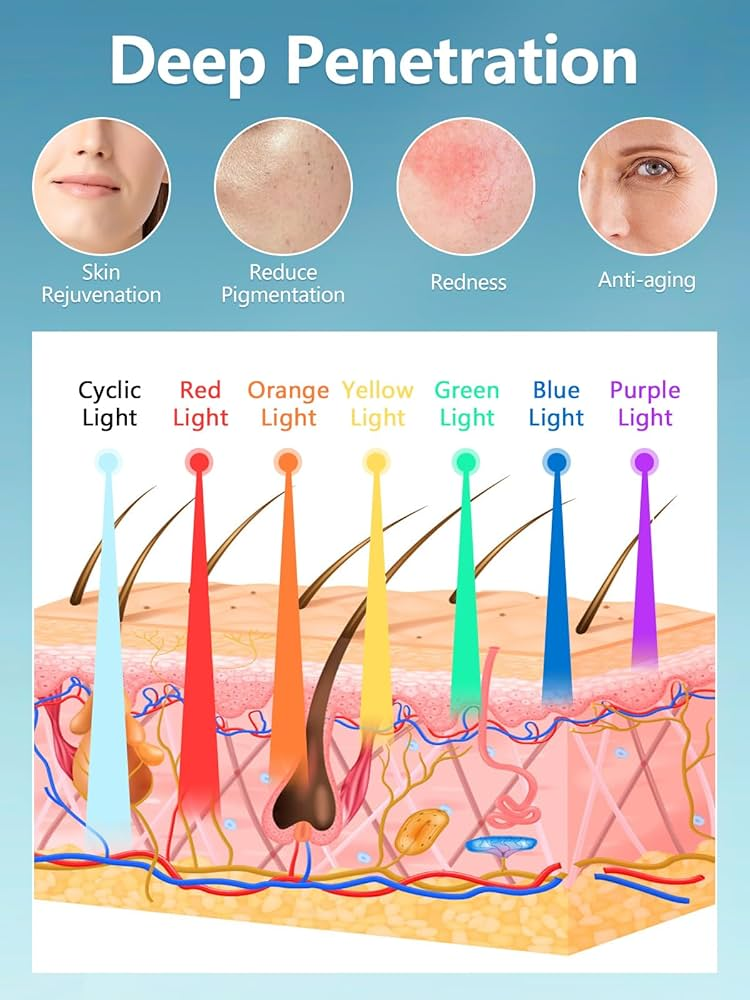
Wavelength is key to LED therapy, as lights with higher wavelengths penetrate your skin deeper than lower wavelengths.
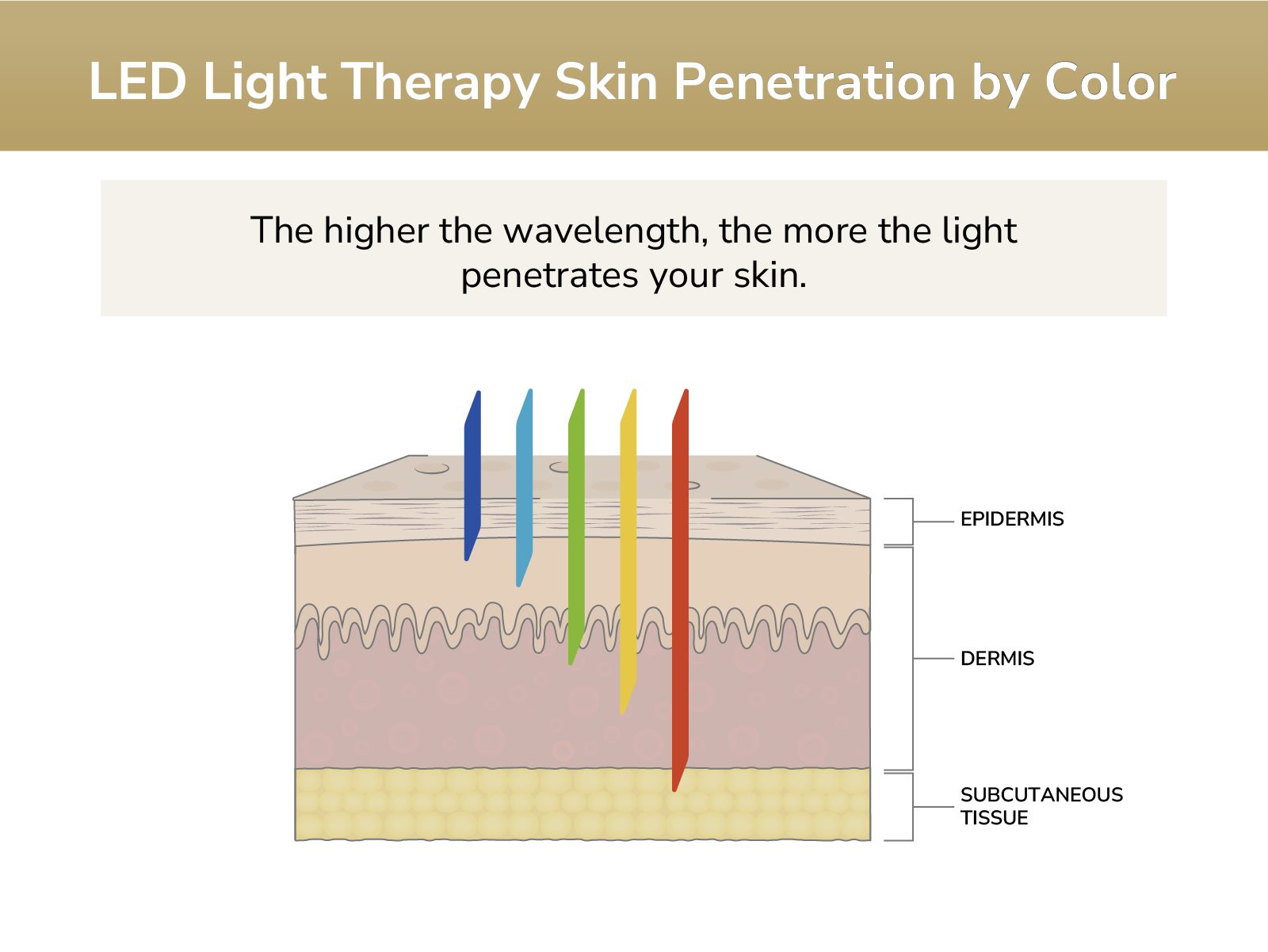
The human skin has three layers, known as epidermis, dermis, and subcutaneous layers.
The epidermis is the outside layer of the skin, which we can see and feel. The dermis contains collagen fibers, blood vessels, and sweat glands, while the subcutaneous is the bottom layer and is made up of fat, acting as a shock absorber. Each layer has different cells and proteins that interact with light.
Ulta-violet and violet light (200–400 nm) can reach the epidermis. Blue, green, yellow, and orange light (400–600 nm) reach the dermis, while red and near-infrared (NIR) light (600–854+ nm) reach the subcutaneous layer.
If you’re not sure how to remember all of that, just remember ROYGBIV and that red, with the longest wavelength, can penetrate the deepest.
Light Therapy Color Chart
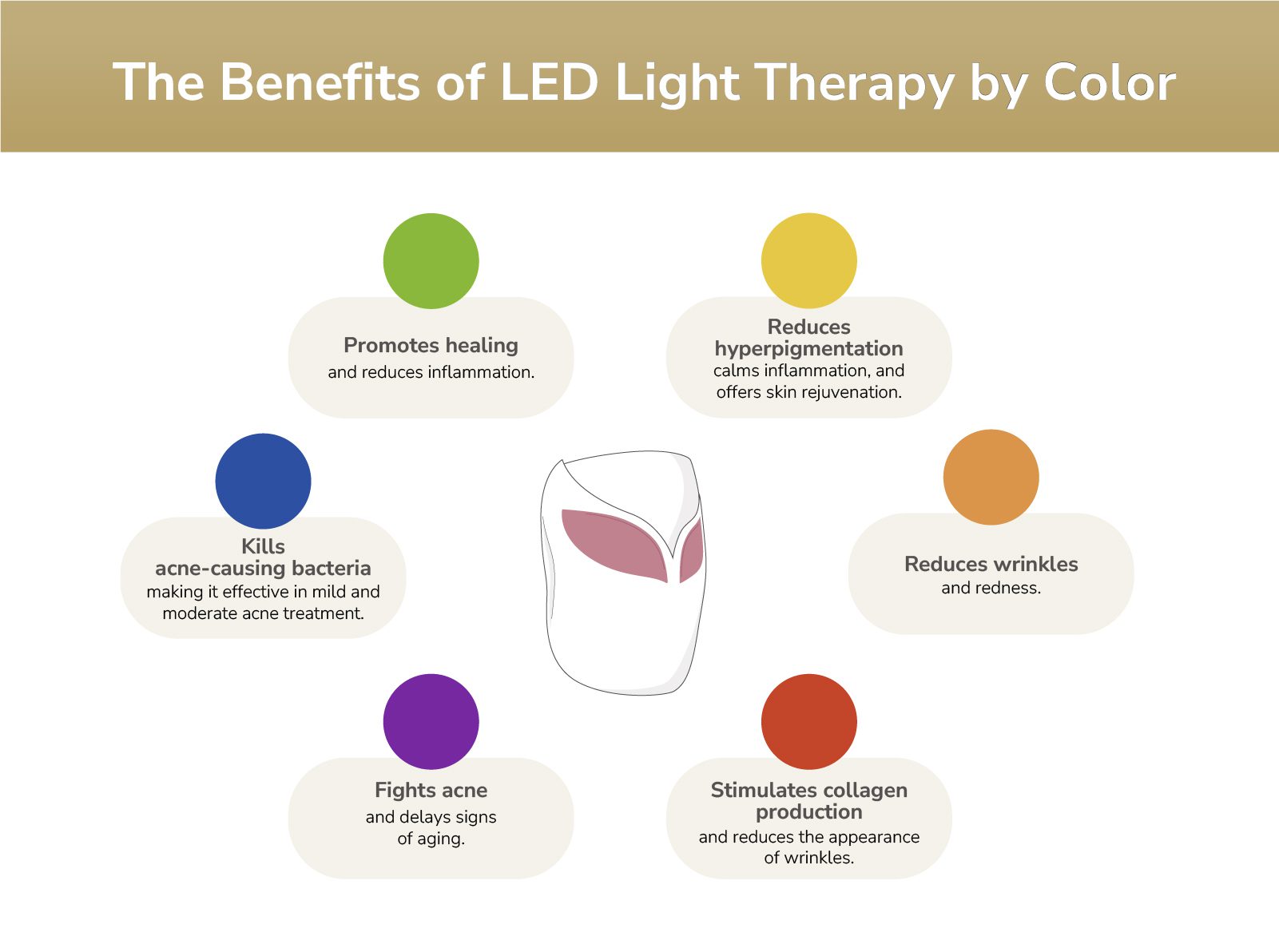
Use this color chart to understand how each specific color impacts your skin treatment. The exact wavelength of each color will vary based on the product you’re using.
| Color | Wavelength | Benefits |
|---|---|---|
| Purple | 400 nm | Fights acne and delays signs of aging |
| Blue | 465 nm | Kills acne-causing bacteria, making it effective in mild and moderate acne treatment |
| Green | 536 nm | Promotes healing and reduces inflammation |
| Yellow | 560 nm | Reduces hyperpigmentation, calms inflammation, and offers skin rejuvenation |
| Amber | 605 nm | Reduces wrinkles and redness |
| Red | 637 nm | Stimulates collagen production and reduces the appearance of wrinkles. |
LED Therapy Color Benefits
Purple Light
Purple light, also commonly referred to as violet or violet-blue light, has the shortest wavelength on the visible light spectrum.
Because of that, it doesn’t deeply penetrate the skin.
Similar to blue light, purple light can be used to treat acne. A clinical-strength violet light therapy study found that, on average, patients experienced a 65% reduction of inflammatory lesions 8 weeks post-treatment.
Blue Light
The American Academy of Dermatology Association highlights the benefits of both at-home and clinical blue light therapy for acne.
Blue LED light combats the bacteria lying on the surface of your skin that causes acne, so it can help treat and prevent breakouts.
It can also slow down activity in the sebaceous glands, helping you produce less oil and thus reducing the risk of acne, and reduce inflammation.
One clinical-strength study found that by week eight of blue light treatments more than 90 percent of subjects reported improvements in their skin’s overall appearance, clarity, radiance, tone, texture, and smoothness.
Blue light is the number one go-to option when you’re looking for a light therapy to treat your acne.
Green Light
Green light has a lot of potential. It may work as an anti-inflammatory, stimulate blood vessel synthesis, and promote the healing process.
One study suggests that green light may play a role in new blood vessel formation as well as a promising role in tissue regeneration. It is currently being tested for its effect on migraine symptoms as well as how it may improve sleep and skin redness and irritation.
In 2023, a mass online statistical review collected data provided by 181 participants using green light–emitting lamps at home for treating migraines. The data collected suggests that two hours of treatment with the lamp during migraine attacks is associated with relief of pain and photophobia, reduction in anxiety, and improved sleep.
Yellow Light
Yellow light aids in regeneration as well as evening out pigmentation. It increases the production of ATP, which is used by your body to combat inflammation and encourage the regeneration of skin cells.
It reduces redness, soothes irritation, and can help your skin heal more quickly. This color is also a useful tool in photo-rejuvenation, reducing signs of aging and improving skin texture.
Yellow light fights hyperpigmentation at the source, reducing the production of a necessary amino acid (tyrosinase) for melanin synthesis as well as stopping melanosomes from maturing. Melanosomes are the organelles that synthesize melanin and store it—if they don’t mature, the melanin won’t be produced.
Amber
Amber light has been proven to be just as effective as red light when it comes to reducing wrinkles. Amber light can also reduce redness associated with inflamed capillaries while increasing your skin’s elasticity, allowing it to stretch and snap into shape instead of sag.
Red Light
Red LED light penetrates deeper than other colors, thanks to its wavelength. Because of this, red light is one of the most useful colors when it comes to light therapy.
By stimulating the mitochondria, red light enhances collagen production, which helps with anti-aging or skin that has suffered sun damage. You will see your skin begin to firm up and smooth out wrinkles.
Red light also encourages the production of elastin, which gives your skin its elasticity, its ability to stretch and snap back into shape, as well as increases hyaluronic acid, the substance your body naturally produces that helps your skin retain moisture and a healthy glow.
Red light can also improve circulation, speed up wound healing, and promote hair growth.
Near-Infrared and Infrared Light
Near-infrared and infrared are easily confused with red light therapy, but the difference is that these two are a higher wavelength and are outside the visible light spectrum.
Most infrared wavelengths range from 700 nm to 1 mm, which means they penetrate the skin deeper than red light, while some devices that include near-infrared light contain wavelengths between 800 and 900 nm.
Near-infrared light can fix skin complexion and texture and has been known to increase collagen production and skin regeneration. It can also speed up the healing process by encouraging your body to produce more growth-factor proteins that stimulate cellular processes and blood vessels to carry much-needed oxygen to tissues.
Struggling With Acne, Wrinkles Or Uneven Skin Tone?
Our LED therapy mask tackles all your skin concerns safely and effectively.

How Long Does Light Therapy Take to Work?
It can take up to four to five weeks to see results, though this can vary based on your skin condition.
The best way to achieve optimal results is to use the treatment consistently. We recommend using our LED mask three to four times per week for ten minutes each time.
LED Light Therapy Safety Tips
If you have any questions or concerns, be sure to talk to your doctor or dermatologist first, but before you begin LED light therapy, follow these tips to ensure you use it safely:
Do not use if:
- You have a weakened immune system.
- You take drugs that cause a sensitivity to light.
- You have had cosmetic surgery or skin-related procedures in the last two months or less.
Consult your doctor if:
- You experience skin irritation that doesn’t go away.
- You have a serious disease or are under treatment for a medical condition.
- Your skin condition changes.
- You have a thyroid-related disease.
- You have suspicious or cancerous lesions.
Only use if you:
- Use the device for only 10 minutes per day.
- Stop use if the device gets too hot.
- Use eye protection, which is built into our mask — don’t look directly at the light when the device is on.
- Don’t use the device after shaving.
Frequently Asked Questions
Can LED light therapy be combined with other skincare treatments?
Yes, LED therapy can complement treatments like chemical peels, microdermabrasion, or serums. It’s gentle and non-invasive, making it a great addition to most skincare routines.
Is LED light therapy safe for all skin tones?
Yes, LED light therapy is safe for all skin tones and types. Unlike some laser treatments, it doesn’t rely on melanin to work, so there’s no risk of hyperpigmentation.
Can LED light therapy help with scarring?
Yes, red and infrared light can stimulate collagen production and enhance wound healing, helping to reduce the appearance of scars over time.
Does LED light therapy have any side effects?
When used properly, side effects are rare. However, some people may experience mild redness or irritation, especially if they have sensitive skin or use the device for too long.
Conclusion
LED light therapy offers a simple, effective way to tackle a variety of skin concerns, from acne to wrinkles.
By using different light colors, you can target specific issues and improve your skin’s overall health—all from the comfort of home. Whether you’re looking to clear breakouts, boost collagen, or reduce inflammation, there’s a light wavelength that can help.
Ready to see real results? Shop our 7-Color LED Face Mask and experience the benefits for yourself. Get started on your journey to healthier skin today.