



Light therapy is revolutionizing eczema treatment—fewer side effects, gentler relief, long-term comfort.
Curious how it works and what it can really do for you?
Let’s break down the benefits, limitations, and what to expect if you’re ready to try this innovative approach to managing your eczema.
- Four main types of light therapy exist, from gentle red light to intensive PUVA treatment.
- Most treatments require 2-3 weekly sessions for several weeks before seeing noticeable improvement.
- Home-based options like red light therapy offer convenience, while UV treatments need professional supervision.
- Light therapy can provide long-term relief but works best combined with proper skincare routines.
How Does Light Therapy Work For Eczema?
Light therapy, also known as phototherapy, uses controlled doses of light to treat skin conditions like eczema.
This treatment involves exposing the skin to specific wavelengths of light—usually UVB or visible light—that can reduce inflammation, calm irritation, and help manage flare-ups.
While light therapy won’t cure eczema, it can be a powerful tool in controlling symptoms, especially when other treatments haven’t done the job.
Types of Light Therapy for Eczema
There are several types of light therapy for eczema, each with its own benefits.
Let’s look at the most common options and how they work:
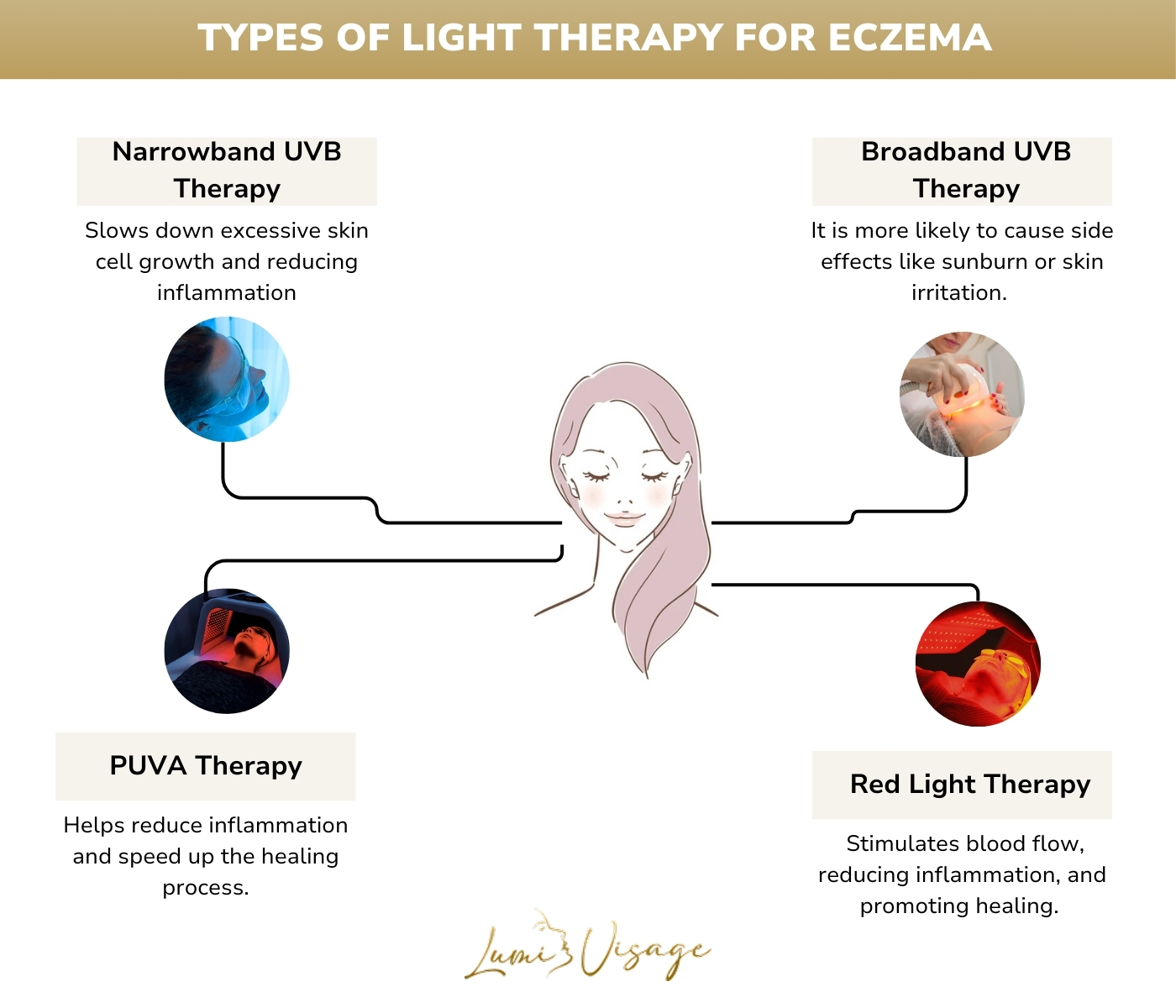
Narrowband UVB Therapy
Narrowband UVB therapy is the most commonly used treatment for eczema.
It delivers a specific wavelength of ultraviolet B light that penetrates the skin, slowing down excessive skin cell growth and reducing inflammation. It’s considered one of the most effective treatments for moderate to severe eczema.
Narrowband UVB therapy requires professional treatment and is usually done at a dermatologist’s office. The typical treatment plan involves 2-3 sessions per week, and patients usually start to see results after several weeks of consistent treatment.
This method has been proven to provide long-term relief for many eczema sufferers.
Broadband UVB Therapy
Broadband UVB therapy is similar to narrowband UVB but uses a broader spectrum of UV light. This can make it less targeted and more likely to cause side effects like sunburn or skin irritation.
Though effective, broadband UVB is not as commonly used as narrowband UVB due to its potential to cause more discomfort and risks. It may still be used in some cases when narrowband UVB is unavailable.
PUVA Therapy (Psoralen + UVA)
PUVA therapy combines ultraviolet A (UVA) light with a medication called psoralen.
Psoralen increases the skin’s sensitivity to light, allowing the UVA light to penetrate deeper into the skin. This combination can help reduce inflammation and speed up the healing process.
PUVA is typically reserved for severe eczema or when other treatments haven’t worked.
However, it carries more risks, including skin aging and an increased risk of skin cancer. Due to these risks, it’s only used when necessary and always under professional supervision.
Red Light Therapy
Unlike UV light therapies, red light therapy uses non-UV light in the red or near-infrared spectrum. This type of therapy works by stimulating blood flow, reducing inflammation, and promoting healing.
It’s a gentler option, ideal for people with mild eczema or localized flare-ups.
Red light therapy is often used at home with handheld devices, making it a convenient choice for those looking for frequent, non-invasive treatment.
It’s generally safe, with minimal side effects, but it’s important to follow the treatment guidelines carefully.
Benefits of Light Therapy for Eczema
Light therapy offers several key advantages, making it a popular choice for eczema sufferers.
Here’s why:
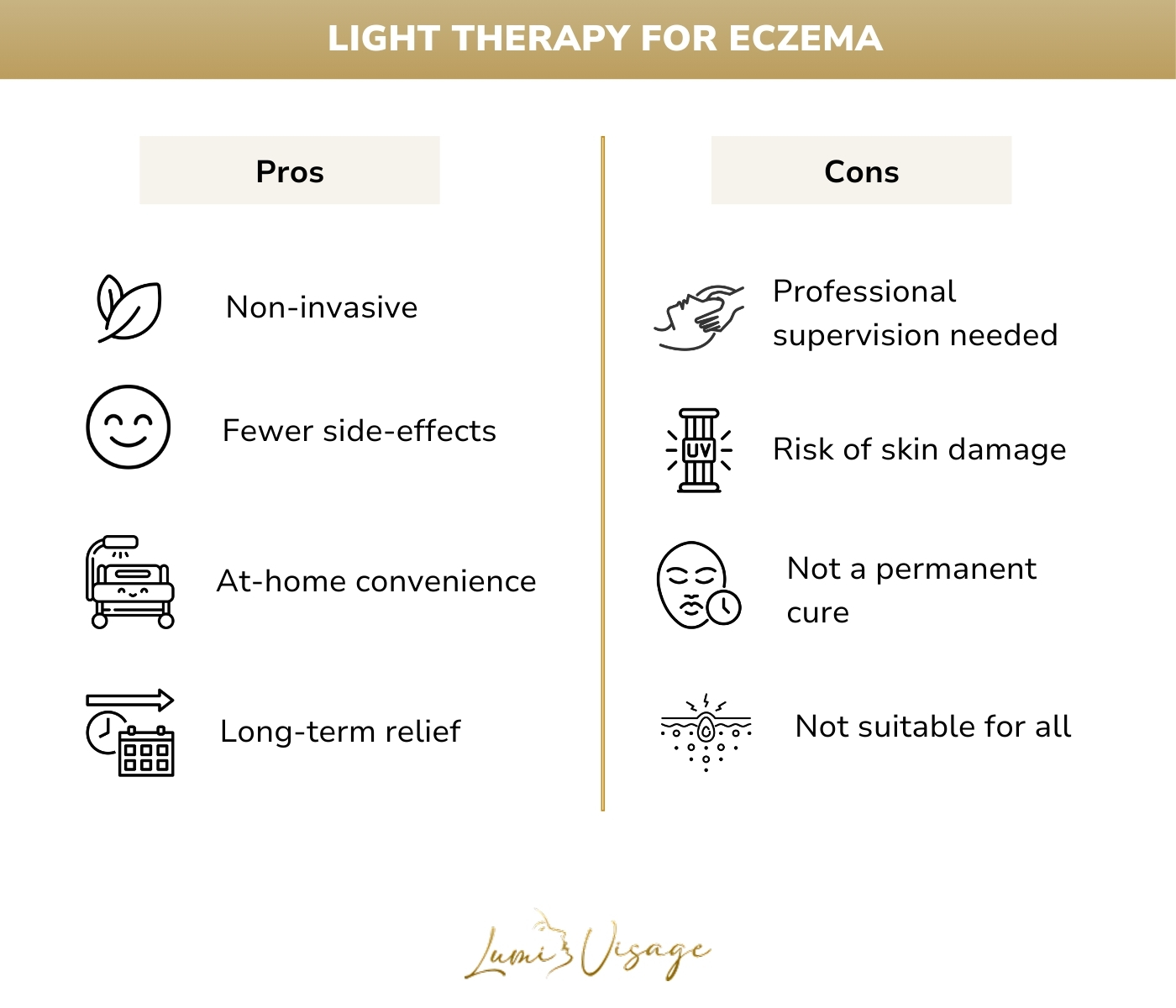
Non-Invasive
Unlike topical steroids or oral medications, light therapy doesn’t require chemicals or drugs.
It’s a simple, natural approach that uses light to help manage symptoms.
Fewer Side Effects
When compared to long-term steroid use, light therapy has fewer risks and side effects. For example, UV-based therapies carry fewer concerns about skin thinning than steroids.
Can Be Done At Home
Red light therapy can be done in the comfort of your home, offering convenience and flexibility for ongoing eczema management.
Long-Term Relief
For many, light therapy offers lasting relief from flare-ups and can help manage eczema over time. It’s particularly effective when combined with a consistent skincare routine.
Cons of Light Therapy for Eczema
While light therapy has plenty of benefits, it’s not without its drawbacks.
Here are some potential downsides:
Some Treatments Require Professional Supervision
Some light therapies, like narrowband UVB and PUVA, need to be administered by a dermatologist. This means scheduling appointments and travel, making it less convenient than at-home treatments.
Risk of Side Effects
UV-based therapies, particularly PUVA, carry the risk of skin damage, aging, and an increased risk of skin cancer with prolonged use.
Not a Permanent Cure
Light therapy can help manage eczema, but it doesn’t eliminate the condition entirely.
Ongoing treatment may be required to keep symptoms under control.
Not Suitable For Everyone
Some people with certain skin types or conditions may not be good candidates for light therapy, especially UV-based treatments.
What to Expect from Light Therapy for Eczema
If you decide to try light therapy for eczema, here’s what you can expect during the treatment process:
Consultation With A Dermatologist
Your doctor will assess your eczema and determine which type of light therapy is right for you. They will also give you a clear treatment plan and explain what results to expect.
Treatment Sessions
Depending on the therapy type, you’ll need 2-3 sessions a week to start. Each session typically lasts 10-20 minutes, and results may take a few weeks to appear.
Consistency Is Key
Light therapy works best with consistent treatments. If you stop too soon, you might not see the full benefits. Stick with your plan for the best results.
Ongoing Care
While light therapy can provide long-term relief, you’ll need to continue managing your eczema with moisturizers, avoiding triggers, and possibly using other treatments alongside light therapy.
Sick Of Constant Eczema Breakouts & Itchy Skin?
Our mask fights inflammation and soothes your skin, fast.
SHOP NOW – GET $100 OFF
Safety and Precautions
Light therapy is generally safe, but it’s important to use it under the guidance of a dermatologist.
Overuse of UV therapies can damage your skin, so be sure to follow the recommended treatment plan. Red light therapy, though gentler, should still be used according to device instructions to avoid irritation.
Be aware that light therapy is not a one-size-fits-all solution.
Some people may experience side effects, and it’s important to consult your doctor regularly to ensure that the treatment is working as expected.
Frequently Asked Questions
How long does each light therapy session for eczema last?
Typically, light therapy sessions last between 10 to 20 minutes, depending on the type of treatment.
Can light therapy help with eczema scars or hyperpigmentation?
While light therapy reduces flare-ups, it may also help fade hyperpigmentation over time, but it’s not guaranteed.
Is light therapy for eczema painful?
Most light therapy treatments are painless, though some people may experience slight warmth or discomfort.
Does light therapy work for eczema on the face?
Yes, light therapy can be used on the face, but it should be done with caution and under professional supervision.
Conclusion
Light therapy for eczema can bring real relief, helping you tackle flare-ups and irritation head-on.
Whether you choose powerful UVB or soothing red light, it’s an effective way to regain control of your skin. While it’s not a cure, it provides long-lasting results that keep eczema in check. Want to experience the benefits for yourself? The Lumi Visage Mask makes light therapy simple and convenient at home. Don’t wait—get yours today and start enjoying smoother, healthier skin.