


Stretch marks can feel like an unwelcome badge of life changes. But light therapy offers a promising way to turn back the clock.
With a whole spectrum of colors to pick from, which one’s your best bet?
Spoiler: red light might just be the real standout solution.
We’ll break down why it’s worth your attention.
Key Notes
- Red light therapy boosts collagen, making stretch marks less visible over time.
- Near-infrared light penetrates deeper, aiding in tissue repair for older marks.
- Amber light targets surface-level pigmentation and brightens the skin.
- Consistency matters: expect results after 8-12 weeks of regular sessions.
Red Light Therapy: The Powerhouse for Stretch Marks
Stretch marks, or striae, form when the skin stretches too quickly, causing collagen and elastin fibers to tear. They start off red or purple (striae rubrae) and gradually fade to a silvery-white (striae alba), commonly appearing on the abdomen, thighs, hips, and breasts.
Genetics and hormones, like high cortisol levels, can make some people more prone to them.
While many creams promise results, they often fall short—which is why light therapy has gained attention as a promising alternative.
When it comes to treating stretch marks, red light therapy is your go-to option. Red light typically has wavelengths between 620 and 700 nanometers, which allow it to penetrate deep into the skin layers, reaching the dermis.
But how does it work?
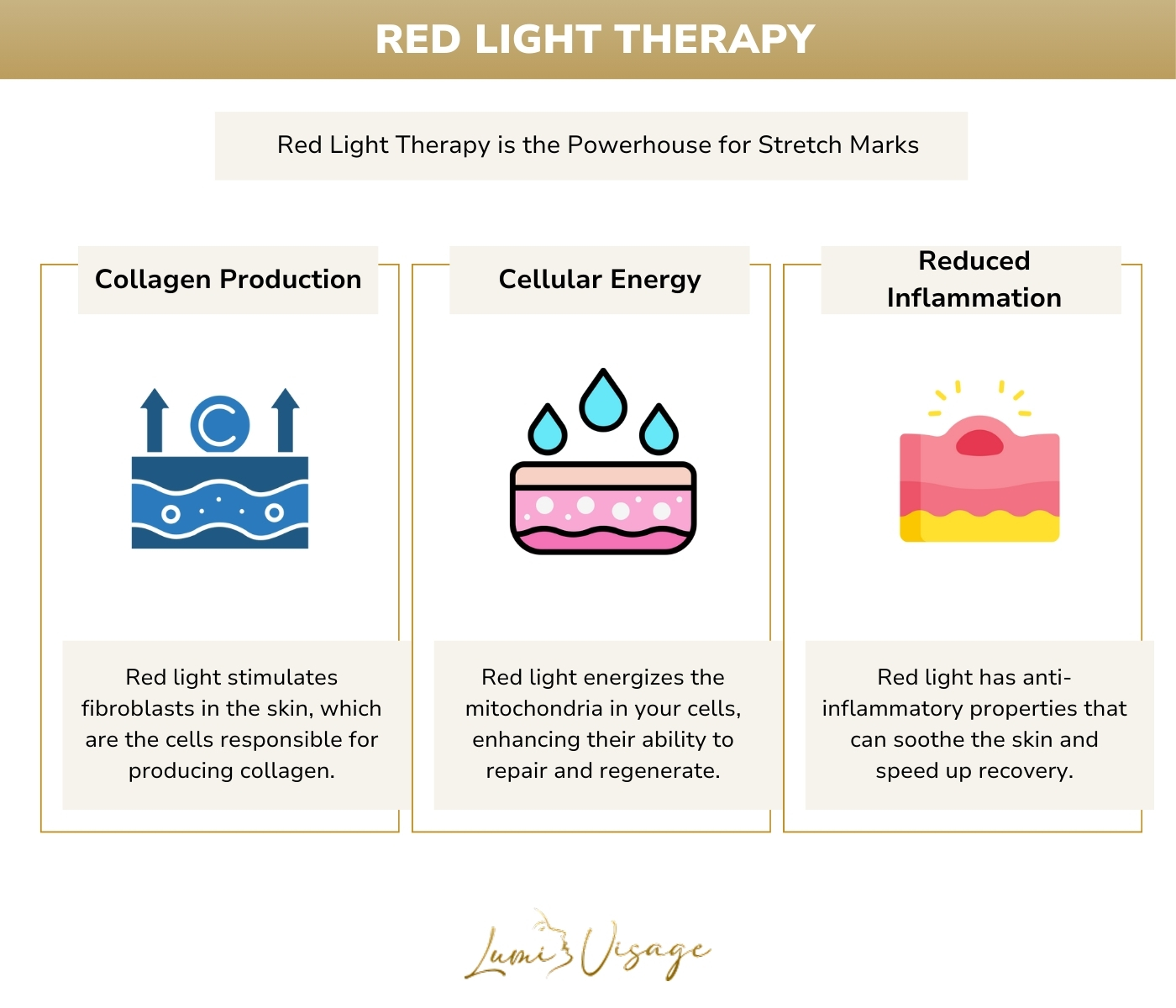
Collagen Production
Red light stimulates fibroblasts in the skin, which are the cells responsible for producing collagen. Increased collagen levels can help strengthen the skin and improve elasticity, making stretch marks less noticeable over time.
Cellular Energy
Red light energizes the mitochondria in your cells, enhancing their ability to repair and regenerate. This means your skin heals faster and more efficiently.
Reduced Inflammation
Fresh, red stretch marks often come with inflammation. Red light has anti-inflammatory properties that can soothe the skin and speed up recovery.
Near-Infrared (NIR) Light: Going Even Deeper
Near-infrared light, with wavelengths between 800 and 900 nanometers, penetrates even deeper than red light.
While it doesn’t have the same direct effects on collagen production, it can boost circulation and reduce muscle and tissue inflammation, aiding the overall healing process.
Combining red and near-infrared light can be a game-changer for older, more stubborn stretch marks. The synergy between these two wavelengths provides a comprehensive approach to skin regeneration, tackling both the surface and deeper skin layers.
Other Light Colors: Do They Work for Stretch Marks?
While red light therapy gets most of the attention, there are other colors in the light therapy spectrum. However, their effectiveness for stretch marks isn’t as strong.
Blue Light
Known for its antibacterial properties, blue light is commonly used to treat acne rather than stretch marks.
It doesn’t penetrate deep enough to make a meaningful difference in collagen or elastin production.
Green and Yellow Light
These colors are sometimes used for skin pigmentation and to calm redness.
However, they don’t have the same collagen-boosting effects as red light and are not considered effective treatments for stretch marks.
Stretch Marks Stealing Your Confidence?
RLT boosts collagen for smoother, healthier skin.

What to Expect from Red Light Therapy
Most studies suggest that you need to stick with red light therapy for 8-12 weeks, with sessions lasting about 10-20 minutes, several times a week, to see noticeable results.
Here’s what a typical timeline might look like:
- Weeks 1-4: You may notice reduced inflammation and softer skin, but stretch marks will still be visible.
- Weeks 5-8: The marks may start to look smoother and blend better with surrounding skin.
- Weeks 9-12: You should see a significant improvement in both color and texture, especially if your marks are relatively new.
Patience and consistency will yield the best outcomes. Also, the age and severity of your stretch marks will influence your results. Older, white marks (striae alba) might require longer treatment compared to newer, red marks (striae rubrae).
Safety & Precautions
Red light therapy is generally safe with minimal side effects, making it a preferred choice for many.
However, there are still a few precautions to consider:
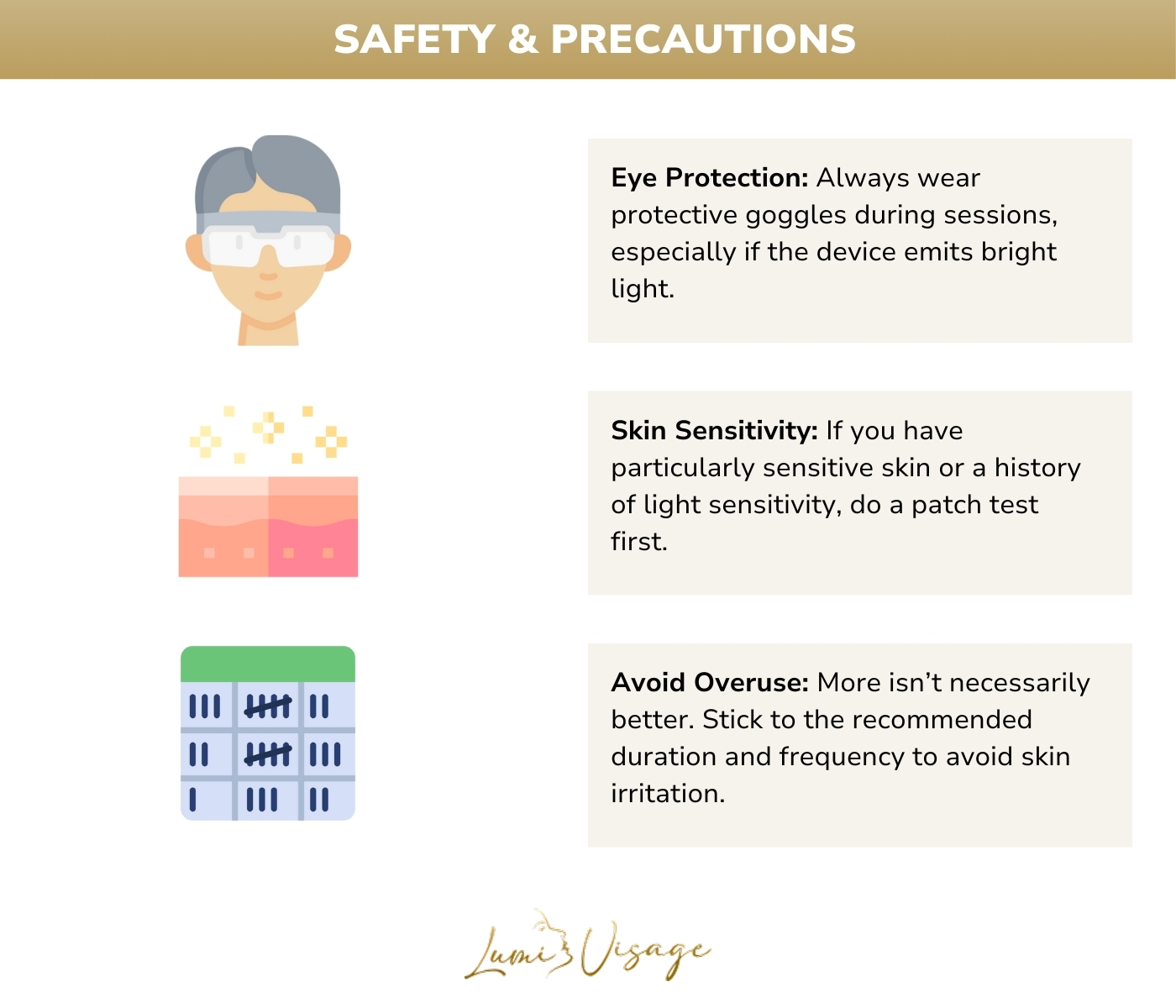
- Eye Protection: Always wear protective goggles during sessions, especially if the device emits bright light.
- Skin Sensitivity: If you have particularly sensitive skin or a history of light sensitivity, do a patch test first.
- Avoid Overuse: More isn’t necessarily better. Stick to the recommended duration and frequency to avoid skin irritation.
If you’re pregnant, have a history of skin cancer, or are taking medication that increases photosensitivity, consult a healthcare provider before starting red light therapy.
Frequently Asked Questions
Can red light therapy be combined with other treatments for stretch marks?
Yes, red light therapy can be combined with other treatments like microneedling or topicals such as hyaluronic acid and tretinoin. These combinations may enhance collagen production and improve results, but always consult a dermatologist before layering treatments.
How soon can I use red light therapy on new stretch marks?
You can start using red light therapy on new stretch marks as soon as they form (when they’re red or purple). Early treatment may help reduce inflammation faster and prevent marks from becoming deep and more pronounced.
Does red light therapy work on stretch marks from pregnancy?
Yes, many women use red light therapy postpartum to treat pregnancy-induced stretch marks. It’s non-invasive and safe when used correctly, but it’s important to wait until your doctor gives the green light, especially if you are breastfeeding.
Are there specific wavelengths more effective for treating stretch marks?
Yes, wavelengths between 630 and 700 nm for red light and 800 to 900 nm for near-infrared light are most effective. These ranges penetrate the dermis to stimulate collagen and elastin production, crucial for reducing the appearance of stretch marks.
Can red light therapy prevent new stretch marks from forming?
Red light therapy can boost skin elasticity and strengthen collagen, potentially reducing the likelihood of developing new stretch marks. However, it can’t completely prevent them, especially in cases of rapid weight gain or hormonal changes.
Are there any skin types that should avoid red light therapy?
Most skin types tolerate red light therapy well, but those with extremely sensitive skin or conditions like lupus should proceed cautiously. If you have a history of photosensitivity or are taking medications that make your skin light-sensitive, consult your healthcare provider before starting treatment.
Conclusion
Reducing the appearance of stretch marks is no easy task, but red light therapy stands out as a powerful, non-invasive option.
With its proven ability to stimulate collagen production, reduce inflammation, and promote faster skin healing, it’s a promising choice for smoother, firmer skin. While results take time and consistency, the rewards can be well worth the effort.
Ready to take control of your skin’s future? Try the Lumi Visage LED face mask and experience the benefits of professional-grade light therapy from the comfort of your home.
Invest in your skin and see the difference.