

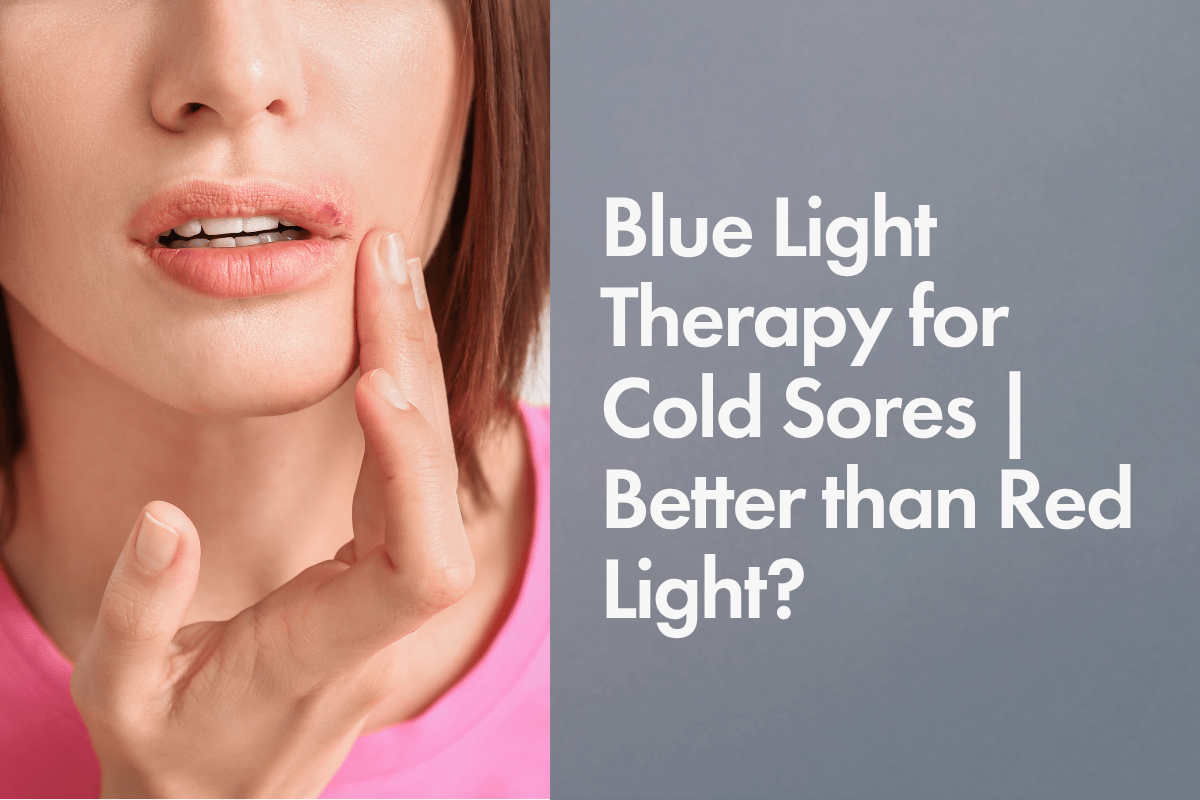

Cold sores are annoying. Painful. Unpredictable. And figuring out what really helps can feel like trial and error.
If you’ve ever wondered whether light therapy could make a difference – especially the newer buzz around blue light – you’re in the right place.
We’ll break down what blue light therapy does for cold sores, how it compares to red light, and when each option makes the most impact.
- Blue light (~445 nm) directly attacks HSV-1 virus particles and replication.
- Most effective during the early prodromal stage before blisters form.
- Red light is better for healing established sores and long-term prevention.
- Combining both wavelengths may provide optimal viral disruption and healing.
What Is Blue Light Therapy for Cold Sores?
Blue light therapy involves exposing skin to visible blue wavelengths, typically in the 400–470 nm range.
For cold sores, the sweet spot seems to be around 445 nm, which research suggests has a direct antiviral effect on HSV-1.
Unlike red light therapy, which mainly supports healing, blue light targets the virus itself. It’s non-invasive, painless, and increasingly used in at-home skincare and therapeutic devices.
How Blue Light Therapy Works Against Cold Sores
Blue light fights cold sores in a few different ways. Think of it as attacking the virus and supporting your skin from multiple angles:
Direct Antiviral Effect on HSV-1
Blue light has been shown in lab studies to reduce the replication of HSV-1 by damaging the virus particles before they can enter host cells.
In some cell models, this reduced the amount of viral DNA and increased the survival of infected cells.
Translation: Blue light may help stop the outbreak before it even begins.
ROS Generation
When blue light hits the skin, it can create something called reactive oxygen species (ROS).
These unstable molecules can disrupt the viral envelope and damage genetic material inside the virus, making it harder for HSV-1 to spread.
Photosensitizer Activation
HSV-1 is an enveloped virus, and its outer shell contains molecules like porphyrins and flavins. These act like internal “light magnets,” absorbing blue light and triggering chemical reactions that can weaken or destroy the virus.
Antibacterial Action
Blue light doesn’t just go after viruses. It also has antimicrobial effects, which means it can kill bacteria that hang out around cold sores and potentially reduce the risk of secondary infections.
Cellular Biostimulation
While red light is the star player in this department, blue light also stimulates certain cellular pathways involved in inflammation control and wound healing.
It’s not as deep-acting, but it can help reduce redness and support faster resolution of the sore.
Red Light Therapy vs Blue Light Therapy for Cold Sores
So, where does blue light stand compared to its better-known sibling, red light therapy?
Let’s break it down:
| Aspect | Blue Light (~445 nm) | Red Light (620–750+ nm) |
|---|---|---|
Primary Target | HSV-1 virus particles | Skin cells, immune system |
Mechanism | Direct antiviral + ROS | Cellular regeneration, immune modulation |
Best Used | Early stage (prodrome) | Blister/healing stage + prevention |
Skin Penetration | Shallow | Deeper tissue reach |
Preventive Use | Not well studied | Supported by clinical research |
Evidence Strength | Promising but early-stage | Stronger clinical backing |
Red light is better studied, especially when it comes to healing time and reducing how often outbreaks occur. Blue light is newer on the scene, but its direct attack on the virus itself makes it a compelling option – especially if you catch the cold sore early.
When and How to Use Blue Light Therapy for Cold Sores
Best Timing
The earlier, the better. Blue light works best during the prodromal stage, when you feel tingling or itching but the blister hasn’t appeared yet.
At this point, the virus is active near the surface of the skin, making it more vulnerable to light exposure.
Session Frequency and Duration
Most studies and device protocols recommend:
- 2–3 short sessions per day
- Each lasting 2–5 minutes
- Repeat daily until symptoms subside
Too much blue light can lead to irritation, so stick to the device’s recommended usage.
Combining Red and Blue Light
Some people see the best results by combining both wavelengths:
- Start with blue light at the first sign of symptoms to target the virus directly
- Switch to red light once the blister forms to speed up healing and reduce inflammation
This approach tackles both the viral load and the tissue damage, potentially cutting the life of the cold sore short from both ends.
Who Benefits Most from Blue Light Therapy?
Best-Fit Users
- People who can catch cold sores early
- Those with mild to moderate outbreaks
- Anyone looking to reduce reliance on prescription antivirals
When Blue Light May Not Be Enough
- If the sore is already well developed (blistered or scabbing)
- In cases of frequent, severe outbreaks where red light or combo therapy may be more effective
- For users with photosensitivity disorders (like lupus or porphyria)
Is Blue Light Therapy Safe?
In general, yes. But a few precautions are worth noting:
- Mild side effects: Some people experience dryness, redness, or temporary irritation.
- Avoid eye exposure: Never look directly into the light. Use eye protection if needed.
- No use before bed: Blue light may disrupt sleep if used late at night.
- Don’t use on popped blisters: Open wounds can increase infection risk.
- Medical conditions: Avoid if you have a condition that makes you light-sensitive.
Used properly, blue light therapy is a safe, non-invasive option that doesn’t involve any harsh chemicals or drugs.
Choosing a Blue Light Device for Cold Sores
Not all devices are created equal. Here’s what to look for:
- Wavelength: ~445 nm for optimal antiviral effect
- Power density: ~0.1 to 0.3 W/cm²
- Treatment duration: 2–5 minutes per session
- Built-in timer and auto shut-off
- Reputable manufacturer with clinical backing
- FDA clearance (or equivalent regulatory approval)
- Ease of use: ideally portable, hygienic, and safe for home use
Avoid devices that don’t specify their wavelength or dosage – those details matter when it comes to effectiveness.
What Results Can You Expect?
If you catch it early and use your device consistently, you may notice:
- Shorter duration of outbreak
- Less severe symptoms
- Reduced pain or itching
- Possibly fewer lesions forming
But let’s be clear: blue light isn’t a magic fix.
The evidence is promising but still emerging. It may work great for some people, especially in the early stages, but red light has more clinical backing for healing and prevention.
The best results often come from combining both approaches.
Final Takeaway: Is Blue Light Therapy Better Than Red Light?
It depends on what you need:
- For early-stage intervention? Blue light shows exciting promise for reducing viral load before a blister forms.
- For healing and long-term prevention? Red light is the clear winner, backed by multiple clinical studies.
- Want the best of both? Combine them. Start with blue, finish with red.
Bottom line: blue light therapy for cold sores is a welcome addition to the light therapy toolkit.
If you’re someone who spots the early signs fast and wants a gentle, drug-free option, it’s worth exploring.
Stop Cold Sores Before They Take Over
Target the virus early and heal faster, naturally.
SHOP NOW – GET $100 OFF
Frequently Asked Questions
Can I use blue light therapy if I’m already taking antiviral medication?
Yes, blue light can be used alongside antiviral meds. It may even complement your treatment by directly reducing viral load at the skin surface – just check with your healthcare provider first.
Will blue light therapy stop a cold sore once the blister has already formed?
It might still help reduce inflammation and bacterial load, but its antiviral effects are strongest during the prodromal stage. For established blisters, red light therapy is usually more effective.
Can I use a blue light acne device on my cold sore?
Not necessarily. Acne devices often have different wavelengths or power settings. For cold sores, look for a device specifically designed for HSV-1 and ideally emitting ~445 nm.
How soon should I expect to see results from blue light therapy?
If used during the earliest stage, some people report milder symptoms or faster healing within a few days. But outcomes can vary depending on timing, consistency, and severity.
Conclusion
Blue light therapy for cold sores is gaining traction for a reason – it goes straight after the virus, especially if you catch it early.
Unlike red light, which focuses more on healing and reducing recurrence, blue light’s strength lies in stopping HSV-1 in its tracks before a blister even forms. That said, red light still holds the crown for tissue repair and long-term prevention.
So, is one better? Not exactly – they just serve different roles. And for a lot of people, the smartest approach may be using both.
If you’re looking for a practical way to support your skin during outbreaks and beyond, our 7-color LED face mask offers targeted wavelengths for both viral disruption and skin recovery – all in one device. Shop now and get $100 off.