


Red light therapy has a lot of buzz around it and a lot of questions too.
One that comes up often is whether you need eye protection while using it. Some say it’s essential, others say it depends.
So, how do you know what’s safe?
We’ll break down what the research says and help you make sense of your options.
- Near-infrared light (810-850nm) penetrates deeper into eyes than red light (630-660nm.
- Specialized red light therapy glasses offer wavelength-specific protection with maintained visibility.
- Follow manufacturer guidelines and consider pre-existing eye conditions before starting treatment.
- Professional consultation recommended for photosensitivity or existing eye conditions.
Red Light Therapy and Eye Safety
Red light therapy (RLT) uses specific wavelengths of red and near-infrared light (typically 630-660nm for red light and 810-850nm for near-infrared) to stimulate cellular function.
Unlike ultraviolet light, which can damage skin and eyes, red light operates at lower energy levels and longer wavelengths.
However, when it comes to eye safety, several factors determine whether protection is necessary.
Why Eye Protection Might Be Necessary
Several key factors determine whether eye protection is required during red light therapy:
Device Power and Irradiance:
Higher-powered devices deliver more intense light energy, increasing potential risks to eye tissues.
Professional-grade devices typically emit more powerful light than consumer models.
Distance from Light Source:
The closer your eyes are to the light source, the higher the intensity of exposure. This is particularly relevant for facial treatments where the device is positioned near the eyes.
Treatment Duration:
Longer exposure times increase the total energy delivered to eye tissues, potentially exceeding safe thresholds.
Wavelength Specificity:
Different wavelengths affect eye tissues differently. Near-infrared wavelengths penetrate more deeply into the eye than red wavelengths.
Comparing Red Light and Near-Infrared Therapy
When considering eye safety, it’s crucial to understand the differences between red light and near-infrared (NIR) wavelengths, as they interact with eye tissues differently.
Wavelength-Specific Effects on Eye Tissues
Red Light (630-660nm):
- Penetrates to the anterior segments of the eye
- Less likely to reach the retina
- Generally considered lower risk for eye exposure
- Beneficial for conditions affecting the front of the eye
Near-Infrared Light (810-850nm):
- Penetrates more deeply into ocular tissues
- Can reach the retina
- Requires more careful consideration for eye safety
- May benefit conditions affecting deeper eye structures
Practical Guidelines for Safe Red Light Therapy
Based on current research and expert recommendations, here are practical guidelines for eye safety during red light therapy:
Choosing the Right Protective Eyewear
When eye protection is recommended, different options exist:
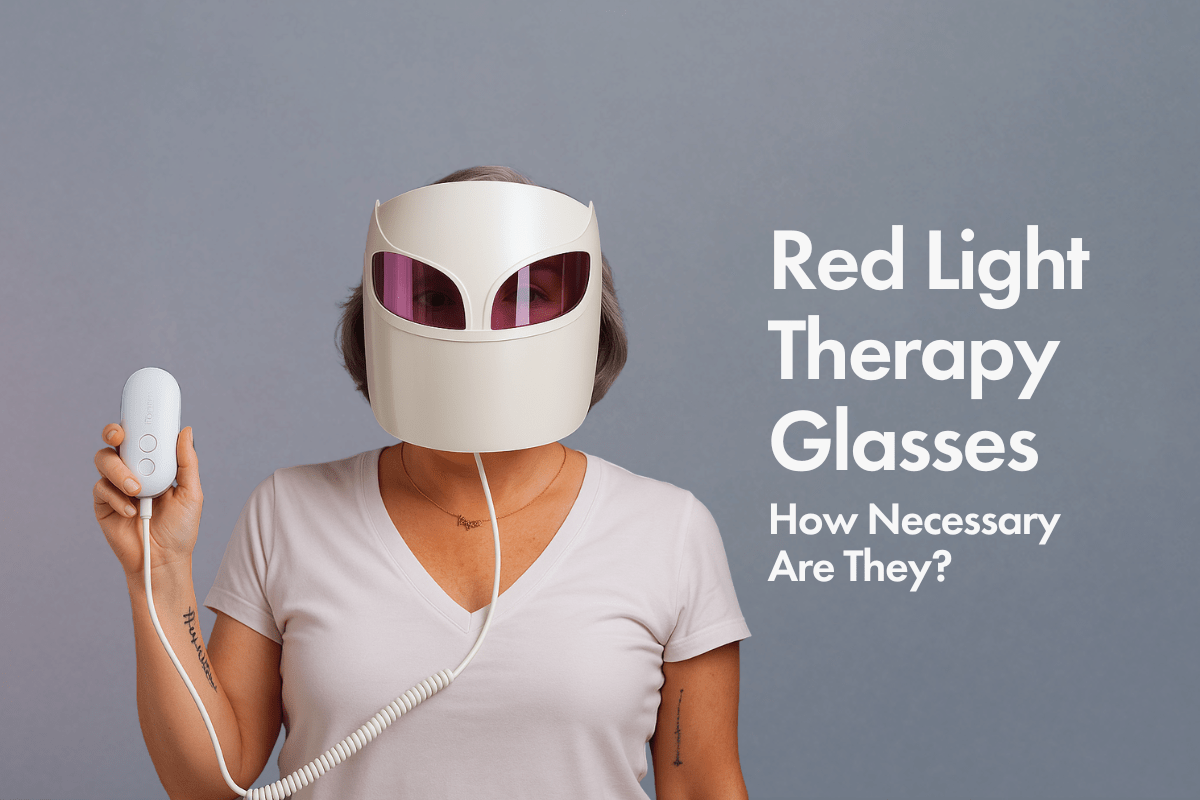
Specialized Red Light Therapy Glasses:
These are specifically designed to block the wavelengths used in therapy while allowing other light through.
Benefits of specialized red light therapy glasses:
- Wavelength-specific protection
- Comfortable for extended wear
- Allow visibility during treatment
- Often designed to complement therapy devices
Standard Blackout Goggles:
These block all light and provide complete protection but may be uncomfortable and disorienting during treatment.
Factors to consider when selecting eye protection:
- The specific wavelengths of your device
- The power output (irradiance)
- Comfort for your treatment duration
- Manufacturer recommendations
Best Practices for Therapy Sessions
To maximize benefits while ensuring eye safety:
- Follow manufacturer guidelines: Always adhere to the specific recommendations provided with your device.
- Consider device placement: Position therapy lights to minimize direct eye exposure when possible.
- Adjust treatment parameters: Lower intensity settings may require less stringent eye protection.
- Maintain appropriate distance: Keep the recommended distance between the device and your face.
- Time your sessions appropriately: Shorter sessions generally pose lower risks than extended exposure.
- Use appropriate eye protection: When in doubt, use protective eyewear, especially with higher-powered devices.
- Consult healthcare professionals: If you have pre-existing eye conditions, consult an eye care specialist before beginning treatment.
Skip The Goggles. Keep The Results.
Built-in eye protection meets serious skin care
Shop Now – Get $100 Off
Frequently Asked Questions
Can I use red light therapy if I have photosensitivity or take photosensitizing medications?
If you have photosensitivity or take medications that increase light sensitivity, consult your healthcare provider before using red light therapy. These conditions may increase your risk of adverse reactions even with wavelengths typically considered safe.
How do I know if my at-home red light therapy device requires eye protection?
Check the manufacturer’s safety guidelines and specifications. Generally, devices with higher power output (measured in mW/cm²) and those that emit light in the 600-650nm range require more caution regarding eye exposure than those in the 660-850nm range.
Can red light therapy worsen existing eye conditions like glaucoma or cataracts?
While some studies suggest potential benefits for certain conditions, others could be exacerbated by improper light exposure. Individuals with pre-existing eye conditions should only use red light therapy under the supervision of an eye care specialist who can monitor for any adverse effects.
How long after red light therapy should I wait before applying eye makeup or contact lenses?
Wait at least 30-60 minutes after treatment before applying eye makeup or inserting contact lenses to allow any residual heat to dissipate and to ensure no irritation develops from the therapy session.
Conclusion
When it comes to red light therapy and your eyes, the takeaway is simple: not all devices are created equal, and the need for protection depends on factors like power, wavelength, and exposure time.
Red light (630–660nm) is generally gentler on the eyes than near-infrared (810–850nm), but that doesn’t mean you should skip safety altogether – especially with higher-powered or close-range treatments.
Whether you’re using specialized glasses, blackout goggles, or just keeping your eyes closed, being cautious is always the better route.
If you’re after results without the risk, our FDA-cleared 7-color LED face mask includes built-in eye protection so you can focus on your skin, not shielding your eyes. Shop now for a safer, simpler skincare routine.