

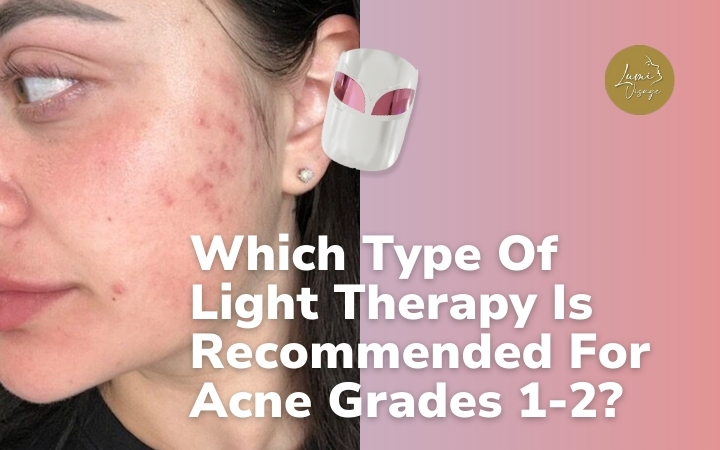

Tired of mild acne (grades 1-2) that makes you feel like a preteen?
Let’s find the type of light therapy that’ll finally clear it up.
We’ll break down the best options so you can get clearer skin—no harsh meds, no confusion, just results.
Key Notes
- Blue light kills acne-causing bacteria, perfect for mild to moderate acne (grades 1-2).
- Red light therapy reduces inflammation and speeds up skin healing post-breakout.
- Dual light therapy combines both for faster, more effective results.
- Regular use is key—results build over time, not overnight.
Understanding Acne Grades 1-2
Grade 1 Acne
This is the mildest form of acne, typically involving a few blackheads or whiteheads with little to no inflammation. It might include occasional pimples, but overall, breakouts are minimal.
Grade 2 Acne
This is still considered mild, but with slightly more visible inflammation. You’ll likely see a few papules or pustules, which are inflamed bumps with or without pus.
Breakouts are still somewhat contained, but they may spread across the T-zone (forehead, nose, and chin).
! Both grades 1 and 2 acne are typically treated with gentle, non-aggressive methods because the skin isn’t severely inflamed. This is where light therapy can play a key role.
Blue Light Therapy: Best for Killing Acne-Causing Bacteria
Blue light therapy is often the go-to for treating acne grades 1-2.
This type of therapy works by using light in the 405-420 nanometer range, which penetrates the skin to target Propionibacterium acnes (P. acnes), the bacteria responsible for acne breakouts.
When blue light hits these bacteria, it kills them, reducing inflammation and preventing future breakouts.
Why It’s Ideal for Acne Grades 1-2:
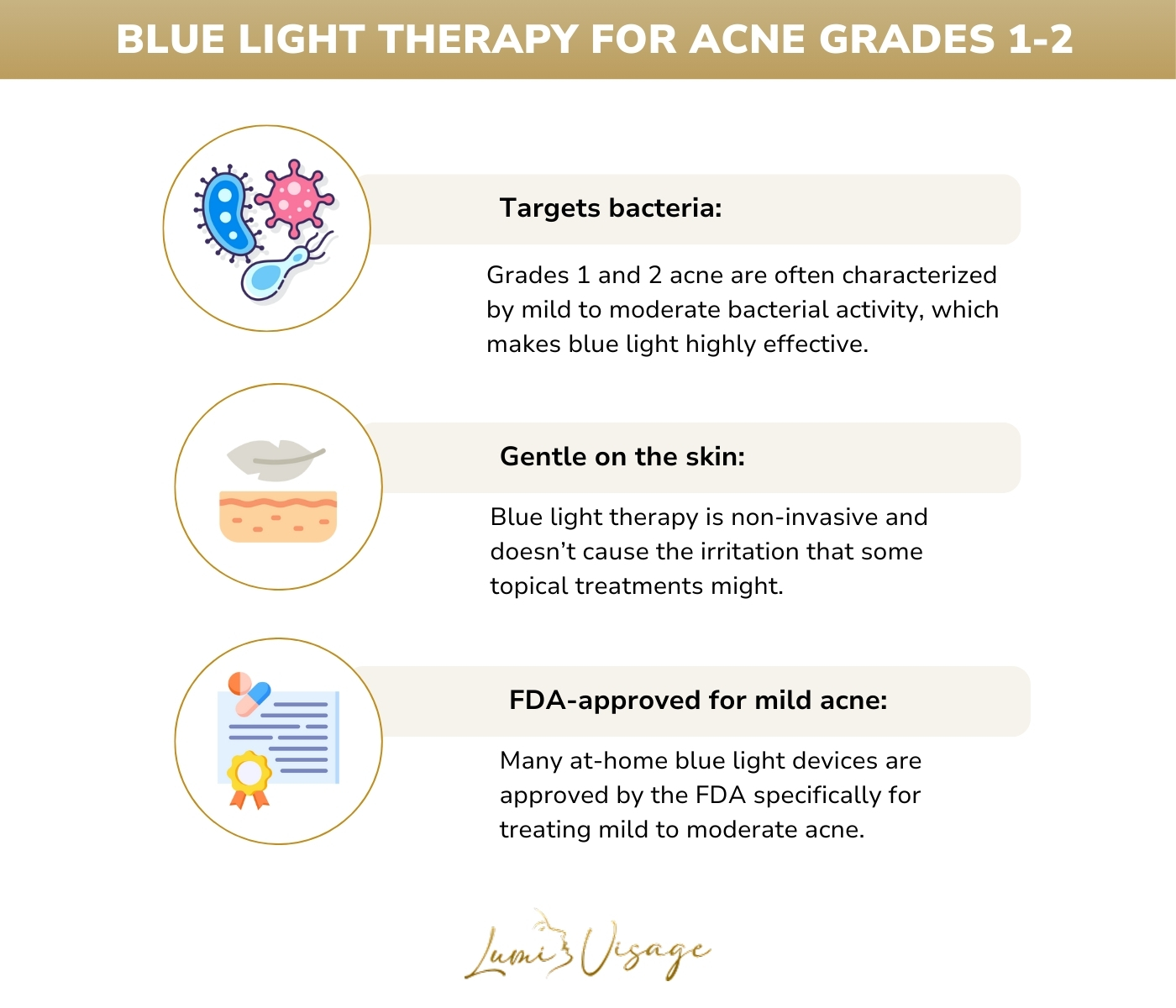
- Targets bacteria: Grades 1 and 2 acne are often characterized by mild to moderate bacterial activity, which makes blue light highly effective.
- Gentle on the skin: Blue light therapy is non-invasive and doesn’t cause the irritation that some topical treatments might.
- FDA-approved for mild acne: Many at-home blue light devices are approved by the FDA specifically for treating mild to moderate acne, making it a safe option for ongoing use.
Because blue light therapy is easy to use and widely available in at-home devices, it’s a practical solution for those dealing with minor breakouts.
Handheld devices, masks, or light panels are common options for self-treatment, and they generally require just a few minutes of use each day.
Red Light Therapy: Reducing Inflammation and Promoting Healing
While blue light therapy is great for killing acne-causing bacteria, red light therapy serves a different purpose.
Red light, which operates at a longer wavelength (around 620-750 nanometers), penetrates deeper into the skin. Its primary benefit is reducing inflammation and promoting skin healing.
Why Red Light Therapy is Useful:
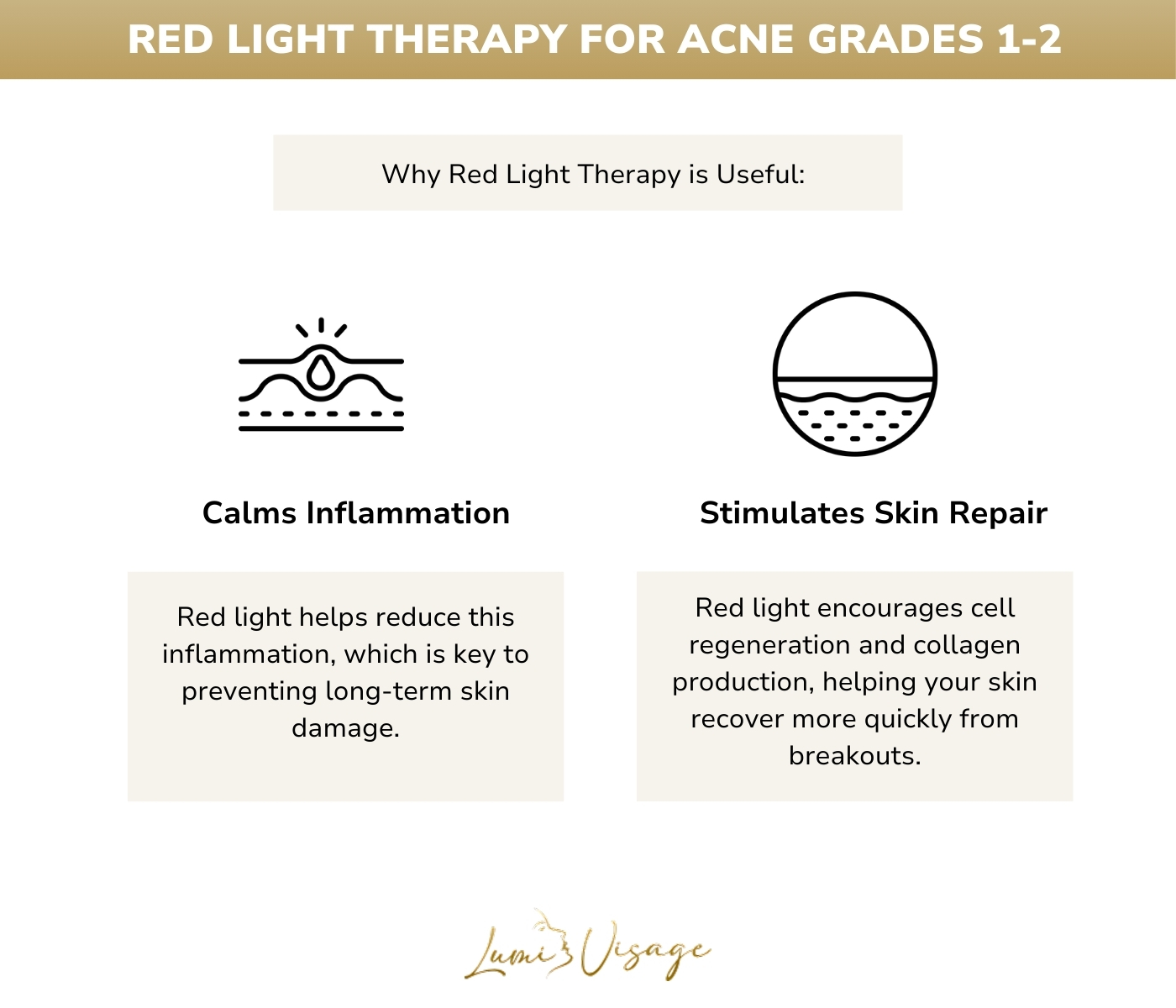
- Calms inflammation: Red light helps reduce this inflammation, which is key to preventing long-term skin damage.
- Stimulates skin repair: Red light encourages cell regeneration and collagen production, helping your skin recover more quickly from breakouts and minimizing scarring.
For acne grades 1-2, using red light therapy either on its own or in combination with blue light can help keep inflammation at bay while promoting faster recovery.
Dual Light Therapy: The Best of Both Worlds
If you’re looking for a comprehensive approach, dual light therapy—combining blue and red light—is an excellent option for treating acne grades 1-2.
Many at-home devices come with dual settings, allowing you to benefit from both bacteria-killing and anti-inflammatory effects.
Why Dual Light Therapy Works Well:
- Targets multiple acne causes: Blue light reduces bacteria, while red light decreases inflammation, making it an all-in-one solution for mild acne.
- Faster healing: The combination of blue and red light not only helps prevent future breakouts but also promotes quicker healing of current blemishes.
- Balanced approach: For people with both small breakouts and mild inflammation, dual light therapy offers a balanced and effective treatment without overwhelming the skin.
Many at-home devices designed for acne treatment come with dual light settings, so you don’t need to purchase separate equipment.
This type of treatment can be done daily or several times a week depending on the severity of your acne.
Struggling To Find An Effective Acne Solution?
Our LED light therapy device delivers fast, safe results.

At-Home vs. Professional Treatments
When considering light therapy for acne grades 1-2, you have two main options: professional treatments at a dermatologist’s office or at-home devices. Each has its pros and cons.
At-Home Light Therapy:
- Convenience: At-home devices allow you to treat your skin on your own schedule without needing to visit a dermatologist.
- Affordability: While the initial cost of a light therapy device can be significant, it’s often more affordable than regular professional treatments in the long run.
- Lower intensity: At-home devices are generally less powerful than professional machines, which means it may take a bit longer to see results. However, for mild acne, the lower intensity is often sufficient.
Professional Light Therapy:
- Higher intensity: Professional treatments use stronger devices, which may lead to faster results, especially for more stubborn acne.
- Supervised treatment: With a dermatologist, you get expert guidance and supervision, ensuring that the treatment is tailored to your skin’s specific needs.
For acne grades 1-2, most people find that at-home devices are sufficient to keep breakouts under control.
However, if you’re not seeing the results you want, a dermatologist can provide stronger treatments or combine light therapy with other acne solutions.
How Often Should You Use Light Therapy?
For mild to moderate acne, using light therapy consistently is key to seeing results.
Most devices recommend daily or every-other-day use, with sessions ranging from 2 to 10 minutes per treatment area.
Over time, you should start to notice fewer breakouts and reduced inflammation.
Remember, while light therapy is effective, it’s not an overnight fix—it takes time for your skin to respond and heal.
Frequently Asked Questions
Can I use blue light therapy with other acne treatments?
Yes, blue light therapy can be safely combined with other treatments like topical creams or retinoids. Just be sure to consult with your dermatologist to avoid irritation or over-treatment.
How long does it take to see results from blue light therapy?
Many users start noticing improvements in their skin after 2-4 weeks of consistent use. However, results can vary based on the severity of the acne and how often you’re using the device.
Is there a risk of skin damage from blue light therapy?
No, blue light therapy does not use UV rays and is considered safe for regular use. However, it’s always a good idea to follow the instructions and avoid overuse.
Can blue light therapy help with acne scars?
While blue light is primarily for acne, red light therapy can help reduce the appearance of scars by promoting skin healing and collagen production.
Conclusion
For acne grades 1-2, blue and red light therapy work together to tackle breakouts at the source—killing bacteria and calming inflammation.
Dual light therapy offers the best of both worlds, giving you a simple, effective way to clear up your skin without harsh side effects.
The key is sticking with it, and you don’t need a dermatologist visit to make it happen.
Ready for clearer skin without the hassle? Try the Lumi Visage 7-Color LED face mask today and see the difference for yourself.