

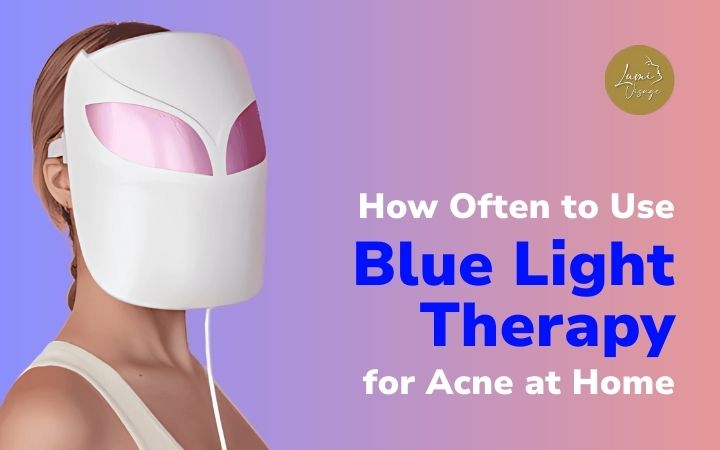

If you’re eyeing blue light therapy as a solution for persistent acne, you’re probably wondering how often you should use it at home to see real results.
The good news? It’s a manageable routine that fits into your skincare regimen.
We’ll walk you through how frequently to use it, how it works, and what you can expect from this acne-fighting tool.
Key Notes
- Use blue light therapy at home 2-3 times per week for optimal results.
- Expect results after 4-6 weeks of consistent treatments.
- Overusing blue light can lead to irritation; balance is key.
How Often Should You Use Blue Light Therapy for Acne at Home?
The frequency of your at-home treatments is important if you want to see real results.
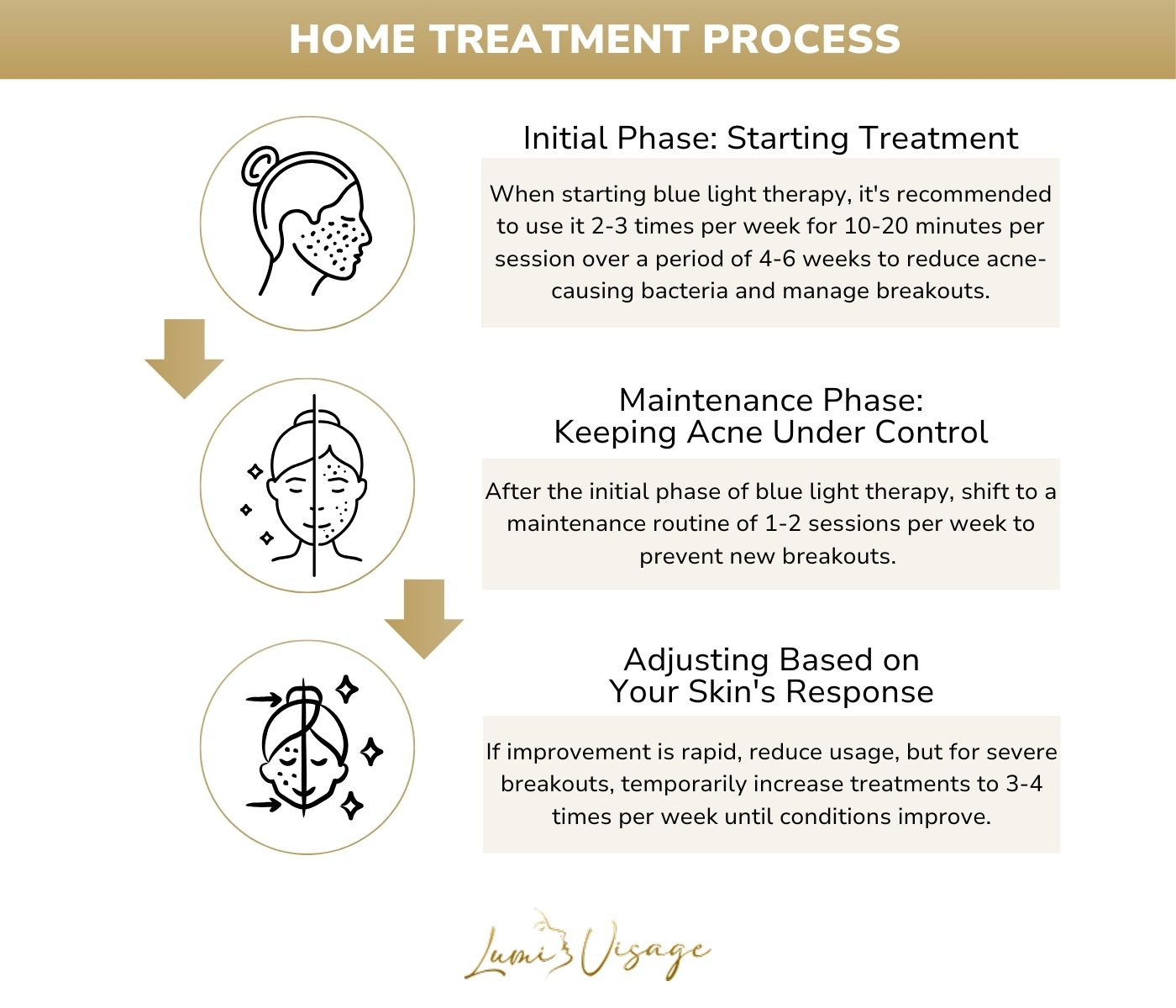
Here’s a general guide on how often to use blue light therapy, depending on where you are in your treatment process:
Initial Phase: Starting Treatment
When you first begin blue light therapy, most devices and experts recommend using it two to three times per week.
During this phase, which typically lasts for four to six weeks, your goal is to consistently reduce the bacteria on your skin and manage any existing breakouts.
Each session should last around 10 to 20 minutes, depending on the device you’re using and its intensity. You want to make sure you’re not overdoing it, especially if your skin is sensitive, but you also need to be regular with your sessions to see any improvement.
Maintenance Phase: Keeping Acne Under Control
Once you’ve completed the initial phase and start to notice improvements (fewer breakouts and reduced inflammation), you can transition to a maintenance routine.
This means cutting back to one or two sessions per week to keep the bacteria at bay and prevent new breakouts from forming.
It’s crucial to stick to these maintenance sessions even after your skin starts clearing up. Blue light therapy isn’t a one-and-done treatment; it requires ongoing care to maintain your results.
Adjusting Based on Your Skin’s Response
Your skin’s response to blue light therapy can vary, so it’s important to stay flexible. If you notice your skin improving quickly, you can gradually reduce how often you use the device.
On the other hand, if you have a particularly bad breakout, it might be necessary to increase the frequency of your treatments temporarily, going up to three or four times a week for a few weeks.
Tired of Breakouts & Inconsistent Results?
Clear skin is possible with regular blue light therapy.

What Results Can You Expect?
Consistency is key when it comes to seeing results from blue light therapy. Most people start to notice changes in their skin after four to six weeks of regular use.
The bacteria reduction leads to fewer breakouts, and your skin may look less inflamed. It’s a gradual process, so don’t expect overnight miracles, but over time, you should see smoother, clearer skin.
In clinical settings, blue light therapy has been shown to reduce acne by 50% to 75% after a few months of consistent treatment. Results from at-home devices can vary based on how powerful the device is and how consistently you use it.
Are There Any Side Effects?
Blue light therapy is generally a gentle option, but it’s not completely risk-free.
You might notice a bit of redness or irritation after a session—don’t worry, it usually fades in a few hours.
Using it frequently? Watch out for dryness or peeling, so make sure to moisturize. And since blue light can increase sun sensitivity, sunscreen is a must post-treatment.
If you spot severe issues like blistering, pause the therapy and check in with your dermatologist.
Frequently Asked Questions
Can blue light therapy help prevent future breakouts?
Yes, regular use can help keep acne-causing bacteria at bay, reducing the frequency of future breakouts.
Is blue light therapy safe for all skin types?
Blue light therapy is generally safe for all skin types, but those with very sensitive or reactive skin should start with shorter, less frequent sessions.
Can blue light therapy be used with other skincare treatments?
Absolutely! You can combine blue light therapy with topical treatments like benzoyl peroxide or retinoids, but be cautious of over-irritation.
Does blue light therapy work on blackheads and whiteheads?
It primarily targets bacteria and inflammation, so it’s more effective on inflamed pimples than on non-inflammatory acne like blackheads or whiteheads.
Conclusion
Using blue light therapy for acne at home is all about consistency. Start with two to three sessions a week, then ease into a maintenance routine once you see improvements.
Over time, regular treatments can help reduce breakouts and keep your skin clearer. It’s a gentle, non-invasive way to manage mild to moderate acne without harsh chemicals.
Ready for clearer skin? Get started with your blue light therapy journey straight from the comfort of your own home with our 7-Color LED Face Mask.