

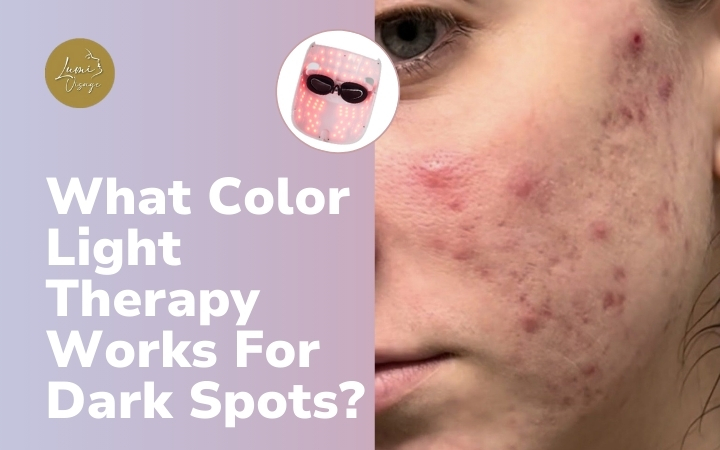

Dark spots reminding you you’re not twenty anymore?
Let LED light therapy turn back the clock.
But choosing the right color is key.
We’ll clear up the confusion and show you which light works best for fading dark spots—safely and effectively.
Key Notes
- Green light therapy is most effective for reducing dark spots and sun damage.
- Red light accelerates skin healing and reduces post-acne hyperpigmentation.
- Amber light targets surface-level pigmentation and brightens the skin.
- Consistent use of LED therapy delivers visible results over time.
Best Light Colors for Dark Spots
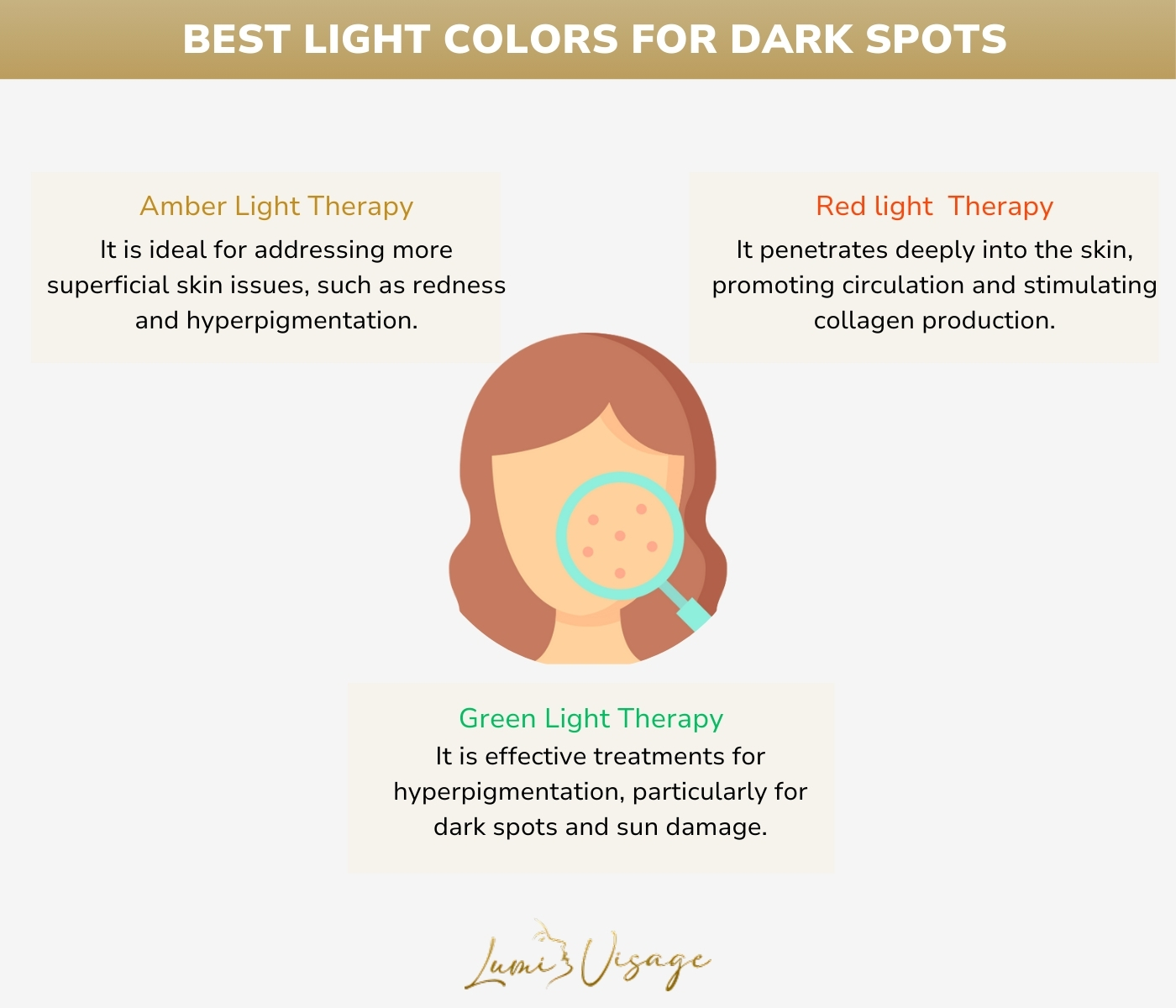
While several colors can benefit your skin, three stand out when it comes to tackling hyperpigmentation: green, red, and amber.
Green Light Therapy
Green light therapy is one of the most effective treatments for hyperpigmentation, particularly for dark spots and sun damage.
Green light targets the melanin-producing cells in your skin and helps regulate the production of this pigment. By controlling melanin production, green light can fade existing dark spots and prevent new ones from forming.
But that’s not all. Green light also has a calming effect on the skin, making it great for people with sensitive skin or those prone to redness and irritation.
If you’re dealing with both hyperpigmentation and redness, green light therapy can be an excellent two-in-one treatment.
Red Light Therapy
Red light therapy is widely known for its anti-aging benefits, but it’s also highly effective for dark spots, especially when combined with other treatments.
Red light penetrates deeply into the skin, promoting circulation and stimulating collagen production. This helps your skin heal more efficiently, reducing inflammation and promoting a more even skin tone.
Red light is especially beneficial for people dealing with post-inflammatory hyperpigmentation, as it helps reduce the residual dark spots left behind after acne, cuts, or other skin injuries.
By speeding up the healing process, red light can prevent these spots from becoming permanent fixtures on your skin.
Amber Light Therapy
If your dark spots are closer to the surface of your skin, amber light therapy may be the best option. Amber light, with its shallow penetration, is ideal for addressing more superficial skin issues, such as redness and hyperpigmentation caused by sun damage.
It works by stimulating the skin’s cells, encouraging them to regenerate more quickly and improving overall skin tone.
Amber light therapy is also known for its ability to calm sensitive skin. If you experience both hyperpigmentation and irritation, it can help soothe your skin while fading dark spots.
It’s a gentle yet effective treatment for sun-induced pigmentation and can improve the skin’s overall radiance.
While amber light therapy isn’t as deep-penetrating as red or green light, it’s still highly effective for brightening the skin and evening out your complexion. Regular use can leave your skin looking refreshed and revitalized.
Tired Of Stubborn Dark Spots That Won’t Fade?
Our LED Face Mask has seen (and fixed) it all!

How to Use LED Light Therapy for Best Results
Consistency is key when it comes to seeing results with LED light therapy.
Whether you’re using an at-home device or getting treatments at a dermatologist’s office, it’s important to stick with a regular schedule to achieve the best outcomes.
For at-home devices, most experts recommend using them a few times a week, typically for about 10-20 minutes per session. Be patient—while you might not see results overnight, consistent use over several weeks or months can lead to significant improvements in your skin’s tone and texture.
If you’re using light therapy along with other skincare treatments, like chemical exfoliants or serums, it’s important to follow your device’s instructions.
Many at-home light masks are made to boost the effects of your favorite products, helping you get clearer, more even skin faster.
Further Tips for Managing Dark Spots
While LED light therapy can work wonders for dark spots, it’s not the only tool you should rely on.
Incorporating other skincare practices into your routine can enhance your results and prevent new dark spots from forming.
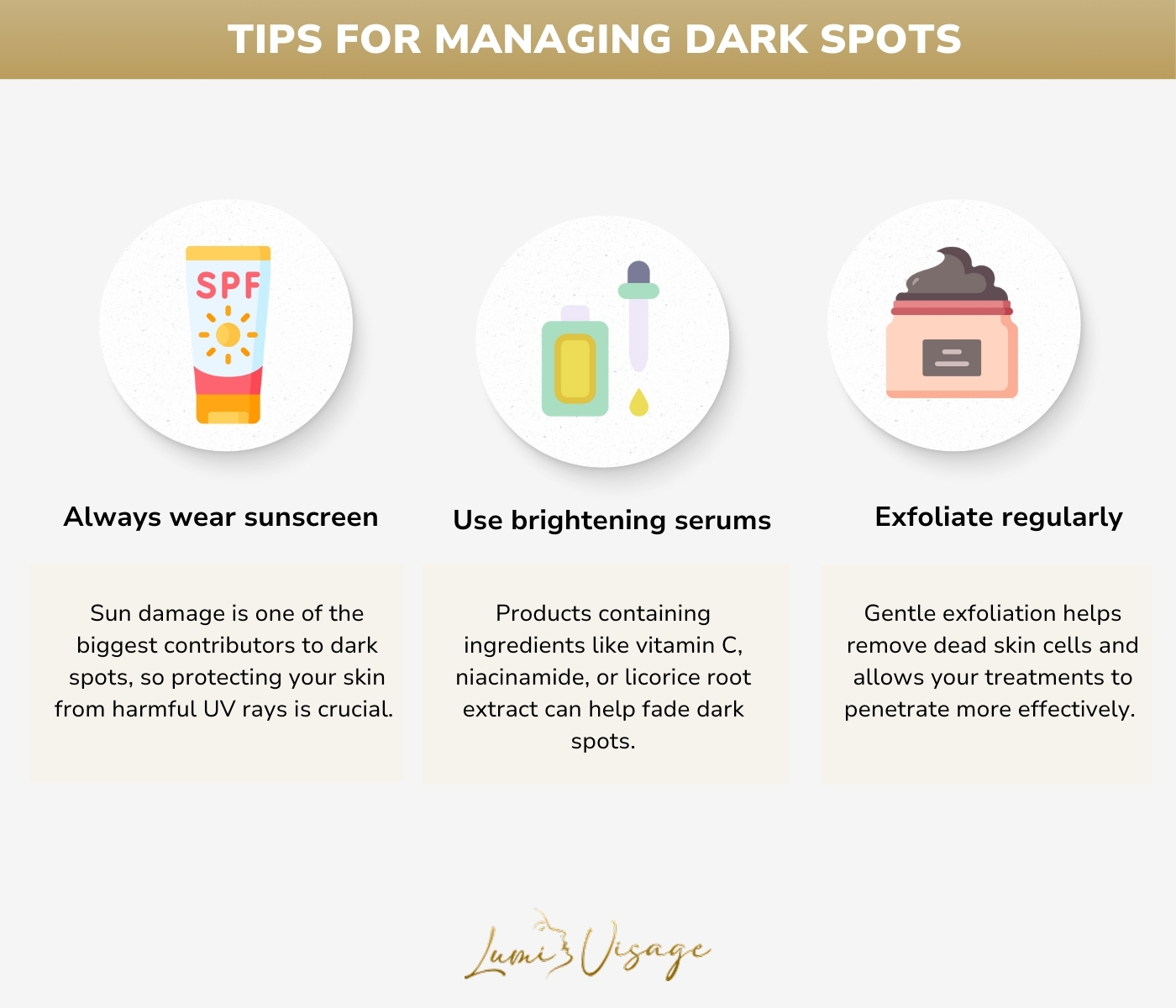
Here are a few tips:
Always wear sunscreen
Sun damage is one of the biggest contributors to dark spots, so protecting your skin from harmful UV rays is crucial.
Look for a broad-spectrum sunscreen with an SPF of at least 30, and reapply throughout the day.
Use brightening serums
Products containing ingredients like vitamin C, niacinamide, or licorice root extract can help fade dark spots and brighten your overall complexion.
These serums work well alongside light therapy to give your skin an extra boost.
Exfoliate regularly
Gentle exfoliation helps remove dead skin cells and allows your treatments to penetrate more effectively.
Look for exfoliants that contain alpha hydroxy acids (AHAs) or beta hydroxy acids (BHAs) for the best results.
Frequently Asked Questions
How long does it take to see results from LED light therapy for dark spots?
Results vary, but most people begin to notice improvement in 4-6 weeks of regular use.
Can LED light therapy prevent new dark spots from forming?
Yes, red and green light therapy can help prevent new spots by improving skin health and regulating melanin production.
How often should I use LED light therapy for dark spots?
For best results, use LED light therapy 3-5 times per week, depending on your device’s instructions.
Is LED light therapy safe for all skin tones?
Yes, LED light therapy is safe for all skin tones and doesn’t cause pigmentation issues like some laser treatments might.
Conclusion
When it comes to fading dark spots, LED light therapy offers a safe, non-invasive option that you can easily incorporate into your skincare routine.
Green light is your go-to for reducing hyperpigmentation, while red light helps heal the skin and prevent future dark spots. For more superficial concerns, amber light offers gentle yet effective brightening benefits.
If you’re ready to give light therapy a try, consider the Lumi Visage 7-Color LED Face Mask to target those pesky dark spots and reveal a brighter, more even complexion.
With the right combination of light therapy and consistent skincare habits, you’ll be on your way to clearer, more radiant skin in no time.