



Red light therapy and microcurrent both show up in the skincare space with big claims. But what do they actually do, and how are they different?
If you’ve been trying to figure out which one makes more sense for your skin goals (or whether you should be using both), you’re in the right place.
We’ll break down how each treatment works, what results to expect, and how to choose what’s right for you.
- Red light boosts cellular energy and collagen for tone/texture improvement.
- Microcurrent electrically stimulates facial muscles for lifting and contouring effects.
- Red light works best for wrinkles and skin health concerns, while microcurrent excels at facial sagging and definition loss issues.
- Both treatments can be safely combined for comprehensive anti-aging results.
Key Differences Between Red Light and Microcurren
| Feature | Red Light Therapy | Microcurrent Therapy |
|---|---|---|
Mechanism | Light-activated mitochondrial stimulation | Electrical muscle and cellular stimulation |
Primary Target | Skin cells and collagen-producing fibroblasts | Facial muscles and skin metabolism |
Key Benefits | Skin tone, texture, inflammation, collagen | Lifting, contouring, firmness, muscle tone |
Treatment Sensation | Warm light, passive experience | Gentle electrical pulses, active stimulation |
Best For | Overall skin health and glow | Facial sculpting and toning |
Contraindications | Rare; avoid with light sensitivity | Avoid with pacemakers, epilepsy, pregnancy |
What Is Red Light Therapy?
Red light therapy (RLT) is all about energy – specifically, the kind your skin cells need to function at their best.
When you expose your skin to red or near-infrared light (typically between 600 and 700 nanometers), that light gets absorbed by the mitochondria in your cells. If you remember high school biology, those are the little organelles often called the “powerhouses” of the cell.
When these mitochondria absorb light, particularly through a key enzyme called cytochrome c oxidase, they kick into gear and start producing more ATP (adenosine triphosphate). ATP is basically the fuel your cells use to do everything – repair, regenerate, and synthesize the proteins your skin needs, like collagen and elastin.
But that’s not all. Red light therapy also increases nitric oxide production (which helps with circulation), modulates inflammation by reducing pro-inflammatory cytokines, and can even trigger beneficial signaling molecules like reactive oxygen species (ROS) to further boost healing and tissue remodeling.
Core Skin Benefits of Red Light Therapy
- Stimulates collagen and elastin to reduce fine lines and wrinkles
- Enhances skin tone and texture, creating a smoother, more even complexion
- Reduces redness and inflammation (great for acne, rosacea, and post-treatment recovery)
- Accelerates healing and scar reduction, including acne marks or surgical scars
- Supports cellular regeneration, improving skin health from the inside out
In short: red light therapy is your go-to for improving skin health at the cellular level.
What Is Microcurrent Therapy?
Microcurrent therapy operates on an entirely different principle: bioelectricity.
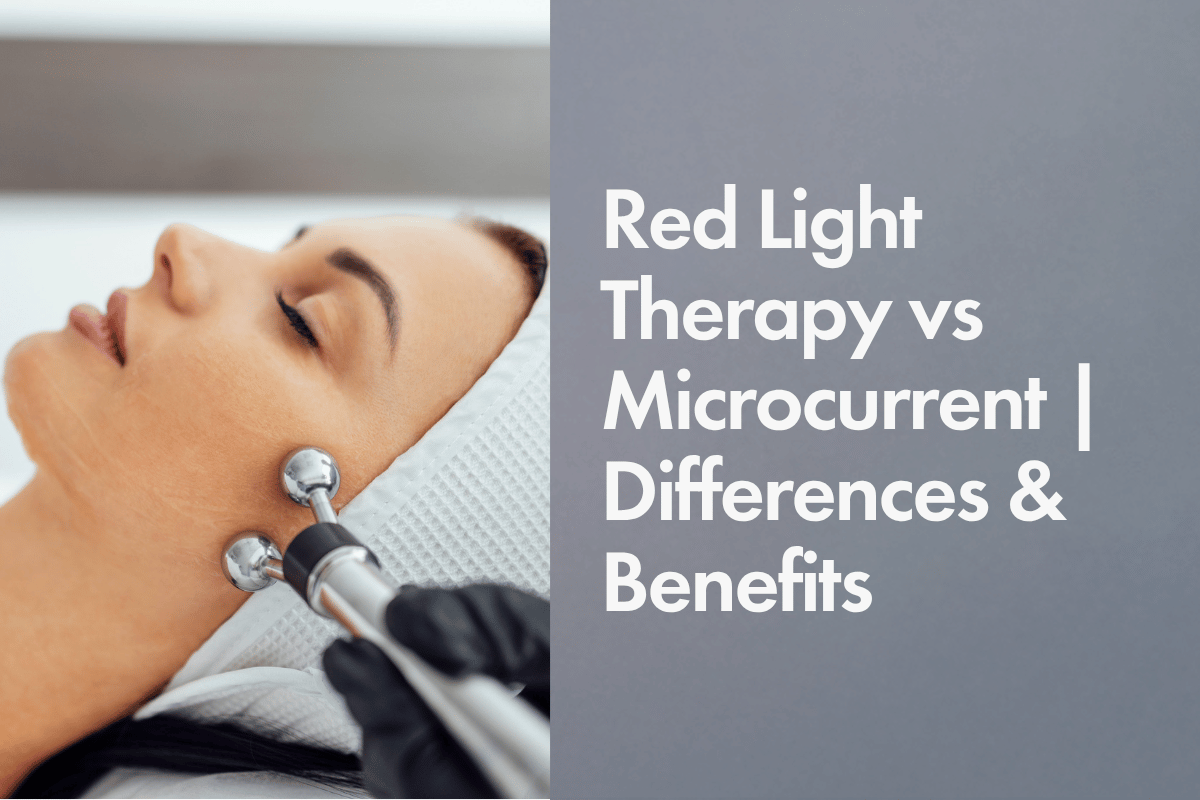
It delivers very low-level electrical currents that mimic your body’s natural electrical signals. These currents stimulate facial muscles to contract and relax – almost like a workout for your face.
Over time, this “muscle training” helps improve facial contours, lift sagging areas, and give your skin a firmer, more sculpted look.
But that’s not all. Microcurrent also increases ATP production in skin cells (just like red light, but through electrical rather than photonic stimulation). This added energy helps boost collagen and elastin synthesis, which further contributes to improved firmness and elasticity.
Core Skin Benefits of Microcurrent Therapy
- Lifts and tones facial muscles for better definition and contour
- Stimulates collagen and elastin production through increased ATP
- Enhances circulation and nutrient delivery to skin tissue
- Supports skin repair and rejuvenation
- Improves skin texture and reduces the appearance of wrinkles with consistent use
Bottom line: microcurrent is all about visible lifting and firmness by targeting the muscles underneath the skin.
Which Is Better for Common Skin Concerns?
Wrinkles and Fine Lines
Red light therapy is generally more effective here, thanks to its collagen-boosting effects at the dermal level. It works on the skin’s structure to soften fine lines over time.
Microcurrent can help too, especially by lifting the muscles beneath those lines. But it’s more of a support act in this case.
Facial Sagging or Loss of Definition
This is where microcurrent shines. If you’re noticing jowls, droopy cheeks, or a less defined jawline, microcurrent provides a non-invasive lift by targeting the muscles that support your facial structure.
Acne or Sensitive Skin
Red light therapy wins. Its anti-inflammatory effects help calm breakouts, soothe redness, and promote healing – all without irritating sensitive skin.
Uneven Skin Tone or Texture
Red light again. By stimulating fibroblast activity and encouraging healthy cellular turnover, RLT improves tone, texture, and overall radiance.
Mature Skin and Aging Prevention
Ideally? Use both.
Red light strengthens the skin at a cellular level, while microcurrent lifts and firms. They tag-team aging from different angles.
Timeline to Results: What to Expect
Red Light Therapy
- 1–2 weeks: Subtle glow, calmer skin
- 4–12 weeks: Visible reduction in fine lines, better tone/texture
- 3+ months: Full collagen benefits, scar fading, firmness
Microcurrent Therapy
- 1–4 weeks: Noticeable lifting and toning (often after just a few sessions)
- 4–8 weeks: Improved facial contour and firmness
- Ongoing: Maintenance is key for long-term results
Red light tends to build gradually, while microcurrent often gives a quicker visible effect.
Safety Considerations & Contraindications
Red Light Therapy
Generally very safe. Side effects are rare and usually mild:
- Temporary redness or dryness
- Slight irritation or acne purging in early sessions
- Eye strain (always wear goggles!)
Avoid if you’re on photosensitizing medications or have a history of skin cancer without consulting a healthcare provider.
Microcurrent Therapy
Also safe, but with a few more contraindications:
- Not recommended for those with pacemakers, epilepsy, heart conditions, or during pregnancy
- Temporary redness or tingling can occur
- Always follow usage guidelines and consult your provider if you’ve had recent injectables or surgeries
Can You Use Red Light and Microcurrent Together?
Absolutely – and many skincare professionals recommend it.
Red light and microcurrent target different layers and mechanisms of the skin. One focuses on energy and healing; the other on lift and tone.
Used together, they form a powerhouse combination for anti-aging, skin smoothing, and visible firming.
Best practice:
- Use red light first to stimulate collagen and reduce inflammation
- Follow with microcurrent for lifting and toning
- Or alternate them on different days to keep your routine simple
Who Should Use Red Light vs Microcurrent?
Best For Red Light Therapy
- Uneven tone, dullness, redness, or inflammation
- Mild acne or acne scars
- Early signs of aging (fine lines, sun damage)
- Post-treatment recovery or wound healing
- Sensitive skin that needs a gentle approach
Best For Microcurrent Therapy
- Mild to moderate facial sagging
- Loss of jawline definition or cheek volume
- Drooping brows or smile lines
- Muscle laxity and loss of tone
- Anyone seeking a more sculpted, contoured look
If You’re New to Skin Tech
Red light is the easiest and safest place to start. It’s gentle, effective, and requires no learning curve.
Microcurrent is fantastic but slightly more advanced – best added once you’re comfortable with skin devices.
Combining With Skincare Actives or Injectables
Red Light Therapy + Skincare
- Safe with: Vitamin C, niacinamide, hyaluronic acid, retinoids
- Best practices: Clean skin before RLT; apply actives afterward
- Bonus: RLT can enhance product absorption and efficacy
Microcurrent Therapy + Skincare
- Use a water-based conductive gel or serum (e.g., hyaluronic acid)
- Avoid retinoids or acids before treatment to prevent irritation
- Apply those after your session instead
After Injectables
- RLT: wait 24–48 hours after Botox or fillers
- Microcurrent: wait 1–2 weeks; check with your injector
Final Verdict: Red Light or Microcurrent?
Here’s the TL;DR:
- Want better tone, glow, and long-term skin health? Red light therapy
- Need a lift, firmer features, or sculpted contour? Microcurrent
- Chasing both? Use both. They’re not rivals – they’re teammates.
With a little consistency and a clear goal, these two technologies can work wonders together.
Your skin. Your rules. Your glow.
Boost Collagen, Firm Skin, Glow Naturally
Achieve pro-level results from the comfort of home.
SHOP NOW – GET $100 OFF
Frequently Asked Questions
Can I use red light therapy or microcurrent if I have rosacea?
Red light therapy is generally safe and often beneficial for rosacea, thanks to its anti-inflammatory effects. Microcurrent may be too stimulating for some with active flare-ups – always patch test and consult your dermatologist.
How long should I wait between red light and microcurrent treatments?
You don’t have to wait – you can use them back-to-back in the same session. Just make sure your skin is clean and hydrated, and start with red light before applying your conductive serum for microcurrent.
Will either treatment help with under-eye bags or puffiness?
Microcurrent can help reduce puffiness by improving lymphatic drainage and toning muscles around the eyes. Red light may support longer-term collagen production but isn’t targeted for puffiness relief.
Can I overdo red light or microcurrent therapy?
Yes, more isn’t always better. Stick to recommended usage (usually 2–3x/week for red light; 3–5x/week for microcurrent) to avoid skin irritation or fatigue. Consistency over time beats daily overuse.
Conclusion
When it comes to red light therapy vs microcurrent, the real win lies in knowing what each one does best.
Red light therapy works deep in your skin cells – boosting collagen, calming inflammation, and helping with tone and texture over time. Microcurrent targets the muscles underneath, lifting and firming your face for more defined contours and visible tightness.
They’re not competing treatments. They just focus on different layers of your skin. One builds the foundation, the other sculpts it.
If you’re looking for an easy, non-invasive way to support smoother skin, improved tone, and long-term collagen production, our FDA-cleared 7-color LED face mask is a smart place to start. Shop now – your skin will thank you later.