


Managing lupus can feel like a full-time job, and new “miracle” treatments seem to show up every week.
Red light therapy is getting a lot of attention, but is it actually worth trying for lupus symptoms, or just another wellness fad?
We’ll break down what real users and early research say—so you can decide if it’s worth a spot in your routine.
- Red light therapy may ease pain, inflammation, and skin issues for some with lupus.
- Responses vary—photosensitivity can make light therapy risky for certain individuals.
- Always consult your doctor before adding red light therapy to your lupus care.
- Start slow, use FDA-cleared devices, and monitor your symptoms closely.
Potential Benefits of Red Light Therapy for Lupus
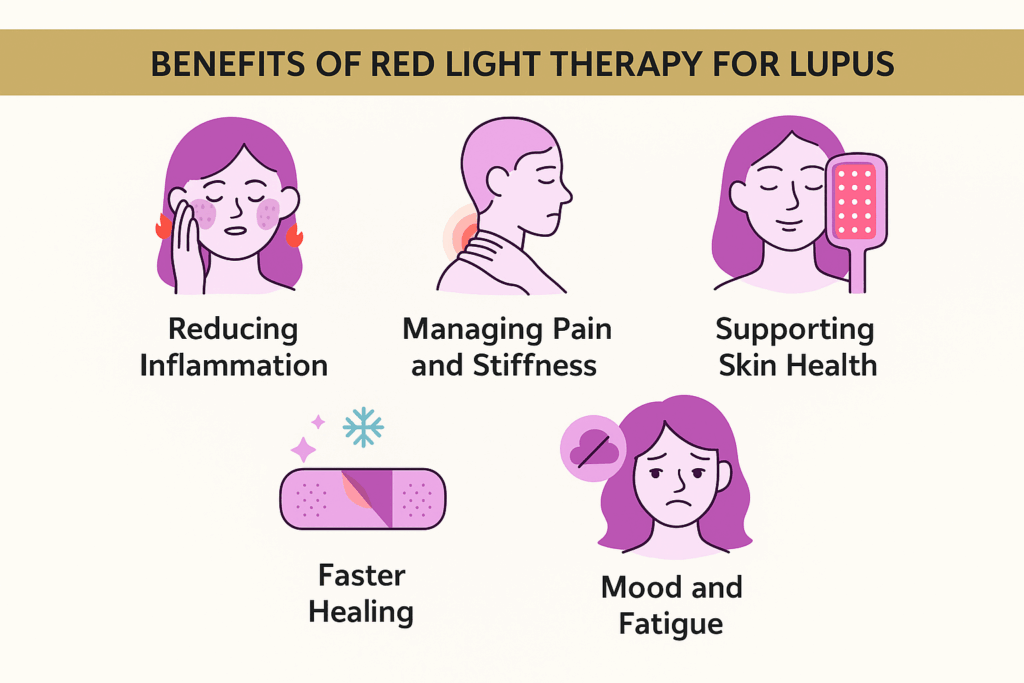
1. Reducing Inflammation
Lupus is defined by inflammation. Whether it’s in the joints, skin, or other tissues, inflammation is what causes most symptoms.
Red light therapy has been studied for its anti-inflammatory effects, especially in joint pain, muscle soreness, and wound healing. By boosting cellular energy and reducing inflammatory markers, red light therapy may help calm the body’s overactive response.
2. Managing Pain and Stiffness
Joint pain is one of the most common lupus symptoms. Red light therapy is already used by people with arthritis and fibromyalgia to manage aches and stiffness.
Some lupus patients report similar improvements—less morning stiffness and reduced pain after regular sessions.
3. Supporting Skin Health
Skin issues, like the classic lupus “butterfly rash,” are another reason people turn to red light therapy. It’s used for acne, scars, and general skin healing, so it’s not a stretch to think it could help some lupus-related rashes or irritation.
Again, always consult with a dermatologist or rheumatologist first.
4. Faster Healing
Wounds and ulcers can be slow to heal in people with lupus. Red light therapy is being studied in chronic wound care, with promising results in speeding up healing time.
A few small studies and case reports suggest it could be beneficial for lupus patients struggling with slow-healing skin.
5. Mood and Fatigue
Chronic illness often brings fatigue and low mood. There’s some evidence that red light therapy may help support better sleep, mood, and energy, which is relevant for anyone dealing with the day-to-day effects of lupus.
Lupus and Light Sensitivity
A major challenge for people with lupus is photosensitivity. Many experience rashes or flare-ups after sun exposure. UV rays can trigger symptoms, making sunlight (and even some indoor lighting) a potential problem.
Red light therapy is different from UV therapy, but anyone with lupus should be careful with any light-based treatment. Most red light devices use wavelengths that are thought to be safe for sensitive skin, but everyone’s response is different.
Always check with your doctor before trying it.
Risks and Considerations
Photosensitivity
Even though red light is safer than UV, some people with lupus are so light-sensitive that any therapy involving light can trigger a flare.
If you’re prone to rashes or burning from sunlight, talk with your doctor before trying red light therapy.
Device Quality and Safety
Stick with FDA-cleared devices and follow manufacturer instructions.
Home-use panels and masks vary in strength and quality. Start with low-intensity sessions and increase only as tolerated.
Medical Supervision
If you’re considering red light therapy for lupus, do it under the supervision of your healthcare provider.
They can help you monitor for reactions, adjust your plan, and ensure it’s not interfering with your other treatments.
Individual Response
Every person with lupus is different. What helps one may do nothing (or even harm) another.
Keep a symptom journal and communicate openly with your healthcare team.
Patient Experiences
There’s no substitute for hearing from people who’ve actually tried red light therapy for lupus.
Here are a few real-world experiences:
Joint Relief
Some users say regular sessions with a red light panel help cut down morning stiffness and swelling in their hands and knees.
They often combine therapy with other lifestyle changes, like diet and gentle exercise.
Skin Calming
A handful of people have noticed less redness or faster healing of skin flare-ups, especially when they use red light masks at the lowest settings.
Mixed Results
Just as many people report no improvement at all, or say that the benefit fades if they stop regular sessions.
Cautions
A small number experienced worsening symptoms—usually related to overuse or devices with higher intensity.
If you’re curious, lupus support forums can be a gold mine for honest feedback.
Need A Gentler Way To Support Your Skin & Joints?
Our FDA-cleared mask fits right into your routine
SHOP NOW – GET $100 OFF
Frequently Asked Questions
Is red light therapy safe for all lupus patients?
Red light therapy is not automatically safe for all lupus patients. While many individuals tolerate it well, those with severe photosensitivity may have adverse reactions. It’s essential to consult your doctor before starting red light therapy if you have lupus.
How often should I use red light therapy if I have lupus?
If you have lupus, you should start red light therapy cautiously—typically with short sessions of 5–10 minutes a few times per week. However, frequency and duration should only be adjusted under the guidance of your healthcare provider.
Can red light therapy trigger a lupus flare?
Yes, red light therapy can potentially trigger a lupus flare, especially in individuals who are highly photosensitive. This is why it’s crucial to monitor your body’s response closely and work with your doctor when using red light therapy.
Is red light therapy covered by insurance for lupus treatment?
In most cases, red light therapy is not covered by insurance, even for lupus patients. Since most devices are classified as wellness or cosmetic tools rather than medical treatments, insurance companies rarely reimburse the cost.
Can I use red light therapy on my face if I have lupus?
You can use red light therapy on your face if your doctor approves it. However, it’s important to be extremely careful, especially around sensitive or rash-prone areas, as the facial skin can be more reactive.
Conclusion
Red light therapy could offer real relief for some lupus symptoms, especially around pain, stiffness, and skin irritation.
That said, it’s not a sure thing for everyone. Starting slow, choosing the right device, and staying connected with your doctor are the best ways to figure out if it fits your care plan.
Everyone’s journey with lupus is different—and it’s okay to move at your own pace.
If you’re thinking about trying red light therapy at home, our 7-Color LED Face Mask is a great place to start. Shop now and see how it feels for you.