

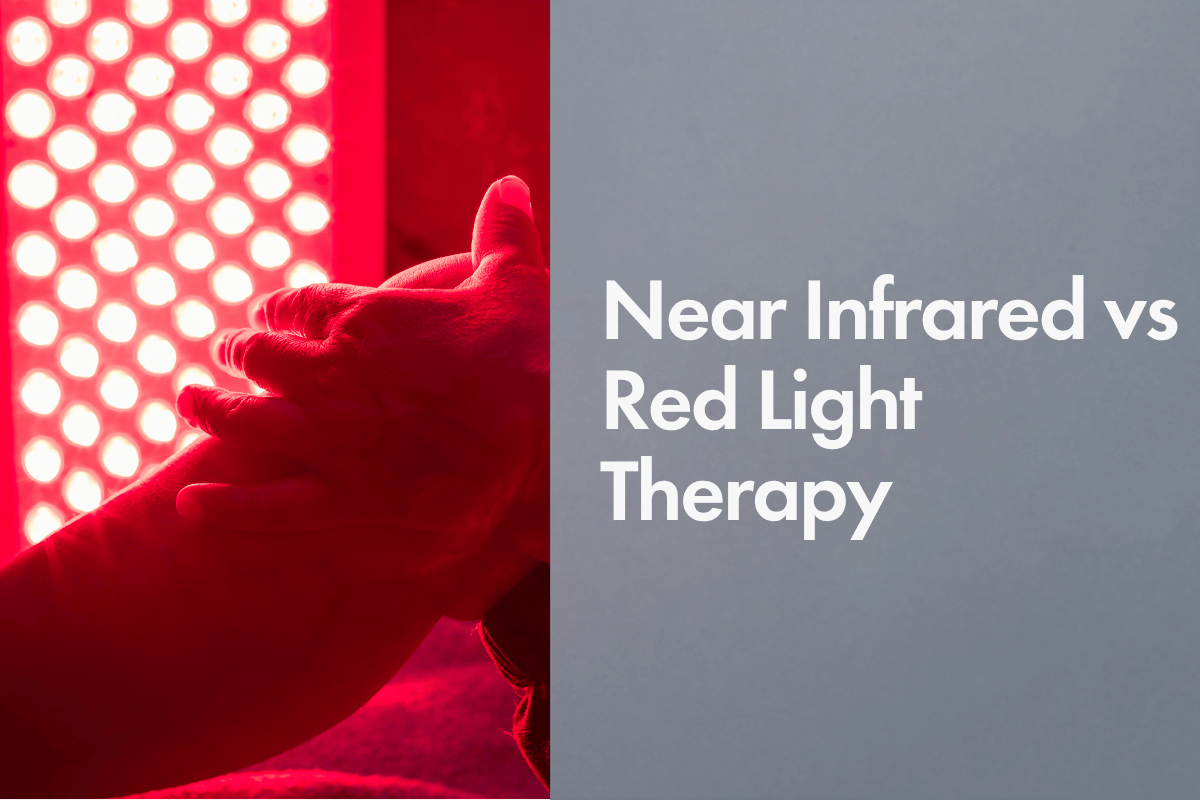

You’ll often see red light and near infrared therapy mentioned in the same breath.
But they’re not quite the same thing. And depending on what you’re trying to treat, choosing the wrong one might slow you down.
So what’s the difference between them, and does it matter?
We’ll break down how they work, what each one targets, and when it makes sense to use both.
- Red light (620-750nm) targets the skin surface while NIR (800-850nm) penetrates deeper tissues.
- Red light treats wrinkles, acne, scars; NIR handles muscle pain, joint issues.
- Combining both wavelengths provides comprehensive surface-to-deep tissue benefits.
- Treatment timing varies: red light 10-20 minutes, NIR needs 15-30 minutes.
What Is Red Light Therapy?
Red light therapy uses visible light in the 620–750 nanometer (nm) range – typically 630nm and 660nm. It looks red to the human eye and mostly targets the surface layers of the skin.
It’s absorbed within 1–2mm of the skin surface (sometimes more under specific conditions), which makes it ideal for boosting skin health, stimulating collagen, and accelerating wound healing.
If your concern lives in the epidermis or upper dermis, red light is your go-to.
What Is Near Infrared (NIR) Light Therapy?
Near infrared light, on the other hand, is invisible to the naked eye. It sits just beyond the red light spectrum, typically between 800–850nm for therapy.
Here’s the key: NIR penetrates much deeper than red light – reaching 2–5mm into the skin and sometimes even deeper under ideal circumstances.
It can impact muscles, joints, connective tissues, and even parts of the brain. That makes it better suited for chronic pain, deep inflammation, and neurological health.
How They Work: Shared Science, Different Reach
Both red and NIR light trigger a biological process called photobiomodulation.
When these specific wavelengths are absorbed by mitochondria (the energy producers in your cells), they stimulate:
- ATP production (aka your cells’ fuel)
- Blood flow and oxygenation
- Collagen synthesis and cellular repair
- Anti-inflammatory responses
The big difference? Where those effects happen. Red light hits the surface layers. NIR goes deeper.
What Does Each One Help With?
Red Light Therapy: Surface-Level Superstar
- Wrinkles, fine lines, and sagging
- Acne and redness
- Superficial scars
- Skin texture and tone
- Hair regrowth
- Minor wounds or mouth sores
What Does Each One Help With?
Red Light Therapy: Surface-Level Superstar
- Wrinkles, fine lines, and sagging
- Acne and redness
- Superficial scars
- Skin texture and tone
- Hair regrowth
- Minor wounds or mouth sores
NIR Therapy: Deep-Tissue Powerhouse
- Muscle recovery
- Joint pain or stiffness
- Chronic inflammation
- Tendon or ligament injuries
- Neurological conditions (early research)
- Post-injury healing
NIR Therapy: Deep-Tissue Powerhouse
- Muscle recovery
- Joint pain or stiffness
- Chronic inflammation
- Tendon or ligament injuries
- Neurological conditions (early research)
- Post-injury healing
When in doubt: Red = skin. NIR = deep tissue.
Can You Use Both Together?
Absolutely, and many high-quality devices do just that.
Using red and NIR light together gives you a more comprehensive treatment: red light handles the skin, while NIR supports muscles, joints, and deep inflammation.
Together, they:
- Boost ATP production across multiple tissue layers
- Reduce inflammation at both surface and deep levels
- Improve healing time and blood flow
- Support whole-body wellness (not just the skin)
That said, you don’t have to use both. If you’re only treating skin, a red-only device works great. Same for NIR and joint pain.
How Long and How Often Should You Use Them?
The ideal session length and frequency depends on what you’re treating.
Here’s a quick reference:
| Therapy Type | Session Length | Frequency | Irradiance (Power Density) |
|---|---|---|---|
|
Red Light |
10–20 minutes |
3–5x per week |
20–100 mW/cm² |
|
NIR Light |
15–30 minutes |
3–4x per week |
30–200+ mW/cm² |
Why the difference? NIR needs more time and energy to reach deeper tissues.
What Results Can You Expect (& When)?
Red Light:
- 1–4 weeks: Brighter skin, reduced redness
- 4–12 weeks: Smoother skin, softened wrinkles
- 12+ weeks: Full collagen effects, hair regrowth, scar fading
NIR Light:
- 1–2 weeks: Relief from stiffness and inflammation
- 4–8 weeks: Improved muscle recovery, less joint pain
- Long-term: Better mobility, tissue repair, neurological effects
Consistency is key. Most changes happen over time, not overnight.
Skin Tone, Sensitivity & Safety
Skin tone and sensitivity affect how you use light therapy, especially red light:
- Darker skin tones: Red light may need lower intensity or shorter sessions due to higher melanin absorption.
- Sensitive or reactive skin: Start slow, patch test first.
- Photosensitive conditions or medications? Always check with a doctor.
NIR is generally safer across skin tones because melanin absorbs less of it, but caution still applies.
Bonus safety tip: NIR is invisible, but it can affect the eyes. Always wear protective goggles during NIR sessions.
Choosing the Right Device
What matters more than just “red vs NIR” is picking a device that works.
Here’s what to look for:
- Wavelengths listed (e.g., 630/660nm and 810/850nm)
- Power output (irradiance) clearly stated
- Certifications (FDA-cleared is ideal)
- Fit and comfort for the treatment area
- Built-in safety features like timers and auto shut-off
If you want both red and NIR, make sure the device actually delivers both. Some tools claim to include NIR but don’t list wavelengths at all – which is a red flag.
So… Red, NIR, or Both?
Use red light if:
Your focus is skin health, acne, anti-aging, or surface wounds.
Use NIR light if:
You need muscle recovery, pain relief, or deep tissue healing.
Use both if:
You want full-spectrum rejuvenation from skin to joints. Many users with both aesthetic and wellness goals benefit most from dual-wavelength devices.
Treat Skin Deep – And Even Deeper
Target wrinkles, acne, and inflammation at every layer.
SHOP NOW – GET $100 OFF
Frequently Asked Questions
Can I use red or NIR light therapy if I have Botox or fillers?
Yes, but it’s best to wait 1–2 weeks post-treatment to avoid interfering with how the filler settles. Always check with your provider to be safe.
Does near infrared light make your skin photosensitive like UV does?
Nope. Unlike UV, red and NIR light don’t cause sun sensitivity or damage. They’re non-ionizing and actually help repair skin at the cellular level.
Can red or NIR light therapy interfere with medications?
Some medications (like antibiotics or retinoids) increase photosensitivity. While red and NIR are gentler than UV, it’s smart to consult your doctor before starting treatment.
Is there an ideal time of day to use light therapy?
Many users find morning or early evening works best. Red light may feel energizing, while NIR can promote relaxation or muscle recovery post-workout.
Conclusion
Red and near infrared light therapy aren’t interchangeable – they serve different purposes depending on what’s going on beneath the surface.
Red light works best for skin-deep concerns like breakouts, redness, or wrinkles. Near infrared light is your go-to for deeper issues like sore muscles, stiff joints, or long-term inflammation.
The science behind both is solid, but what matters most is matching the wavelength to your goal and being consistent with how you use it.Our 7-color LED face mask makes it easy to treat both surface and deeper layers in one session, with FDA-cleared red and near infrared modes built in. If you’re after real, noticeable results, this is a smart place to start. Shop now and get $100 off.