

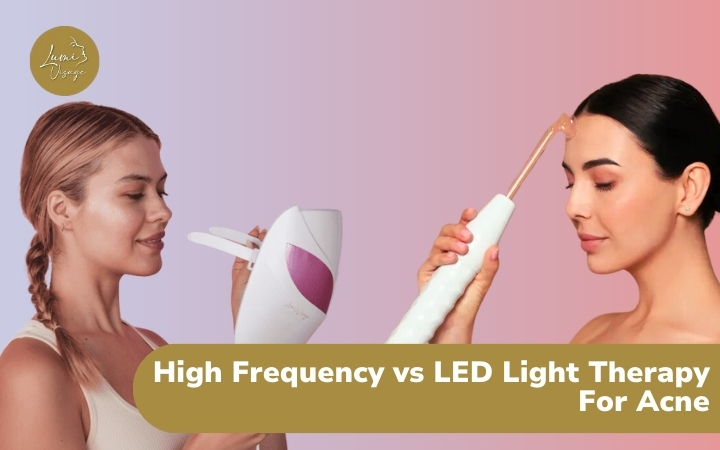

Stuck choosing between High Frequency and LED Light Therapy for acne?
Both promise clearer skin, but which one actually suits your acne type—whether it’s surface blemishes or deeper, inflamed spots?
We’ll break down the core features, pros, and cons of each treatment, so you can confidently decide what works best for you.
By the end, you’ll know exactly which path to clearer skin is right for your needs.
Key Notes
- High Frequency targets surface acne with quick results, ideal for whiteheads and blackheads.
- LED Light Therapy excels at treating deep, inflamed acne like cysts and nodules.
- Combining both treatments tackles acne on multiple levels for clearer skin.
- LED Light Therapy is completely painless and suitable for almost all skin types.
High Frequency vs. LED Light Therapy At A Glance
| Feature | High Frequency | LED Light Therapy |
|---|---|---|
| Price | At-home: $30–$150 Professional: $75–$150/session | At-home: $100–$400 Professional: $50–$200/session |
| Main Benefit | Quick results for surface acne | Effective for inflamed acne, minimal discomfort |
| Core Feature 1 | Kills acne-causing bacteria with oxygen | Blue light eliminates bacteria; red light reduces inflammation |
| Core Feature 2 | Improves circulation, promotes healing | Promotes skin healing, reduces post-acne marks |
1. High Frequency Overview
High Frequency treatment uses low-level electrical currents to kill acne-causing bacteria and improve blood circulation.
It’s best suited for those with surface acne like whiteheads, blackheads, and small pustules.
This therapy can also help with oil control, as it minimizes the appearance of enlarged pores.
Core Features
- Bacteria-Killing Oxygenation: Oxygen generated by electrical currents kills acne-causing bacteria, helping to prevent new breakouts.
- Improved Circulation: Increases blood flow, speeding up the healing process and promoting healthier skin.
- Pore Minimization: Helps reduce the size of pores, making the skin appear smoother.
| Pros | Cons |
|---|---|
|
|
High Frequency Pricing
Pricing varies depending on whether you use at-home devices or visit a professional.
At-home devices are typically affordable and can range from $50 to $150. Professional pricing typically ranges from $75 to $150 per session, depending on the clinic and location.
How to Get Started with High Frequency
To start using a High Frequency device, follow these simple steps:
1. Cleanse Your Skin
Thoroughly wash and dry your face to ensure it’s free of dirt and oil.
2. Apply a Serum
Use a conductive serum or an acne treatment product. This helps the wand glide smoothly and enhances its effectiveness by allowing the serum to penetrate deeper into the skin.
3. Prepare the Device
Insert the glass electrode into the wand and select the appropriate intensity level. Start with a lower setting if you’re new to the treatment.
4. Use the Wand
Gently move the device over your acne in circular motions, focusing on areas with active breakouts. Sessions typically last 5 to 10 minutes but don’t exceed 3 to 5 minutes on any one spot.
5. Finishing Touches
After the treatment, apply your usual moisturizer to soothe and hydrate your skin.
2. LED Light Therapy Overview
LED Light Therapy uses specific wavelengths of light to target acne. Blue light kills acne-causing bacteria, while red light reduces inflammation and promotes healing.
This treatment is suitable for almost all skin types and is especially effective for inflamed, painful acne like cysts and nodules.
Core Features
- Blue Light for Bacteria Reduction: Effectively kills the bacteria responsible for acne, preventing future breakouts.
- Red Light for Inflammation and Healing: Reduces redness and helps speed up the healing of inflamed acne lesions.
- Post-Acne Mark Reduction: Helps to fade dark spots and scars left behind by acne.
| Pros | Cons |
|---|---|
|
|
LED Light Therapy Pricing
At-home LED light therapy devices can range from $100 to $400, depending on the features, brand, and light wavelengths included. Entry-level devices, like handheld wands, are typically on the lower end, while full-face masks or multi-light panels are more expensive.
For professional treatments, prices can vary significantly based on the clinic and session length. Each session typically costs between $50 and $200, and since multiple treatments are often recommended for optimal results, the total cost can add up over time.
Clinics often offer package deals for a series of sessions, which can reduce the per-session price if you commit to several treatments upfront.
Feature-by-Feature Comparison
| Feature | High Frequency | LED Light Therapy |
|---|---|---|
| Acne Type Treated | Best for surface acne (whiteheads, blackheads | Best for inflamed acne (cysts, nodules) |
| Treatment Sensation | Mild tingling sensation | Completely painless |
| Time for Results | Quick results for mild acne | Takes multiple sessions for noticeable effects |
| Skin Benefits | Tightens pores, improves circulation | Reduces inflammation, fades acne scars |
| Additional Benefits | Improves skin tone and texture | Suitable for almost all skin types |
High Frequency vs LED Light Therapy: Which Should You Choose?
Your choice between High Frequency and LED Light Therapy comes down to the type of acne you’re trying to treat.
If you’re battling surface-level acne like whiteheads and blackheads, High Frequency offers quicker results and smoother skin.
However, if inflamed, deep acne is your primary concern, LED Light Therapy will likely be the better option, as it targets bacteria and reduces inflammation without any discomfort.
- Choose High Frequency if you need: Quick relief from surface acne and want smoother, tighter skin.
- Choose LED Light Therapy if you need: Treatment for inflamed, cystic acne and post-acne marks.
Frustrated With Acne That Just Won’t Clear Up?
LED Light Therapy targets bacteria & inflammation for clearer skin.

Frequently Asked Questions
Can I combine High Frequency and LED Light Therapy?
Yes, many people find that using both therapies together maximizes their acne treatment. High Frequency tackles surface acne, while LED Light Therapy calms inflamed areas.
How often should I use High Frequency or LED Light Therapy?
For High Frequency, most experts recommend a few times per week. LED Light Therapy often requires multiple sessions over several weeks for the best results.
Can I use High Frequency or LED Light Therapy with other acne treatments?
Yes, both therapies can be safely combined with other acne treatments like topical creams, serums, or medications. However, it’s best to avoid using harsh exfoliants or retinoids directly before High Frequency treatments, as they can cause irritation.
For LED Light Therapy, you can generally continue using your usual skincare products unless they make your skin more sensitive to light.
How long does each session of High Frequency or LED Light Therapy last?
High Frequency sessions typically last between 5 to 10 minutes, depending on the area being treated. LED Light Therapy sessions tend to be longer, usually around 15 to 30 minutes per session. Professional treatments might take more time, but at-home devices are usually quicker.
Conclusion
Both High Frequency and LED Light Therapy are effective, but the best option depends on your acne type.
High Frequency delivers quick results for surface acne and tightens pores, while LED Light Therapy excels in reducing inflammation and healing deeper, inflamed acne.
By understanding your skin’s specific needs, you can choose the most suitable treatment. If inflamed breakouts are your main concern, an LED Light Therapy device might be the perfect solution.
Ready to tackle your acne and achieve clearer skin? Get the Lumi Visage 7-Color LED Face mask and start seeing real results.