

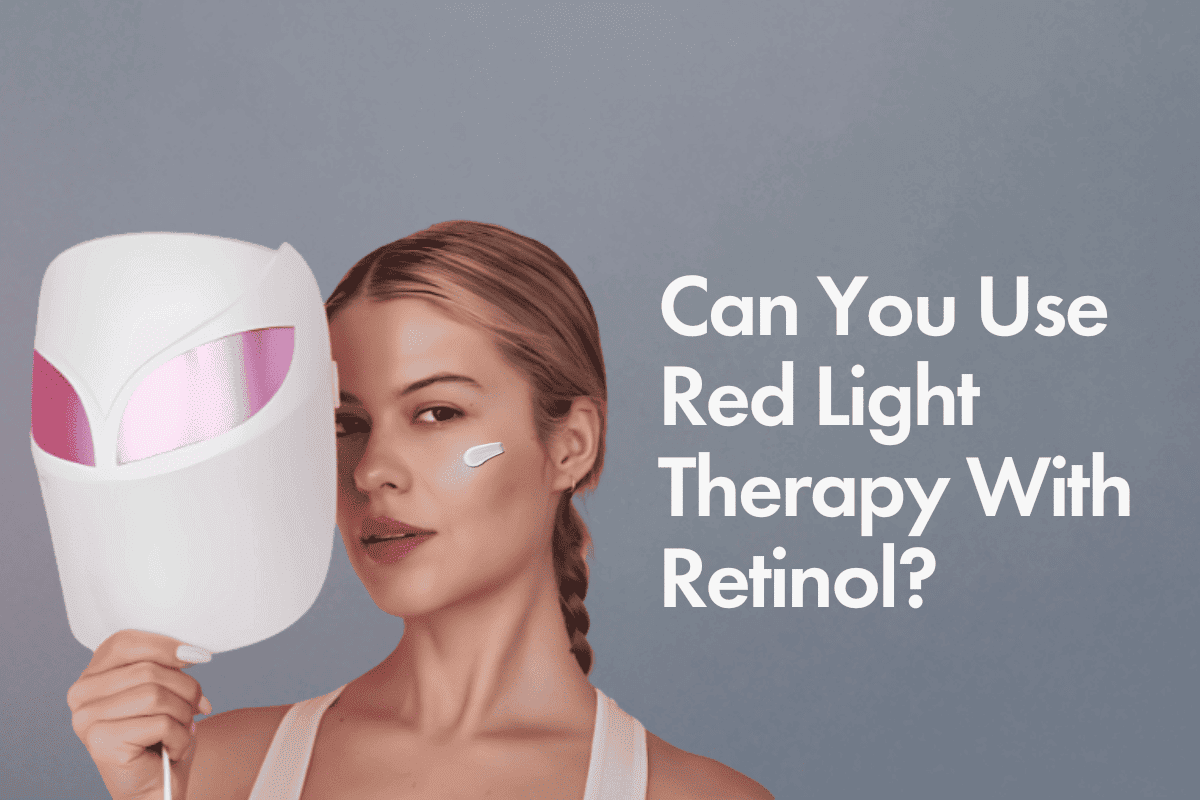

Red light therapy boosts collagen. Retinol speeds up skin renewal. Together, they’re skincare powerhouses—but can you actually use them at the same time?
Get it wrong, and you could end up with irritation, redness, or dryness. But get it right, and you can maximize the benefits of both without damaging your skin.
Here’s what you need to know to use red light therapy and retinol safely—and get the best results.
- Red light therapy should always be used before applying retinol to avoid irritation.
- Wait at least 10-15 minutes after red light therapy before applying retinol.
- Start slow—retinol 2-3 times a week, red light therapy 3-5 times a week.
- Always follow with moisturizer and SPF to prevent dryness and sun sensitivity.
Can You Use Red Light Therapy and Retinol Together?
Yes, but with caution. Red light therapy and retinol can complement each other, but using them improperly can lead to irritation.
Retinol increases skin sensitivity, and red light therapy stimulates cell activity, so using both at the wrong time or in excess can overwhelm your skin.
How Red Light Therapy Helps With Retinol Side Effects
One of the biggest benefits of using red light therapy with retinol is that RLT can help reduce inflammation. Since retinol can cause redness and peeling, red light therapy may help soothe irritation and speed up the skin’s healing process.
However, using them incorrectly can backfire.
If you apply retinol immediately before or after red light therapy, your skin might become overly sensitive and more prone to dryness or irritation.
How to Use Red Light Therapy and Retinol Together
If you want to use both treatments without irritation, follow these best practices:
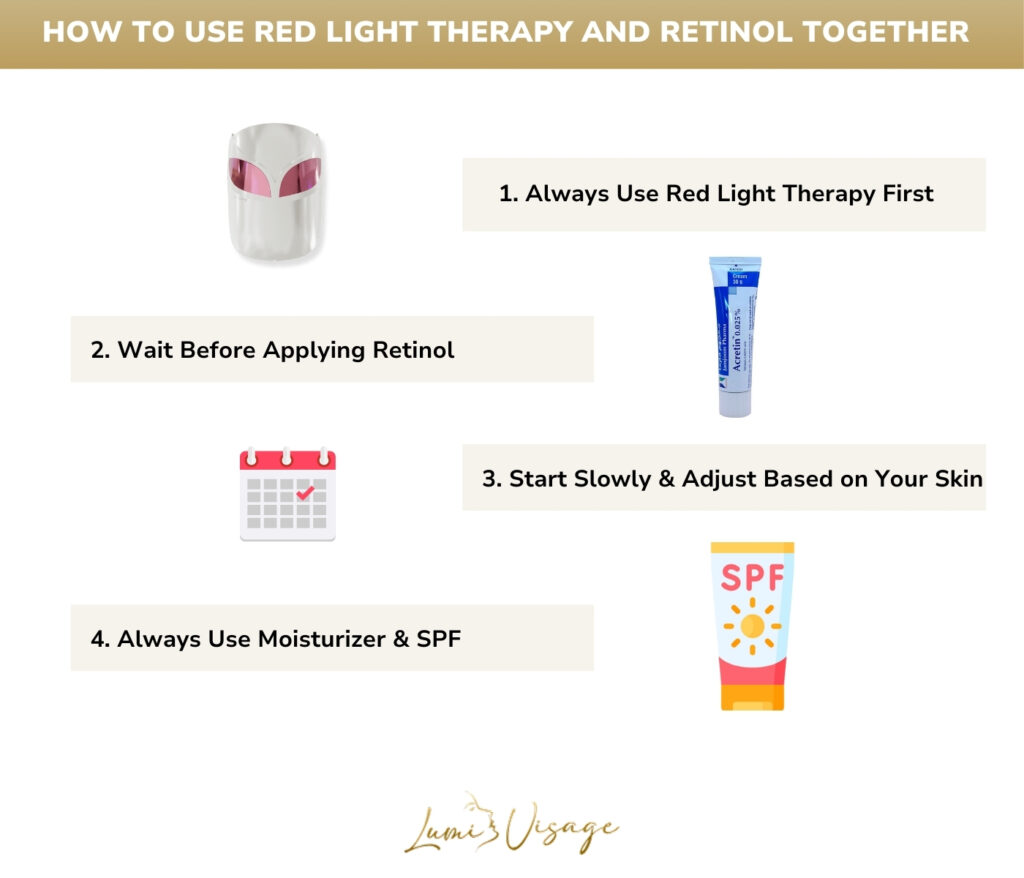
1. Always Use Red Light Therapy First
Red light therapy should always be the first step in your nighttime routine (before applying any skincare products).
This allows your skin to fully absorb the red light without interference.
2. Wait Before Applying Retinol
After your red light therapy session, wait at least 10-15 minutes before applying retinol. This allows your skin to cool down and reduces the risk of irritation.
3. Start Slowly & Adjust Based on Your Skin
- If you’re new to retinol, use it only 2-3 times a week alongside red light therapy.
- If your skin tolerates both well, you can increase frequency gradually.
- If you experience redness or excessive peeling, reduce how often you use retinol.
4. Always Use Moisturizer & SPF
Both red light therapy and retinol can cause dryness. Use a hydrating moisturizer after applying retinol to lock in moisture.
Also, since retinol makes your skin more sensitive to sunlight, always wear broad-spectrum SPF 30+ during the day.
Ready To Supercharge Your Retinol Results?
Our LED mask amplifies your skincare for maximum benefits

What Does Retinol Do?
Retinol, a form of vitamin A, is one of the most powerful ingredients for skin renewal. It increases cell turnover, helps fade dark spots and fine lines, and boosts collagen production over time.
Dermatologists frequently recommend it for anti-aging and acne treatment.
Benefits of Retinol for Skin
- Speeds up skin cell turnover, helping to fade pigmentation and texture issues
- Boosts collagen production, reducing wrinkles and fine lines
- Unclogs pores, making it great for acne-prone skin
- Improves overall skin tone, creating a brighter, smoother complexion
Retinol comes with one big downside: it can be irritating, especially in the first few weeks of use. Common side effects include redness, dryness, peeling, and sensitivity—which is why many people wonder whether it’s safe to combine it with red light therapy.
Common Mistakes to Avoid
To get the best results from combining red light therapy and retinol, avoid these common mistakes:
- Don’t Apply Retinol Right Before Red Light Therapy – This can make your skin overly sensitive and prone to irritation.
- Don’t Overuse Both Treatments at Once – Using red light therapy daily and retinol every night might be too much for your skin to handle. Start slowly.
- Don’t Skip Moisturizer or Sunscreen – Retinol and red light therapy work best when the skin is well-hydrated and protected from UV rays.
Potential Risks of Using Red Light Therapy with Retinol
While both treatments offer major skincare benefits, they can also cause sensitivity if misused.
Here’s what to watch out for:
1. Increased Sensitivity & Redness
Both treatments speed up cell turnover. If used too aggressively, this can lead to irritation, dryness, and flaking.
2. Over-Exfoliation
Retinol already exfoliates the skin by encouraging cell renewal. Adding red light therapy too frequently can overstimulate skin turnover, leading to excessive peeling or irritation.
3. Burning or Discomfort
If your skin feels hot, itchy, or burns after combining both treatments, reduce how often you use them.
How to Minimize Risks
- Use red light therapy and retinol on alternating nights if your skin is sensitive.
- Always follow with a rich moisturizer to keep your skin barrier strong.
- Listen to your skin—if irritation occurs, scale back on retinol use.
Frequently Asked Questions
Can I use red light therapy and retinol on the same night?
Yes, but use red light therapy first, then apply retinol at least 10-15 minutes later.
Should I use red light therapy before or after retinol?
Always before. Using it after retinol can increase irritation and skin sensitivity.
Can red light therapy reduce retinol irritation?
Yes, red light therapy can help calm redness and inflammation, making retinol easier to tolerate.
How often should I use both treatments?
Start with red light therapy 3-5 times per week and retinol 2-3 times per week. Adjust based on how your skin reacts.
Do I need sunscreen when using both?
Absolutely. Retinol makes your skin more sensitive to sunlight, so SPF 30+ is a must.
Conclusion
Red light therapy and retinol can work together, but only if used correctly. Start with red light therapy first, wait at least 10-15 minutes, then apply retinol to avoid irritation.
Go slow—retinol a few times a week, red light therapy 3-5 times a week—so your skin can adjust. Always follow with a moisturizer and SPF to prevent dryness and sensitivity. If your skin feels irritated, scale back on retinol or alternate nights.
Used properly, this combination can help with fine lines, acne, and overall skin texture. Pay attention to how your skin reacts, make adjustments as needed, and you’ll get the best results.
Ready to enhance your retinol routine? The Lumi Visage LED Mask is designed to work perfectly with your existing skincare routine, helping you achieve professional-level results from home. Try it today and save $100 on your purchase.