

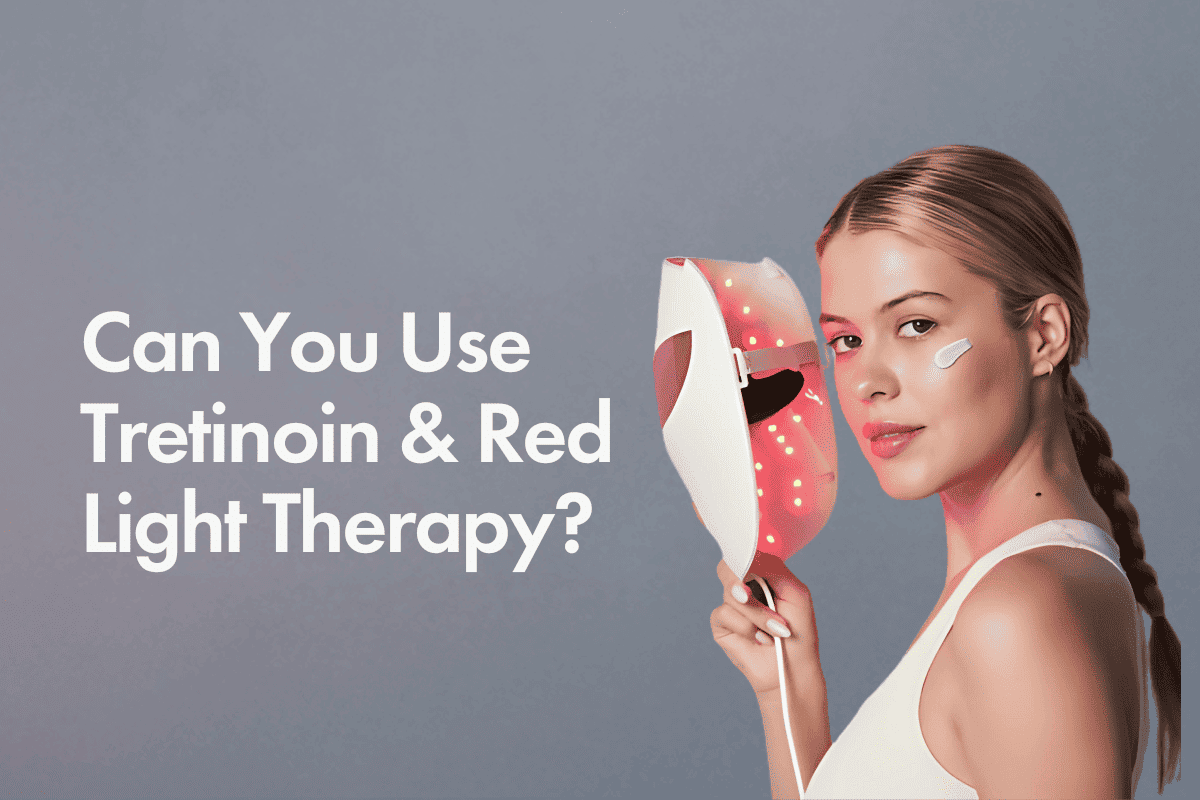

Tretinoin speeds up skin renewal. Red light therapy calms irritation and boosts healing.
Used correctly, they can work together for smoother, clearer skin—but get it wrong, and you’ll deal with dryness and irritation.
The trick is knowing when and how to use each one.
If you’re looking to combine these treatments without wrecking your skin barrier, here’s exactly what you need to know.
- Use red light therapy first, then wait 10-15 minutes before applying tretinoin.
- Start slow—tretinoin 2-3 times per week, red light therapy 3-5 times per week.
- Keep treatments separate—red light therapy in the morning, tretinoin at night.
- Always use moisturizer and SPF to prevent dryness and sun sensitivity.
Can You Use Tretinoin & Red Light Therapy Together?
Yes, but with caution. Red light therapy and tretinoin work well together, but using them the wrong way can overwhelm your skin and cause irritation. The key is timing and moderation.
Tretinoin exfoliates and renews the skin, but it also makes it more sensitive. Red light therapy reduces inflammation and helps the skin heal faster. When combined correctly, red light therapy can help counteract some of tretinoin’s harsher side effects.
However, using them at the same time or too frequently can be too much for the skin.
How to Safely Use Tretinoin & Red Light Therapy
1. Always Use Red Light Therapy First
Red light therapy should always be done on clean, dry skin before applying tretinoin.
Using red light therapy first allows it to work without interference and helps calm the skin before applying a potentially irritating product like tretinoin.
2. Separate Their Application
To avoid overloading your skin, follow this schedule:
- Morning → Red light therapy on clean skin, followed by your usual morning skincare routine.
- Night → Tretinoin on clean, dry skin, followed by moisturizer.
Keeping them separate reduces irritation and gives your skin time to recover between treatments.
3. Start Slow & Adjust Based on Your Skin
- If you’re new to tretinoin, start with 2-3 nights per week and increase as tolerated.
- If you’re new to red light therapy, start with 3-5 sessions per week and gradually increase duration.
- If your skin feels irritated, reduce one or both treatments and increase moisturizer use.
4. Always Moisturize & Use Sunscreen
Both tretinoin and red light therapy can dry out the skin, so hydration is key.
Always wear SPF 30+ during the day—tretinoin increases sun sensitivity, and even though red light therapy doesn’t cause sun damage, it’s still crucial to protect your skin.
Use a gentle, hydrating moisturizer after tretinoin to prevent dryness.
What Is Tretinoin and How Does It Work?
Tretinoin, also known as retinoic acid, is a prescription-strength vitamin A derivative commonly used to treat:
- Acne
- Fine lines and wrinkles
- Uneven skin tone and dark spots
- Rough skin texture
How Tretinoin Improves Skin
- Speeds up skin cell turnover – It helps old, damaged skin shed faster, making way for fresh new cells.
- Increases collagen production – Over time, it improves elasticity and reduces fine lines.
- Unclogs pores – By preventing dead skin buildup, it reduces acne breakouts.
What Is Red Light Therapy?
Red light therapy (RLT) uses low-level wavelengths of red and near-infrared light to penetrate the skin and stimulate cellular repair and regeneration.
Unlike UV light, red light is non-damaging and has been shown to:
- Reduce inflammation and redness
- Boost collagen production
- Accelerate wound healing
- Improve circulation and hydration
Because of its ability to soothe irritation and speed up skin recovery, red light therapy can be a great addition to a tretinoin routine—if used properly.
Ready To Amplify Your Tretinoin Results?
Our LED mask is the perfect companion
SHOP NOW – GET $100 OFF
Common Mistakes To Avoid
- Applying Tretinoin Before Red Light Therapy → This can cause excessive sensitivity and irritation. Always do red light therapy first on clean skin.
- Using Both Too Frequently at First → Give your skin time to adjust. Start with red light therapy 3-5 times per week and tretinoin 2-3 nights per week before increasing frequency.
- Skipping Moisturizer or Sunscreen → Dryness and sun sensitivity are common with tretinoin. Always follow up with moisturizer at night and sunscreen in the morning.
- Not Listening to Your Skin → If you experience redness, peeling, or irritation, scale back on tretinoin or red light therapy and focus on hydration until your skin adjusts.
Potential Side Effects & How to Prevent Them
While tretinoin and red light therapy can work well together, they can cause irritation if not used correctly.
Here’s what to watch for:
| Potential Side Effect | Cause | How to Fix It |
|---|---|---|
|
Redness & Sensitivity |
Using tretinoin & red light therapy too frequently |
Reduce frequency & use moisturizer |
|
Peeling & Dryness |
Tretinoin speeds up cell turnover |
Apply a hydrating moisturizer nightly |
|
Increased Sun Sensitivity |
Tretinoin makes skin more reactive to sunlight |
Always wear SPF 30+ daily |
If irritation persists for more than a week, reduce tretinoin use or take a break from red light therapy.
Frequently Asked Questions
Can I use red light therapy on nights I don’t use tretinoin?
Yes! If tretinoin makes your skin too sensitive, you can use red light therapy on alternate nights to help with recovery and collagen production while giving your skin a break from exfoliation.
Does the wavelength of red light therapy matter when using it with tretinoin?
Yes. Red light (around 630-660nm) and near-infrared (810-850nm) are best for skin healing and collagen production. Avoid blue light therapy, as it can be too harsh when combined with tretinoin.
Can red light therapy help with the “tretinoin purge”?
Potentially. Since red light therapy reduces inflammation and speeds up healing, it may help minimize the irritation, redness, and breakouts that often come with starting tretinoin.
Should I skip red light therapy if my skin is peeling from tretinoin?
Not necessarily. If your skin feels overly raw or irritated, take a break from red light therapy until the peeling subsides. If your skin just feels dry but not inflamed, you can continue using it.
Can I use red light therapy with prescription-strength tretinoin (like 0.1%)?
Yes, but stronger tretinoin formulas can make your skin more sensitive. Start slow, use extra moisturizer, and avoid excessive red light therapy sessions.
Will red light therapy make tretinoin work faster?
Not directly, but it can help reduce inflammation and support collagen production, which may enhance the overall effects of tretinoin over time.
Conclusion
Tretinoin and red light therapy can work together, but timing and consistency matter. Use red light therapy first, wait 10-15 minutes, then apply tretinoin at night.
Keep treatments separate—red light therapy in the morning, tretinoin in the evening—to reduce irritation. Start slow, moisturize generously, and always wear SPF to protect your skin. If irritation occurs, adjust your routine by spacing out treatments or lowering frequency.
With the right approach, this combination can boost collagen, improve skin texture, and reduce acne without unnecessary irritation. Listen to your skin, make small adjustments as needed, and you’ll get the best results over time.
Ready to maximize your tretinoin results while minimizing irritation? Our 7 Color LED Mask is designed to work perfectly with your prescription skincare, featuring gentle yet effective red light therapy that complements your tretinoin routine. Shop now and transform your skincare experience.