


Sun spots don’t fade on their own. No matter how much vitamin C or exfoliant you use, those stubborn brown patches stick around.
If you’re tired of covering them up, red light therapy for sun spots might be the solution. This treatment helps fade discoloration by supporting your skin’s natural repair process.
Here’s everything you need to know before giving it a try.
- Red light therapy for sun spots helps fade pigmentation by supporting skin cell renewal.
- It works by stimulating collagen, reducing melanin production, and improving overall skin tone.
- Combining red light therapy with sunscreen and skincare boosts effectiveness and prevents new spots.
How Red Light Therapy Targets Sun Spots
Red light therapy uses targeted wavelengths to energize skin cells, helping them repair and renew. By boosting collagen, calming inflammation, and balancing melanin, it may help fade sun spots over time.
Originally studied for wrinkles and scars, it’s now gaining attention as a non-invasive way to even out sun-damaged skin.
Here’s how it works:
1. Stimulating Cell Turnover
Red light therapy encourages the skin to shed old, pigmented cells and replace them with new ones. This gradual renewal process can help lighten sun spots and create a more even complexion.
2. Regulating Melanin Production
Studies suggest that red and near-infrared light can help balance melanin levels.
By targeting overactive pigment-producing cells, red light therapy may reduce further darkening of existing sun spots.
3. Supporting Collagen and Skin Repair
While sun spots don’t cause texture issues, long-term UV damage can break down collagen and lead to premature aging. Red light therapy promotes collagen synthesis, improving overall skin quality while addressing pigmentation concerns.
Benefits of Red Light Therapy for Sun Spots
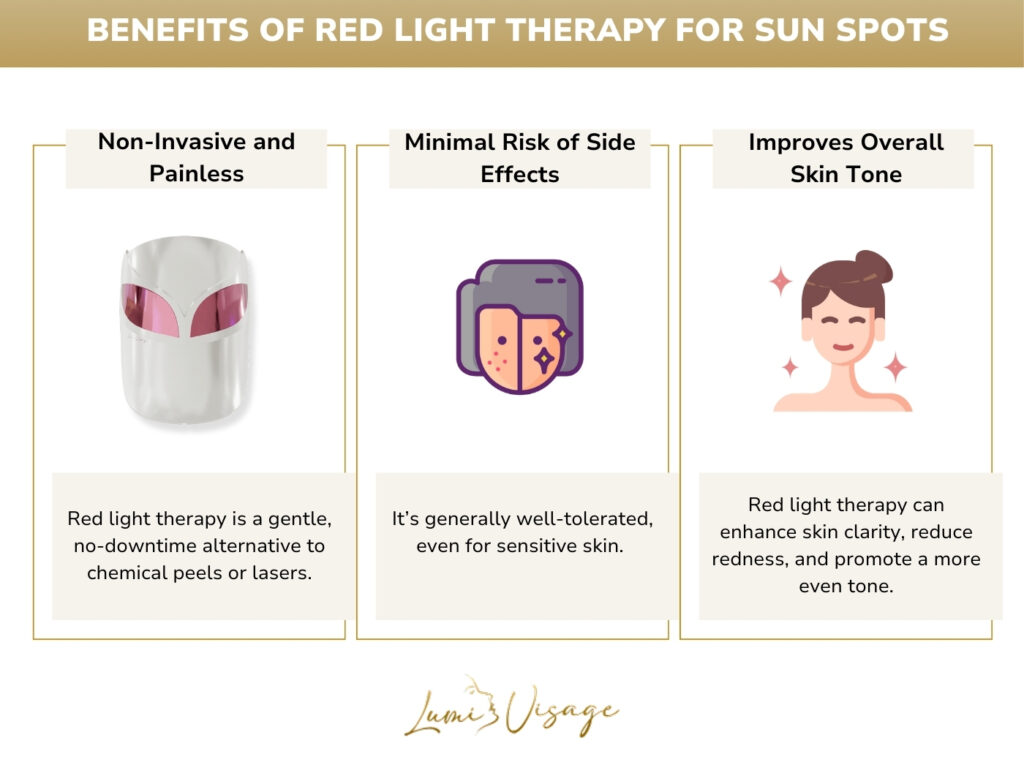
Non-Invasive and Painless
Unlike chemical peels or laser treatments, red light therapy doesn’t damage the skin’s surface. There’s no need for recovery time, making it a convenient option for those with busy schedules.
Minimal Risk of Side Effects
Since red light therapy works through light absorption rather than heat or abrasion, it carries little risk of irritation or adverse reactions. It’s generally well-tolerated, even for sensitive skin.
Improves Overall Skin Tone
In addition to fading sun spots, red light therapy can enhance skin clarity, reduce redness, and promote a more even tone.
At-Home vs. Professional Treatments
Red light therapy devices are available for both home use and professional treatments. Each option has its advantages, depending on the level of intensity and desired results.
| Criteria | At-Home Devices | Professional Treatments |
|---|---|---|
| Power | Lower intensity | Higher intensity |
| Cost | One-time purchase | Per-session fee |
| Convenience | Daily use at home | Requires appointments |
| Results | Gradual over weeks | Faster, but pricier |
At-Home Devices
- Typically lower power than professional treatments
- Require consistent use over several weeks to see results
- More affordable and convenient for long-term maintenance
Professional Red Light Therapy
- Higher intensity treatments available at dermatology clinics or med spas
- May show faster results due to stronger wavelengths
- Often combined with other treatments like chemical peels for enhanced effects
For those seeking a noticeable improvement in sun spots, a combination of professional sessions and at-home maintenance may provide the best outcome.
Potential Side Effects and Precautions
Red light therapy is considered safe, but it’s important to use it correctly to avoid unwanted effects.
Possible Mild Reactions
- Temporary redness in sensitive skin
- Slight dryness or tightness after treatment
To minimize risks, follow the manufacturer’s instructions for home devices and consult a dermatologist before starting any new skin treatment.
Complementary Skincare Practices
For the best results, red light therapy for sun spots should be paired with a well-rounded skincare routine.
1. Daily Sunscreen Use
UV exposure is the main cause of sun spots, so preventing further damage is essential. Use a broad-spectrum SPF 30+ sunscreen daily, even if you’re treating existing spots.
2. Antioxidant Serums
Vitamin C and niacinamide can support skin brightening and protect against further pigmentation. These ingredients work well alongside red light therapy.
3. Gentle Exfoliation
Using mild exfoliants like lactic acid or glycolic acid can help speed up the skin’s natural turnover process, complementing the effects of red light therapy.
4. Hydration and Barrier Support
A well-hydrated skin barrier allows for better absorption of treatments and enhances overall skin health. Look for products containing hyaluronic acid and ceramides.
Sun Spots Sticking Around No Matter What You Try?
RLT fades sun spots and evens skin tone—right from home.

Frequently Asked Questions
How long does it take to see results with red light therapy for sun spots?
Most people notice subtle improvements within 4–6 weeks of consistent use, but deeper pigmentation may take longer to fade. Results vary based on skin type, treatment frequency, and the severity of sun spots.
Can red light therapy make sun spots worse?
No, when used correctly, it won’t darken sun spots. However, overuse or improper settings may overstimulate skin cells, leading to temporary redness or sensitivity.
Is red light therapy safe for all skin tones?
Yes, it’s safe for all skin tones. Unlike some laser treatments, it doesn’t carry a risk of post-inflammatory hyperpigmentation (PIH), which is more common in darker skin types.
Can I use red light therapy after a chemical peel or laser treatment?
Yes, but wait until your skin has healed. Red light therapy can support post-procedure recovery by reducing inflammation and promoting repair, but using it too soon on compromised skin may cause irritation.
Does red light therapy work better in combination with other treatments?
Yes, pairing it with skincare ingredients like retinol, vitamin C, and niacinamide can enhance results. Professional treatments like microneedling or laser therapy may also work well alongside red light therapy for stubborn spots.
Can I use red light therapy every day?
Most at-home devices are designed for daily use, but more intense professional treatments should be spaced out to avoid overstimulation. Always follow the recommended usage guidelines for your device.
Conclusion
Sun spots don’t have to be permanent. Red light therapy for sun spots helps fade discoloration by boosting skin renewal, balancing melanin, and improving overall tone—all without harsh treatments or downtime.
Consistency is key, and pairing it with sunscreen and targeted skincare can make a big difference.
If you’re ready to try it for yourself, the Lumi Visage 7-Color Led Face Mask is designed for effective at-home treatment. With the right routine, clearer, more even skin is within reach. Shop now and start your journey to brighter skin.