

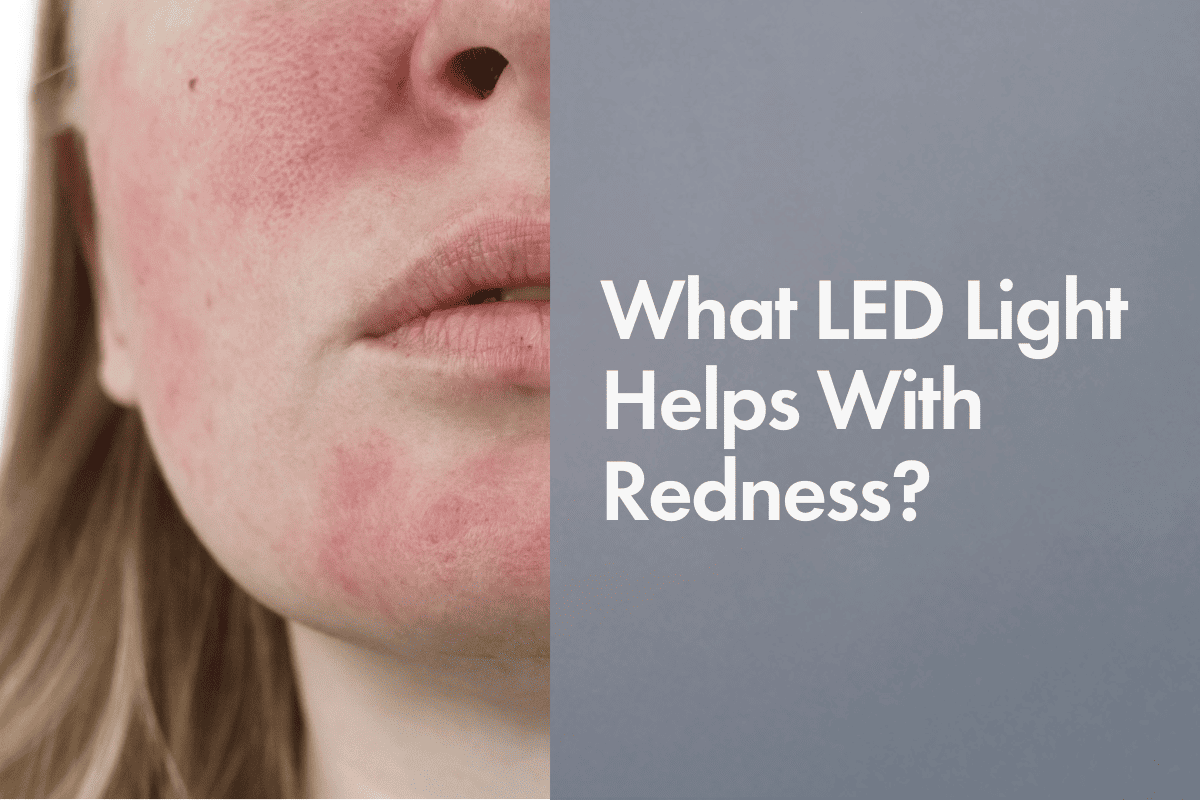

Specific LED colors like green, yellow, and red, can calm irritation and restore balance to a complexion.
Each light works uniquely, offering powerful tools to help reduce redness and soothe your skin.
Let’s uncover which one is right for you and how to use it for glowing, even-toned skin.
- Green light calms irritation and balances skin tone for sensitive or rosacea-prone skin.
- Yellow light improves circulation and reduces inflammation for a healthier, more even complexion.
- Red light penetrates deeply to reduce inflammation tied to chronic redness or acne.
- Consistency and the right device ensure effective results for redness relief.
Best LED Light Colors for Reducing Redness
Green Light Therapy
Green light is a powerful option for redness, especially if your skin is sensitive or prone to irritation.
It penetrates just enough to calm the surface without overstimulating deeper layers. This makes it ideal for reducing redness from rosacea, mild irritation, or even sunburn.
Yellow Light Therapy
Yellow light is another excellent choice, particularly for redness that’s tied to poor circulation or inflammation. By stimulating blood flow and calming inflammation, yellow light can reduce redness and give your skin a healthier appearance.
Red Light Therapy
While red light is most commonly associated with anti-aging, its anti-inflammatory properties make it a strong contender for addressing redness.
It works at a deeper level than green or yellow light, making it effective for chronic redness tied to inflammation or skin conditions like acne.
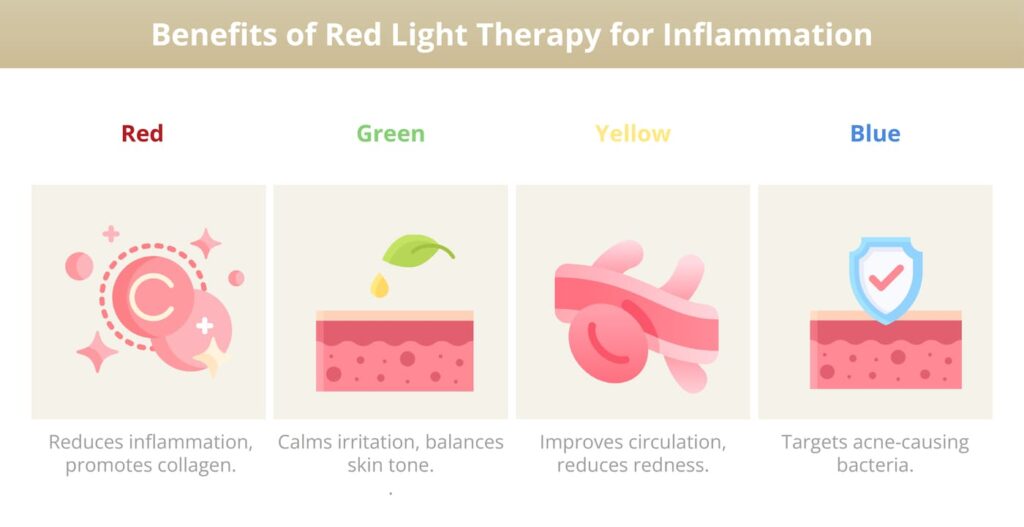
LED Light Colors and Their Effects
Each color in LED therapy serves a different purpose. Here’s a breakdown of the most common ones:
Red Light (Around 630 nm)
- Benefits: Red light penetrates deeply into the skin, where it reduces inflammation and promotes collagen production. It’s particularly effective for calming redness caused by inflammation or irritation.
- Best For: Anti-aging, reducing redness, and improving overall skin texture.
Blue Light (Around 415 nm)
- Benefits: Blue light targets acne-causing bacteria, helping to reduce breakouts. While not directly focused on redness, it can indirectly reduce redness by addressing acne inflammation.
- Best For: Acne treatment and prevention.
Green Light (Around 520–540 nm)
- Benefits: Green light is known for its calming effects. It helps reduce redness and even out skin tone by soothing irritated or sensitive skin.
- Best For: Redness caused by rosacea, irritation, or sensitivity.
Yellow Light (Around 590 nm)
- Benefits: Yellow light stimulates blood circulation and reduces redness by calming the skin. It’s often used for sensitive skin and conditions that cause persistent redness.
Best For: Sensitive skin, post-treatment redness, and overall calming effects.
Choosing the Right LED Light Therapy Device
Factors to Consider
Selecting the right device is crucial for achieving the best results. Here’s what to look for:
- Wavelength Accuracy: Make sure the device emits light in the correct range (e.g., 520–540 nm for green light).
- Device Quality: Choose a device from a reputable brand with certifications or FDA clearance.
- Treatment Area: Some devices are better suited for small areas like the face, while others can treat larger areas of the body.
Multi-Light Devices
Many at-home LED devices offer multiple light options in one device, allowing you to switch between green, yellow, red, and even blue light.
This versatility can be a great investment if you want to address multiple skin concerns.
Tips for Using LED Light Therapy to Reduce Redness
To get the most out of your sessions, follow these tips:
- Start Slow: If it’s your first time using LED light therapy, begin with shorter sessions (5–10 minutes) and gradually increase.
- Clean Skin First: Always cleanse your skin before a session to ensure the light penetrates effectively.
- Stick to a Routine: Consistency is key. Use the device 2–3 times per week for visible results.
Pair With Gentle Skincare: After your session, apply a calming moisturizer or serum to lock in benefits and soothe the skin further.
Frustrated By Persistent Skin Redness?
Our 7 Color LED mask calms and restores your skin
SHOP NOW – GET $100 OFF
Frequently Asked Questions
Can I use multiple LED light colors in one session?
Yes, many devices allow switching between colors during a session, but it’s often more effective to focus on one color per session for specific concerns like redness.
Does LED light therapy work for redness caused by allergies?
While it won’t address the root cause of an allergy, LED therapy, especially green or yellow light, can help calm the skin and reduce visible irritation.
Can LED light therapy make redness worse if overused?
Overuse or overly intense settings can overstimulate the skin, potentially increasing redness. Always follow device instructions.
Is it safe to use LED light therapy on broken or peeling skin?
It’s best to avoid using LED light therapy on open wounds or peeling skin until they’ve healed to prevent irritation.
How long do results from LED light therapy take to show?
Redness reduction can often be noticed after a few sessions, but consistent use for 4–6 weeks yields the best results.
Conclusion
Reducing redness doesn’t have to be a guessing game. With LED light therapy, specific colors like green, yellow, and red provide effective solutions to calm and balance your skin.
Each light works in a unique way to target redness, whether from irritation, sensitivity, or inflammation. Consistent use paired with the right device can make a noticeable difference in your skin’s appearance.
Ready to take the next step? Shop the 7-Color Lumi Visage LED Face Mask now and see the results for yourself.