

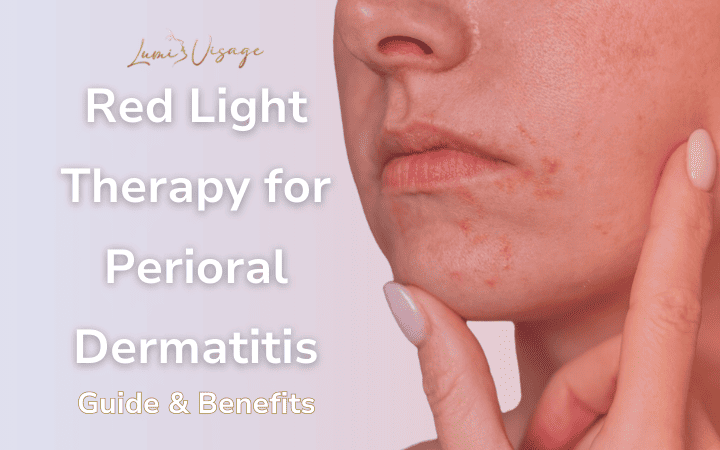

Dealing with red, irritated skin around your mouth can be exhausting. If you’re struggling with perioral dermatitis, you’re far from alone—many others know exactly how it feels.
Some are turning to red light therapy for relief, and for good reason—it’s non-invasive, easy to use, and shows real promise.
We’ll cover everything you need to know to see if it’s the right choice for your skin. Let’s get into it.
- Red light therapy soothes inflammation and promotes skin healing for perioral dermatitis.
- Consistency is key: sessions typically last 10–20 minutes, multiple times per week.
- Look for FDA-cleared devices with wavelengths between 600–850 nm for optimal results.
- Pair therapy with gentle skincare to avoid irritation and maintain a healthy skin barrier.
Understanding Perioral Dermatitis
Perioral dermatitis is a skin condition that typically affects the area around the mouth, nose, and sometimes the eyes. It’s often mistaken for acne or rosacea due to its appearance—clusters of small red or flesh-colored bumps.
For some, these bumps may be accompanied by a burning or itching sensation.
Common Causes and Triggers
While the exact cause isn’t fully understood, certain factors can trigger or worsen perioral dermatitis.
These include:
- Overuse of topical steroids
- Certain heavy or fragranced skincare products
- Hormonal fluctuations
- Stress or environmental factors like wind or harsh weather
Because triggers vary from person to person, managing this condition often requires a tailored approach.
Benefits of Red Light Therapy for Perioral Dermatitis
The primary benefits of red light therapy stem from its ability to calm inflammation, speed up healing, and improve overall skin health. These advantages are particularly promising for managing perioral dermatitis.
Reduces Inflammation
Inflammation is a key driver of perioral dermatitis, contributing to redness, irritation, and discomfort.
Red light therapy has anti-inflammatory properties that can help soothe the skin, making it an excellent option for those dealing with flare-ups.
Supports Skin Healing
The stimulation of cellular repair mechanisms encourages faster healing of the affected areas.
This can be especially helpful for individuals whose skin is slow to recover from flare-ups.
Improves Skin Barrier Function
Regular use of red light therapy has been shown to promote collagen production, which strengthens the skin’s barrier.
A healthy barrier is essential for keeping irritants out and moisture in, both of which are critical for individuals with perioral dermatitis.
How to Use Red Light Therapy for Perioral Dermatitis
Consult a Dermatologist
Before starting red light therapy, it’s essential to speak with a dermatologist. They can confirm whether the therapy is appropriate for your skin and provide guidance on how to use it safely and effectively.
Establish a Routine
For best results, consistency is key. Most red light therapy devices recommend sessions lasting between 10 and 20 minutes, two to five times per week.
Always follow the manufacturer’s instructions and avoid overuse, as this can irritate the skin.
Choose the Right Device
There are many at-home red light therapy devices on the market, ranging from handheld wands to full-face panels.
When selecting a device, consider:
- Wavelength: Devices with wavelengths between 600 and 850 nm are most effective for skin health.
- Certification: Look for devices that are FDA-cleared or approved to ensure safety and efficacy.
- Ease of Use: Opt for a device that fits comfortably into your routine.
Practice Proper Skin Care
To maximize the benefits of red light therapy, pair it with a gentle skincare routine:
- Use a mild, fragrance-free cleanser to avoid irritation.
- Apply a soothing moisturizer after your therapy session to keep the skin hydrated.
- Always wear sunscreen during the day, as perioral dermatitis can make the skin more sensitive to UV rays.
Are There Any Risks?
Red light therapy is generally considered safe for most people.
However, improper use can cause mild side effects such as temporary redness or irritation. To minimize these risks:
- Avoid exceeding the recommended treatment times
- Use protective eyewear if the light is near your eyes
- Ensure the device you choose is suitable for sensitive skin
For individuals with certain medical conditions or those taking medications that increase photosensitivity, red light therapy may not be advisable. Always check with a healthcare professional if you’re unsure.
Complementary Strategies for Managing Perioral Dermatitis
While red light therapy can play a significant role in treatment, it’s not a standalone solution. Combining it with other strategies can lead to better outcomes.
Skincare Modifications
Switching to non-comedogenic, fragrance-free products can prevent further irritation. Avoid exfoliants or harsh active ingredients during flare-ups.
Stress Management
Stress is a known trigger for many skin conditions, including perioral dermatitis. Practices such as mindfulness, meditation, or regular exercise can help reduce stress levels.
Dietary Considerations
Although not a universal trigger, some individuals find that certain foods worsen their symptoms. Keeping a food diary may help identify potential dietary contributors.
Red, Irritated Skin Holding You Back?
Red light therapy can calm and heal stubborn flare-ups.
SHOP NOW – GET $100 OFF
Frequently Asked Questions
Can red light therapy be combined with other treatments for perioral dermatitis?
Yes, it can complement other treatments like topical antibiotics or prescribed creams. Consult your dermatologist to ensure compatibility.
How long does it take to see results from red light therapy?
Most users notice improvement in 4–8 weeks with consistent use, though individual results may vary.
Is there a difference between red light and near-infrared light for skin treatment?
Red light primarily targets the skin’s surface, while near-infrared light penetrates deeper layers for additional healing.
Can I use red light therapy during a severe flare-up?
Yes, but ensure you follow recommended exposure times and avoid overusing the device on inflamed areas.
Can red light therapy help with scarring from previous flare-ups?
Yes, it can stimulate collagen production, which helps improve the appearance of scars over time.
Conclusion
Red light therapy offers a promising solution for managing perioral dermatitis.
By calming inflammation, supporting healing, and strengthening the skin barrier, it tackles key aspects of the condition.
Consistency, proper technique, and pairing it with a gentle skincare routine can lead to noticeable improvements over time. If you’re ready to take control of your skin’s health, the Lumi Visage 7-Color LED Face Mask is a great place to start. With its versatility and effectiveness, it’s an easy, at-home way to care for your skin. Try it today and see the difference.