


At first glance, all red light therapy looks the same – glowing panels, bright masks, and plenty of promises.
But beneath that red hue, not every device delivers the same results. Differences in wavelength, intensity, and even how close the light sits to your skin can completely change what it does.
We’ll break down what the science says and what really makes it work.
- 630-660nm targets the skin surface; 810-850nm penetrates deeper for muscles and joints.
- Dose depends on irradiance, time, and distance – consistency beats raw power.
- LED masks provide even coverage for the face, while panels are better for body treatments.
- Look for transparent specs: exact wavelengths, irradiance measurements, and safety documentation.
Quick Answer
Not all red light therapy delivers the same outcome. Two devices can both glow red and still perform very differently.
The big variables are wavelength selection, irradiance or power density, treatment time, distance from your skin, frequency per week, how evenly the light covers the area, and the quality and safety of the device itself.
Wavelengths Are Not One Size Fits All
Red vs Near Infrared At A Glance
Red light usually refers to 630 to 660 nanometers. This range focuses on the epidermis and dermis, so it is most relevant for visible skin changes such as tone, texture, fine lines, and surface healing.
Near infrared is typically 810 to 850 nanometers. It travels deeper and can influence muscles, joints, and connective tissue.
Both act on mitochondria, but they reach different targets because of depth.
The Evidence Heavy Peaks
Across studies, wavelengths around 630 to 670 nanometers and 810 to 850 nanometers stand out. You will often see 660 and 830 mentioned because they perform well in tests of mitochondrial activation.
A classic example compares 670 and 830 nanometers to nearby wavelengths and finds those two peaks consistently stimulate cytochrome c oxidase more strongly.
The takeaway is simple: Choose wavelengths in the proven bands rather than chasing extremes.
Dose Makes The Difference
The Three Levers of Dose
Dose is set by irradiance in milliwatts per square centimeter, time in minutes, and distance from the light source. Increase distance and your irradiance falls. Shorten time and your energy delivered falls.
For consistent results, keep distance and time stable so you can repeat the same dose.
Practical Dose Ranges
For skin goals like collagen support and visible redness reduction, many users do well around 20 to 50 mW per cm² with slightly longer sessions.
For deeper tissues such as muscles or joints, aim higher, often 100 to 200 mW per cm² with controlled session length.
Fluence Basics
Fluence is energy delivered, measured in joules per cm². It is the product of irradiance and time. Correct dose beats raw power every time.
A device with balanced irradiance that you can use comfortably and consistently tends to outperform a blindingly bright device that you can barely tolerate.
Device Design Variables That Change Results
LEDs vs Lasers
Low-level lasers emit coherent, focused light. LEDs emit non-coherent, more diffuse light.
Both can work when wavelengths and doses are in the therapeutic window. Lasers can target very small areas. LEDs often win for comfort, coverage, and routine use at home.
Coverage and Ergonomics
Panels, face masks, and handhelds all have pros and cons.
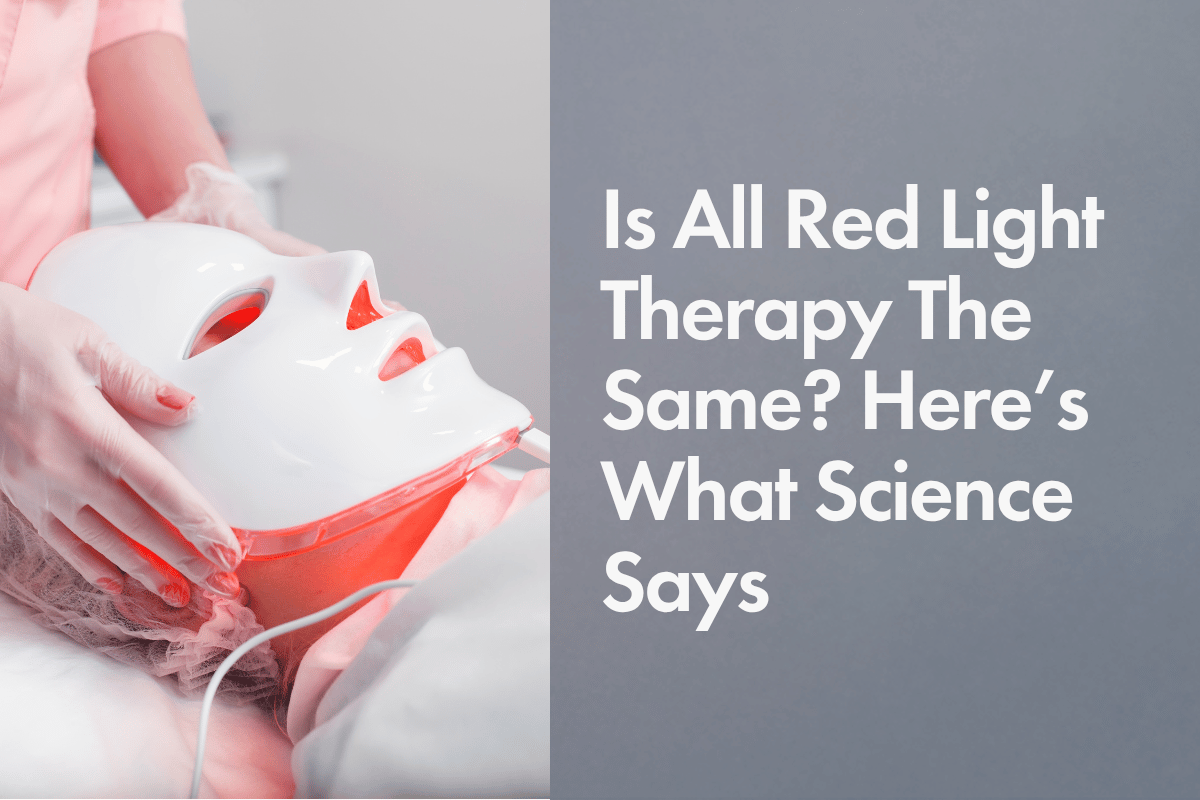
Masks provide even coverage and stable distance for facial skin, which improves repeatability. Panels cover larger areas, handy for muscles and joints. Handhelds are portable but need careful positioning and more patience.
Consistent, even coverage is a quiet superpower for results.
Wavelength Mix and Control
Some devices offer just red. Others combine red and near infrared. A smart mix lets you target both surface and slightly deeper layers.
Independent channel control is useful when you want red only for a skin-focused session or to add NIR for comfort after workouts.
Pulsing, Heat & Session Comfort
Pulsing can matter in certain protocols, but simplicity works for most users. You should not feel heat at therapeutic doses.
If a device feels uncomfortably warm, shortenthe distance or time. Comfort supports adherence, and adherence is where progress happens.
Where The Evidence Is Strongest Today
Skin Health and Visible Aging
Red wavelengths in the 630 to 660 range support collagen production, calmer redness, and smoother texture. Most users notice initial changes within 4 to 6 weeks with steady use.
Maintenance sessions sustain the gains your collagen fibers work hard to build.
Wound Healing and Scars
Photobiomodulation supports fibroblast activity, collagen remodeling, and microcirculation. It helps tissues organize repair more efficiently.
Hair Regrowth
Around 650 to 660 nanometers is a common choice for androgenic alopecia protocols. Think slow, steady progress over months, not an overnight turnaround.
Pain and Inflammation
Near infrared, especially 810 to 850 nanometers, is frequently used to support recovery and comfort in tendons, joints, and muscles.
The mechanism is a blend of improved mitochondrial output and balanced inflammatory signaling.
Cognitive & Ocular Applications
Transcranial near-infrared is an active research area for cognitive function and mood. Ocular uses are also being explored. Promising, but these areas still need standardized protocols and supervision. When in doubt, involve a clinician.
Marketing Claims To Treat With Caution
Red Flags To Watch For
Be wary of superlatives like most powerful or deepest penetration without third-party data. Avoid vague jargon such as enhanced penetration or EMF-free claims that do not explain dosing.
If a brand cannot clearly state wavelengths, irradiance at a specific distance, and safety credentials, that is a pass.
What Credible Transparency Looks Like
Look for exact wavelengths, honest irradiance measurements at a stated distance, consistent coverage details, and safety documentation.
Plain language policies and real warranty terms speak volumes. FDA clearance or equivalent safety testing is the benchmark for medical-grade claims.
Also know that FDA cleared and FDA approved are not the same thing.
How To Choose A Device?
The Spec Checklist
Pick wavelengths in the evidence-based bands, typically 630 to 660 and 810 to 850 nanometers. Confirm irradiance at the recommended distance.
Prioritize even coverage and ergonomic fit, especially for the face. Check build quality, warranty, and safety documentation.
Extras like pulsing are nice to have, but comfort and consistency matter more.
Match Device Type To Your Goal
If your focus is facial skin quality, a well-designed face mask with red wavelengths gives you stable distance and even coverage.
For muscles or joints, consider a device that includes near infrared or a panel that can reach the target area comfortably.
If you plan to use a device three to five times a week, choose something that feels effortless to put on and use. The best device is the one you will actually reach for.
Ready To See What The Right Light Can Do?
Experience wavelengths that deliver visible change.
Get Your LED Mask Today
Frequently Asked Questions
Does the color of red light (bright vs. deep red) change its effectiveness?
Slight differences in hue often mean different wavelengths, which can change penetration depth and effect. Bright orange-reds (around 620 nm) target more superficial layers, while deeper crimson shades (around 660 nm) reach further into the dermis for collagen stimulation.
Can you overuse red light therapy?
Yes, more isn’t always better. Excessive exposure can cause temporary skin sensitivity or overstimulation, reducing results. Most studies suggest 3–5 sessions per week with moderate doses works best.
Do LED masks work as well as large light panels?
For facial skin, high-quality LED masks can be just as effective because they provide close, even coverage. Panels are more useful for body treatments or deeper-tissue goals.
Is red light therapy safe for sensitive or rosacea-prone skin?
Generally yes, as it helps reduce inflammation and strengthen the skin barrier. Still, start with shorter sessions and greater distance to gauge tolerance – sensitivity varies person to person.
Conclusion
So, is all red light therapy the same? The short answer: not even close.
What separates an effective treatment from a wasted session often comes down to the fine print – wavelength accuracy, power density, and how consistently that light reaches your skin.
Red light in the 630–660 nm range targets the surface for collagen and texture support, while near-infrared goes deeper to soothe inflammation and energize cells from within. The real results happen when science meets consistency.
If you’re ready to bring that level of precision home, try our FDA-cleared 7-color LED face mask – designed for even coverage, clinically supported wavelengths, and the flexibility to treat your skin’s changing needs.