


IPL and red light therapy both use light to improve your skin, but that’s pretty much where the similarities end.
They treat different issues, feel completely different to use, and show results on very different timelines.
If you’re not sure which one makes more sense for your skin, we’ll lay it all out: how they work, what they’re good for, and how to choose the right fit.
- IPL uses intense light to damage/correct pigmentation; red light stimulates cellular healing.
- IPL excels at removing sun spots, redness, hair; red light builds collagen, reduces inflammation.
- IPL requires downtime and professional sessions; red light is painless with daily use.
- IPL costs $300-600 per session; red light offers better long-term value.
IPL vs Red Light Therapy: Quick Comparison
| Feature | IPL | Red Light Therapy |
|---|---|---|
Type of Benefit | Rapid pigment correction + collagen | Gradual collagen + inflammation reduction |
Downtime | 1–3 days | None |
Skin Suitability | Lighter skin tones | All skin tones |
Pain & Downtime | Moderate discomfort, 1–3 days | Painless, no downtime |
Results Timeline | Fast (3–5 sessions) | Gradual (2–3x/week over weeks) |
Cost | High per session | Low per session or at-home |
How Each Technology Works
What Is IPL and How Does It Work?
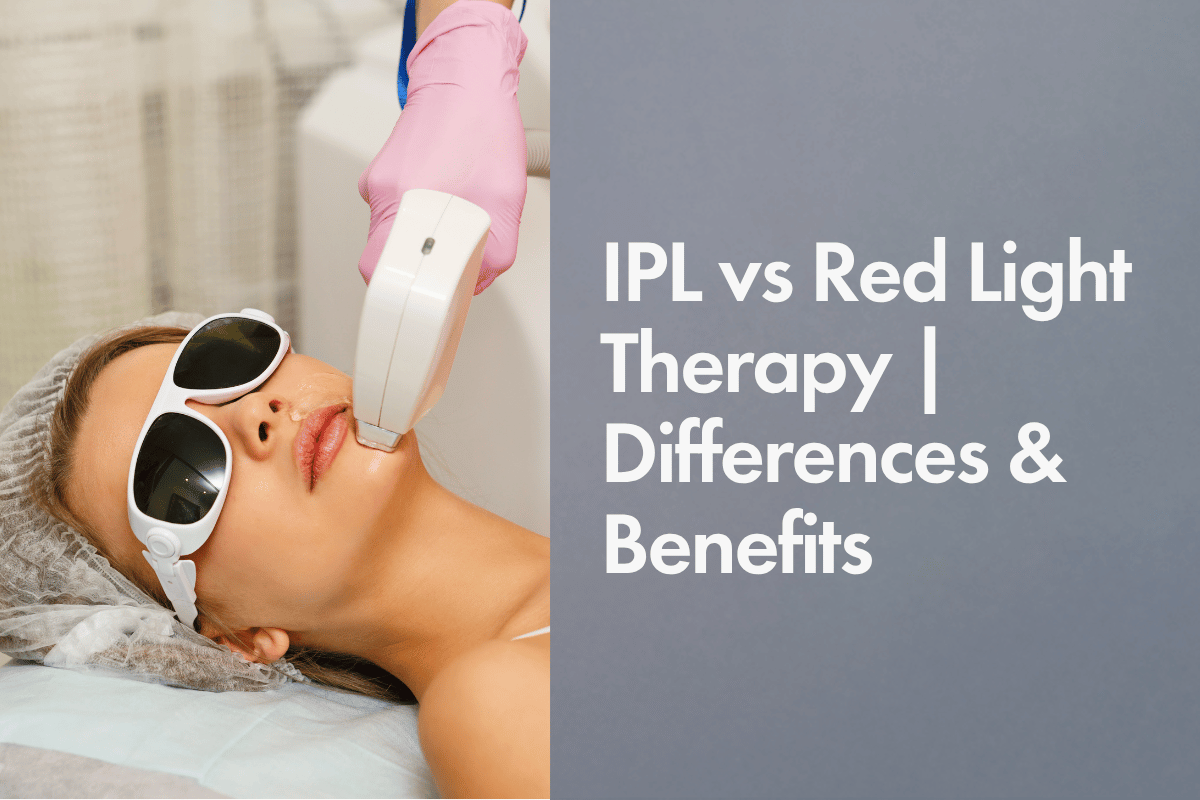
IPL stands for Intense Pulsed Light. It uses high-intensity, broad-spectrum light (wavelengths ranging from 500 to 1200 nm) to target pigment and blood vessels in the skin.
By delivering short, intense bursts of light, IPL heats specific chromophores like melanin and hemoglobin – which helps break up dark spots, reduce redness, and even remove hair.
The body then does the rest, healing the targeted areas over time.
But here’s the catch: IPL works by creating controlled damage, so your skin needs downtime to recover. It’s powerful, effective, and versatile, but not exactly gentle.
What Is Red Light Therapy and How Does It Work?
Red light therapy, on the other hand, takes a gentler route.
It uses specific wavelengths in the red to near-infrared range (around 630 to 700+ nm) to stimulate your skin’s natural repair processes – without causing damage.
These wavelengths penetrate the skin and are absorbed by mitochondria (your cells’ energy producers), boosting ATP (cellular energy) production.
This improves circulation, reduces inflammation, and triggers collagen synthesis – making it great for healing, rejuvenation, and anti-aging.
Treatment Benefits: When to Use Each
What IPL Is Best For
- Pigmentation (sunspots, freckles, age spots)
- Redness and rosacea
- Vascular lesions (spider veins, broken capillaries)
- Hair removal
- Photofacials for general skin tone and texture
IPL is basically your go-to if you’re trying to remove or correct something. It’s especially helpful for visible sun damage or broken blood vessels.
What Red Light Therapy Is Best For
- Fine lines, wrinkles, and skin laxity
- Redness and inflammation
- Acne healing (especially paired with blue light)
- Wound and scar recovery
- Sensitive or reactive skin
- Overall skin rejuvenation and glow
Red light therapy doesn’t “remove” things the way IPL does. Instead, it helps your skin work better. Think long-term support and maintenance, not quick fixes.
Results Timeline: What to Expect and When
| Treatment | Speed of Results | Longevity | Maintenance |
|---|---|---|---|
|
IPL |
Visible after 1–3 sessions |
Months to a year |
6–12 months |
|
RLT |
Builds gradually over weeks |
Ongoing with use |
1–2x/week or more |
IPL delivers faster correction, but you’ll need recovery time. RLT takes more patience, but it’s safe for regular use and builds up a healthy skin foundation.
Pain, Downtime & Safety
IPL: What It Feels Like
- Feels like a rubber band snap (yup, it stings a bit)
- You might see redness or swelling for a few days
- Not recommended for darker skin tones (risk of burns or hyperpigmentation)
- Requires professional treatment
Red Light Therapy: The Gentle Option
- Painless and relaxing (some people even nap during sessions!)
- Zero downtime
- Safe for all skin tones
- Can be used frequently, even daily, depending on the device
Frequency & Routine: How Often to Use Each
| Phase | IPL | RLT |
|---|---|---|
Type of Benefit | Rapid pigment correction + collagen | Gradual collagen + inflammation reduction |
Downtime | 1–3 days | None |
IPL requires spacing for recovery. Red Light Therapy thrives on consistency.
At-Home vs In-Clinic: What Works Best
IPL
- Professional IPL = most effective for pigmentation, redness, and hair removal
- At-home IPL devices = mainly for hair removal, less power than clinical devices
Red Light Therapy
- Professional RLT = high-powered panels or beds, great for full-body treatments
- At-home RLT = highly effective with the right device (like our FDA-cleared mask)
- Easy to integrate into your routine and maintain long-term skin health
Cost Comparison
| Type | IPL | RLT |
|---|---|---|
Type of Benefit | Rapid pigment correction + collagen | Gradual collagen + inflammation reduction |
Downtime | 1–3 days | None |
Skin Suitability | Lighter skin tones | All skin tones |
RLT wins for long-term value, especially if you’re using a quality at-home device. IPL is more of a short-term investment with visible correction.
Can You Combine IPL and Red Light Therapy?
Absolutely. Some people use both for enhanced results:
- Rosacea: IPL targets vessels, RLT calms inflammation
- Post-IPL recovery: Red Light Therapy can reduce downtime and redness
- Ongoing rejuvenation: IPL corrects, RLT maintains
Just don’t use them on the same day unless your dermatologist says it’s okay.
When NOT to Use Each Treatment
Avoid IPL If You:
- Have dark or recently tanned skin
- Take photosensitizing medications
- Are pregnant or breastfeeding
- Have active skin infections or open wounds
- Have a history of skin cancer
Avoid Red Light Therapy If You:
- Have a current or suspicious skin cancer lesion
- Take photosensitizing drugs
IPL vs Red Light Therapy for Anti-Aging
| Feature | IPL | RLT |
|---|---|---|
Type of Benefit | Rapid pigment correction + collagen | Gradual collagen + inflammation reduction |
Downtime | 1–3 days | None |
Skin Suitability | Lighter skin tones | All skin tones |
Best For | Age spots, redness, sun damage | Wrinkles, elasticity, long-term maintenance |
So, Which One Should You Choose?
If you want quick fixes for sun damage, redness, or unwanted hair, and you’re okay with downtime, IPL could be a great option.
If you’re after ongoing skin health, collagen support, and a treatment you can do safely at home – red light therapy is the better pick. It’s gentle, consistent, and backed by science.
And if your goals (and budget) allow? There’s no harm in combining both, with guidance from your skincare professional.
Gentle, Science-Backed Results Without The Downtime
No redness, no risk – just healthier, smoother skin.
SHOP NOW – GET $100 OFF
Frequently Asked Questions
Can I use Red Light Therapy before or after IPL treatments?
Yes, Red light therapy is often used after IPL to soothe inflammation and support healing. Just wait 24–48 hours post-IPL unless your provider advises otherwise.
Is one better for treating melasma?
Red light therapy is generally safer for melasma, as IPL can sometimes worsen pigment in sensitive skin types. Always consult a dermatologist first.
Can I use either treatment while on retinoids?
For IPL, retinoids typically need to be paused a few days before and after treatment. Red light therapy is usually safe with retinoids but check your device guidelines.
Will either treatment make my skin photosensitive?
IPL can increase temporary photosensitivity, so sun protection is essential post-treatment. Red light therapy doesn’t cause sun sensitivity but SPF is always a good idea.
Conclusion
When it comes to IPL vs red light therapy, it’s less about which one is “better” and more about which one fits your skin goals, time, and tolerance for downtime.
IPL works fast and targets pigment, redness, and unwanted hair through controlled light damage – but it’s not ideal for sensitive skin and does come with recovery time.
Red light therapy takes a gentler approach. It stimulates cellular repair, reduces inflammation, and helps your skin build resilience over time – making it a great option for ongoing maintenance, anti-aging, and general skin rejuvenation.
If you’re leaning toward consistent, science-backed results without the redness or recovery, our FDA-cleared 7-color LED face mask is built for you. It fits into your routine, supports skin health, and brings professional-grade light therapy home – on your terms. Shop now!