

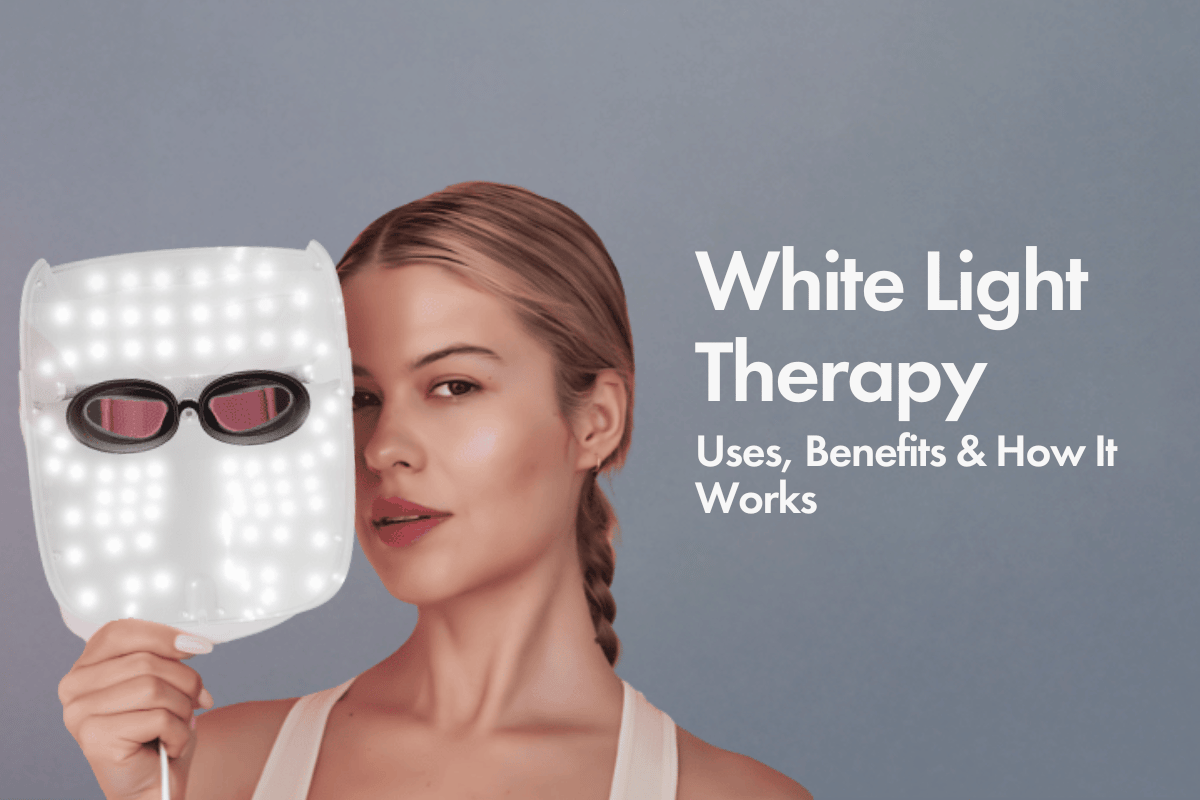

Your body runs on light. Take it away, and things start to fall apart—low energy, poor sleep, cranky moods.
White light therapy is designed to fix that. Used for everything from seasonal blues to better skin, it’s like bottled-up sunshine you can switch on anytime.
But does science back it up? Let’s get straight to the facts.
- White light therapy helps regulate mood, sleep, and skin health by mimicking natural sunlight.
- It’s commonly used for seasonal depression, sleep disorders, and certain skin conditions.
- Light boxes support circadian rhythms, while LED devices target skin concerns like acne and inflammation.
- Daily use for 20–30 minutes can yield noticeable improvements in mood and energy levels.
Uses of White Light Therapy
White light therapy is like a stand-in for natural sunlight, giving your body the light it craves—especially in darker months.
These devices don’t just brighten a room; they deliver full-spectrum or broad-spectrum light designed to support mood, sleep, and skin health.
Most emit between 5,000 and 10,000 lux, a level that mimics daylight, while filtering out UV rays to keep things safe.
1. Seasonal Affective Disorder (SAD)
One of the most well-known applications of white light therapy is treating Seasonal Affective Disorder (SAD).
This condition typically occurs in fall and winter when daylight hours decrease. Symptoms include low energy, irritability, changes in appetite, and difficulty concentrating.
Light therapy can help by simulating natural sunlight, which supports serotonin production and helps regulate melatonin. Many people with SAD use light boxes for 20 to 30 minutes each morning to help stabilize mood and energy levels.
2. Sleep Disorders
For those struggling with sleep, white light therapy can help reset the body’s internal clock.
This is particularly useful for:
- Shift workers who need to adjust to irregular schedules
- Individuals experiencing jet lag
- People with delayed sleep phase syndrome (difficulty falling asleep at a conventional time)
Using a light therapy device in the morning can signal to the brain that it’s time to wake up, making it easier to fall asleep at night. In some cases, exposure in the evening can be used to delay sleep for those needing to stay awake later.
3. Skin Conditions
White light therapy is also used for various skin concerns. While red and blue light are more commonly associated with skin treatments, some white light devices are designed to help with:
- Hyperpigmentation & Uneven Skin Tone: Some treatments encourage collagen production and cell turnover.
- Acne: Light exposure can reduce inflammation and target bacteria that contribute to breakouts.
- Eczema & Psoriasis: By reducing inflammation, white light therapy may help manage flare-ups.
4. Mood & Mental Health Support
Beyond SAD, light therapy may help with other mood-related concerns, including general depression and anxiety.
While it’s not a replacement for medical treatment, some studies suggest it can be a useful tool for improving overall mood and reducing symptoms of mild to moderate depression.
By increasing serotonin levels and regulating sleep patterns, it may also contribute to better emotional stability over time.
Benefits of White Light Therapy
White light therapy is popular for several reasons:
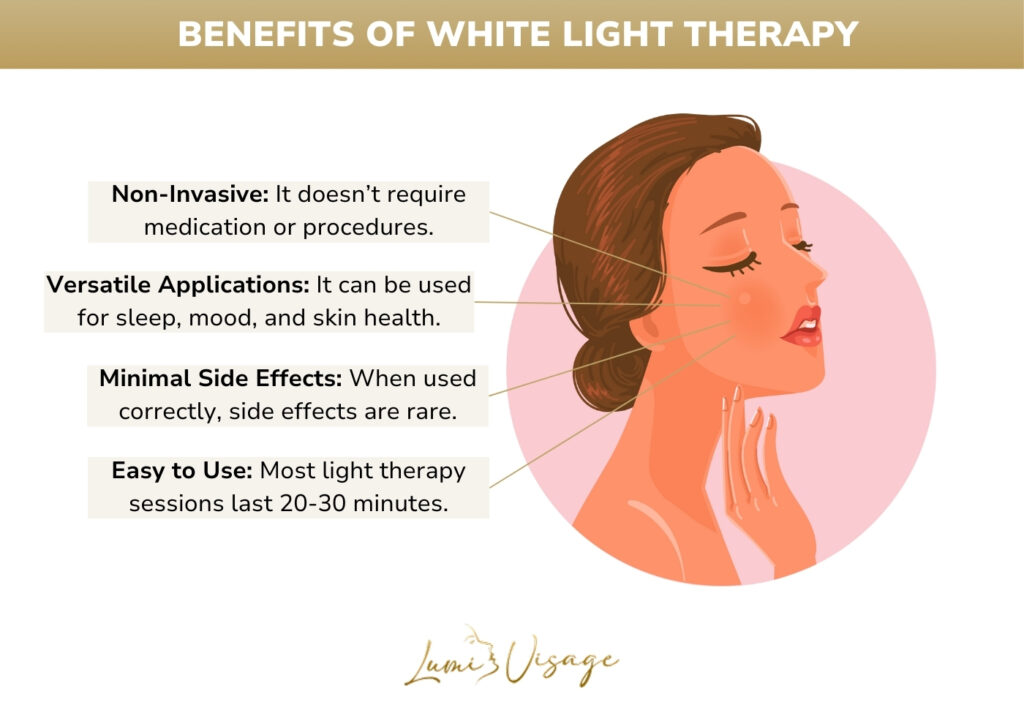
- Non-Invasive: It doesn’t require medication or procedures.
- Easy to Use: Most light therapy sessions last 20-30 minutes and can be done at home.
- Minimal Side Effects: When used correctly, side effects are rare and usually mild.
- Versatile Applications: It can be used for sleep, mood, and skin health.
For those looking for a simple, at-home solution to support well-being, it’s an appealing option.
How Does White Light Therapy Work?
Light exposure influences the body’s internal clock, or circadian rhythm, which regulates sleep-wake cycles.
When natural sunlight is limited, the body may struggle to maintain a stable rhythm. White light therapy helps compensate for this by stimulating specific receptors in the eyes that send signals to the brain.
One of the key areas affected is the hypothalamus, which controls melatonin and serotonin production. Melatonin regulates sleep, while serotonin plays a role in mood and energy levels.
By adjusting these chemical balances, light therapy can improve sleep quality, boost energy, and reduce symptoms of mood disorders.
How to Use White Light Therapy
1. Light Boxes for Mood & Sleep
The most common device for mood and sleep therapy is a light box. Here’s how to use one effectively:
- Positioning: Place the light at eye level, about 16-24 inches away.
- Timing: Use in the morning for 20-30 minutes to support circadian rhythm regulation.
- Consistency: Daily use yields the best results.
Most people begin to notice improvements within a few days to a few weeks.
2. LED Devices for Skin Treatments
Skin treatment devices are typically LED-based and come in various forms, including handheld units and face masks.
- Session Length: Most treatments last between 10-20 minutes.
- Frequency: Daily or a few times per week, depending on the device and condition.
- Skin Type Considerations: Some people may need to start with shorter sessions to monitor skin sensitivity.
Results vary, but many users report clearer skin and reduced inflammation after consistent use.
Safety Considerations
While generally safe, there are a few things to keep in mind:
- Eye Sensitivity: Some people experience mild eye strain or discomfort. Using the light at an appropriate distance can help.
- Headaches: If headaches occur, shorten sessions or adjust brightness.
- Medication Interactions: Certain medications, like those that increase light sensitivity, may cause adverse reactions. Consult a healthcare provider if unsure.
For skin treatments, following manufacturer guidelines is essential to avoid irritation.
Struggling With Low Energy, Poor Sleep Or Dull Skin?
White light therapy can help reset your rhythm and refresh your glow

Frequently Asked Questions
Can white light therapy be used at night?
It depends on your goal. Morning use helps regulate sleep, while evening sessions may disrupt melatonin production and make it harder to fall asleep.
How long does it take to see results?
For mood and sleep benefits, some notice changes within a few days, while others may take a few weeks. Skin improvements typically require consistent use over several weeks.
Can I use white light therapy while working or watching TV?
Yes, as long as the light is positioned correctly. You don’t need to stare directly at it—just keep it within your field of vision.
Is there a difference between white light therapy and blue light therapy?
Yes. White light therapy mimics natural sunlight for mood and sleep support, while blue light therapy is often used to treat acne or regulate circadian rhythms in a more targeted way.
Does white light therapy work in rooms with windows?
It can still be effective, but direct exposure to bright natural light is always best. If your indoor space is already well-lit, you may need a shorter session.
Conclusion
White light therapy is a simple, effective way to boost mood, regulate sleep, and support skin health.
Whether you’re looking to shake off seasonal fatigue, reset your body’s clock, or improve your complexion, consistent use can make a real difference. With the right device, you can bring the benefits of natural light into your daily routine—no matter the season.
Ready to experience the benefits for yourself? Our 7-Color LED Face Mask combines advanced light therapy with convenience, helping to target skin concerns like acne, redness, and dullness.
Give your skin the treatment it deserves. Shop now and start glowing.