


Flaky, stubborn, and downright irritating—no, not your Wi-Fi! We’re talking about dry skin.
Tired of slathering on creams and serums that don’t deliver? Red light therapy might be your next move.
But does it really work? We’ll break down the science, the benefits, and whether it’s worth a spot in your routine.
- Red light therapy boosts collagen and improves blood flow to treat dry skin.
- It helps hydrate skin, reduce inflammation, and strengthen the skin barrier.
- Minimal risks include mild redness or irritation with overuse.
- Use red light devices 3–5 times per week for best results.
Red Light Therapy For Dry Skin
Understanding Dry Skin
Dry skin, or xerosis, happens when your skin loses moisture or its protective barrier weakens. The result: Skin that feels tight, itchy, and flaky.
Common culprits include cold weather, harsh soaps, long hot showers, and aging—when oil production naturally slows. Skin conditions like eczema or psoriasis can also play a role.
Left unchecked, dryness can worsen into irritation or cracks, making treatments like red light therapy worth exploring.
What is Red Light Therapy?
Red light therapy, or low-level laser therapy (LLLT), uses red or near-infrared light to penetrate the skin, boosting collagen production, improving blood flow, and reducing inflammation.
It’s non-invasive, generally safe, and already popular for treating acne, wounds, and muscle pain.
While research on its effects for dry skin is ongoing, early results and user experiences show promising benefits for relieving dryness and irritation.
Red Light Therapy for Dry Skin
By boosting collagen production, improving blood flow, and reducing inflammation, red light therapy targets key factors that contribute to dry, irritated skin—offering a potential path to healthier, more hydrated skin.
Collagen Production
Collagen is a protein found in the skin that helps maintain its elasticity and firmness. As we age or experience skin damage, our collagen production decreases, leading to dryness, fine lines, and sagging skin.
Red light therapy works by stimulating the mitochondria, the energy-producing parts of cells, to produce more collagen.
By increasing collagen production, red light therapy can help strengthen the skin’s structure, keeping it hydrated and plump. This can be particularly beneficial for dry skin, as collagen helps prevent moisture loss by improving the skin’s natural barrier function.
Increased Circulation
In addition to collagen production, red light therapy also boosts blood flow. Increased circulation delivers more oxygen and nutrients to the skin, which helps it repair itself and stay moisturized.
For dry skin, this is crucial because healthy blood flow ensures that the skin is nourished and can maintain a healthy moisture balance.
Reducing Inflammation
Inflammation is a major factor in many skin conditions, including dry skin. Whether it’s from environmental factors, over-exfoliation, or an underlying condition like eczema, inflammation can leave the skin irritated and dry.
Red light therapy can help reduce this inflammation by promoting the production of anti-inflammatory molecules in the skin, leading to a calmer and more balanced complexion.
Benefits of Red Light Therapy for Dry Skin
- Improved Skin Hydration: By stimulating collagen production and increasing circulation, red light therapy can help skin retain moisture more effectively
- Healthier Skin Barrier: Red light therapy strengthens the skin’s barrier function, helping to lock in moisture and protect against external irritants.
- Reduction in Skin Irritation: Reducing inflammation can help soothe itchy or irritated skin, providing immediate relief for those suffering from dry skin flare-ups.
- Long-Term Skin Health: Regular use of red light therapy may result in longer-lasting improvements in skin texture, moisture retention, and overall appearance.
Risks and Considerations
While red light therapy is generally safe, it’s important to consider a few potential risks.
In some cases, overuse of the therapy can lead to skin irritation or increased sensitivity. Since red light therapy stimulates the skin, it’s crucial to not overdo it, especially if your skin is already irritated or damaged from dryness.
It’s also worth noting that red light therapy should be used in conjunction with other skin care practices, such as moisturizing, avoiding harsh products, and protecting your skin from extreme weather.
The therapy should be seen as a complement, not a replacement, for a proper skincare routine.
How to Incorporate Red Light Therapy Into Your Skincare Routine
If you’re interested in trying red light therapy for dry skin, there are several ways you can incorporate it into your routine:
At-Home Devices
One of the easiest ways to use red light therapy is with an at-home device.
Many people opt for handheld devices or LED face masks that are specifically designed for skincare. These devices are relatively affordable and easy to use, making them a convenient option for those looking for regular treatment.
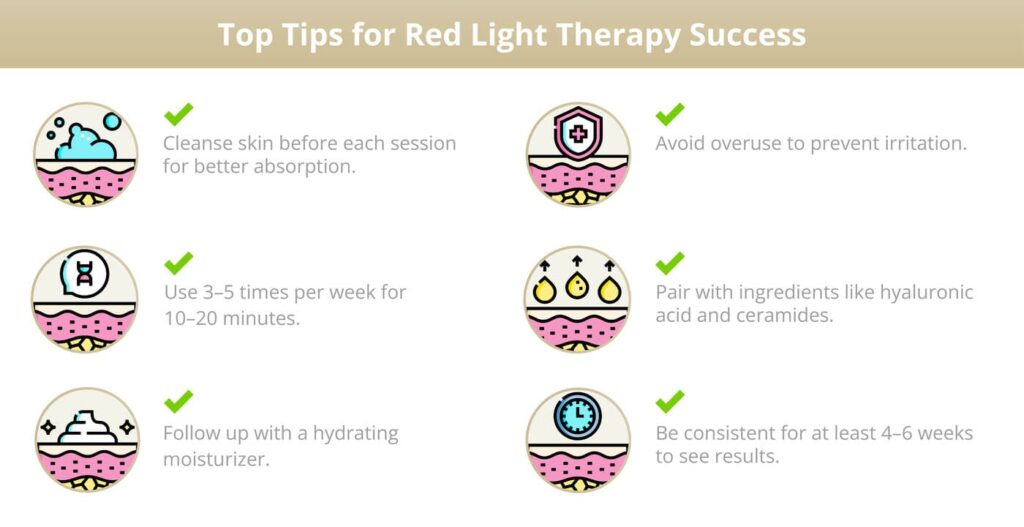
When using a red light therapy device at home, follow the manufacturer’s instructions carefully. Most devices recommend 10 to 20-minute sessions, several times a week.
Be sure to keep your skin clean and free of products before treatment for maximum absorption.
Professional Treatments
If you prefer a more controlled environment, professional treatments are also available.
Dermatologists and licensed professionals offer red light therapy sessions using stronger devices that may provide more immediate results.
However, these sessions tend to be more expensive than at-home devices.
Combine With Other Skincare Products
Red light therapy works best when combined with other moisturizing and hydrating products.
Be sure to use a good moisturizer after each session to lock in the hydration and keep your skin soft and smooth.
Look for products containing ingredients like hyaluronic acid, ceramides, and glycerin to boost the effects of red light therapy.
How Long Does It Take to See Results?
The timeline for seeing results from red light therapy can vary. Most people begin to notice improvements in their skin after about 4-6 weeks of consistent use.
However, it’s important to keep in mind that red light therapy is not a quick-fix treatment.
For long-term results, you’ll need to stay consistent with your sessions and pair them with a good skincare routine.
Fed Up With Skin That Feels Like Sandpaper?
Hydrate, soothe, and glow with the Lumi Visage LED Mask
SHOP NOW – GET $100 OFF
Frequently Asked Questions
How long does it take to see results from red light therapy?
Most people notice improvements in skin texture and hydration after 4–6 weeks of consistent use.
Can I use red light therapy with my regular skincare routine?
Yes! Red light therapy works well alongside moisturizers, serums, and other hydrating treatments.
Are at-home red light therapy devices effective?
Many at-home devices are effective if used properly, but professional treatments may offer faster results.
How often should I use red light therapy for dry skin?
For best results, aim for 3–5 sessions per week, with each session lasting 10–20 minutes.
Can red light therapy help prevent dry skin in winter?
Yes, regular use can strengthen the skin barrier and improve hydration, helping combat winter dryness.
Conclusion
Red light therapy is showing real promise for tackling dry, irritated skin. By boosting collagen, improving blood flow, and calming inflammation, it supports hydration and strengthens your skin’s barrier over time.
If you’re ready to see the benefits for yourself, the Lumi Visage 7_color LED Face Mask is the perfect at-home solution. It’s easy to use, effective, and a great addition to your skincare routine.
Say goodbye to stubborn dryness and hello to smoother, healthier-looking skin. Get yours today and start glowing.