


Figuring out how much acne treatment costs shouldn’t be another headache.
Whether you’re trying to avoid splurging on something that doesn’t work or worrying about expensive procedures, you want answers—fast.
From affordable drugstore options to dermatologist visits, we’ll cover it all.
Let’s clear up the confusion (and your skin) so you can find the right treatment for your budget.
Key Notes
- Acne treatment costs vary from $30 OTC options to $3,500 professional procedures.
- Prescription medications like isotretinoin can cost up to $500 a month.
- Professional treatments like laser therapy may require multiple sessions, adding up quickly.
- Some acne scar treatments, like dermabrasion, can cost over $4,000.
| Treatment Type | Cost Range (per session/product) | Frequency |
|---|---|---|
| Over-the-Counter (OTC) Products | $30 – $60/month | Daily |
| Prescription Medications | $45 – $500/month | Daily/Monthly |
| Chemical Peels | $100 – $400/session | Multiple sessions needed |
| Laser Treatments | $200 – $3,500 for full treatment series | 4-10 sessions |
| Blue Light Therapy (In-office) | $40 – $60/session | Multiple sessions needed |
| At-Home LED Devices | $100 – $300 (one-time purchase) | Daily use for long-term results |
| Dermabrasion (for scars) | $1,100 – $4,000 | May require multiple sessions |
| Dermal Fillers (for scars) | $300 – $3,000/session | 6-12 months maintenance needed |
Over-the-Counter Treatments
For mild cases of acne, over-the-counter (OTC) treatments are often the first line of defense.
These products are widely available in drugstores and supermarkets, making them accessible and budget-friendly.
They come in various forms—cleansers, spot treatments, toners, and creams—typically containing active ingredients like benzoyl peroxide, salicylic acid, or alpha hydroxy acids (AHAs).
Costs of OTC Acne Products
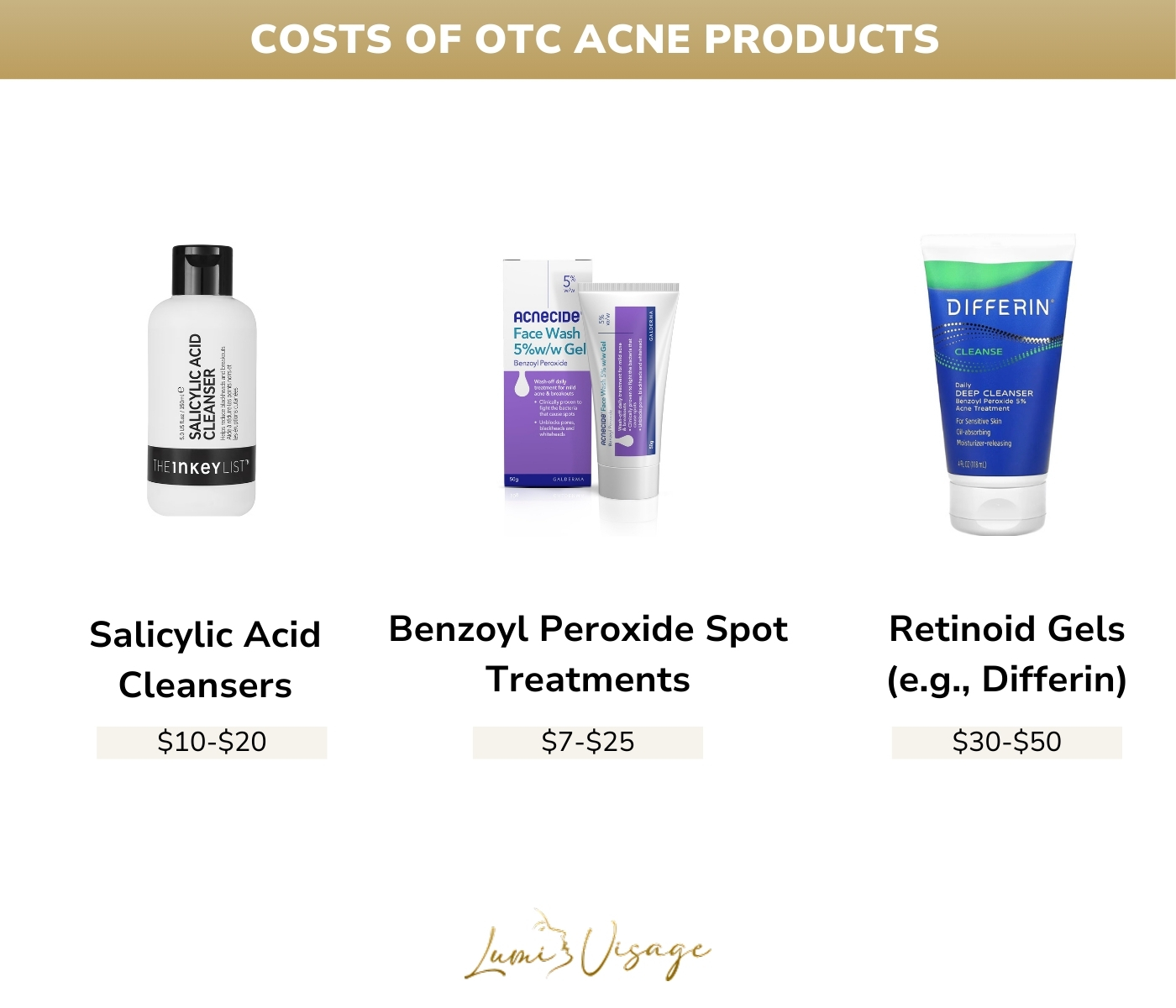
Most OTC acne treatments are relatively affordable. You can expect to spend around $30 to $60 per month on a basic skincare routine using cleansers, exfoliants, and spot treatments.
The actual price will vary depending on the brand and product type. Popular brands like Neutrogena, Clean & Clear, and Differin offer effective products that fall within this price range.
However, high-end brands with more specialized formulas can cost up to $100 or more per month.
Example Products and Prices:
- Salicylic Acid Cleansers: $10-$20
- Benzoyl Peroxide Spot Treatments: $7-$25
- Retinoid Gels (e.g., Differin): $30-$50
Who Should Use OTC Treatments?
OTC treatments are ideal for those with mild acne—defined as occasional breakouts of whiteheads or blackheads.
For many people, a consistent routine using these products is enough to keep acne under control without needing to see a dermatologist.
Prescription Medications
When OTC options don’t provide the desired results, or when acne is more severe, dermatologists often prescribe stronger medications.
These can come in topical forms, like prescription-strength retinoids and antibiotics, or oral forms, such as antibiotics, birth control pills, or isotretinoin (commonly known as Accutane).
Cost of Prescription Acne Medications
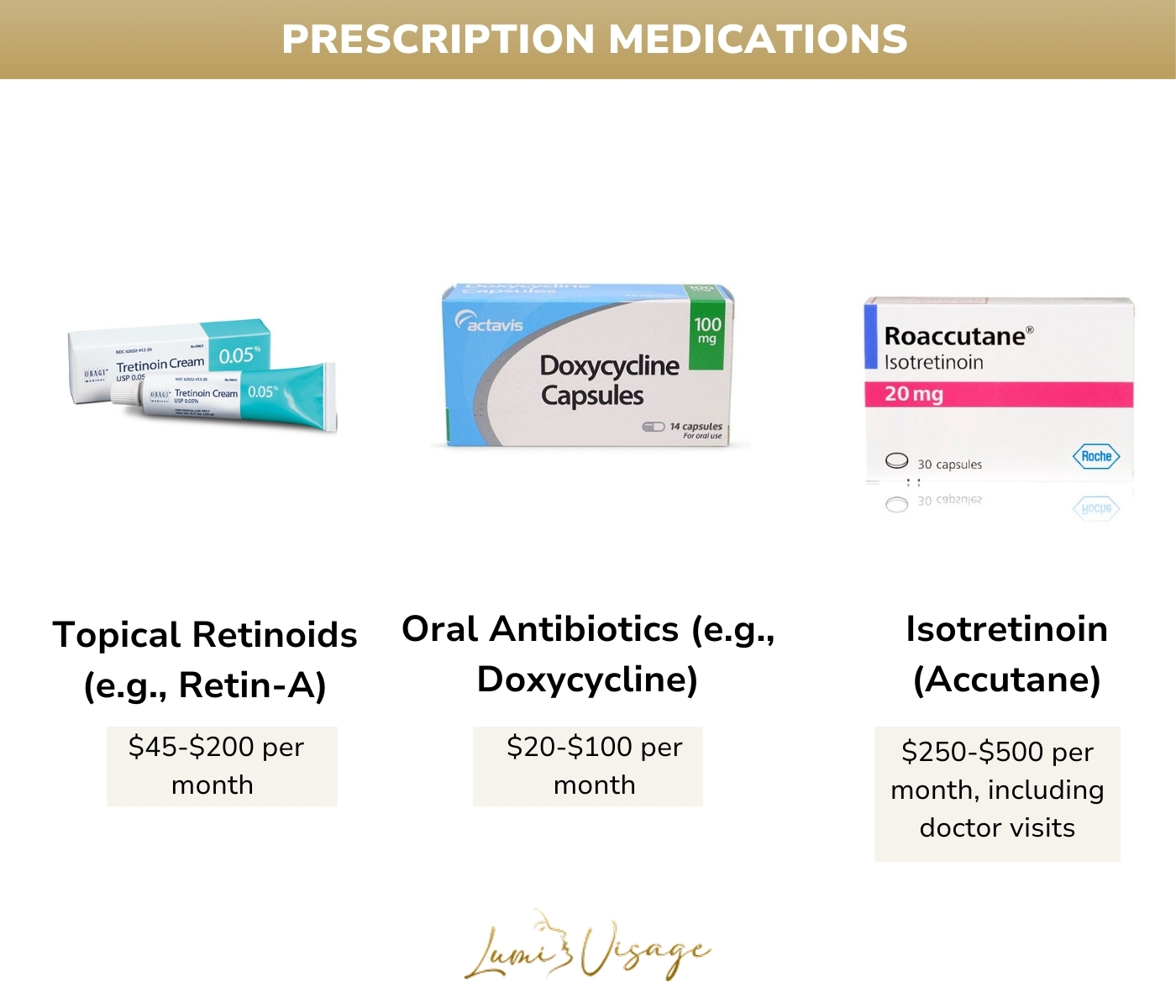
Prescription medications vary in cost, especially depending on your health insurance.
Without insurance, topical treatments like Retin-A (tretinoin) can range from $45 to $200 for a small tube.
Oral antibiotics typically cost between $20 and $100 per month, depending on the type. Isotretinoin, a powerful treatment for severe acne, can be much more expensive, with monthly costs ranging from $250 to $500, including doctor visits and blood tests.
Common Prescription Medications and Costs:
- Topical Retinoids (e.g., Retin-A): $45-$200 per month
- Oral Antibiotics (e.g., Doxycycline): $20-$100 per month
- Isotretinoin (Accutane): $250-$500 per month, including doctor visits
Who Should Consider Prescription Medications?
Prescription treatments are typically recommended for those dealing with moderate to severe acne, especially when over-the-counter products have failed.
Prescription retinoids help with both acne prevention and acne scarring, while isotretinoin is reserved for those with the most severe, cystic acne due to its potential side effects and high cost.
Professional Dermatological Treatments
When both OTC and prescription treatments aren’t enough, professional procedures performed by dermatologists can help tackle more severe cases of acne and acne scarring.
These treatments are more expensive, but they often offer quicker or more long-lasting results.
Let’s take a closer look at the most popular in-office acne treatments and their costs:
Chemical Peels
Chemical peels use a solution (often containing glycolic or salicylic acid) to exfoliate the skin and help treat acne by removing the top layer of skin, allowing healthier skin to emerge.
Chemical peels are often used in conjunction with other acne treatments to help reduce breakouts and minimize scars.
Cost of Chemical Peels:
The cost of chemical peels can vary widely depending on the strength of the peel and your location. Generally, one session will cost between $100 and $400.
Some dermatologists may offer discounted packages for multiple treatments.
Laser Treatments
Laser treatments are increasingly popular for treating acne and acne scars.
These procedures use focused light to reduce inflammation, kill acne-causing bacteria, or improve skin texture by promoting collagen production. Laser treatments are particularly effective for deep acne scars, but they can also be used to reduce active acne.
Cost of Laser Treatments:
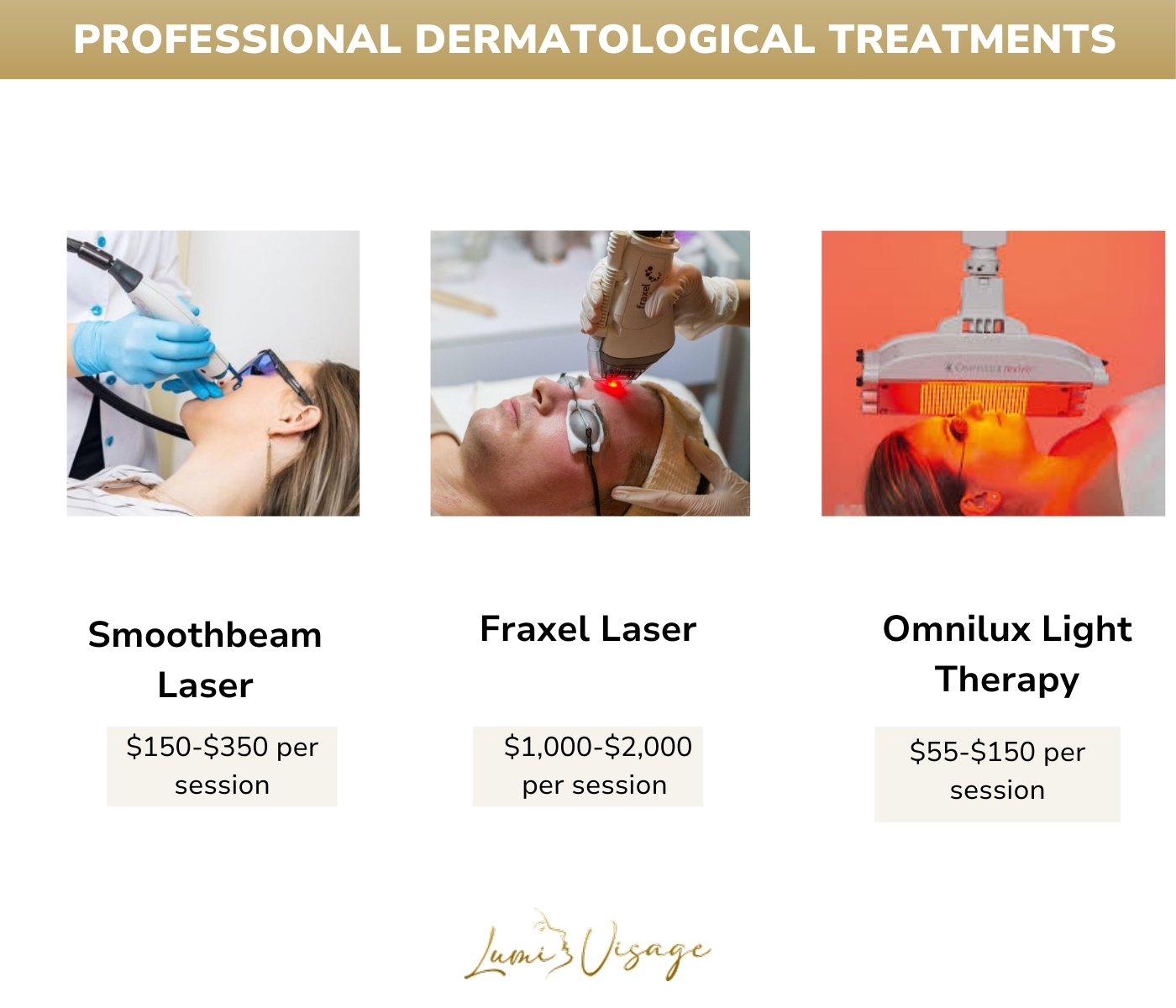
The price of laser treatments depends on the type of laser used and the number of sessions needed. On average, you can expect to pay between $200 and $500 per session.
Patients typically need several sessions, and the total cost can range from $1,500 to $3,500 for a full treatment course.
Popular Types of Laser Treatment:
- Smoothbeam Laser: $150-$350 per session
- Fraxel Laser: $1,000-$2,000 per session
- Omnilux Light Therapy: $55-$150 per session
Blue Light Therapy
Blue light therapy is a non-invasive treatment that uses blue light to kill bacteria on the skin that cause acne. It’s an effective option for those with mild to moderate acne who prefer a non-invasive approach.
Blue light therapy can also be used in conjunction with other acne treatments.
Cost of In-Office Blue Light Therapy:
Each session of blue light therapy typically costs between $40 and $60.
Multiple sessions are required for optimal results, which can add up to several hundred dollars over the course of treatment.
At Home LED Devices:
For those looking for a more affordable, at-home solution, LED devices designed for blue light therapy are becoming popular.
These handheld devices or face masks can be used on a daily basis to kill acne-causing bacteria, offering a more convenient and long-term option compared to in-office sessions.
While the upfront cost can range from $100 to $300, they can save money over time by reducing the need for repeated clinic visits.
Many users report improvements after consistent use, but like professional treatments, results may take weeks to become noticeable.
Who Should Opt for Professional Treatments?
Professional treatments are ideal for people dealing with persistent, moderate to severe acne or acne scarring that doesn’t respond to other treatments.
While these procedures are more expensive, they often provide quicker or more dramatic results compared to at-home treatments.
Acne Scar Treatments
Once acne has subsided, many people are left with scars that can affect their confidence.
Fortunately, there are several effective treatments for acne scars, though they tend to be on the more expensive side.
Dermabrasion
Dermabrasion is a surgical technique that involves scraping away the top layer of skin to reduce the appearance of scars, wrinkles, and other skin imperfections.
It’s considered one of the most intensive scar treatments.
Cost of Dermabrasion:
Dermabrasion typically costs between $1,100 and $4,000, depending on the size of the area treated and the depth of the scars.
Laser Skin Resurfacing
Laser skin resurfacing is a popular method for treating acne scars.
It works by removing layers of skin, allowing new skin to form, which reduces the appearance of scars. Depending on the severity of the scarring, dermatologists may recommend either non-ablative or ablative laser treatments.
Cost of Laser Skin Resurfacing:
Laser skin resurfacing costs range from $750 to $3,500, depending on the type of laser used and the extent of the scarring.
Dermal Fillers
For deep or pitted acne scars, dermal fillers can provide a temporary solution. These fillers work by lifting the skin around the scar, making the scars less noticeable.
Cost of Dermal Fillers:
Dermal fillers can cost anywhere from $300 to $3,000 per session, and the results typically last six months to a year.
Who Should Consider Acne Scar Treatments?
Anyone with persistent acne scars that affect their self-esteem or overall skin appearance may want to consider scar treatments.
The choice between dermabrasion, laser treatments, or fillers depends on the type and severity of the scars, as well as personal budget considerations.
Factors That Influence Acne Treatment Costs
Several factors can impact how much you spend on acne treatment.
These include:
Severity of Acne
More severe acne often requires more intensive (and expensive) treatments.
Location
The cost of professional treatments like chemical peels and laser therapy can vary depending on where you live.
Treatments in major cities or affluent areas may cost more than in smaller towns.
Number of Sessions
Many professional treatments require multiple sessions, which increases the total cost.
Insurance
Prescription medications may be covered by insurance, but most professional procedures (such as laser treatments and chemical peels) are considered cosmetic and aren’t covered.
Tired Of Expensive Acne Treatments & Limited Results?
Get pro-level skin clarity at home with the Lumi Visage LED Face Mask.

Frequently Asked Questions
Are there any hidden costs associated with professional acne treatments?
Yes, many professional acne treatments, such as laser therapy and chemical peels, may require additional costs beyond the procedure itself. These can include initial consultation fees, follow-up visits, and even post-treatment care products, which can add hundreds of dollars to the total expense.
Can health insurance help cover any acne treatment costs?
Generally, health insurance does not cover cosmetic acne treatments like laser therapy or chemical peels. However, some prescription medications, especially those deemed medically necessary for severe acne, may be partially or fully covered, depending on the insurance plan. It’s best to check with your provider to see if any costs can be minimized.
Are there any low-cost clinics or organizations that offer acne treatment on a sliding scale?
Some dermatology clinics, medical schools, or nonprofit health organizations may offer acne treatments at a reduced cost or on a sliding scale based on income. Certain programs may also provide free treatment for qualifying individuals, especially in larger cities or university health centers.
How long should I expect to see results from acne treatments?
Results vary widely depending on the treatment type: OTC products may show results within weeks, while professional treatments like chemical peels or laser therapy might require multiple sessions over months. The length of time for results can impact costs, especially for treatments requiring regular maintenance or follow-ups.
Conclusion
Acne treatment costs range from budget-friendly OTC products at $30-$60 per month to professional options like laser therapy, which can exceed $3,000. For mild cases, OTC products or an at-home LED mask ($100-$300) may do the trick.
But if you need stronger solutions, prescription meds or dermatologist treatments—like chemical peels at $100-$400 per session—could be worth the investment.
But if you’re looking for an effective, budget-friendly option you can use daily, consider an LED face mask. With its proven blue light technology, it offers the convenience of professional results from the comfort of your home—without the recurring costs of in-office treatments.
Get the Lumi Visage 7-Color LED Face Mask and start investing in clearer skin today.