

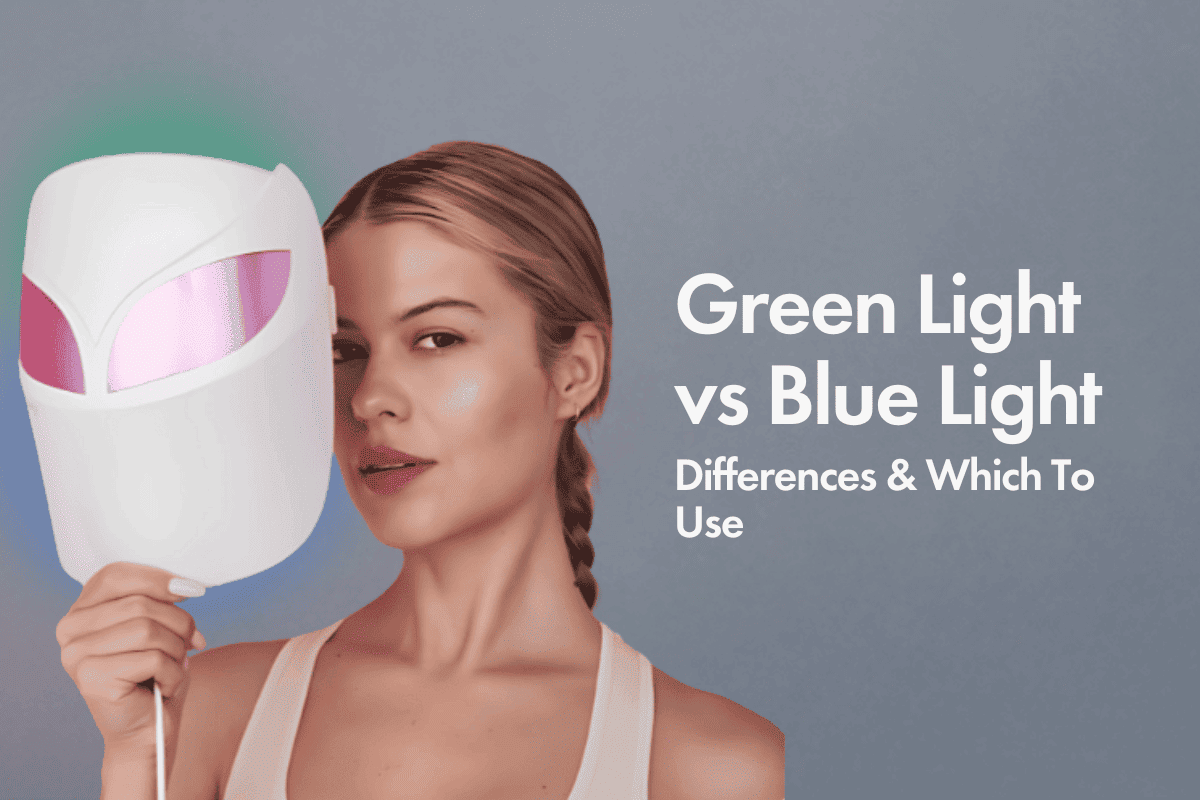

Your skin has a lot to say—it just speaks in breakouts, redness, and dark spots instead of words.
Green and blue light therapy promise to fix the problem, but which one actually does what?
One fights acne, the other calms and corrects, but using the wrong one won’t get you far.
If you’re tired of guessing, let’s make it simple. Here’s how to pick the right light for your skin.
- Blue light fights acne by killing bacteria and reducing oil production.
- Green light fades dark spots, calms redness, and promotes even skin tone.
- Both therapies work differently by penetrating the skin at different depths.
- Choosing the right one depends on acne, pigmentation, or overall skin balance.
Key Differences Between Green and Blue Light Therapies
| Factor | Blue Light Therapy | Green Light Therapy |
|---|---|---|
| Primary Use | Acne treatment, oil control, skin conditions | Hyperpigmentation, redness, relaxation |
| Penetration Depth | Surface-level (epidermis) | Slightly deeper (papillary dermis) |
| Main Effects | Kills acne bacteria, regulates oil, reduces inflammation | Breaks down melanin, soothes redness, promotes calmness |
| Best For | Oily, acne-prone skin | Uneven skin tone, sensitive skin |
| Additional Benefits | Helps with wound healing | May aid in migraine relief and pain management |
Blue Light Therapy
How It Works
Blue light operates at wavelengths between 400–490 nm. It penetrates the skin’s surface and targets bacteria, making it a popular choice for treating acne and oily skin.
Primary Benefits of Blue Light Therapy
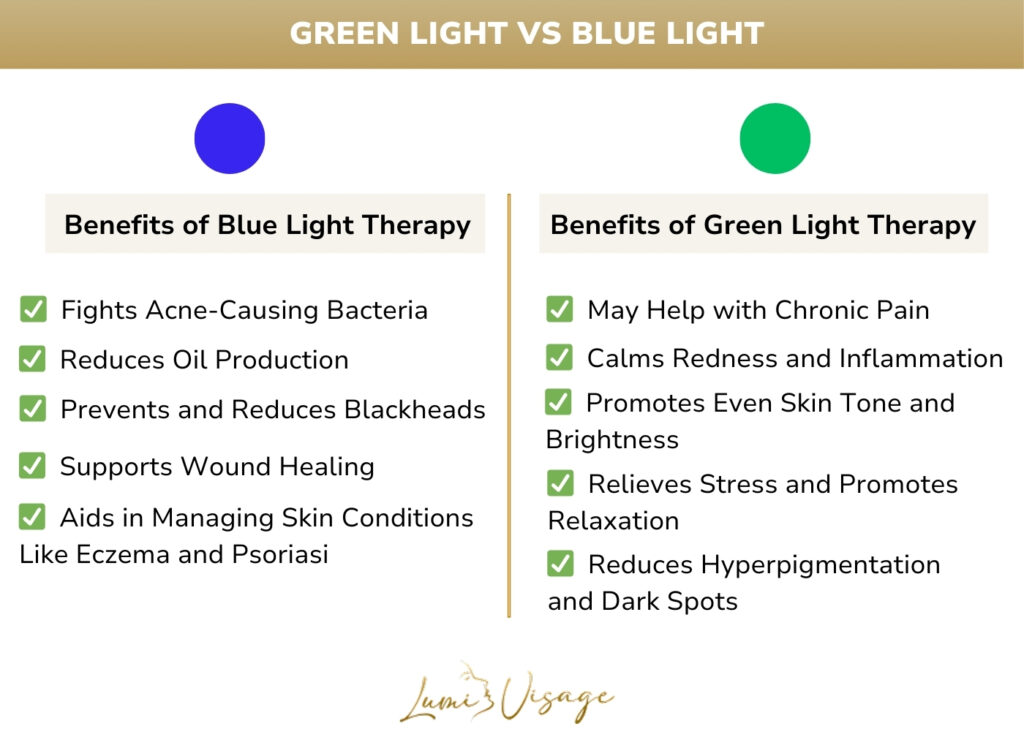
1. Fights Acne-Causing Bacteria
One of the biggest reasons people turn to blue light therapy is its ability to kill Propionibacterium acnes (P. acnes), a bacteria responsible for breakouts.
Unlike harsh creams or medications, blue light offers a drug-free way to manage acne.
2. Reduces Oil Production
Excess oil (sebum) clogs pores and contributes to breakouts. Blue light therapy helps regulate oil production, leading to clearer skin over time.
3. Prevents and Reduces Blackheads
Since blue light reduces oil and bacteria buildup, it can also help prevent blackheads before they form.
4. Aids in Managing Skin Conditions Like Eczema and Psoriasis
Some studies suggest that blue light therapy can help reduce inflammation in skin conditions like eczema and psoriasis by slowing the overactive immune response.
5. Supports Wound Healing
Blue light may speed up skin repair by promoting cell turnover. This makes it useful for post-procedure healing or treating minor wounds.
Green Light Therapy
How It Works
Green light falls within the 520–560 nm range, penetrating deeper than blue light but not as deeply as red light. It primarily affects pigmentation, inflammation, and relaxation responses in the body.
Primary Benefits of Green Light Therapy
1. Reduces Hyperpigmentation and Dark Spots
Green light helps break down melanin clusters, making it an effective treatment for sunspots, age spots, and post-acne discoloration.
Unlike harsh chemical treatments, it provides a gentle alternative for evening out skin tone.
2. Calms Redness and Inflammation
People with sensitive skin, rosacea, or chronic redness can benefit from green light’s soothing effects.
It reduces inflammation without irritating the skin, making it ideal for those who react poorly to aggressive treatments.
3. Promotes Even Skin Tone and Brightness
Green light therapy has been linked to improved circulation, which can make the skin appear more vibrant and healthy.
Over time, regular treatments may lead to a more balanced complexion.
4. Relieves Stress and Promotes Relaxation
Unlike blue light, which is more energizing, green light has a calming effect. Some studies suggest that exposure to green light can reduce headaches and tension.
5. May Help with Chronic Pain
Emerging research indicates that green light therapy may help manage conditions like migraines and fibromyalgia by altering pain perception in the brain.
While more studies are needed, early findings are promising.
Choosing the Right Therapy for Your Skin
When to Use Blue Light Therapy
- If you struggle with acne, blackheads, or oily skin, blue light therapy is the better choice.
- Those dealing with mild eczema or psoriasis may also see benefits.
- It’s a good option for people looking to support faster healing after minor skin injuries.
When to Use Green Light Therapy
- If hyperpigmentation, dark spots, or sun damage are your main concerns, green light therapy is more effective.
- People with redness, sensitive skin, or rosacea may see improvements with regular use.
- Those looking for a calming, relaxing therapy to reduce tension and headaches may prefer green light.
Combining Green and Blue Light Therapies
For some skin types, using both green and blue light in combination can be beneficial.
Many LED masks and light therapy devices offer multiple settings so you can tailor treatments to your needs.
Who Benefits from Using Both?
- People with acne and post-acne marks: Blue light clears active breakouts, while green light helps fade lingering dark spots.
- Those with mixed concerns: If you have both oily skin and redness, alternating treatments may work best.
- Anyone looking for full-spectrum skincare: Combining therapies can promote overall skin health and balance.
Breakouts Won’t Budge? Dark Spots Sticking Around?
Blue and green light therapy can fix that

Frequently Asked Questions
Can green or blue light therapy help with under-eye circles?
Green light may help reduce dark circles caused by pigmentation, but it won’t fix hollowness or poor circulation. Blue light isn’t typically used for this purpose.
Does blue light therapy make skin more sensitive to sunlight?
Yes, blue light can increase photosensitivity. Always apply sunscreen after treatment to protect your skin.
Can these therapies be used on other parts of the body besides the face?
Yes! Blue light can help with body acne (like on the back and chest), while green light may help with discoloration on the hands, neck, or shoulders.
How long does it take to see results from light therapy?
It varies. Acne improvement with blue light may be noticeable within a few weeks, while green light for pigmentation may take a month or more.
Can I use green or blue light therapy if I have sensitive skin?
Yes, but start with shorter sessions to see how your skin reacts. Green light is usually gentler than blue.
Are there any risks to overusing light therapy?
Too much blue light can dry out the skin or cause mild irritation. Overuse of green light is unlikely to cause harm, but excessive exposure won’t speed up results.
Conclusion
Green and blue light therapy aren’t one-size-fits-all.
Blue light is best for fighting acne and controlling oil, while green light helps with pigmentation, redness, and overall skin tone. If you’re dealing with both, using them together can give you the best of both worlds.
The key is consistency—results take time, but the right light can make a real difference. Instead of guessing, why not try a device that offers both?
Our 7-Color LED Face Mask includes green and blue light settings, so you can target exactly what your skin needs.
Start your light therapy routine today and see the benefits for yourself.