


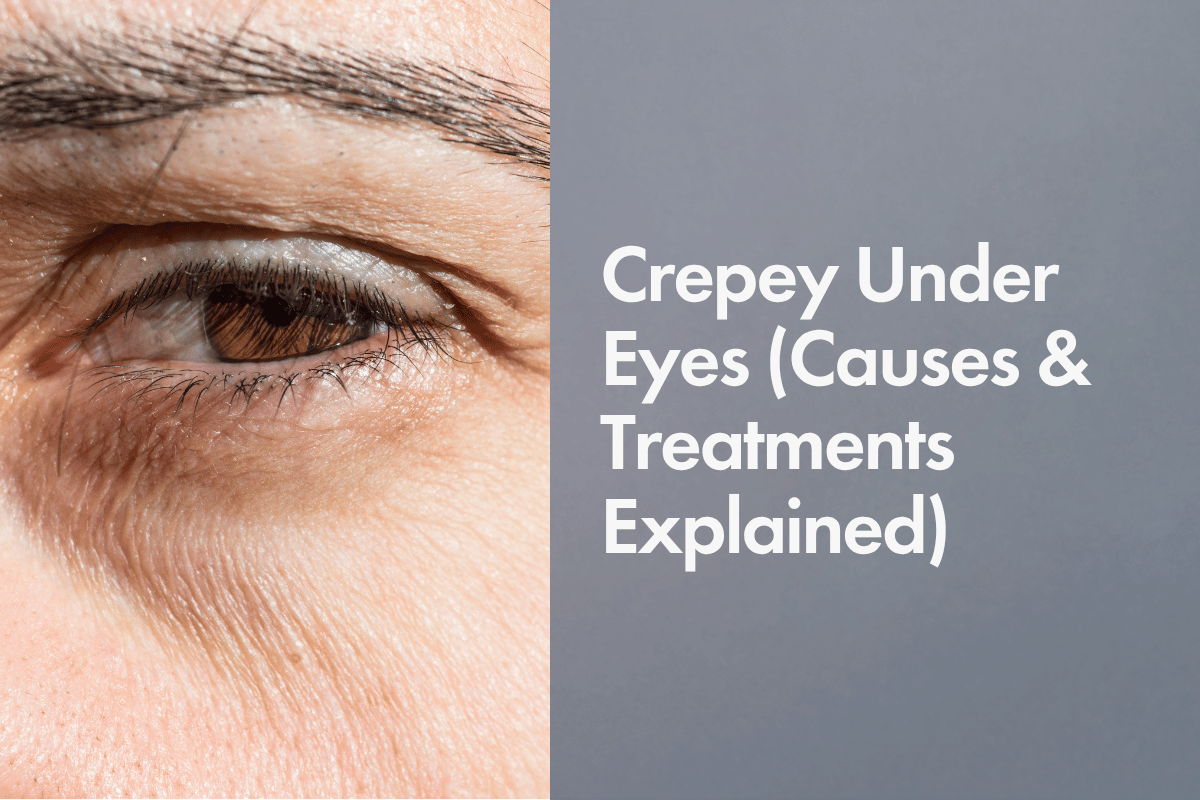

The skin under your eyes does a lot of heavy lifting. And over time, it can start to look thin, fragile, and crinkled, almost like crepe paper.
That’s what people mean when they talk about crepey under eyes. It’s not quite the same as dark circles or puffiness, and it doesn’t respond to the same fixes either.
We’ll look at what causes it, how to tell it apart, and the treatments that make a difference.
- Crepey texture differs from fine lines: it’s thin, fragile skin from collagen loss, not expression.
- Best ingredients: retinol for collagen synthesis, peptides for repair, hyaluronic acid for plumping.
- Red LED therapy (630-660nm) stimulates fibroblasts – expect gradual improvements in 4-6 weeks.
- Professional options include microneedling, laser resurfacing, and PRP for moderate to severe cases.
What Are Crepey Under Eyes?
Crepey under-eye skin describes thin, delicate, finely wrinkled skin that looks crinkly and loose. It’s a texture and skin-quality issue driven by thinning of the dermis and reduced elasticity.
How It Differs From Regular Fine Lines And Wrinkles:
Fine lines are surface-level and often linked to repeated expressions. Crepey texture involves loss of collagen and elastin, so the skin looks paper-thin and fragile, not just lined.
Main Causes of Crepey Under-Eye Skin
Intrinsic Factors
- Aging: Fibroblast activity slows and collagen types I and III decline. Elastin quality decreases. The epidermal barrier can weaken, so skin looks and feels thinner.
- Hormonal shifts: Menopause can accelerate thinning and dryness.
- Genetics: Some people simply produce less robust structural proteins.
Extrinsic Factors
- Sun damage (UV): UV accelerates collagen breakdown and elastin degeneration, and it increases oxidative stress.
- Lifestyle: Smoking, high alcohol intake, dehydration, poor diet, and eye rubbing all impair repair mechanisms.
- Other: Rapid weight loss, chronic dermatitis or eczema, long-term corticosteroid use, and pollution-driven free radical damage.
Crepey Under Eyes vs Puffiness vs Dark Circles
Choosing the right treatment starts with the right diagnosis.
| Condition | What You See | Primary Cause | Key Difference |
|---|---|---|---|
|
Crepey Skin |
Thin, fragile, finely wrinkled, crinkly |
Loss of collagen/elastin, thinning skin |
A texture problem with visible thinness |
|
Puffiness |
Swelling, bags, raised area |
Fluid retention, inflammation, fat pad changes |
A volume/fluid problem, not texture |
|
Dark Circles |
Blue/brown/grey discoloration, shadows |
Thin skin showing vessels, pigmentation, tear trough shadowing |
A colour/shadow problem, not texture |
Mislabel crepey skin as puffiness and you will chase cooling gels rather than collagen support. Get the label right and your plan gets smarter.
Do Crepey Under Eyes Get Worse Over Time?
Usually yes, if left unchecked.
Collagen and elastin production naturally slow with age, and UV exposure plus daily habits compound the decline. Luckily, targeted care can slow the process and often improve thickness and texture.
Best Over-the-Counter Ingredients for Crepey Under Eyes
Target collagen, support the barrier, and restore hydration. Consistency is everything.
| Ingredient | What It Does | How To Use |
|---|---|---|
|
Retinol |
Increases collagen synthesis and cellular turnover, gradually thickens skin |
Start 1–3 nights per week, buffer with moisturiser, build to nightly as tolerated |
|
Peptides |
Signal fibroblasts to support collagen and elastin, often paired with ceramides |
Daily in serums or eye creams, AM or PM |
|
Hyaluronic Acid |
Pulls and holds water in the epidermis for immediate plumping |
Layer under or within moisturiser to prevent TEWL |
|
Vitamin C |
Antioxidant support and co-factor for collagen; brightens tone |
AM use under SPF, stabilised formulas preferred |
|
Niacinamide / Allantoin |
Barrier support, soothing, reduces irritation from actives |
Daily, especially alongside retinol |
Tips: Introduce one active at a time and patch test. Around the eyes, low and slow wins.
Eye Creams vs Eye Serums
Both have a place. The order and purpose matter:
| Product | Texture | Primary Benefit | Best For |
|---|---|---|---|
|
Eye Serum |
Lightweight, fast-absorbing |
Delivers concentrated actives like peptides, HA, vitamin C |
Specific concerns, oily or combo skin, layering under cream |
|
Eye Cream |
Rich, occlusive or emollient |
Locks in hydration, reinforces barrier, reduces dryness |
Dry or mature skin, or anyone using retinol |
Layering rule: Serum first for actives, cream second to seal and protect.
At-Home Devices That Support Crepey Under Eyes
Red LED Therapy
Red light therapy works through photobiomodulation – energizing cells, reducing inflammation, and stimulating fibroblasts to make new collagen.
With consistent use, you can expect gradual smoothing of fine lines and better texture within about 4–6 weeks. Sessions are typically around 10 minutes, several times per week, and results are best when paired with a hydrating serum.
Because wavelengths in the 630–660 nm range specifically support collagen and skin repair, LED tends to be the most reliable and accessible at-home option.
Microcurrent
Microcurrent devices deliver low-level electrical currents that help tone the muscles under the eyes. The effect is a subtle lift and improved contour, but the results are temporary and depend heavily on consistency.
Plan for short sessions four to five times per week, especially in the beginning, if you want to see noticeable changes.
Dermaroller (Microneedling At Home)
Dermarollers introduce tiny punctures into the skin that stimulate gentle collagen induction while also improving serum absorption.
Results take longer – think several months of consistent use – and strict hygiene is non-negotiable to avoid infection.
Use sparingly (once a week or less) with shorter needles suitable for at-home use.
At-Home RF
Radiofrequency devices deliver mild heat to the dermis, encouraging collagen tightening and new growth. At-home versions are less powerful than professional machines, so results are subtle and cumulative rather than dramatic.
Always follow the device instructions carefully and avoid overheating the delicate under-eye skin.
Professional Treatments Worth Considering
If crepiness is moderate to severe, clinic treatments can accelerate results. Always consult a qualified practitioner.
- Microneedling: Creates controlled micro-injuries that trigger collagen and elastin remodelling. Downtime is usually mild. Series of sessions works best.
- Laser resurfacing (CO2 or erbium): Removes damaged layers and heats the dermis to remodel collagen. Highly effective for texture, with more downtime.
- PRP (platelet-rich plasma): Uses your own growth factors to encourage healing and collagen formation. Often paired with microneedling.
- Dermal fillers: Hyaluronic acid fillers can soften tear trough hollows that make crepiness look worse. Instant volume, but not a substitute for skin-thickening.
- Neuromodulators: Reduce dynamic lines from movement around the eyes. Best as a complement, not a texture fix.
- Chemical peels: Low-strength, well-chosen peels can refine texture and brightness.
- Blepharoplasty: For significant laxity and excess skin, surgical tightening offers the most dramatic change. Considered when other options cannot meet goals.
Natural Remedies and Lifestyle Support
Helpful, especially for maintenance. Expectations should be realistic.
- Hydration and nutrition: Protein, vitamin C, E, and omega-3s support collagen and the skin barrier.
- Gentle massage and lymphatic drainage: Can reduce morning puffiness and help tissue look smoother.
- Soothing topicals: Aloe, green tea compresses, or cooled chamomile tea bags can calm the area temporarily.
- Sleep and stress: Quality sleep and stress management reduce inflammatory load and help overall skin function.
These do not replace actives or devices, but they do support the whole picture.
How To Choose The Right Plan
A quick way to map your next step:
Mild Crepiness, Minimal Laxity:
SPF, hydrating serum with HA, peptide eye serum, gentle retinol a few nights per week, and red LED therapy.
Moderate Crepiness With Early Hollows:
As above, plus consider microcurrent and a consultation for light microneedling or PRP.
Pronounced Crepiness With Clear Laxity Or Excess Skin:
Dermatology consult for laser resurfacing, PRP, or fillers. Discuss whether surgery is appropriate.
Filter Your Choice By:
- Sensitivity: If reactive, prioritise peptides, HA, niacinamide and LED, then add retinol later.
- Downtime and budget: Home care is ongoing and cost-effective. Clinic care is episodic and higher impact with cost and recovery to plan for.
- Timeline expectations: Fillers offer immediate contour change. Collagen-building options are gradual and compounding.
Maintenance After You See Results
- Daily SPF and sunglasses to protect your investment.
- Keep using your core routine: hydrators, peptides, vitamin C, and retinol as tolerated.
- Stick with devices: Red LED a few times per week is a simple way to maintain collagen support.
- Occasional boosters: Periodic microneedling or laser touch-ups based on your practitioner’s advice.
- Stay gentle: No aggressive rubbing or heavy scrubbing.
Realistic Expectations
You can expect visible improvement, not a total reset to teenage skin.
- Topicals and LED often show changes in 4–6 weeks, with continued gains over several months.
- Microneedling, PRP, and laser remodelling can keep improving for up to a year.
- Fillers change contours instantly but do not thicken the skin by themselves.
Consistency is the not-so-secret advantage.
Looking For A Non-Invasive Way To Firm Skin?
LED light therapy boosts elasticity and supports lasting results.
SHOP NOW – GET $100 OFF
Frequently Asked Questions
Can makeup make crepey under eyes look worse?
Yes. Heavy concealers or powders often settle into fine crinkles and exaggerate texture. A lightweight, hydrating formula paired with a good primer works better.
Are crepey under eyes only caused by aging?
No. While age-related collagen decline is a big factor, sun damage, genetics, lifestyle, and even chronic rubbing of the eyes can trigger crepiness at a younger age.
How long does it take to see improvement with at-home treatments?
Most people notice subtle changes within 4–6 weeks of consistent care, but collagen remodeling and texture improvements may take several months.
Can diet alone fix crepey skin under the eyes?
A nutrient-rich diet supports skin health, but it cannot fully reverse crepey texture. It works best alongside topical treatments, sun protection, and collagen-stimulating therapies.
Conclusion
Crepey skin under eyes happens when skin thins out, loses elasticity, and takes on that crinkled look that concealer just can’t hide.
It’s not the same as puffiness or dark circles, and fixing it means going beyond quick cover-ups. Daily SPF, hydration, and gentle habits keep things from getting worse, while actives like retinol, peptides, and vitamin C slowly help rebuild structure.
For bigger changes, devices and professional treatments step in.
One of the simplest ways to support collagen and gradually smooth fragile under-eye skin is consistent red light therapy. That’s why our 7-color LED mask is designed to fit into your week in minutes and tackle more than one concern at once. Shop now – get $100 off.