


Red light therapy promises better skin, faster healing, and less pain—but could it also carry a hidden risk like cancer?
The good news: science shows it’s safe and doesn’t cause cancer.
Let’s cut through the noise and uncover why this glowing trend is nothing to fear.
- Red light therapy uses non-harmful wavelengths and does not emit cancer-causing UV rays.
- Scientific studies confirm no link between red light therapy and increased cancer risk.
- It promotes cellular repair, making it popular for skin, pain, and wound treatments.
- Mild side effects, like skin redness, are rare and easily avoidable with proper use.
Red Light Therapy Is Considered Safe: Here’s Why
Red light therapy uses safe, low-level light to boost healing, circulation, and inflammation relief—no UV risk. The secret is its 600-850nm wavelengths, energizing cells to repair, regenerate, and thrive.
The safety of red light therapy largely comes down to its mechanism of action. Unlike UV light, red light doesn’t cause DNA damage or stimulate the formation of free radicals, which can lead to cancer.
Instead, it enhances cellular energy production, allowing healthy cells to repair themselves and function better.
Additionally, red light therapy is a non-ionizing form of radiation. This means it doesn’t have the ability to remove tightly bound electrons from atoms or molecules, a process that can lead to cellular mutations.
Comparing Red Light to Ultraviolet (UV) Light
A common misconception is that all forms of light therapy carry the same risks as UV light.
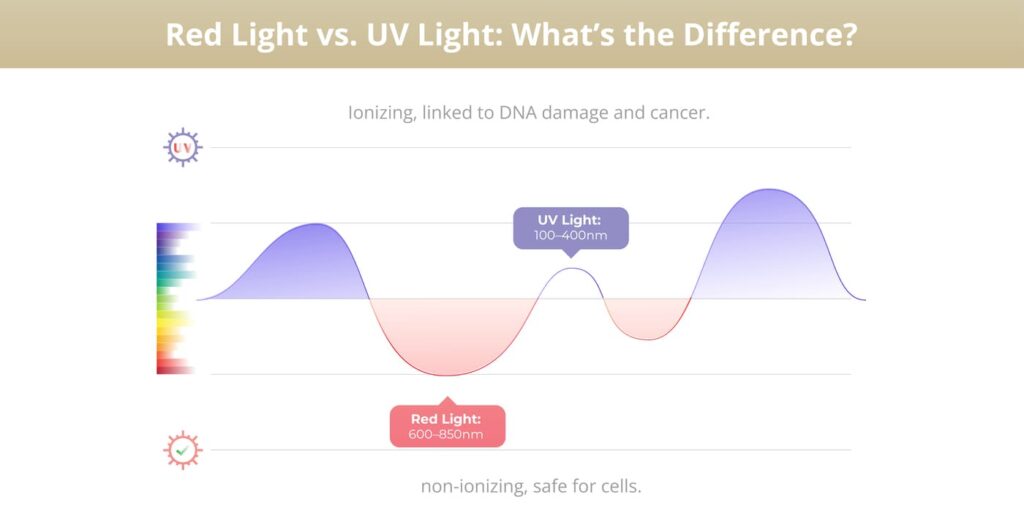
UV radiation is known to damage DNA and increase the risk of skin cancer. Red light, however, operates on a completely different wavelength spectrum that does not have the energy required to cause DNA mutations.
UV light falls within the 100 to 400 nanometer range, which is short and highly energetic. This is what makes UV light capable of penetrating the skin and causing harmful changes at the cellular level.
On the other hand, red light has longer wavelengths and lacks the intensity needed to cause such damage.
Scientific Evidence on Red Light Therapy and Cancer
Concerns about cancer and red light therapy often stem from misunderstandings about how the treatment interacts with cells.
To date, there is no scientific evidence suggesting that red light therapy causes cancer. In fact, some studies have explored its potential role in reducing cancer treatment side effects.
For example, red light therapy has been used to alleviate oral mucositis, a painful condition caused by chemotherapy and radiation. By promoting faster healing and reducing inflammation, red light therapy has helped improve the quality of life for many cancer patients.
Furthermore, the therapy’s ability to stimulate healthy cell growth and repair contrasts with the uncontrolled, abnormal growth of cancer cells.
Researchers continue to monitor its safety closely, and the consensus remains that it does not pose a cancer risk when used appropriately.
Potential Side Effects of Red Light Therapy
While red light therapy is generally safe, some people may experience mild and temporary side effects.
These might include:
- Skin irritation: Slight redness or tightness in the treated area.
- Eye sensitivity: Avoid looking directly into the light, as it can cause discomfort or temporary eye strain.
These effects are rare and typically resolve quickly. To minimize risks, always follow the manufacturer’s guidelines or consult with a healthcare provider before starting treatment.
Guidelines for Safe Use of Red Light Therapy
If you’re considering red light therapy, taking precautions can help ensure it’s both effective and safe:
- Choose FDA-approved devices: Look for devices that have been cleared for safety and effectiveness.
- Stick to recommended session durations: Overexposure to any form of light can lead to skin irritation, so use the therapy as directed.
- Consult a professional: If you have underlying health conditions, especially skin disorders or a history of skin cancer, speak with a doctor before trying red light therapy.
- Protect your eyes: Wear protective eyewear during sessions to avoid sensitivity or irritation.
Debunking Myths About Red Light Therapy
The internet is full of conflicting information, and it’s easy to feel overwhelmed by claims about treatments.
Here are a few common myths about red light therapy and cancer:
Myth: “All light therapies increase cancer risk.”
Truth: Only UV-based therapies have been shown to increase the risk of skin cancer. Red light therapy operates in a safer wavelength range.
Myth: “Red light stimulates cancer cells.”
Truth: Research indicates that red light promotes healthy cell function and does not trigger the abnormal growth associated with cancer.
Myth: “Long-term use of red light therapy is harmful.”Truth: When used as directed, red light therapy is safe for regular use, with no evidence of cumulative damage.
Concerned About Safe, Effective Skincare?
Our LED mask heals skin and boosts radiance
SHOP NOW – GET $100 OFF
Frequently Asked Questions
Can red light therapy be used on all skin types?
Yes, red light therapy is safe for all skin types and tones, as it doesn’t rely on heat or UV rays that might cause damage or pigmentation issues.
How long does it take to see results from red light therapy?
Results vary, but many users report noticeable improvements in 4–6 weeks with consistent use.
Is red light therapy safe for pregnant or breastfeeding women?
While generally considered safe, pregnant or breastfeeding women should consult their healthcare provider before starting red light therapy.
Can red light therapy be combined with other treatments?
Absolutely. It often complements treatments like microneedling, chemical peels, or physical therapy for enhanced results.
How often can you safely use red light therapy?
Most devices recommend 3–5 sessions per week for optimal benefits, depending on the treatment area.
Conclusion
Red light therapy is a safe, effective treatment with benefits ranging from healing and inflammation relief to improved skin health.
Unlike UV light, it poses no cancer risk and is backed by science for its ability to boost cellular repair. By following proper usage guidelines, you can enjoy these benefits with minimal risks.
Ready to experience the power of red light therapy at home? Try the Lumi Visage LED Face Mask and see the difference for yourself.