

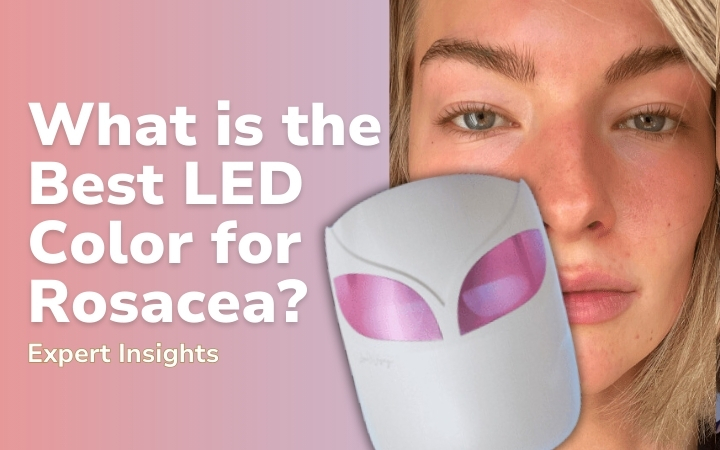

When it comes to fighting rosacea flare-ups with light therapy, choosing the right LED color matters.
If you find yourself constantly slathering on foundation or avoiding social plans because of redness, read on.
We’ll show you the most effective LED color for calming inflammation and giving your skin a break from the constant stress.
Ready to take control? Let’s fix this.
Key Notes
- Blue light helps acne-prone rosacea by killing bacteria and preventing breakouts.
- Red LED light is the most effective for calming rosacea-related redness and inflammation.
- Combining red and blue light can target both redness and rosacea-triggered breakouts.
- Consistent treatment is key—2-3 sessions per week deliver the best results.
Red LED Light (633 nm)
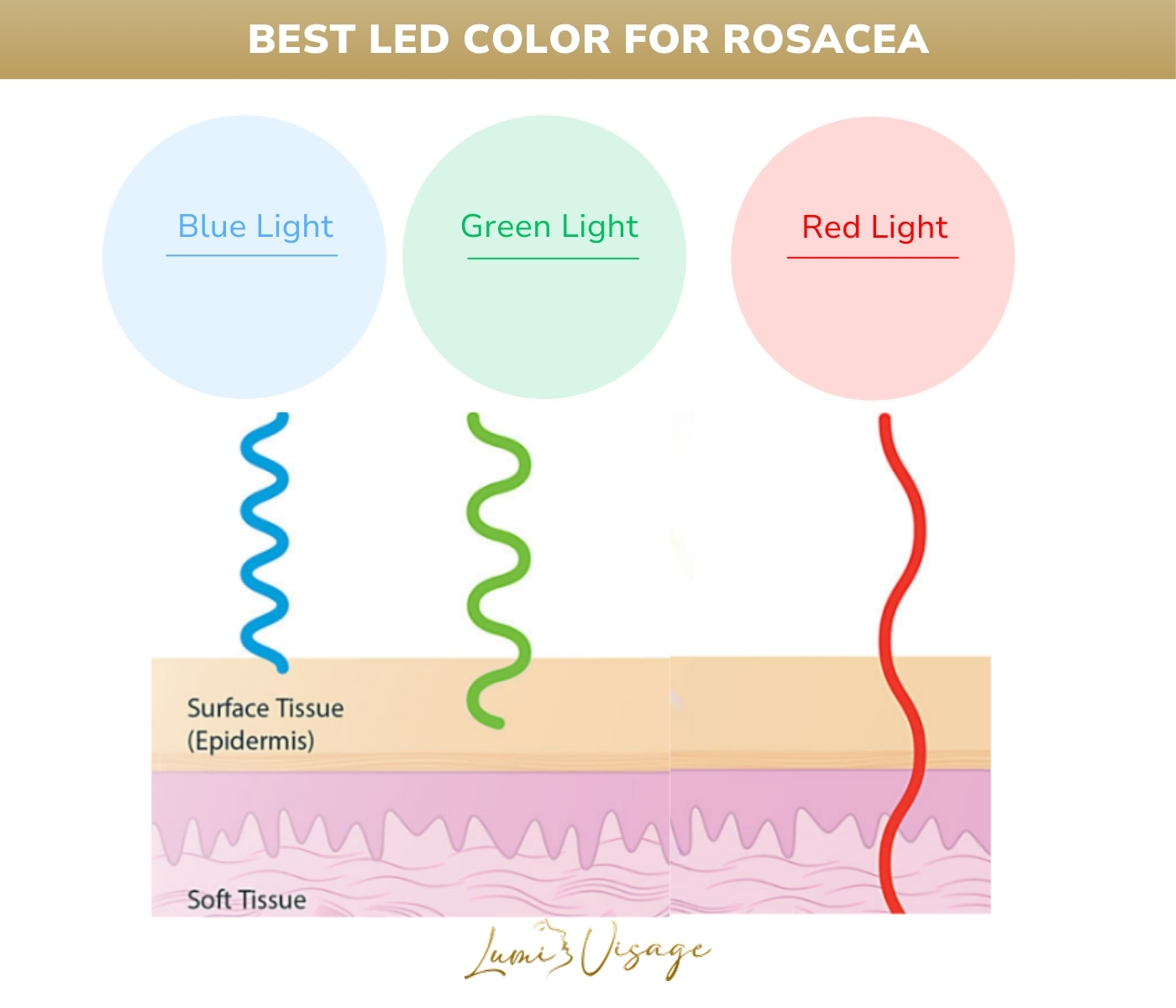
Red light therapy is by far the most recommended option for treating rosacea. This light penetrates deep into the skin, reaching the dermis layer, where it helps reduce inflammation and promote cellular repair.
Red light stimulates the production of collagen, a protein that helps keep the skin firm and elastic.
It also enhances circulation, which can improve the overall tone and texture of the skin.
Blue LED Light (450 nm)
Though blue light therapy is primarily known for fighting acne, it’s also a game-changer for rosacea sufferers dealing with breakouts—especially those with papulopustular rosacea.
Blue light kills acne-causing bacteria, helping prevent the painful bumps and pustules that can come with rosacea flare-ups. It’s a great option for tackling two problems at once: soothing inflammation and keeping breakouts under control.
Though blue light doesn’t penetrate as deeply as red light, it works well on the surface of the skin, helping to manage bacteria and reduce inflammation in acne-prone rosacea.
However, blue light alone isn’t enough to address the redness and sensitivity of rosacea, which is why it’s often paired with red light for a more comprehensive treatment plan.
Green LED Light
Even though green light therapy isn’t as commonly associated with rosacea treatment, it can definitely be effective for calming the skin. Green light has a soothing effect and works at a more superficial level to reduce redness and irritation.
It doesn’t penetrate as deeply as red light, but it can help even out skin tone and provide relief after flare-ups.
Many rosacea sufferers use green light as a complementary treatment to red light therapy, particularly after a flare-up, to quickly calm the skin and reduce visible redness.
Struggling With Constant Rosacea Flare-Ups?
Calm redness and irritation with our LED face mask.

Comparison: Best LED Light Color For Rosacea Treatment
| Benefit | Red Light | Blue Light | Green Light |
|---|---|---|---|
| Reduces inflammation & redness | ✓ | ✘ | ✓ |
| Stimulates collagen production | ✓ | ✘ | ✘ |
| Kills acne-causing bacteria | ✘ | ✓ | ✘ |
| Prevents rosacea breakouts | ✘ | ✓ | ✘ |
| Calms irritation after flare-ups | ✓ | ✘ | ✓ |
| Improves skin texture | ✓ | ✘ | ✘ |
| Penetration depth | Deep (Dermis) | Surface | Superficial |
How To Use LED Light Therapy For Rosacea
LED light therapy is easy to use, whether you’re getting treatments at a dermatologist’s office or using a device at home.
Here are some key things to consider when incorporating LED light therapy into your rosacea treatment plan:
1. Frequency of Treatments
Consistency is key.
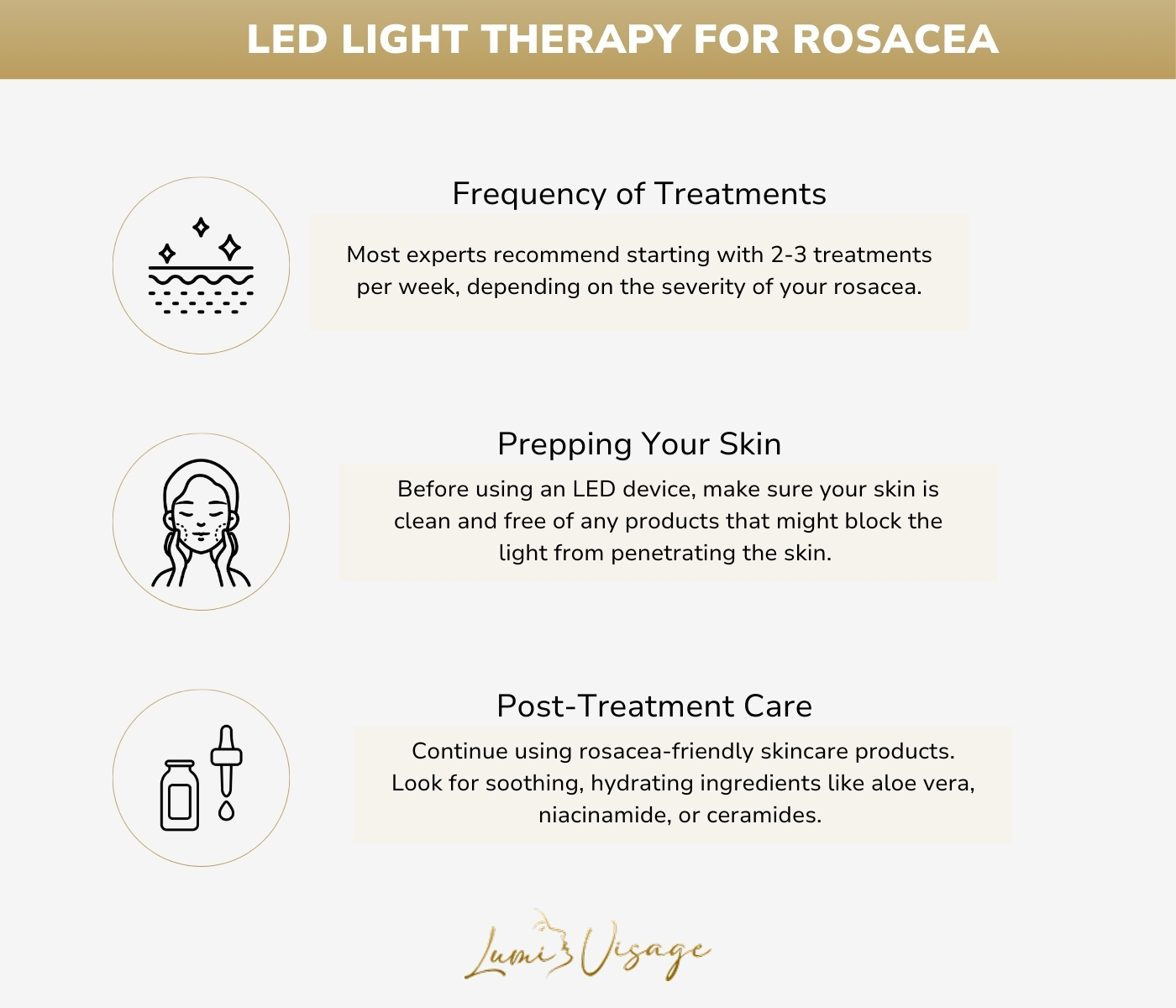
Most experts recommend starting with 2-3 treatments per week, depending on the severity of your rosacea. Each session usually lasts around 10-20 minutes, making it a quick and convenient treatment option.
2. Prepping Your Skin
Before using an LED device, make sure your skin is clean and free of any products that might block the light from penetrating the skin.
Gentle cleansing is essential for preventing further irritation.
3. Post-Treatment Care
After your LED session, it’s important to continue using rosacea-friendly skincare products. Look for soothing, hydrating ingredients like aloe vera, niacinamide, or ceramides.
And don’t forget sunscreen—sun exposure is a major trigger for rosacea, and using SPF 30 or higher daily is crucial to prevent flare-ups.
At-Home vs. In-Office LED Treatments
Both at-home LED devices and professional in-office treatments can be effective for managing rosacea. The main difference lies in the intensity of the light and how quickly you might see results.
At-Home Devices
These are generally less powerful than the machines used in dermatology clinics, but they’re convenient and affordable.
You can use them regularly to maintain results and keep flare-ups under control.
While they may take longer to show noticeable improvements, consistent use can still yield amazing benefits. Most people begin to notice improvements in redness and irritation after 4-6 weeks of consistent use.
In-Office Treatments
Professional treatments tend to be more powerful, meaning you may see faster results.
However, they can be costly and require multiple sessions, which may not be practical for everyone.
Frequently Asked Questions
Can LED light therapy be used during a rosacea flare-up?
Yes, LED light therapy is safe to use during a rosacea flare-up. In fact, red light therapy can help reduce inflammation and calm the skin during an active flare-up, making it an excellent option for immediate relief.
How often should I use LED light therapy for long-term rosacea management?
For long-term management, it’s recommended to use LED light therapy 2-3 times a week. Once your symptoms are under control, you can reduce sessions to once a week to maintain results.
Does LED light therapy for rosacea have any side effects?
LED light therapy is generally very safe with minimal side effects. In rare cases, some users may experience mild dryness or temporary redness after treatment, but these effects are typically short-lived.
Can LED light therapy prevent future rosacea flare-ups?
While LED therapy can’t prevent flare-ups entirely, regular use can help keep symptoms under control by reducing inflammation and calming the skin, making future flare-ups less severe.
Conclusion
When it comes to managing rosacea, red light therapy is your top choice for reducing inflammation, soothing redness, and promoting healthier skin.
It penetrates deeply to heal from within while being gentle enough for sensitive skin. If you’re dealing with acne-prone rosacea, blue light is a great addition to combat breakouts, while green light offers extra calming for irritation and redness.
Consistency is key, and combining LED therapy with a gentle skincare routine can make all the difference.
Ready to calm your rosacea and restore your skin’s balance? Try our 7-color LED face mask and start experiencing relief from redness and irritation.