



Botox smooths wrinkles, but what comes next? Healing and maintenance matter just as much as the injection itself.
That’s where red light therapy comes in. It’s known for boosting collagen, reducing inflammation, and speeding up recovery.
Here’s what you need to know to get the best results while avoiding common mistakes.
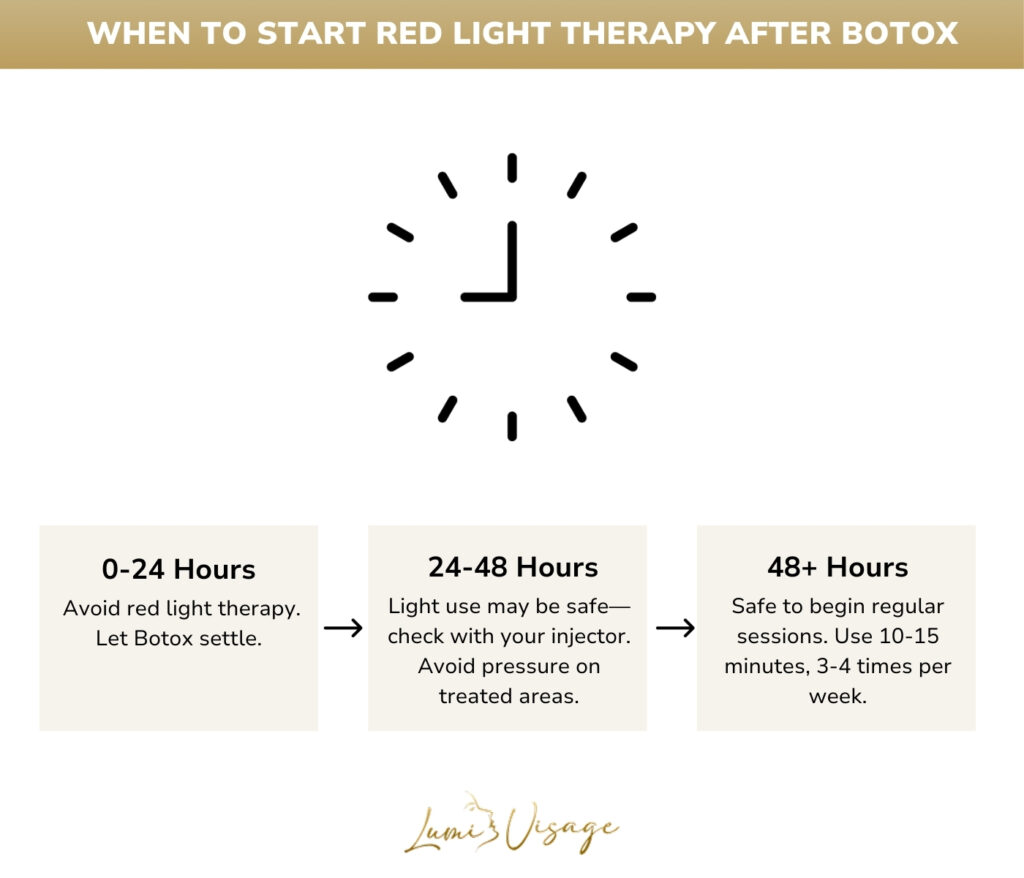
- Wait 24-48 hours after Botox before using red light therapy.
- RLT may reduce swelling, bruising, and support collagen production.
- Avoid pressing on treated areas to prevent Botox from migrating.
- Always consult your injector before adding RLT to your routine.
Can You Use Red Light Therapy After Botox?
Yes, but not immediately after the procedure. Botox needs time to settle into the muscles before any external treatments are applied.
When to Start Red Light Therapy After Botox
Most professionals recommend waiting 24 to 48 hours before using red light therapy. This ensures the Botox has fully settled and prevents any unintended effects on the treatment area.
If you’re unsure, check with your injector before starting RLT.
How Red Light Therapy Benefits the Skin After Botox
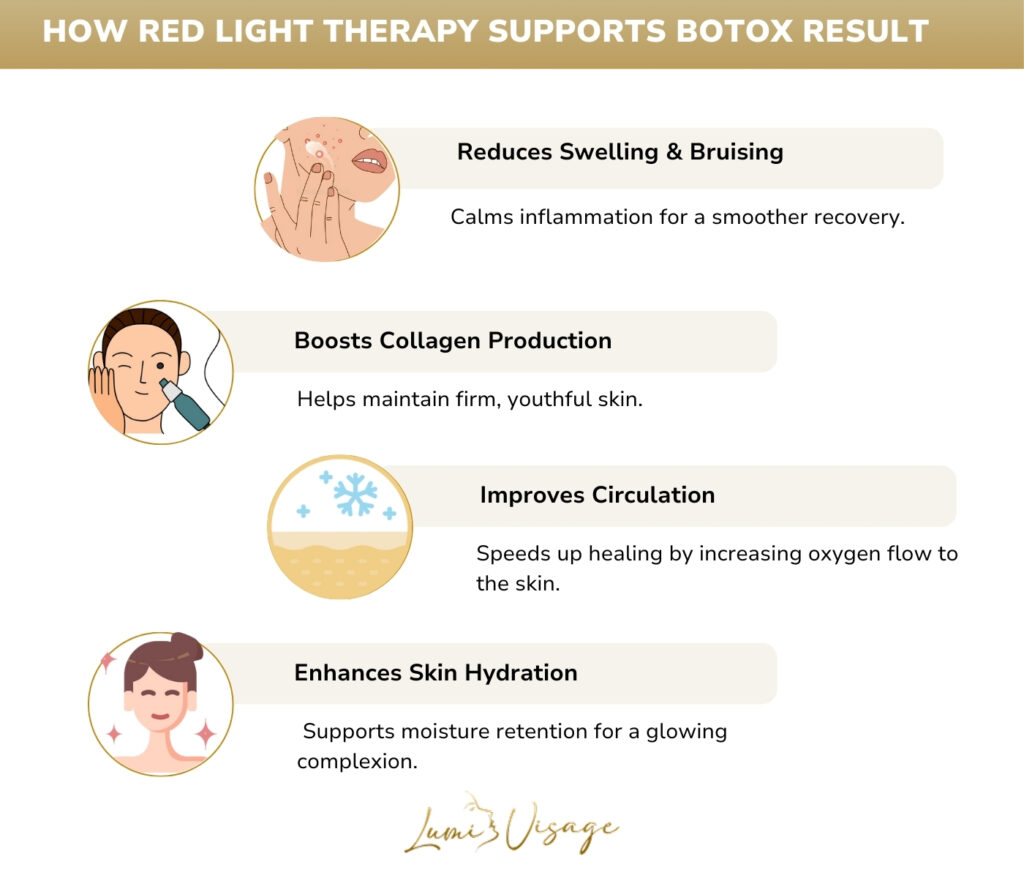
Helps Reduce Swelling and Bruising
Botox injections can leave behind minor swelling and bruising. RLT increases circulation and reduces inflammation, helping the skin recover faster.
Supports Collagen Production for Smoother Skin
Botox relaxes wrinkles, but it doesn’t improve skin texture. RLT stimulates collagen and elastin, making the skin firmer and more even over time.
Enhances Skin Hydration and Glow
Red light therapy improves skin barrier function, allowing it to retain moisture better. This helps Botox-treated skin stay plump and radiant.
Extends the Longevity of Botox Results
By keeping skin healthy and resilient, RLT may help prolong Botox results.
While Botox typically lasts 3 to 4 months, regular RLT sessions support overall skin maintenance.
How to Use Red Light Therapy Safely After Botox
If you’re planning to add RLT to your routine after Botox, here’s how to do it safely:
1. Choose the Right Device
Not all red light therapy devices are created equal. Look for:
- LED panels, masks, or handheld devices depending on your needs
- Wavelengths between 630-850nm (ideal for skin health)
- FDA-cleared or clinically tested devices
2. Follow a Gentle Schedule
Start with 10-15 minute sessions, 3-4 times per week. Avoid pressing the device directly onto the treated area in the first few days.
3. Pair RLT with a Solid Skincare Routine
To maximize results, combine red light therapy with a Botox-friendly skincare routine:
- Sun Protection: Apply SPF 30+ daily to protect collagen and prevent wrinkles
- Gentle Cleansing: Use a mild cleanser to avoid irritation.
- Hydration: Look for products with hyaluronic acid to keep skin plump.
4. Stay Consistent
Red light therapy isn’t a one-time fix. Regular use leads to long-term improvements in skin tone, elasticity, and overall health.
Precautions to Take After Botox and Red Light Therapy
While both treatments are safe, there are a few things to keep in mind:
1. Avoid Heat Immediately After Botox
Saunas, steam rooms, and hot yoga can cause Botox to spread to unintended areas.
Red light therapy is safe after 24-48 hours, but always start with lower settings to prevent overheating.
2. Don’t Massage or Apply Pressure to the Treated Area
For at least 24 hours, avoid rubbing or pressing on Botox-treated areas. If using a handheld RLT device, keep it at a slight distance.
3. Be Mindful of Other Skincare Treatments
Avoid chemical peels, microdermabrasion, or strong exfoliants for at least a week after Botox. These treatments, combined with RLT, could cause irritation.
4. Watch for Unusual Reactions
Mild redness after RLT is normal, but if you experience prolonged irritation, take a break and consult a professional.
Who Should Avoid Red Light Therapy After Botox?
While most people tolerate red light therapy well, there are a few exceptions. You may want to avoid it if you:
- Have a history of light sensitivity or take medications that increase photosensitivity.
- Have active skin infections or conditions like rosacea that flare up with heat.
- Are under a doctor’s recommendation to avoid LED treatments post-Botox.
If in doubt, ask your provider before starting RLT.
Want to Heal Faster & Keep Your Botox Looking Flawless?
Red light therapy speeds up recovery and boosts your glow

Frequently Asked Questions
Can red light therapy make Botox wear off faster?
No, RLT doesn’t break down Botox. However, applying too much pressure to the treated area might.
Is it better to use red light therapy before or after Botox?
After. Using RLT beforehand won’t interfere, but post-treatment can help with healing and inflammation.
Can I use an LED face mask after Botox?
Yes, but wait 24-48 hours and ensure the mask sits lightly on your skin.
Will red light therapy help if my Botox results look uneven?
RLT improves skin health, but uneven Botox results usually need a touch-up from your injector.
Can I combine red light therapy with other post-Botox treatments?
Yes, but avoid facials, massages, or heat-based treatments for at least a few days.
Does red light therapy help Botox last longer?
Indirectly, yes—by keeping skin healthy and collagen levels strong, it supports overall skin quality.
Conclusion
Red light therapy can be a great addition to your post-Botox routine—but timing matters. Wait 24-48 hours before your first session to avoid interfering with the injection.
Once it’s safe to use, RLT may help reduce swelling, speed up healing, and support overall skin health. Always check with your injector before adding new treatments.
Looking for an easy way to boost your results? Our 7-Color LED Face Mask delivers professional-grade red light therapy at home. Order yours today and give your skin the care it deserves.