

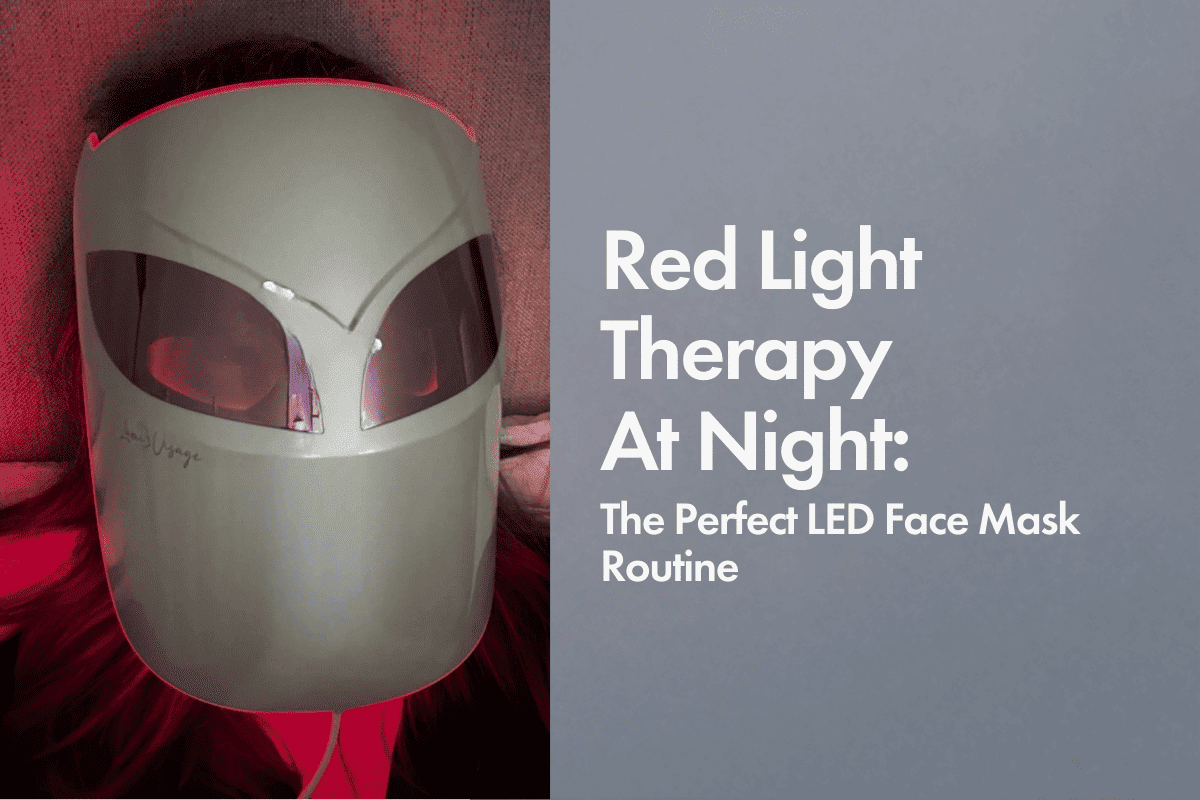

Skincare doesn’t stop when you sleep—that’s when the real work begins. Your skin repairs itself overnight, and red light therapy at night gives it the boost it needs.
It stimulates collagen, smooths fine lines, and even helps you unwind before bed.
The trick? Using it at the right time, in the right way.
Here’s how to build the perfect LED face mask routine for better skin while you sleep.
- Red light therapy boosts collagen, improves elasticity, and supports overnight skin repair.
- Using it before bed aligns with the skin’s natural healing cycle for better results.
- Proper skincare after LED therapy enhances absorption and maximizes benefits.
- Consistency is key—expect visible improvements after 4-6 weeks of regular use.
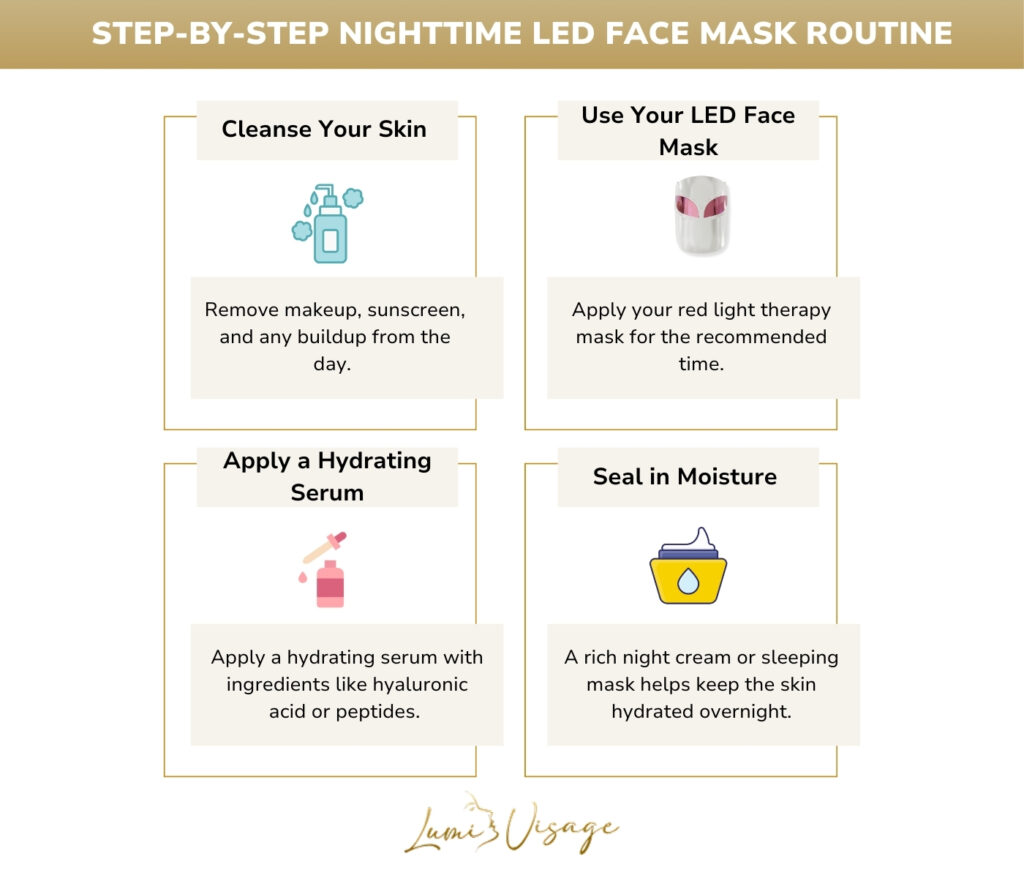
Step-by-Step Nighttime LED Face Mask Routine
To get the most out of red light therapy at night, follow a structured routine.
Consistency is key, and these simple steps will help you build a habit that delivers real results:
Step 1: Cleanse Your Skin Thoroughly
Before using your LED face mask, remove makeup, sunscreen, and any buildup from the day.
A gentle cleanser is best, especially if you’re using other active skincare ingredients. Cleansing ensures the red light can penetrate the skin effectively.
Step 2: Use Your LED Face Mask
Apply your red light therapy mask for the recommended time (typically 10-20 minutes).
Relax while the light works on your skin. Many people choose to lie down, listen to music, or practice deep breathing to wind down before bed.
Step 3: Apply a Hydrating Serum
After removing the mask, apply a hydrating serum with ingredients like hyaluronic acid or peptides.
These ingredients help lock in moisture and work well with red light therapy’s collagen-boosting effects.
Step 4: Seal in Moisture with a Night Cream
A rich night cream or sleeping mask helps keep the skin hydrated overnight. Look for products with ceramides, niacinamide, or squalane to support the skin barrier.
Step 5: Prioritize Sleep
Since red light therapy supports relaxation, take advantage of the benefits by sticking to a consistent bedtime.
Avoid screens, keep lighting dim, and let your skin and body repair while you sleep.
Benefits of Red Light Therapy
Red light therapy isn’t just a trendy skincare treatment—it’s supported by research. Used consistently, it promotes skin rejuvenation and may even help with relaxation before bed.
Skin Rejuvenation
Red light therapy penetrates the skin at a cellular level, triggering processes that improve elasticity and repair damage.
Some of the biggest benefits include:
- Boosting collagen production – Red light stimulates fibroblasts, the cells responsible for producing collagen and elastin. More collagen means firmer, smoother skin.
- Reducing fine lines and wrinkles – By increasing skin thickness and elasticity, red light helps soften lines over time.
- Improving circulation – Better blood flow means more oxygen and nutrients are delivered to the skin, leading to a natural glow.
- Calming inflammation – Red light has been shown to reduce redness and irritation, making it beneficial for sensitive or acne-prone skin.
Enhanced Sleep Quality
Another surprising benefit of red light therapy at night is its potential effect on sleep.
Unlike blue light (which can interfere with melatonin production), red light helps regulate the body’s circadian rhythm. Exposure before bed may promote relaxation, making it easier to fall and stay asleep.
Why Nighttime Application?
While red light therapy is beneficial at any time of day, using it at night offers a few key advantages:
Alignment with Natural Healing Processes
Your skin does most of its repair work while you sleep. During deep sleep stages, cell turnover increases, collagen production peaks, and the body removes toxins.
Applying red light therapy at night supports this process by:
- Prepping the skin for repair
- Enhancing absorption of skincare products
- Encouraging faster cell regeneration
Improved Absorption of Skincare Products
After red light therapy, the skin is more receptive to active ingredients.
This makes it an ideal time to apply serums and moisturizers, as the treatment primes the skin for maximum absorption.
Choosing the Right LED Face Mask
If you’re investing in an LED face mask, make sure it meets the right standards for effectiveness and safety.
Wavelength Specifications
For skin rejuvenation, red light between 630-660nm is ideal.
Some masks also offer near-infrared light (830nm), which penetrates deeper and aids in healing and circulation.
Safety and Comfort Features
Look for a mask that is:
- FDA-cleared or dermatologist-approved for safety
- Comfortable and lightweight so you’ll actually use it regularly
- Cordless or has an adjustable fit for convenience
A good mask should be easy to use and fit into your routine without feeling like a chore.
Tired Of Waking Up To Dull, Tired Skin?
Red light therapy repairs, firms, and restores while you sleep

Precautions and Considerations
While red light therapy at night is safe for most people, there are a few things to keep in mind:
Consistency is Key
Results don’t happen overnight. It typically takes 4-6 weeks of regular use to notice improvements in skin texture and tone.
Pairing with Other Skincare Treatments
If you use retinoids, acids, or exfoliants, introduce red light therapy gradually.
Some active ingredients can make the skin more sensitive, so avoid using them immediately before or after treatment.A good mask should be easy to use and fit into your routine without feeling like a chore.
Consult with a Professional
If you have a history of skin conditions like melasma, photosensitivity, or are pregnant, check with a dermatologist before starting.
While red light therapy is generally safe, certain conditions may require modifications.
Frequently Asked Questions
Can I use red light therapy every night?
Yes, most LED masks are safe for nightly use, but start with 3-5 times a week.
How soon before bed should I use my LED mask?
Use it 15-30 minutes before bed to maximize skin benefits and promote relaxation.
Does red light therapy work on the neck and chest?
Absolutely! Many people extend treatments to these areas to maintain a youthful look.
Can I wear an LED mask while doing other tasks?
Some masks are hands-free, but for best results, relax and let the light work undisturbed
Will red light therapy interfere with my retinol routine?
It’s best to apply retinol after therapy or on alternate nights to avoid irritation.
What’s the difference between red and near-infrared light for skin?
Red light targets the surface for collagen production, while near-infrared penetrates deeper for healing.
Conclusion
Red light therapy at night works with your skin’s natural repair cycle, making it one of the simplest ways to boost collagen, smooth fine lines, and wake up with healthier-looking skin.
Used consistently, it helps improve elasticity, enhances skincare absorption, and even promotes better sleep. The key is using the right LED mask with the correct wavelengths for real results.
If you’re ready to upgrade your nighttime routine, our 7-Color LED Face Mask delivers professional-grade red and near-infrared light therapy from the comfort of home. Get the benefits of firmer, brighter skin while you sleep.
Shop now and start seeing the difference.