


Your skin tells a story—dark spots, redness, and irritation are just unwelcome plot twists.
But green light therapy is like an editor, smoothing out the rough patches and bringing balance back to your skin.
It fades discoloration, calms inflammation, and even helps with migraines—all without harsh treatments or downtime.
If you’re ready for a fresh chapter in your skincare routine, here’s how to use green light therapy for the best results.
How to Use Green Light Therapy
Green light therapy works at the skin’s surface to fade dark spots, calm redness, and promote relaxation.
Unlike red or blue light, it targets pigmentation by slowing melanin production, helping to even out skin tone.
Here’s how to make the most out of it:
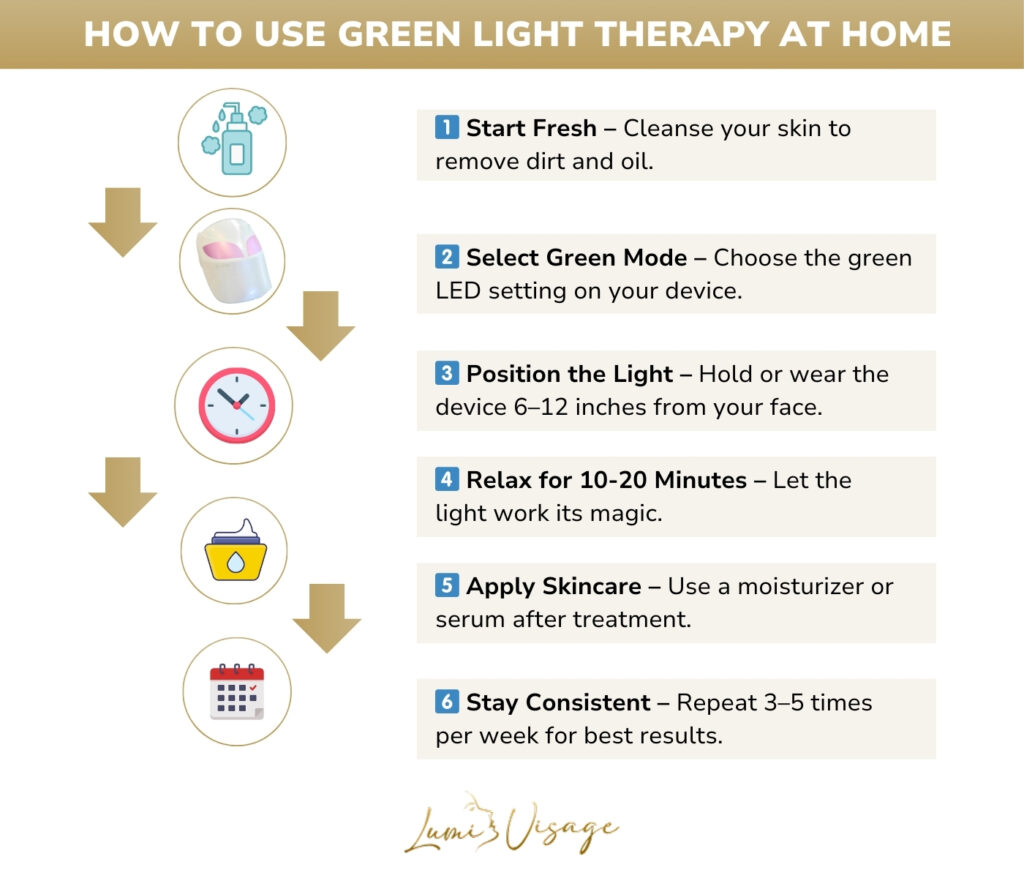
Step 1: Preparation
Before starting a green light therapy session, it’s important to prep your skin or environment properly.
- For skincare treatments: Wash your face with a gentle cleanser to remove oil and dirt.
- For migraine relief: Choose a dim, quiet room to minimize distractions.
- For relaxation: Reduce screen exposure before your session for better results.
Step 2: Using the Device
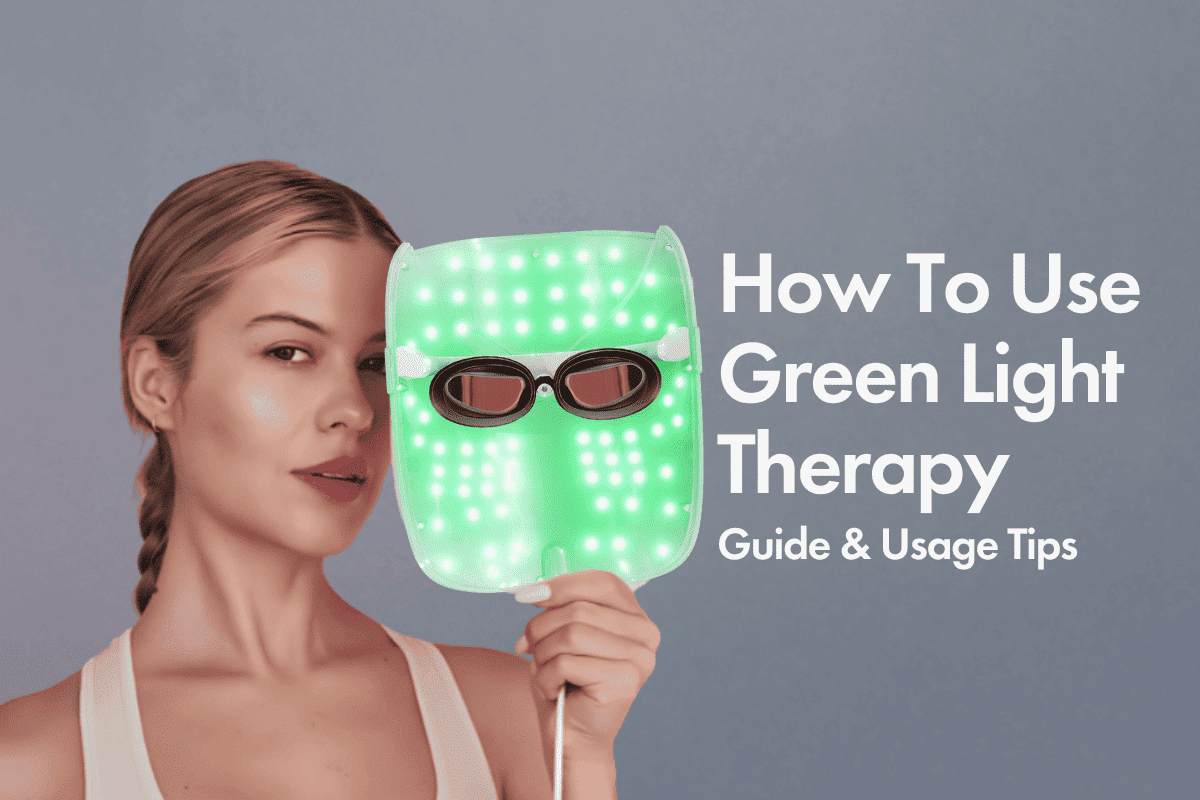
Green light therapy can be delivered through masks, handheld devices, or larger LED panels.
Follow these guidelines for the best experience:
- Hold or position the device 6-12 inches away from your face or treatment area.
- Use for 10-20 minutes per session, depending on your device’s intensity.
- Avoid looking directly into the light, even if it’s not harmful. Wearing protective goggles can help reduce eye strain.
Step 3: Post-Treatment Care
After your session, taking care of your skin can maximize benefits.
- Apply a hydrating serum or moisturizer to lock in moisture.
- Use sunscreen if applying during the day, as light-exposed skin may be more sensitive.
- Stay consistent, as noticeable results often take several weeks.
Benefits of Green Light Therapy
Skin Benefits: Hyperpigmentation and Redness Reduction
One of the biggest advantages of green light therapy is its ability to target pigmentation issues.
Whether you’re dealing with age spots, sun damage, or post-inflammatory hyperpigmentation, regular sessions can help fade discoloration over time.
- Slows excess melanin production to prevent new dark spots.
- Breaks down existing pigmentation, making it less noticeable.
- Calms redness and irritation, making it great for sensitive skin.
Pain Management: Migraine and Fibromyalgia Relief
Research suggests that green light exposure can help reduce migraine frequency and intensity.
Unlike harsh artificial lighting, which can trigger headaches, green wavelengths create a soothing effect on the nervous system.
- May reduce migraine severity by promoting relaxation.
- Can help with fibromyalgia pain, though more studies are needed.
- Eases eye strain and light sensitivity, especially for screen-heavy lifestyles.
Mood and Sleep Support
While not as well-known as red or blue light for mood regulation, green light therapy has shown potential in supporting relaxation and sleep.
Some studies suggest it may help balance circadian rhythms, making it easier to fall asleep.
- Promotes a sense of calm, reducing stress levels.
- May help regulate sleep cycles, especially when used before bed.
- Gentler on the eyes than blue light, making it a better option for evening use.
Choosing the Right Green Light Therapy Device
| Feature | Green Light Therapy | Red Light Therapy | Blue Light Therapy |
|---|---|---|---|
| Best For | Dark spots & redness | Wrinkles & healing | Acne & oil control |
| How It Works | Slows melanin & calms skin | Boosts collagen & repairs cells | Kills acne bacteria |
| Who Should Use It? | Sensitive or uneven skin | Aging or damaged skin | Oily, acne-prone skin |
Types of Devices
There are several types of green light therapy devices, each suited for different needs:
- LED face masks: Ideal for skincare-focused treatments. Covers the entire face for even exposure.
- Handheld devices: Best for targeted treatment of specific areas like dark spots or tension points.
- Larger LED panels: Suitable for full-body relaxation or migraine relief.
What to Look For in a Green Light Therapy Device
Not all LED devices are created equal. When shopping for one, consider:
- Wavelength Range: Look for devices emitting light between 515-550 nm for maximum effectiveness.
- Adjustable Intensity: Some devices allow you to change light intensity for comfort.
- Certified Safety Features: Ensure the device is FDA-cleared or dermatologist-recommended for skin safety.
Tired Of Uneven Skin And Lingering Redness?
Green light therapy fades dark spots and calms irritation

Safety and Precautions
Green light therapy is generally safe for most users, but like any treatment, a few precautions can help ensure a smooth experience.
Potential Side Effects
- Mild skin sensitivity: Some people experience slight redness after sessions, which usually fades quickly.
- Eye strain: Extended exposure may cause temporary discomfort, so protective eyewear is recommended.
- Not a replacement for medical treatments: While helpful, it should be used as part of a broader skincare or wellness routine.
Who Should Avoid Green Light Therapy?
While safe for most, those with the following conditions should consult a doctor before use:
- Photosensitivity disorders
- History of seizures triggered by light
- Certain skin conditions that worsen with light exposure
Integrating Green Light Therapy into Your Routine
Adding green light therapy to your routine doesn’t have to be complicated. A few adjustments can make it easy to maintain consistency and see results.
Pairing with Other Treatments
- For hyperpigmentation: Combine with Vitamin C serums to enhance brightening effects.
- For acne-prone skin: Alternate with blue light therapy to keep breakouts in check.
- For relaxation: Use alongside meditation or deep breathing exercises for a calming effect.
Tracking Progress
Keeping track of your results can help determine effectiveness. Try:
- Taking weekly photos to monitor skin changes.
- Logging migraine frequency to see if symptoms improve.
- Adjusting session length based on how your skin responds.
Frequently Asked Questions
Can green light therapy help with under-eye circles?
Yes, it may reduce dark circles by improving circulation and reducing pigmentation over time.
Is green light therapy safe for daily use?
Most people can use it daily for 10–20 minutes, but consistency over time matters more than frequency.
Does green light therapy help with rosacea?
It may help calm redness, but those with rosacea should start with shorter sessions to test sensitivity.
Can I use green light therapy after chemical peels or laser treatments?
Yes, but wait until your skin has fully healed to avoid irritation. Always check with your provider.
Conclusion
Green light therapy is a simple, non-invasive way to tackle hyperpigmentation, redness, and even migraines. It works by slowing melanin production, calming inflammation, and promoting relaxation—all without harsh treatments or downtime.
Whether you’re looking for clearer skin or a way to ease tension, consistency is key to seeing results.
Want to bring professional-grade green light therapy into your routine? Our 7-Color LED Face Mask gives you access to multiple light settings, including green, so you can target different skin concerns in one device.
Take the guesswork out of your skincare—order yours today!