

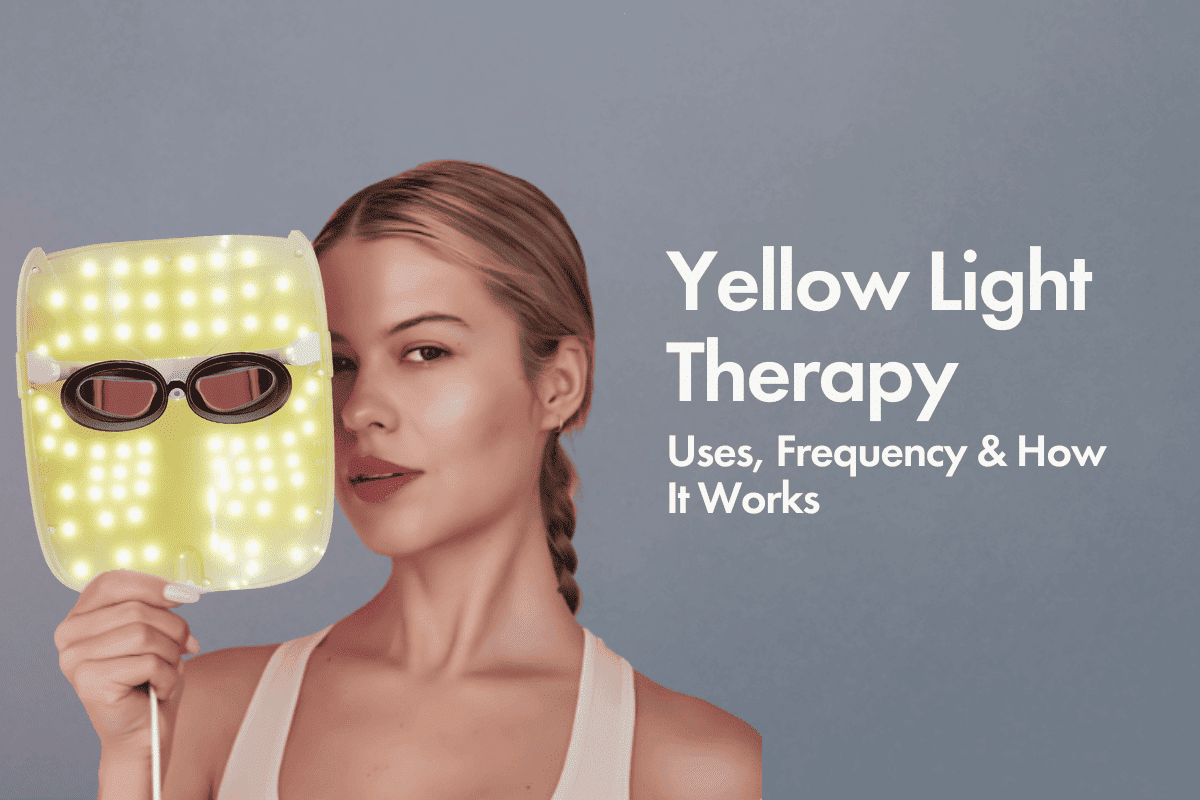

Red, blue, and infrared light therapies get all the attention, but yellow light therapy is taking its rightful place in the spotlight.
Whether you’re dealing with rosacea, post-treatment sensitivity, or dull skin, this gentle treatment might be exactly what you need.
Here’s how it works, how often to use it, and why it deserves a spot in your routine.
- Yellow light therapy calms redness, improves circulation, and supports skin healing.
- It works by increasing oxygen flow, boosting lymphatic drainage, and reducing inflammation.
- Ideal for rosacea, post-treatment recovery, and brightening dull skin.
- Safe for sensitive skin with minimal side effects when used correctly.
What Is Yellow Light Therapy?
Yellow light therapy, also known as amber light therapy, uses wavelengths between 570nm and 590nm to penetrate the skin at a shallow depth.
Unlike deeper-penetrating red or infrared light, yellow light is ideal for targeting surface-level skin concerns.
How It Compares to Other Light Therapies
- Red Light (620-700nm): Boosts collagen, improves elasticity, and reduces wrinkles.
- Blue Light (400-470nm): Kills acne-causing bacteria and regulates oil production.
- Yellow Light (570-590nm): Calms inflammation, promotes healing, and reduces redness.
Because it doesn’t generate heat or cause irritation, yellow light therapy is ideal for sensitive or reactive skin. It’s commonly used after cosmetic treatments to speed up healing and minimize redness.
| Light Therapy | Main Benefit | Best For |
|---|---|---|
| 🔴 Red Light | Boosts collagen & reduces wrinkles | Anti-aging, fine lines |
| 🔵 Blue Light | Kills acne-causing bacteria | Acne, breakouts |
| 🟡 Yellow Light | Reduces redness & boosts healing | Rosacea, inflammation |
Uses of Yellow Light Therapy
Yellow light therapy has a range of applications, from skincare treatments to wellness benefits.
Its ability to reduce redness, improve circulation, and support healing makes it a versatile option for different concerns.
1. Skincare & Dermatology
- Rosacea & Redness Reduction: Helps calm inflamed skin and minimize flushing.
- Post-Treatment Healing: Speeds up recovery after chemical peels, laser treatments, and microneedling.
- Sun Damage Repair: Reduces the appearance of sunspots and uneven pigmentation.
2. Wound Healing & Recovery
- Bruising & Swelling: Supports lymphatic drainage, helping the body recover from minor injuries.
- Scar Reduction: Encourages skin renewal, which may help soften the appearance of scars.
3. Mood & Sleep Regulation
- Seasonal Affective Disorder (SAD): Some studies suggest yellow light may help improve mood and combat winter blues.
- Sleep Cycle Support: May help regulate circadian rhythms by mimicking natural sunlight.
Because it’s non-invasive and has minimal side effects, yellow light therapy is safe for frequent use and can be incorporated into both medical and cosmetic treatments.
Recommended Frequency of Treatment
How often you should use yellow light therapy depends on your skin concerns and whether you’re using a professional or at-home device.
Professional Yellow Light Therapy
- Frequency: 1-2 times per week
- Duration: 15-30 minutes per session
- Best for: Post-treatment healing, severe redness, or medical conditions like rosacea
At-Home Yellow Light Therapy
- Frequency: 3-5 times per week
- Duration: 10-20 minutes per session
- Best for: General skin maintenance, mild redness, and brightening
Results build over time, so consistency is key. Most people start seeing noticeable improvements in 2-4 weeks with regular use.
How Does Yellow Light Therapy Work?

Yellow light therapy works by stimulating skin cells and increasing circulation.
When the skin absorbs these wavelengths, it triggers biological processes that help with repair and renewal.
Key Effects of Yellow Light Therapy:
- Boosts Lymphatic Drainage: Helps remove toxins and reduce puffiness.
- Increases Oxygen Flow: Improves blood circulation for healthier skin.
- Reduces Redness and Sensitivity: Ideal for rosacea, sun damage, and post-treatment recovery.
- Speeds Up Healing: Supports recovery after laser treatments or microneedling.
Unlike some other treatments, yellow light therapy doesn’t cause peeling, flaking, or sensitivity. It’s a non-invasive way to calm and support the skin without downtime.
Potential Side Effects & Precautions
Yellow light therapy is generally safe and well-tolerated, but a few precautions apply.
Possible Mild Reactions:
- Temporary redness (rare)
- Mild warmth during treatment
- Increased sensitivity if used too frequently
Who Should Avoid It?
- People with Photosensitivity: Those sensitive to light (due to medication or medical conditions) should check with a doctor first.
- Individuals with Active Skin Infections: Light therapy isn’t suitable for treating bacterial or fungal infections.
For the best experience, follow manufacturer guidelines and avoid overuse, as excessive sessions won’t speed up results.
Choosing the Right Device
If you’re considering yellow light therapy at home, choosing the right device matters.
Key Features to Look For:
- Wavelength Range: 570-590nm for optimal results.
- FDA Clearance: Ensures safety and effectiveness.
- Treatment Timer: Prevents overuse and simplifies sessions.
- Hands-Free vs. Handheld: Hands-free masks are convenient, while handheld devices target specific areas.
High-quality LED masks and panels often provide better, more consistent results than cheap alternatives. Investing in a well-reviewed, reputable brand can make a significant difference.
Struggling With Redness or Skin Sensitivity That Nothing Works For?
Yellow Light Therapy calms, heals, and evens out your skin

Frequently Asked Questions
Can yellow light therapy help with under-eye circles?
Yes, it may reduce dark circles caused by poor circulation. Yellow light increases blood flow, which can brighten the under-eye area and reduce puffiness over time.
Is yellow light therapy safe for pregnant or breastfeeding women?
There’s no known risk, but studies on light therapy during pregnancy are limited. It’s always best to check with a doctor before starting any new treatment.
Can I combine yellow light therapy with other LED colors?
Yes! Many devices offer multi-light options. Using yellow light alongside red or blue therapy can target multiple skin concerns in one routine.
Does yellow light therapy help with sunburn recovery?
It can help reduce redness and inflammation from mild sunburns, but it won’t replace sunscreen or proper after-sun care like aloe vera and hydration.
Can I use yellow light therapy on my scalp?
Yes, some people use it to improve circulation in the scalp, which may support overall hair health. However, it’s not proven to treat hair loss like red light therapy.
Does yellow light therapy work on sensitive skin?
Absolutely. It’s one of the gentlest forms of light therapy, making it ideal for people with rosacea, eczema, or highly reactive skin.
Conclusion
Yellow light therapy is a simple, effective way to calm redness, speed up healing, and improve skin tone.
Whether you’re dealing with rosacea, post-treatment sensitivity, or dullness, regular treatments can make a real difference. It’s gentle, non-invasive, and safe for all skin types, making it an easy addition to any routine.
For the best results at home, try the Lumi Visage 7-Color LED Face Mask. With multiple light settings, including yellow light therapy, it’s designed to target a variety of skin concerns in one device. Get yours today and start seeing the benefits firsthand!