


Psoriasis can feel like an unpredictable storm, not just on your skin, but in your life.
Light therapy might be your answer – it’s a proven, science-backed treatment that’s giving people back control, one session at a time.
If you’re tired of feeling like your skin is running the show, this guide will take you beyond the basics, unlocking the power of light therapy to help you own your psoriasis treatment with confidence and clarity.
- Six different light therapy types are available – from standard UVB to newer LED options.
- Most patients see improvement within 4-6 weeks with 2-3 weekly sessions.
- Treatment requires bare skin, protective eyewear, and post-session moisturizing to maximize benefits and prevent irritation.
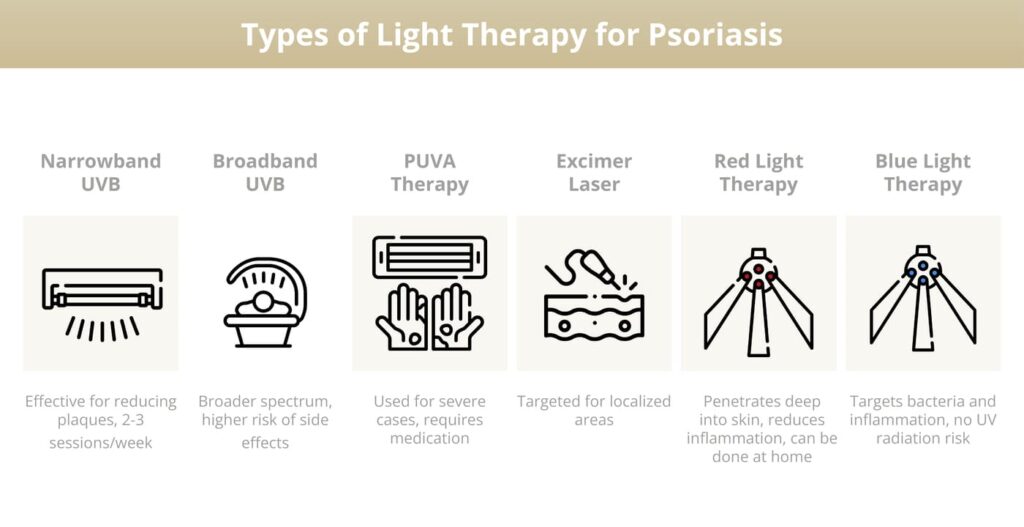
Types of Light Therapy for Psoriasis
Light therapy, or phototherapy, is a powerful treatment that uses targeted UV light to ease psoriasis symptoms.
By exposing the skin to controlled doses of UV light, light therapy slows the rapid skin cell production behind psoriasis plaques and reduces inflammation. This non-invasive treatment has been a trusted solution for decades, offering significant relief for many.
When it comes to light therapy, different methods are used depending on the severity of psoriasis and the patient’s needs.
Here’s a breakdown of the most common types:
Narrowband UVB Therapy
This is one of the most widely used forms of phototherapy.
Narrowband UVB involves using a specific wavelength of UV light (311-313 nanometers), which has proven to be particularly effective for psoriasis.
Treatments are typically administered two to three times a week. Over time, this therapy can lead to a reduction in plaques and prolonged periods of remission.
Broadband UVB Therapy
Broadband UVB therapy uses a broader spectrum of UV light compared to narrowband. While less commonly prescribed today, it can still be effective for certain cases.
However, it carries a slightly higher risk of side effects like sunburn because of the wider range of UV wavelengths.
PUVA Therapy (Psoralen + UVA)
PUVA combines UVA light with a medication called psoralen, which makes the skin more sensitive to the light.
This method is often used for severe cases of psoriasis that don’t respond to other treatments.
While PUVA can be highly effective, it requires careful monitoring due to an increased risk of long-term skin damage.
Excimer Laser Therapy
Excimer laser therapy is a targeted option that uses concentrated UVB light to treat specific areas of the skin.
This method is ideal for patients with mild to moderate psoriasis in localized areas, such as the elbows or knees.
LED Light Therapy
While UV light therapy is a well-known solution for psoriasis, other light therapies like red and blue light are gaining attention for their potential benefits.
- Red Light Therapy: This treatment uses low-level red wavelengths to penetrate deeper into the skin, promoting healing and reducing inflammation. It’s often used for improving skin texture, and studies suggest it may help manage psoriasis symptoms by calming the immune response and promoting cell regeneration.
- Blue Light Therapy: Blue light targets the bacteria and inflammation that can contribute to psoriasis flare-ups. It has been shown to reduce plaque formation and help heal the skin without the risk of UV radiation.
Both red and blue light therapies offer a gentler approach to managing psoriasis and may be a good alternative for those looking to explore non-UV options.
For added convenience, at-home LED face masks provide an accessible way to incorporate these therapies into your daily routine.
Who Is a Candidate for Light Therapy?
Light therapy isn’t suitable for everyone.
Candidates are usually individuals with moderate to severe psoriasis who haven’t achieved sufficient relief from topical treatments or other methods. That said, certain factors may rule out phototherapy, such as a history of skin cancer or conditions that make the skin more sensitive to UV light.
Always consult a healthcare provider to determine if this treatment is right for you.
Benefits Light Therapy for Psoriasis
Light therapy offers several advantages, making it a preferred choice for many patients:
- Symptom Relief: Regular sessions can lead to significant improvements in scaling, redness, and itching.
- Non-Invasive: Unlike systemic treatments, which may involve oral medications or injections, phototherapy works externally, directly on the skin.
- Long-Lasting Results: Many patients experience extended periods of remission after completing a course of treatment.
It’s also worth noting that light therapy is an option for people who may not respond well to topical creams or prefer to avoid medications with systemic side effects.
Tired Of Dealing With Psoriasis Flare-Ups?
LED light therapy reduces inflammation for smoother skin
SHOP NOW – GET $100 OFF
Risks and Considerations
While light therapy is generally safe, it’s not without its risks. Short-term side effects include skin redness, itching, and mild irritation, similar to a mild sunburn.
Long-term risks, particularly with prolonged or excessive exposure, include premature aging of the skin and an increased risk of skin cancer.
To minimize these risks, treatments should always be conducted under the guidance of a healthcare professional. Protective eyewear is also essential to shield the eyes from UV damage during sessions.
Preparing For Light Therapy Sessions
Getting the most out of your phototherapy sessions requires a bit of preparation. Before your appointment, make sure to:
Follow Skincare Advice
Avoid applying lotions or creams unless instructed otherwise, as these can affect how your skin absorbs UV light.
Additionally, some LED light therapy devices may require bare skin to maximize the effectiveness of the specific wavelengths.
Protect Sensitive Areas
Areas not affected by psoriasis, like the face or genitals, are typically covered during treatment to prevent unnecessary UV exposure.
Similarly, LED light therapies often include protective measures to shield sensitive areas from unintended exposure.
During the session, protective goggles are provided to safeguard your eyes. Each session typically lasts only a few minutes, though the exact duration depends on your treatment plan.
What To Expect During Treatment
The first session is usually brief, with the intensity of the UV light gradually increasing over time. This helps the skin acclimate and reduces the risk of side effects.
Most patients undergo treatment two to three times a week for several months. As sessions progress, many notice a gradual reduction in symptoms.
It’s important to stick to the schedule recommended by your dermatologist, as consistency is key for effective results.
Post-Treatment Care
After each session, taking care of your skin is crucial. Mild redness or itching is common, but these symptoms usually subside quickly. Moisturizers can help soothe irritation, but avoid any products that your doctor hasn’t approved.
LED Aftercare Tip: Using an LED-specific post-treatment serum, if recommended, can help enhance the benefits of light therapy.
It’s also important to limit additional sun exposure to prevent overloading your skin with UV rays. Wearing sunscreen and protective clothing is a good habit to maintain.
Combining Light Therapy with Other Treatments
For some patients, light therapy works best when paired with other treatments. For example, topical steroids or vitamin D analogs can enhance results when applied between sessions.
Combination therapies can reduce the overall number of phototherapy sessions needed, which may lower the risk of long-term side effects. Speak with your dermatologist about options tailored to your condition.
Frequently Asked Questions
How long does it take to see results from light therapy?
Most people start seeing improvements within 4-6 weeks of consistent treatment, though it can vary by individual.
Can light therapy be used alongside other psoriasis treatments?
Yes, light therapy can complement topical treatments, oral medications, or biologics. Always consult your doctor to create a personalized plan.
Is light therapy safe for all skin types?
While generally safe, light therapy may be less effective for darker skin tones. A consultation with a dermatologist is recommended to determine suitability.
How often should I use light therapy for psoriasis?
Typically, light therapy is used 2-3 times a week, but your dermatologist will recommend the best frequency based on your condition.
Can light therapy be used to treat psoriasis on the scalp?
Yes, specialized devices like scalp lamps or combs are available for targeted light therapy on the scalp.
Conclusion
Light therapy has become a trusted and effective treatment for psoriasis, offering a non-invasive way to reduce plaques and inflammation.
Whether you choose UV, red, or blue light therapy, each option provides its own unique benefits, helping to improve your skin’s appearance and comfort. With consistent use, many people see significant relief and improvement.
If you’re ready to take control of your psoriasis treatment, an at-home LED light therapy device is a convenient and powerful solution.
Don’t wait for flare-ups to take over—invest in your skin’s health today and start seeing the results for yourself.